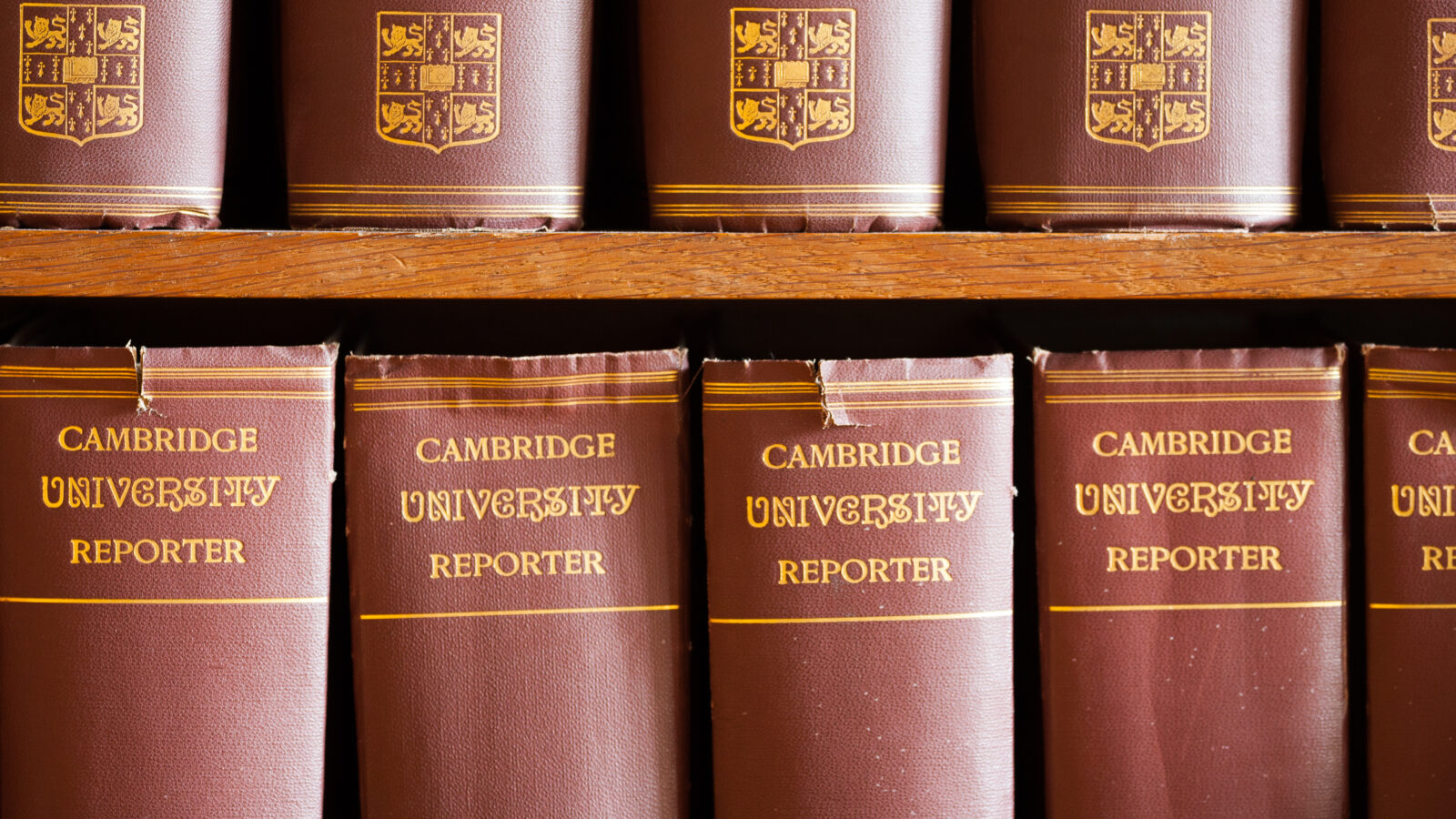
The current issue of ‘The Reporter’ contains much of interest.
First, the Grace for an audit of the Human Resources division has been published. It is on page 7.
The Grace is intended to strengthen and improve the University’s Human Resources practices for the good of the whole University community — staff, students and the institution as a whole. It would establish an independent Oversight Committee, chaired by a legally qualified employment-law expert and including elected members of the Regent House and external members of the Audit Committee. The Committee would commission an independent external audit of HR procedures and practices, assessing their compliance with University policies and legal requirements, while also developing clear standards for good HR practice. Current and former employees, and where appropriate students, would be given an opportunity to provide evidence so that the review can consider a broad range of experiences.
The Grace also sets out a clear process for turning the audit’s findings into practical improvements. The auditors’ recommendations would be published, considered by the Oversight Committee, and then discussed with the recognised trade unions. The University Council would publish and implement an agreed plan, taking account of feedback from the wider University community, and would subsequently report publicly on what has been done. The whole process is designed to be transparent, independent and constructive, with further action recommended where necessary. Overall, the aim is not simply to examine past or present practices, but to ensure that the University develops fair, lawful, consistent and effective HR practices that serve the interests of everyone who works and studies within the University.
We hope that there are no anti-democratic shenanigans from the senior leadership regarding this Grace.
Secondly, there are notices of the three ongoing investigations (two into matters concerning Jason Arday and one into the loss of the Cambridge Whistleblowing Tribunal.
While the University describes these reviews as “independent”, there are important questions about what that independence means in practice.
The University Council is appointing the chair and establishing the panels, yet there is no clear commitment to real involvement by the wider academic and staff community in selecting either the chair or panel members. There is also no assurance that academics, professional staff, trade unions, or others with relevant experience will have a substantive role in shaping the investigations. Without such safeguards, there is a risk that reviews intended to examine institutional culture and practice become largely internal exercises involving senior management, HR and individuals already closely connected to the University’s existing problems.
There are important questions about transparency. The University has committed to publishing the terms of reference, but it has not clearly committed to publishing the full reports, evidence-based findings and recommendations. Nor is it clear whether current and former staff and academics will be invited to contribute evidence, whether submissions can be made confidentially, or whether those affected will have a meaningful opportunity to respond. A report that is ultimately submitted to Council but not published in full would provide no real assurance to the wider University community.
If these reviews are genuinely intended to restore confidence and improve institutional practice, independence should mean more than appointing an external chair: the process should be demonstrably independent, open to evidence from across the University, and transparent about its findings and recommendations. The University should therefore commit to immediate consultation with academics and staff, independent representation on the panels, and publication of the full final reports, subject only to necessary legal or privacy redactions
The 21 Group believes that at least the Board of Scrutiny — which is a body directly elected by Regent House — should be asked to approve both the membership of the review panels and the Terms of Reference. This gives some measure of consultation with academics and staff. We also believe the final reports must be available (at minimum) to the Board of Scrutiny and preferably to the whole of Regent House.
(The image is licensed under the Creative Commons Attribution-Share Alike 3.0 Unported license. We acknowledge Michael Maggs as the original creator)
The unmistakable scent of whitewash is in the air.
How the f* can the same people exposed in court for wrongdoing be involved in designing an “investigation” in to their own actions? They should all have been suspended already.
Friends, for those of you who did not go through the torment of the HR grievance procedure let me tell you that this is all sounds depressingly familiar. The RP and investigator are presented as ‘independent’ but it is just a theatre and on closer examination they are all working in collaboration with the accused. Clearly this culture goes all the way to the top and that is why the Grace must pass. Otherwise the outcome is more changing everything to change nothing and next year the whole cycle of 2026 simply repeats itself.
Right. Ignoring the determinations of the tribunal and then declaring that you will follow your “own” independent investigation seems weirdly presumptuous. First you need to respect the sovereignty of the courts to decide what is fact. You can investigate further, and should, but the first action is to discipline those caught out, and not leave them in a position to undermine things further.
It’s not just HR. There needs to be an oversight committee to investigate our Legal Services. That’s the real black hole at the heart of the university.
I would love to be optimistic that this year could be a positive turning point for Cambridge. Unfortunately I am not. We can, and likely will sink lower.
All of these reviews could be perfectly constructed and run perfectly, but still fail. The reason is that there is no capacity at senior leadership level to implement their recommendations. Several of those who remain in post are conflicted and implicated in the matters under review. Recommendations need someone to implement them, and I don’t currently see who would do that. That said, get out and vote for the Grace when it comes!
We are not optimistic. There are further hugely damaging cases due in the Tribunals and Courts in 2027 — and no sign that HR or senior leadership has understood the extent of the failings.
This is the world in 2026.
Once upon a time, our leaders were caught out – even on relatively minor stuff – and they did the decent thing and resigned. They didn’t need to be asked. They just knew what was expected.
Today the scandals hit wave after wave and the default response is to “manage the narrative” and just keep on going until the bitter end. I don’t know how this became the norm but it is the single biggest cause of erosion of standards in public life.
@anonymous
100% In yesterday’s Cambridge evidence, facts and logical thinking determined the narrative. And lawyers were employed to facilitate the academic enterprise.
In today’s Cambridge, the narrative determines the facts, regardless of evidence and logic. And academics seem to be employed to facilitate the lawyers’ business – whatever that business may be.
The structural problem has a name: cowardice.
Committees don’t want to take responsibility, so default to HR. HR don’t want to take responsibility, so default to legal. And legal don’t care, because they can hide behind legal privilege.
Post Office, anyone?
Even once it all comes out in court still the management don’t take a tough decision but opt to kick it all down the road to further committees and reviews.
As our Old Schools Refugee colleague reminds us, if there existed a person in a position to make a clear decision, surely they’d have done so by now?
Instead what we get is this never-ending game of pass-the-parcel while everyone just hopes for the process to time out.
“We hope that there are no anti-democratic shenanigans from the senior leadership regarding this, Grace.”
Of course there will be such shenanigans. There is no doubt about that. Incompetent and dishonest people will continue their malpractices until they are held accountable, and I have yet to see anyone take responsibility for the current state of affairs at Cambridge University.
The good news is this: the senior leadership is being watched now. There are still many scandals yet to come to light, and the information can easily reach the press. If they prefer to continue with the cover-up, Cambridge will remain in the news for some time.
The corrupt regime of the American Queen will resist any change. Legal, HR and ProVCs will fight for the status quo. In the SCM Profs Smallman, Crookery, Teflon and Viciouswoman will press to save their skins. How long can the sewer wait?