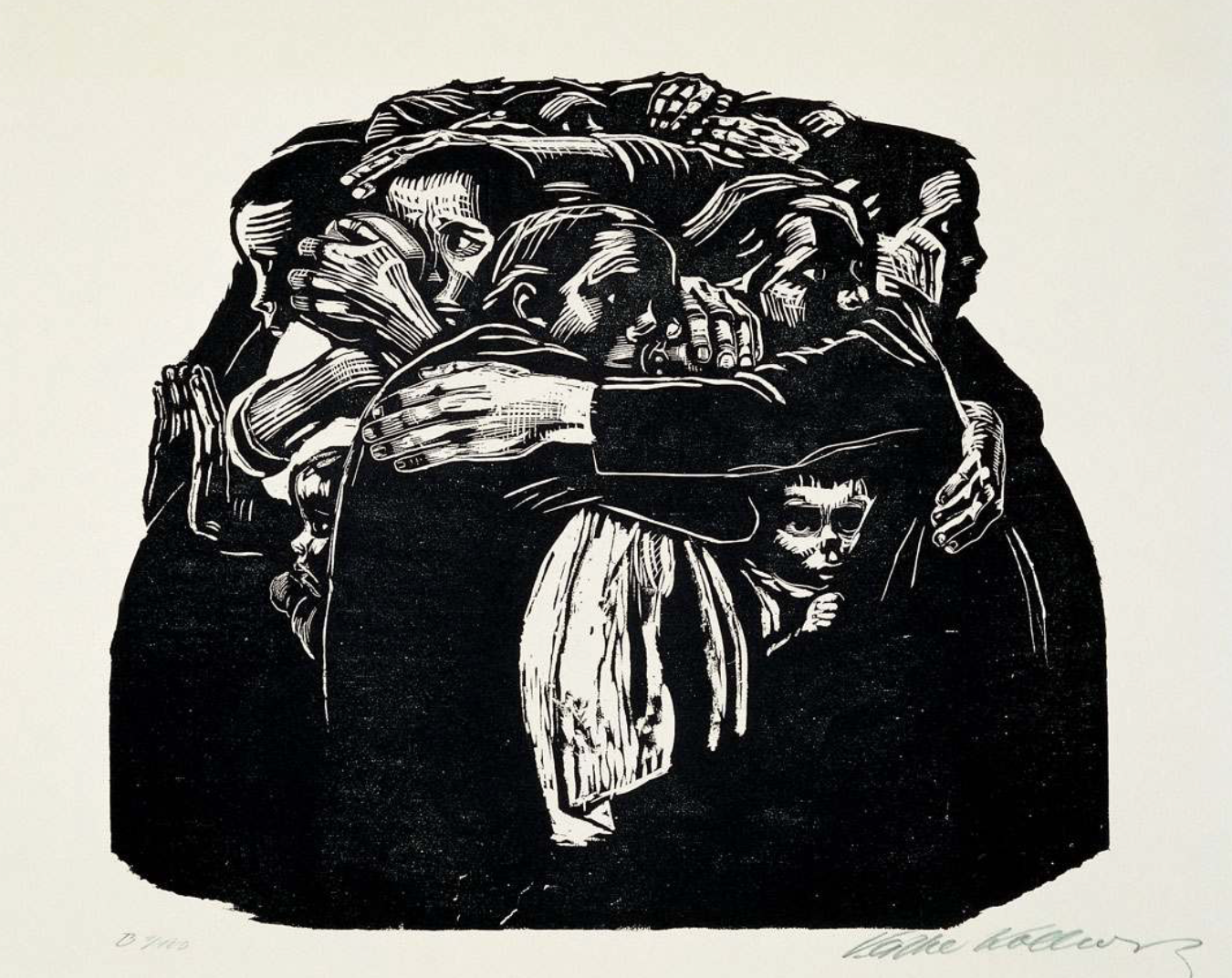
The running of the Human Resources and Legal divisions at Cambridge University has created many victims who could not fight back — young and early-career scholars, those without standing or status in the University, those without the financial resources or the mental stamina to challenge the University’s deceitful practices.
This victory is dedicated to them.
The full decision in the Cambridge Whistleblowing Tribunal is available here. Thanks are due to Employment Judge Graham, Mrs A Buck and Ms S Williams for the careful and compassionate way in which they conducted the proceedings and reached their judgment.
We summarise the key findings below. We will have more to say later about what should happen next.
Systemic failures
The Tribunal found systemic failures in the University’s handling of the matter. It unanimously held that Professor Wyn Evans was subjected to detriments because he made protected disclosures about the bullying of female staff by Professor Richard McMahon. Eleven of the 14 alleged detriments were upheld against the University and/or individual respondents.
The Tribunal repeatedly found decision-making to be opaque: matters were presented to senior decision-makers as fait accompli by Human Resources (HR), meaningful inquiries were lacking, paper trails or note-taking were inadequate and there were instances of “ghost writing” by HR for the senior leadership team.
A retaliatory complaint allowed to continue
Prof McMahon’s retaliatory complaint against Prof Evans was allowed to become a prolonged and fundamentally one-sided process. The Tribunal found it extraordinary that the University accepted and continued investigating allegations that were insufficiently particularised and unsupported by any evidence. Prof Evans was not even told the case against him for a substantial period.
The Tribunal described the process as contrary to natural justice, noting that Prof McMahon repeatedly failed to provide the evidence or particulars requested.
The failure to stop the grievance became very serious once the HR Director Ms Andrea Hudson recognised it as a “counter-complaint”. The Tribunal found that Ms Louise Akroyd and Prof Nigel Peake were on notice that the complaint was retaliatory, yet the investigation still continued. It said it was “impossible to understand” why the process was allowed to continue for so long without supporting evidence.
HR: lack of ownership and oversight
The Tribunal was particularly critical of HR’s handling of the delays. It found that the investigation was allowed to “drift excessively”, with very little effective oversight and a “clear lack of ownership or interest from HR”.
It also noted that correspondence purportedly from senior figures — including the Academic Secretary, Registrary and Vice-Chancellor — was routinely drafted by HR and sometimes with input from Legal Services. This helped create the appearance of senior-level ownership without clear evidence of genuine independent consideration.
Professor Nigel Peake and the lack of candour
Professor Nigel Peake was criticised both for the initial handling of Prof McMahon’s grievance and for failing to insist on evidence.
Although Prof Peake decided that the retaliatory complaint should be investigated, the Tribunal found that the investigation should not have continued once it became apparent that Prof McMahon was providing no evidence. Prof Peake had expressly warned Prof McMahon against retaliation, yet once the complaint against Prof Evans was underway, he did not bring it to an end. It continued for nearly two years.
The Tribunal also found aspects of Prof Peake’s evidence “not entirely candid”.
Professor Eilis Ferran and protecting the University
Professor Eilis Ferran ultimately rejected Prof McMahon’s grievance as unsubstantiated. Prof Ferran accepted that Prof McMahon had failed to substantiate his allegations, yet concluded — surprisingly — that they were neither malicious, vexatious nor retaliatory. The Tribunal found her assertion that Prof McMahon could not have known about Prof Evans’s whistleblowing “did not seem credible”, particularly given what Prof Evans had expressly told him.
More strikingly, when repeatedly asked what evidence supported the assertion that Prof Evans had made false or unsubstantiated allegations, Prof Ferran could not answer. The Tribunal inferred that she did not want to say anything that might harm the University.
Professor Kamal Munir and procedural barriers
Prof Kamal Munir’s involvement illustrates the procedural barriers Prof Evans faced when attempting to understand the University’s handling of the matter.
Prof Munir received Prof Evans’s grievance against the HR Director Ms Hudson with regard to the progressing of Prof McMahon’s retaliatory allegations, but the University initially resisted dealing with it. It then took almost six months simply to appoint an investigator.
The University then refused to address Prof Evans’s later grievance against Prof Peake and Ms Akroyd. It found that his whistleblowing had been a material influence on the decision not to process that grievance.
Professor Tim Harper and the 624-day delay
Professor Tim Harper’s investigation into the conduct of HR was itself found to be seriously deficient. The grievance took 624 days to conclude — what the Tribunal described as a “staggering” delay. Although it accepted that Prof Harper was busy, it found that his task was relatively discrete and should not have taken anything approaching that length of time.
More seriously, the Tribunal found that Prof Harper failed to investigate key allegations. In particular, alleged serious breaches of HR confidentiality by Prof McMahon were rejected on the basis that there was “no evidence”, even though Prof Harper ultimately accepted that he had not actually investigated those breaches.
The Tribunal described his evidence on this point as “not satisfactory” and “less than candid”. It also found his treatment of other complaints to be a “non-response” and “deflective”, giving the clear impression that he wanted to “shut this down” rather than properly engage with Prof Evans’s concerns.
The Tribunal did not find Prof Harper himself incompetent. Instead, it placed much of the responsibility on the University’s HR division.
Professor Deborah Prentice and the lack of independent scrutiny
The Tribunal also found the most senior decision-making wanting. The Registrary and Vice-Chancellor did not provide the independent scrutiny one would expect. Prof Evans repeatedly raised concerns about the investigation and related matters with the Registrary and Vice-Chancellor, but responses were delayed, limited or non-substantive.
The Tribunal was particularly critical of the handling of Prof Evans’s final complaint to Professor Deborah Prentice. Her rejection letter had been drafted by somebody else. The Tribunal considered it “incredibly unlikely” that she could have conducted the claimed full review of the substantial papers within the time available, and found that the complaint had instead been “summarily rejected, without serious consideration”.
It inferred that the underlying reason was that Prof Evans had come to be regarded as a problem because of his whistleblowing, combined with a desire to shield the University from criticism and shut the matter down.
The wider pattern
The judgment is damaging not simply because individual complaints were upheld, but because of the institutional pattern identified by the Tribunal:
- an unsupported complaint against a whistleblower was allowed to continue for years;
- HR failed to exercise effective oversight or ownership;
- senior personnel repeatedly relied on processes and correspondence prepared by others;
- allegations were not properly investigated before decisions were made;
- procedural barriers made it difficult for Prof Evans to challenge the University’s handling of the matter; and
- as the matter progressed, the institutional priority appeared to shift from independently addressing his concerns to containing criticism of the University and shutting the matter down.
This is a vindication of the stance that Prof Evans has taken all along — that he was retaliated against after making whistleblowing disclosures.
For those who lacked the resources, position or stamina to fight back, the consequences of Cambridge University’s dysfunctional HR and legal divisions have been profound.
There have been many victims.
This victory is theirs too.
(The image is of Käthe Kollwitz’s woodcut ‘The Mothers’ )
Thank you – and congratulations again!
Well said. So pleased you have been vindicated.
Ms Ackroyd has a history of being involved in such cases at Cambridge University from when she was a HR adviser earlier on. She actively ignored claims of bullying and misogny and helped to facilitate further behaviours against female members of staff who submitted grievances. One very serious case was when a senior foreign born female member of staff at The Fitzwilliam museum was left traumatised by a wooden figure being noosed and hung from a pipe in the workspace as part of a bullying campaign, (this occurred over 10 years ago). All staff there protected the male who did this even lying in statements. Ms Ackroyd dismissed it as banter. Cambridge University swept it under the carpet. Now if that was to happen today it would not be good press for the university in what they cover up behind closed doors.
Time to tell it like it is. Hudson, Gardner and Rampton have overseen a culture of institutionalised bullying against whistleblowers – for years. They have hounded talented researchers out of the university, covered for mediocre figures at senior level, wasted millions of pounds of public money, and produced the greatest damage to the university’s reputation in the 800-year history of the institution.
They must either be fired or resign – and resign in shame.
The whole university will celebrate their departures.
That culture has been in the University since 2015 if not earlier, what was not complying with Dr Catherine Mackenzie’s re-engagement order from an employment tribunal if not institutionalised bullying against a whistleblower & subjecting a whistleblower to detriment. Does the Chair of the Board of Scrutiny have the option to not raise a substantive unfair dismissal? to not take a substantive unfair dismissal through an employment tribunal?
The University conceded the it had unfairly dismissed the claimant and did not assert any contributory fault by the claimant. To not comply with a re-engagement order from an employment tribunal in that set of circumstances – claimant was Chair of the Board of Scrutiny, unfair dismissal was conceded, no contributory fault by the claimant was asserted – is institutionalised bullying against a whistleblower & subjecting a whistleblower to detriment
That’s two years before Professor Stephen Toope became VC, that’s under Sir Leszek Borysiewicz.
It has been going on since at least 2012 and involving the same HR officer involved in this case.
Cambridge has a history of paying people off, signing non-disclosure agreements, giving a glowing reference and moving them into other colleges and or roles. How many refused a payoff and didn’t sign a non-disclosure agreement in this time? I was told very few.
I think the Vice Chancellor has a 24-48 hour window to announce a full-scale investigation in to HR and Legal Services. Otherwise, the calls for her own resignation will become overwhelming.
Agreed, this is what we need — external investigation into what has been going on in HR/Legal.
Statement posted to Twitter/X and bluesky
“Cambridge University has lost the whistleblowing tribunal, with Vice-Chancellor Deborah Prentice among the respondents found to have retaliated against a whistleblower.
That comes on top of serious concerns about her leadership during the Jason Arday crisis. Taken together, these events raise a fundamental question: is Deborah Prentice actually in control of the University she is supposed to lead?
She appears to have neither a clear grasp of what has been happening nor an independent power base within the University. Instead, she risks becoming dependent on the very senior leaders she is supposed to challenge, scrutinise and hold to account.
That is an untenable position for a Vice-Chancellor.
Deborah Prentice now faces a simple choice: either demonstrate that she has the authority and independence to confront failures within Cambridge University, or accept that she cannot provide the leadership the University needs.
Deborah Prentice needs to announce an independent investigation into the workings of the University’s Human Resources and Legal divisions.
Cambridge cannot credibly claim to champion accountability, transparency and freedom of speech while its own Vice Chancellor appears unwilling or unable to hold those senior leaders who have made mistakes to account.”
I’ve read about 70 pages of the judgment. The Reasons are a valuable record of the OBSTRUCTIONALIST BEHAVIOUR by HR and Administrators that many commentators have documented for years.
-ghost writing
-ghosting by decision-makers
-‘the Invisible Hand did it’ arguments
-unrecorded conversations and processes that leave no paper trail (erasure of legal record)
-bad faith investigation (2 years based on ‘scant particularisation’ while dismissing detailed complaints ‘out of hand’)
The white sheets now removed, we can see the University Officials concealing themselves are Obstructionists. They were never ghosts. These Obstructionists hiding beneath white sheets— and haunting as poltergeists— always had Human Agency. It will be more difficult for them to play these ‘paranormal’ tricks on complainants in the future.
Well done, Wyn Evans.
5. Our task was a complex one because it was not always clear who had been
responsible for the detriments; who had been the real decision-makers; and
how decisions had been reached. In many instances, as we have found,
decisions were presented to decision-makers as a fait accompli without any
genuine or meaningful inquiry into how the decision had been reached,
which they then put their names to.
6. Pre-determined outcomes appeared to have been rubber-stamped, and
little if any paper-trails were put before us showing the thought process
behind the decision-making; and various witnesses struggled to explain to
us what it was that they took into consideration when reaching their
conclusions. In one example the person being complained about drafted the
response to the Claimant rejecting his complaints against them. Ghost
writing was a consistent and a concerning theme throughout this matter.
7. Allegations against the Claimant were accepted and subjected to a pro-
longed nearly two-year investigation by the University even though they
contained scant particularisation, and no evidence to support them. By
contrast, a number of the Claimant’s detailed concerns or complaints were
dismissed out of hand without a proper process.
The judgment is devastating. They were offered opportunities to settle. They ignored them, spent huge amounts of money on an Employment Tribunal, which has comprehensively back-fired causing massive reputational damage to the Institute of Astronomy & Cambridge University
Why didn’t they settle this the moment it was filed with Acas years ago? Why didn’t they investigate, if only to discover just how dismal their position at court was going to be?
I think questions need to be asked around corruption here. What were the pre-existing relationships between the solicitors and barristers brought in on the case? In choosing to fight a case on such weak merits, and with such obvious and huge downside tail risk (loss of millions in donations etc), might public funds have been allocated here to their benefit rather than that of the university?
It would be interesting to find out who made the decision not to settle, and to what extent this case may have been driven by conflicted individuals.
Were there ghosts sitting in the courtroom?
Will the Cambridge University legal costs to fight this case ever be made public? I read tha they use student fees to help fund legal cases along with legal insurance etc. So essentially that is deemed to be public money being used for their legal team?
If she resigns, it almost makes it easier for Cambridge University. This has happened before a senior academic involved in a major investigation took early retirement with a payoff. Then that major person to investigate is gone.
Let’s not forget the humiliation video where many of them appear:
“Introducing the University of Cambridge Dignity at Work Policy ”
https://www.youtube.com/watch?v=pizOGdQK4tE
Shame on them all!
Bloody hell. This video is legitimately shocking. These are the exact people who were just found guilty at court of victimisation and staff retaliation!!!!!!
Isn’t it time for Munir, Rampton and Peake to face the “Cremin” experience?
It is amazing how far they go. It is not just Cambridge.
On X or Bluesky, there would be a user comment placed underneath where any statement were voted to be dishonest or misleading, explaining to the reader why this is so.
Is this video on social media anywhere? There ought to be an “anti-disinformation” version that includes the following as subtitles when the following speakers appear:
1. “Professor Kamal Munir. At a court hearing in June of 2026, Professor Munir was found to have stalled investigations for bullying and staff harassment once these had been reported to him, in order to protect the Head of HR, Andrea Hudson, who was eventually found culpable of 6 counts of misconduct. He then oversaw the committee that dismissed these charges. These events occurred at the same period as this video was recorded.”
2. “Emma Rampton. At a court hearing in June of 2026, Ms. Rampton was found to have engaged in retaliatory conduct against Cambridge members of staff, including expediting false counter-grievances and protecting faculty found guilty at High Court. She was herself condemned by a High Court judge in 2025 for approving a ban on peaceful protests, and resigned without explanation later that year.”
3. “Professor Nigel Peake. At a court hearing in June of 2026, Professor Peake was found to have expedited a vexatious counter-grievance against a whistleblower, without provision of evidence or engaging in due diligence. At the time this video was recorded, he was aware that he would be cross-examined in court for these actions. He is not usually this shifty in appearance. He has since been promoted.”
This would be a great public service. The original video was, as you say, a deliberate act of disinformation. It was meant to deceive the public and was produced by individuals with an incentive to do so prior to their appearance in court.
Is that not an attempt to pervert the course of justice?
It could be if they referred to it in their witness statements or court testimony. I am not aware that they did so, but could be wrong.
A clearer case for perverting the course of justice would be if Ricardo Sabates, hypothetically, after being taken to court for racial discrimination, had sat on the hiring panel for Jason Arday – a candidate very clearly not qualified for the role – and then, if the university had cited that fact in later proceedings at tribunal, in order to secure dismissal of allegations of racism. If so, the case should then rightfully be reopened.
Here are some more fun quotes
Kamal Munir:
“White privilege is part of institutional racism, when people actually understand it to be just part of… a meritocratic organization”.
“Cambridge wouldn’t be Cambridge if it weren’t for our anti-racist work”
A sentiment many of us agree with but seems rather awry in light of recent events
Nigel Peake:
At his DAMTP Head’s welcome of 2019 he said he was:
“committed to a pro-active and inclusive approach to equality” (including celebrating how “the majority of toilets on site are gender neutral”)
Emma Rampton:
On appointing Andrea Hudson in 2021, Rampton described Hudson as having “the right qualities, values and experience… to lead the Division’s evolution into a more contemporary and progressive service, while helping us all in our endeavour to create a kind, compassionate working environment”
[REDACTED]
All were found culpable of systemic bullying and staff whistleblower retaliation at court in June
The EDI crap has to go. At this point it’s simply a way to give power to HR (“show me the man and I’ll show you the crime”). Let’s have a policy to judge people on their potential and what they’ve done, without discriminating.
While I think there’s a place for affirmative action (one of the most surprising discoveries of this whole scandal is learning that even Nathan Cofnas of all people supports diversity quotas) it cannot happen by abandoning any semblance of criteria for merit. Doing so triggers backlash like this and undermines staff of all ethnic groups.
Congratulations Professor. Thanks for sharing. Particulars of your tribunal will be very helpful for my own case.
I’ll second that. Thank you Prof. Evans (and others concerned) for sharing the details. This is clearly a landmark case. For the panel to be so direct (for which they are to be commended btw) is a major statement in itself about just how bad things have become not just a UCam but across the sector.
The parallels between what I’ve just read and an upcoming ET case at another institution is very striking. More details will be provided as soon as possible.
My case will probably land here too. R’s are focused on egos instead of fixing mistakes.
Congratulations to Professor Evans for this outstanding result. He has shown the resolve, integrity and the commitment to do the right thing that is sadly lacking by so many people in the University. I have worked in a miserable department for many years and seen countless members of staff who have been treated unfairly. Too many so called leaders are cowards who refuse to take responsibility and are without any humility.
Thank you for this summary – and what great news! Will there potentially be a post about how similar patterns of complaints investigations and HR matters have occurred across other UK universities (also encompassing those of students) (i.e. a comparative glance) – or what this case (as well as perhaps the one of Arday) means for other UK universities? (Know that blog posts maybe rely on voluntary contributions – but would be interesting to hear more about this!)
@Elbaba: Yes, absolutely! It’s vitally important that accounts are shared to expose the patterns. It would be even better if they are referenceable, especially as a court or tribunal ruling. In my opinion, this is very powerful support for others making similar claims.
Myself and others have raised this very point on several occasions, and I hope that such a resource can be compiled on this site, which we can do if many contribute.
(Actually, I just posted a comment on this theme on a previous page:
https://21percent.org/?p=4148#comment-10002)
Meanwhile, the letter of Carter-Ruck to silence journalists was published:
https://x.com/DanNeidle/status/2087095547479945612
Note what they say, “Not for publication” … Yes, Sir!
Cambridge seem to have been kept pretty much in touch with what ws going on.
“We are instructed that, following the 19 September Enquiry, our client has arranged for his PhD thesis to be independently peer-reviewed by individuals at the University of Cambridge.”
Be fascinating to know who these individuals were
Or perhaps Arday was just making it up as usual!
Clear from the content of the letter that Comms Office was working hand-in-glove with Carter-Ruck. They passed the story to them, directly or via Arday. The passthrough would likely have come with expectation that Carter-Ruck were engaged to respond. Also, don’t forget that Comms Office work directly with Legal any time a negative story comes in. Always. And frequently send threat letters like this to the press.
While Arday proved to be a great fantasist, this seems the kind of farce he had help with, and by that, I mean help from the University.
The letter is posted here, for those not on X: https://taxpolicy.org.uk/wp-content/assets/arday/ARDAY_-_Letter_to_Times_Higher_Education_-_24.09.25_Redacted.pdf It has many curious features. A footnote claims that JA is currently supervising 15 PhD students and has been external examiner for more than 35 PhDs. I find both of those numbers hard to believe. It also describes the REF as a peer review process, which it is, but not the sort that would catch plagiarism.
Note that Carter-Ruck explicitly states that the Comms Office of Cambridge was aware of the situation and was giving advice to Arday. Did they also give him advice to call the police? Didn’t James Helm worked for Met police before?
Here’s a post from Priyamvada Gopal on X:
Priyamvada Gopal c @PriyamvadaGopal . 19h
I just need to say that the official rule at Cambridge, AHRC-mandated, is a
maximum of 6 PhD students. It may be that the Faculty broke the rule but I
am sceptical. I have never heard of anyone with 15 PhD students, though I
once had 8 inadvertently.
https://x.com/PriyamvadaGopal
What is the Council doing by the way? I thought they were responsible for addressing reputation risk, but perhaps I got it wrong. What exactly do they do?
Do not forget what our friendly Lord Glossover told us when misconduct was reported to him:
“Nonsense. I am on Council. I know everything.”
https://21percent.org/?p=2655
Another cycle of bad stories begins
https://www.timeshighereducation.com/news/cambridge-v-c-criticised-whistleblowing-academic-wins-tribunal
And I was told that other newspapers are writing on it now 😉
Cambridge University decided to retaliate against the wrong people this time.
Here it is another story about our Vice-Chancellor. Not sure if she will like this one:
https://unherd.com/newsroom/cambridge-vice-chancellor-found-liable-for-silencing-whistleblower/
Even in their worst nightmares I doubt the leadership could have imagined an ending as devastating as this. This seems a moment of overwhelming hubris followed by total defeat. They have played the game so poorly that you must wonder what on earth they were telling each other all this time. This will surely go down in history as the worst management collapse at any leading institute of higher education.
It is not over yet. Stay tuned. They will have to apolagize for the damaged they caused to all the victims that were bullied and harassed on their watch.
Indeed there is more – and worse. It is going to blow people’s minds, not that they aren’t pretty astonished enough as it is.
A comment from that article:
Jonathan Palmer
14m ago
Evans seems to be an extremely brave, fine man battling for women’s rights. It appears Deborah Prentice thought they were the wrong sort of women. We cannot act surprised. She was brought in from Princeton to implement greater DEI, and I’m certain she’ll bully any little people who stand in her way or tarnish the university’s reputation while she’s doing it. Frankly, I consider her position untenable, especially in the Jason Arday debacle, but that’s just me.
Very good! It is not just that poster who considers her position untenable, but here we are, she continues with the embarrassing silence and the head in the sand. Alternatively, she may be waiting that someone writes her resignation letter. She should ask HR and Legal as I was told they do some good ghostwriting!
^ thought they were the wrong sort of women ^
Hm. I could see that. Except it seems impossible….. all women love women, and all women are feminists, isn’t that right?
[…] and the result is a decisive win for Professor Wyn Evans. You can read more about the judgment here, but the salient points are visible […]
Full link to ‘In the Dark’ (Peter Coles’ blog) is her
https://telescoper.blog/2026/08/11/the-ioa-whistleblowing-case/
An external Inquiry is not going to change anything in this university. The same admin zombies will appear to intone platitudes and do nothing. They won’t have the intellectual firepower to sort anything out. Managerialism has infected the university and the infection is now in its fulminant phase. Wyn’s tribunal is just a symptom of the infection, like a rigor. The managerial class is self replicating and expanding inexorably.
True. But at least Anglia Ruskin is hiring.
What’s the point of an enquiry? They should just fire the entire hiring committee and if anyone feels hard done by they can just sue the university and if they win they’ll get their job back. It is not as if the university is averse to lawsuits after all.
Lord Chris Smith, are you there?
Shall we wait for some more scandals of Consigliere University to be in the press?
https://21percent.org/?p=3097
p
To be honest he’s probably the only person who can survive this ordeal
BOOOOOOM!
Third story is out! Well done, Daisy!
https://www.theguardian.com/education/2026/aug/11/university-cambridge-whistleblower-wyn-evans-wins-employment-tribunal
Hits from the right, hits from the left. Surely it is time to call a knockout.
Not yet, they can handle some more punches. 😅
Of course, they can step forward and apolagize, while making sure that there will be an external investigation on the practices of HR & Legal Divisions, as well as on OSCCA. What is done to students is an absolute shame, Senior Tutors know about it, and gaslight them.
the beatings will continue until morale improves
FROM POST ABOVE:
“The wider pattern
The judgment is damaging not simply because individual complaints were upheld, but because of the institutional pattern identified by the Tribunal:
#an unsupported complaint against a whistleblower was allowed to continue for years;
#HR failed to exercise effective oversight or ownership;
#senior personnel repeatedly relied on processes and correspondence prepared by others;
#allegations were not properly investigated before decisions were made;
#procedural barriers made it difficult for Prof Evans to challenge the University’s handling of the matter; and
as the matter progressed, the institutional priority appeared to shift from independently addressing his concerns to containing criticism of the University and shutting the matter down.”
THIS IS EXACTLY HOW UCAM DID IN THE SCM ONCOLOGY-CRUK SCANDAL! TO THE LAST DETAIL!
I know who must be shaking and panicking:
Prof Smallman- he allowed a case of false allegations to proceed in his School without ever speaking with the person against whom the allegations were made.
Prof Teflon- he orchestrated the whole case against a colleague he was jealous off in his own Department.
Prof Viciouswoman- she started the false allegations and was rewarded with positions for which she is not qualified. Just look at her CV! DEI in action again!
There are many similarities between CRUK and Astronomy. And there is a link. Including an individual who “started the false allegations and was rewarded with positions for which [they are] not qualified”. And who continues to embellish their CV to near-Jason levels of plausibility.
I wrote on multiple occasions to the Head of the School of Clinical Medicine, all the senior academics in the SCM, the VC at the time, the new VC when she took over, and all the proVCs. I also wrote to the senior people at Cancer Research UK including the Board of Trustees. I outlined very carefully the details of the accusations and why they were (clearly) baseless. I also wrote about the bullying of junior staff in the course of the ‘investigation’. They all knew what was going on but decided to do nothing. Not a single senior person apart from me willing to speak out. I got several threatening letters from the University lawyers for my actions and a formal dignity at work complaint investigation. Institutional bullying.
One of the actors in this farrago once ‘joked’ with a junior colleague that if the colleague ever crossed them they would hang him up by his ankles and slit his throat. I told this to Andrea Hudson.
“I told this to Andrea Hudson.”
Big mistake. Check what happens at Consigliere University:
“The HR Director at Consigliere University has stated she doesn’t believe in getting evidence before launching a major disciplinary process. She prefers instead to let the machinery grind first and find the evidence later. Elsewhere, this might raise concerns about procedural fairness, but at Consigliere it’s deemed to fall comfortably within accepted custom, requiring neither explanation nor remedy!”
You can also check this post: https://21percent.org/?p=1239
The running theme is a total failure of due diligence. HR do not enforce rules, just do whatever the heads of department and school tell them. When everything fucks up due to the psychopathic narcissism of the latter, complaints are made to Pro VCs and VC, who kick it back to HR, who let the accused lunatics draft their reply, and then Pro Vc and Vc merrily sign. Institutionalised staff torture.
HR also act as tipsters. Ask the most discussed Lead HR Business Partner the advices she gives to Professors and Heads of Department regarding reports of misconduct. Where do you think the idea of “counter-complaints” comes from?
This is true. Many heads of department and school are basically like smarter versions of Jason Arday. And HR serve to help them destroy anyone more competent than them who dare upset their fragile egos and fear of eventual exposure
“We acknowledge the Employment Tribunal’s judgment of 10 August 2026 and are carefully reviewing it. We will now take time to reflect on the findings in detail.”
https://www.cam.ac.uk/notices/news/university-statement-on-employment-tribunal-11-august-2026
Do not take too long as the scandals do not wait…
For All the Victims. This title and tribute!
: ( ::::::::::::::::::::::::::::::::::::::::::::::::::::::::::::::::::::::::::::::::::::::::::::::::::::::::::::::::::::::::::::::::::::::::::::::::::::::::::::::::::::
“Medea · 11 August 2026 at 18:37
There are many similarities between CRUK and Astronomy. And there is a link. Including an individual who “started the false allegations and was rewarded with positions for which [they are] not qualified”. And who continues to embellish their CV to near-Jason levels of plausibility.”
Can you be more specific? Is the CV publicly available?
The information is in the public domain.
Meanwhile, life continues at Cambridge University…
“Cambridge hired academic who backed terror group ”
https://www.telegraph.co.uk/news/2026/08/11/cambridge-hired-academic-who-backed-terror-group/
The Researcher really does need to be more careful about his entirely uncritical take on anything that comes out of the rightwing media trying to now make this a major witchhunt. Racist witchhunt.He seems to take anything at complete face value. Pity. Lowers the credibility of this site.
Is this also bad?
https://www.thetimes.com/uk/education/article/cambridge-jason-arday-farah-ahmed-hizb-ut-tahrir-2kg3zqs3n
Or can I just post things from the Guardian? I actually did post above Madam Speaker, but anyway, thanks very much for the advice! I promise I will think about it! 😉
It doesn’t lower the credibility of this site at all. This is a blog comment section, people exchange views politely (more or less). Even if I disagree with the implicit racism of some of the right-wing commentary I for one certainly don’t attribute those views to TheResearcher, and if we have an issue with the articles then that is an issue for the Telegraph or Times editors. And let’s not miss the forest from the trees here. The articles (“trees”) may exist in the right-wing ecosystem, but the broader issue (the “forest”) is about corruption, abuse of position, bullying and gross managerial misconduct. We should reflect soberly on why the centre and left-wing press has been so slow to address these issues when they clearly bear upon matters of inequality, power, and structural (in)justice.
One could ask The Guardian why they killed a story about the scandals of POLIS in July 2025. Ask them and see what they say. Let me know if they deny it.
I should say that it does not bother me when people get triggered when I post links of the Telegraph or any other journal for that matter as I have been rather consistent in sharing information across the political spectrum. The reason is simple, I am not motivated by politics at all. This being said, let’s focus on exposing the real Cambridge. It seems our favourite institution just locked down the section ‘People’ of the Faculty of Education. What are they hiding? https://x.com/fundypost/status/2087311679973654766
That one is almost identical to the Wyn Evans case but CRUK as well has disturbing similarities too.
It’s a sign of how far expectations have fallen in the last month that this story isn’t even shocking any more
seven years ago it was shocking that Cambridge allowed a terrorist to attend a seminar and conduct an attack at fishmongers’ hall
now – we aren’t even surprised that a supporter of a terrorist group is teaching there
in the education department the country’s foremost educational institution
think we need to let that sink in
I think there is a more general point to be made about education in relation to belief systems :
If a person who is neutral about a particular belief system shows another person a belief system that the person doesn’t already hold that says if a person doesn’t hold this particular belief system then the person should not be allowed to live by those who do hold this particular belief system then there is no undue pressure being applied by one person to another person to hold this particular belief system.
If a person who holds a particular belief system shows a person a belief system that the person themselves also already holds that says if a person doesn’t hold this particular belief system then the person should not be allowed to live by those who hold this particular belief system then there is also no undue pressure being applied by one person to another person to hold this particular belief system because the person themselves already holds this particular belief system.
If a person who holds a particular belief system shows a person a belief system that the person themselves doesn’t already hold that says if a person doesn’t hold this particular belief system then the person should not be allowed to live by those who hold that particular belief system then there is significant undue pressure being applied to a person by another person to hold this particular belief system.
There has been a lack of consideration of the impact of the belief system differential between the giver and the receiver of education in relation to belief systems and the difference in undue pressure that could arise as a result of that differential when educating in relation to belief systems. Freedom of choice of belief system relies on a person having a choice between belief systems where none of the belief systems puts undue pressure on a person who does not already hold that particular belief system to hold that particular belief system.
For those of us at other universities fighting battles of our own, 21 Group is an inspiration.
You did it. You actually did it.
It is inspiring that a rag-tag group of academics and students can bring to its knees one of the most powerful universities in the world though sheer tenacity and ruthless determination.
Everything Jason Arday pretended to be – you are the real thing.
We are all 21 Group now.
4th on the Whistleblowing case. Hope that this article does not lower the credibility of this site!
https://www.thetimes.com/uk/education/article/cambridge-university-bullying-tribunal-jason-arday-7cc6zmlb8
This is my favourite part:
“McMahon told The Times: “An allegation of bullying made against me within the Institute of Astronomy in 2021 was investigated and was not upheld. The outcome of the investigation was communicated to me in May 2023, more than three years ago.””
Was this the only thing McMahon had to say? It suggests he will ignore this new decision as he did with the defamation claim because he did not agree with it.
The guy came across as a hopeless drunk at ET. At first people were laughing but then I felt sorry for him. Mainly because he obviously is or was a great astrophysicist and in a less dysfunctional university like Caltech or UCB would be advancing the frontiers of knowledge, not the exhausted pawn of a psychotic HR abd legal department
Don’t feel sorry for him.
Many have made that mistake.
He would never feel sorry for you.
Oh be charitable. At least McMahon achieved a B in GCSE English.
Take that, Jason Arday!
The true tragedy of being governed by administrative mediocrity is that it has made mediocrity of us all.
It was clear from the hearings that he was not mentally well, and I do not know what triggered it. He seemed to genuinely believe that he was not a bully and that he had done nothing wrong, which could be a coping mechanism for the fact he was unable to assume the reality, and learn from it. One question, of course, is who contributed to that mental state, who re-enforced on him that he was not wrong, and that it was a “personal vendetta” from others. People closer to him, who knew him before the initial events, can comment on this issue better than I can, but I can definitely imagine HR re-enforcing the the narrative, and further alienating him from the reality. If true, they are responsible for the deterioration of his health but their KC simply chose to say in open court that “my client is a very chaotic person” as if he had always been like that.
What is very clear is that the University should not have placed him in this position. It was a poor decision to fight the Tribunal
Researcher, you contribute well providing media links. Less well with comment and exaggeration of past experience
Thanks for the feedback!
Welcome to the 21 Group blog.
“An allegation of bullying made against me within the Institute of Astronomy in 2021 was investigated and was not upheld”
The allegation was not one of bullying, it was one of administrative incompetence (or interference with another academic’s research projects and employment contract).
“The outcome of the investigation was communicated to me in May 2023, more than three years ago.”
The outcome referred to as communicated in May 2023 was the outcome of a different investigation, into McMahon’s own unsubstantiated and defamatory allegations against colleagues.
Now everyone can make up their own minds about the clarity and accuracy of the information provided.
If the judicial outcome for the university with significant HR/Legal input is potentially significantly worse than the judicial outcome that could have been achieved for the university with no HR/Legal input that is a strong indicator that it is time for “an independent investigation into the workings of the University’s Human Resources and Legal divisions”.
The statement above should not be taken to imply that HR/Legal input isn’t typically producing better outcomes for the University than could be achieved with no HR/Legal input but if there is a case where HR/Legal input has potentially had a paradoxical effect on an outcome for the University that would be a strong indicator that it is time for “an independent investigation into the workings of the University’s Human Resources and Legal divisions”.
Cambridge appears to be a clone of my former institution, the University of British Colonialism (sorry, Columbia). Did Toope import the managerial practices of UBC to Cambridge, or did UBC just copy Cambridge? Same HR dept behavior, same ghost-writing, same protection of Heads and above against regular faculty. Nice that Cambridge is now publicly exposed, UBC is yet to be.
I feel like it is time we all watched this video again?
https://www.youtube.com/watch?v=buEJYUnNPr4
“There is something so cool about watching this tiny little creature being fearless, fighting off predators, putting bullies in their place, protecting others, suplexing a fool just because they can”
Go 21 Group!
https://www.cam.ac.uk/notices/news/statement-from-the-vice-chancellor-12-august-2026
She does not comment on the Employment Tribunal case….
The question is: Who wrote this statement? I know it was not her.
It might have been a good statement two weeks ago, but alas, coming the day after she was found by tribunal to have engaged in whistleblower retaliation, one may now reasonably question whether she remains the right person to deliver the message, as it raises doubt regarding her ability to handle the matter with due integrity and independence. One might also think that, at any large organisation (to say nothing of politics), it would also be expected of the executive to deliver interviews, and respond to legitimate public questions regarding the matters raised in recent weeks in an effort to calm speculation and doubts. That would include ensuring that those found to have engaged in underhand conduct by the tribunal, will fully and definitely be excluded from any role in the management of the announced investigation, not least of all as prior “investigations” that the university claims to have conducted regarding Mr Arday had apparently cleared him of wrongdoing, a conclusion which is obviously entirely untenable and not credible.
I already asked Mr David Parsons and Mr James Helm who wrote that message, and if it will take her 3 additional weeks to comment on the Whistleblowing Employment Tribunal case where she is directly involved.
Re VC’s statement on Arday, the phraseology is poor, and the punctuation worse. Can she not find a better ghostwriter, or do we need Rampton back?
UNIVERSITY COVER UP STATEMENTS
BEFORE an investigation has been conducted, the VC is announcing from her vacation spot that misconduct and cover up are an ‘aberration.’ This statement proves there will be no fair and independent review. The conclusion has already been decided. No Credibility Debs is saying it’s a one-off. Declaring it an aberration as other cases are being covered up is yet another way of stepping on victim’s throats with dress shoes and high heels. It’s NOT an aberration. THE UNIVERSITY REFUSES TO INVESTIGATE ITS STAR ACADEMICS. EVERY VICTIM, FRAUDSTER AND COVER UP-ER KNOWS.
I just wanted to reach out to Wyn here to offer both my gratitude for his bravery and congratulations on his vindication. I am a staff member at the IoA – I would ordinarily have emailed some words of support but such is the climate we live/work in, I cannot be sure any such communication would not have an impact on my professional life (yes, how sad it has come to this).
Not being faculty, I was only at the periphery or listening on the grapevine at the time this was blowing up, and it is clear there was a narrative spread and, without being fully appraised of the facts, I accepted the insinuations and rumours as truth and drew conclusions that were entirely false. I never participated in the spreading of such narratives, but had slight exposure due to “time served” at the institute and what I hope is a friendly relationship with many longstanding members there.
Wyn, we haven’t crossed paths in my time at the institute, but perhaps you have seen, notwithstanding your own ordeal, how the culture and mood of the place has changed over the recent years. There has been a virulent spread of high-handed officiousness, formality, HR overreach (both “local” and most certainly now central) that is turning the place into a faceless “corporatised” department run by managerialsts rather than scientists.
I don’t know how to reverse this culture. In a rare show of courage, I laid this out very clearly (and somewhat forcefully) during our one-on-one sessions with the (co-) Director. Whilst taken aback at the time, there was no follow-up (as indeed has been the case from so many of my concerns raised over the years during the annual appraisal system that the directors sign off on), and still we march on to the latest managerial trend or tickboxing exercise, whilst being encouraged to “bring our whole selves to work” etc.
Anyway, please know that you have at least one appreciative and supportive colleague in the IoA, nevertheless horrified that we are where we are. I await a statement from the Co-directors in follow-up to their “no comment” email circular on the 16th of June whilst proceedings were underway. I won’t hold my breath.
From the Independent now:
“Cambridge University ‘tried to shut down whistleblower’ – tribunal”
https://www.independent.co.uk/news/uk/home-news/cambridge-university-astrophysics-press-association-b3031755.html
Not just one though…
The press already saw the statement of Prentice on Arday…
https://www.theguardian.com/education/2026/aug/12/cambridge-independent-inquiry-jason-arday-appointment
No comment on whistleblowing retaliation though.
From The Telegraph:
https://www.telegraph.co.uk/news/2026/08/12/cambridge-vice-chancellor-insists-arday-case-is-aberration/
From Financial Times:
https://www.ft.com/content/14430047-c8b9-4e7b-89db-aed36244ad71?syn-25a6b1a6=1
Again, no comment on their ranking!
The days of the American Queen are over. She must go and with her the whole leadership team. No-one is salvageable!
I’ll bet that she is a ball of fury right now. Her minions landed her in a courtroom and a humiliating final judgement, doubtless assuring her all the way that spending millions on expensive lawyers would resolve everything. Just as with High Court last year – it did not – but instead, made the situation worse.
The decision reflects poorly on Prentice for having signed along. She is fighting for survival and any semblance of a legacy.
The media, alumni, and even some faculty are circling like sharks baying for blood. They are not going to be satisfied until she delivers them a few big scalps right from the top. And unlike the soft departures to date, they will need to be presented as restorative justice. Until that point, I fear, the university will continue to bleed out like a sacrificial elephant.
Echoing the many comments above to say congratulations Wyn on this resounding victory. As a relatively new member of IoA, it is horrifying to learn about what has been going on in this department, tempered slightly by the knowledge that there are people fighting back, and winning.
It may sicken people to learn that, during the tribunal proceedings, an image of Judas kissing Jesus in the Garden was affixed to Wyn’s office door. One cannot imagine what was going through the mind of the person retaliating against Wyn in this manner, and it troubles me that it may have been someone unnamed in the tribunal, and likely in a senior position at IoA. An email swiftly followed to the entire department warning us that material stuck to office doors “should be consistent with the standards of professional behaviour expected within the University community”.
Given the University senior leadership’s poor example in this regard, no wonder the IoA is losing its way. To my fellow postdocs reading this, join UCU without delay. Solidarity with Wyn and all others fighting bullying and corruption in the workplace.
I didn’t know an image of Judas kissing Jesus in the Garden was affixed to the door of Wyn’s office during the ET proceedings. Bullies specialise in optics and optical illusions. The reality is Wyn and other whistleblowers have been carrying heavy crosses while surrounded by smear campaigners.
For what it’s worth, I know someone warned not to trust Wyn. He was one of the only people in that frightened person’s corner. The university wanted to make people betray him. ‘Solidarity w/ Wyn and all others fighting bullying and corruption in the workplace’ is the right approach.
Thank you to both AstronomousIoA and IoAnonymous for their posts. They describe a situation in IoA, of disinformation, coercion and suppression of facts, even worse than we anticipated.
It explains the continued mistrust, slander, discrimination, public insults and humiliation, the continued bullying, of those of us involved in this case, who only ever wanted that the truth be told, that the facts be checked, that standards be upheld.
Judge Graham’s judgment has finally allowed us to be heard. We very much hope that our IoA colleagues will take the time to read it in full.
The news about the Judas picture on Wyn’s door is sickening.
When the email came about material stuck on office doors in IoA, we so very naively thought someone had perhaps made the front page of the Daily Mail a little too visible…
There were many opportunities, over several years, for the IoA directors to acquaint themselves with the facts. They resisted, to the point of literally and demonstrably declining to read documents. But McMahon and his supporters were listened to, McMahon’s “side of the story” was allowed to become the storyline, HR-dictated “confidentiality” was maintained and it was emphasized to all that they were not taking sides.
“HR-dictated “confidentiality” was maintained and it was emphasized to all that they were not taking sides”
Hopefully, people now understand that they should not follow what HR says or demands, and that they are some of the key responsible for the current disgraceful state of UCam.
HR’s enforced confidentiality is used to cover up and manipulate information. This practice has happened over and over across campus, in different departments and schools so please have that in mind next time they tell you they will do an “investigation” and that “it must be confidential.”
Needless to say, the most discussed Lead HR Business Partner of the 21 Group, who is directly involved in much of the IoA’s destruction, has continued to remain involved with her ever-helpful advice throughout all these very difficult years.
I am sure she did. But there is nothing she can do regarding the fact that people will not trust a single word she says from now onwards.
“Counter-complaint? It must be an error!”
I think a bigger issue that needs to be discussed among faculty (and which has been entirely ignored in debates thus far) is the hit that mismanagement is going to have on the university’s rankings.
Both QS and THE include a component for academic reputation. This is not insignificant – for QS, “Academic Reputation” is 30% while “Employer Reputation” is 15%. That’s almost half of the score. Meanwhile, for THE reputation survey feeds about 15% of the score.
Of course Times Higher is also the paper whose journalist was threatened and investigated over the Arday scandal – and while that won’t affect the methodology directly, it is hard to see how it will help (after all, many survey respondents are also THE readers).
All this comes at a terrible time. Cambridge has been teetering on both for some years now. It is down to #6 on QS, the bottom of its historical range. Even a small drop to #7 or #8 would be a shock. Same with THE, it has been knocked off the top already (to #3 or #4), and any further downgrade would be taking the university to very uncomfortable territory.
Alumni and faculty need to deliver a clear message to the university to mend its ways – not with cosmetic whitewash exercises, but root and branch reform to fix the system.
The rankings have been discussed in the 21 Group blog for the last several months before these recent scandals were public. A few people who contribute to the blog knew this would happen because they are aware of multiple scandals at UCam, and the senior leadership too knows about them because they were contacted by the individuals who know the scandals and these were ignored at best. Addressing the issue of rankings is surely important but as we write these messages, members continue to be bullied and harassed at this University. Some members had to leave, others were made redundant or were expelled, some considered suicide, and many were broken after reporting misconduct at UCam. What happened with Arday and the result of the employment tribunal of Wyn is a sign of hope for all those who continue to struggle, most often in silence. They should hang in there. If the senior leadership does not address the culture of cover up and retaliation against whistleblowers, the scandals will continue to reach the press, regardless of the impact on rankings.
“as we write these messages, members continue to be bullied and harassed at this University”
If that is true then parliament and police should be involved. Harassment is a crime. If multiple people continue to be affected even after the disclosures of the past week then there can surely be no excuses.
What would be of great interest to many, I think, is an article written by someone senior in HR and/or Legal Councel setting out the pros and cons of their and others’ strategy of shutting down whistleblowers, threatening staff and, in some cases, ensuring, via use of processes, delays and co-option, the removal of good members of staff and students. They could seek the help of the Management School who will know studies which can be referenced (I don’t know of any which support their techniques and rational but I’m sure there must be some). They all have the qualifications and essay/report-writing experience (with some significant management training across the group), and a grasp of their reasoning, as they have apparently put it into practice a number of times.
Senior Management Teams have a very difficult role in managing Universities which are complex and face many outside pressures, but their appropriate treatment of staff is a fundamental requirement as it is the staff who are the university. The Senior Management Team must realise that they are also obviously being watched, as in this case, by academics and others who are, overall, equally equipped in terms of intellect, morals and common sense and also bring with them vast experience and creative thought and foresight. They should also realise that the majority of staff in the institution want to be supportive for the smooth running, success of their departments and the institution, for the mutual benefits of colleagues and for their own careers.
The answer here is depressing and simple. The retaliation against students and staff serves no benefit to the institution. Rather, it is a short-term strategy enacted by individuals with a record of misconduct, seeking to protect themselves from accountability. This is done at tremendous long-term cost to the institution in immediate impact (the cost of legal fees, staff sickness, lost grant and donor income), and less quantifiable damages (reputational damage, loss of research output, loss of morale). If there were proper accountability, the members of HR who were responsible for these damages would be held liable to the fullest extent possible.
Arday as the gift that keeps on giving… ‘Always cracking jokes’
https://www.theguardian.com/uk-news/2026/aug/12/jason-arday-cambridge-claim-non-verbal-child
Busterkeaton is correct. All the whingeing about EDI is missing the point. Managerialism is the problem.
But EDI is managerialism. There is no EDI without managerialism it’s a symptom.
Dear 21Group, turns out that Cambridge HR is recruiting!!!
https://www.cam.ac.uk/jobs/term/Human-Resources-Division
Why do they need a “Senior HR Business Partner”? Is it to sub the most discussed Lead HR Business Partner in the 21 Group? That would be great news and we could even do a farewell party.
As stated
Credit where it’s due: the VC’s announcement today is in her own name (at last!) and concedes that there must be external involvement in these reviews. Externally *led* would be better. It’s missing lots of other crucial detail, but they have 6 weeks to draft appropriate terms of reference if they want to get ahead of the Graces.
One thing really worries me: the assertion that the Faculty of Education was responsible for Arday’s appointment. Wrong. The Guardian article allludes to this mistake. The Council appoints the membership of the election committee, and it’s chaired by the Vice-Chancellor’s deputy. On Arday’s committee there were 3 members of the Faculty on a committee of 9 members. This worries me for two reasons. Firstly, the Vice-Chancellor (or whoever actually wrote her words) really should understand how Professors are elected. Secondly, it may be an attempt to deflect investigation from the central administration, its involvement in his appointment and their subsequent behaviour when concerns were raised.
“it may be an attempt to deflect investigation from the central administration”
Of course they do not want any investigation in the central administration. The culture of cover up did not yet change. Did Prentice mention Carter-Ruck or the police? Did she apolagize for all this mess, namely to the journalist Jack Grove? No. One question is if her statement today was made to deflect yesterday’s result of the Whistleblowing Employment Tribunal, which she also did not mention. She had 3 weeks to talk about Arday and chose to do it precisely 1 day after the verdict of the tribunal was out where it is shown she contributed to whistleblowing retaliation.
They are protecting Morgan, Hudson and the lawyers involved in the Graham case. Cremin and co are easy targets to throw under the bus.
So she is either 1. Lying, or 2. Doesn’t know how professors are elected in the university she runs. I wonder which it is…
“The university must now consider not only the damages that may eventually be awarded, but also the tribunal’s findings about whistleblowing, administrative decision-making, senior accountability and the handling of complaints.
At a time when Cambridge is already facing questions over its leadership and internal processes, the judgement creates a new test for the university. That is, whether it will treat the ruling as an isolated employment dispute or use it as an opportunity to examine more deeply how concerns are raised, investigated and acted upon.
For an institution whose history is measured in centuries, the lesson from the case is distinctly modern. Prestige does not remove the need for accountability, and an institution’s response to criticism can become as important as the original complaint. Cambridge now has the opportunity to demonstrate which of those lessons it intends to learn.
The Eye Of Media contacted Cambridge University for comment about how it intends to improve its institutional mindset, and address the culture of misogyny in its environment.The university declined to comment.”
https://theeyeofmedia.com/institutional-mindset-cambridge-uni-whistleblower-wins-tribunal-after-judge-condemns-baseless-investigation/
“an institution’s response to criticism can become as important as the original complaint”
The response of an institution can become more important than the original complaint. If an organisation jams both its grievance processes and its concerns processes with a single element of its response to criticism in a single case – non compliance with re-engagement order from an employment tribunal – and it doesn’t realise what it has done to itself for over a decade then the response of an institution can become more important than the original complaint. If a single element of a response to criticism in a single case puts the organisation on an unsustainable pathway with respect to whistleblowing, administrative decision-making, senior accountability and the handling of complaints then a single element of a response to criticism in a single case can become more important than the original complaint.
When faced with a simple choice between keeping a person who has successfully held the organisation to account – through an independent external investigation – in the organisation & unnecessarily pushing a person who has successfully held the organisation to account out of the organisation the organisation chooses to unnecessarily push the person who has successfully held the organisation to account out of the organisation. The organisation makes the retaliatory choice as the final element of its response to the original complaint which makes the whole response a retaliatory response. A person loses their academic post not because they did anything wrong but because the organisation did something wrong and it didn’t like the fact that the person held it to account for doing something wrong.
@E.Nugent – exactly, and clearly explained.
And this cowardly and illogical institution (Leadership, HR and Legal) response to so many individuals is a strategy they should be able to explain if they wish to retain any intellectual and people-management credibility, irrespective of the already damaged reputation.
Varsity on King’s culture review: https://www.varsity.co.uk/news/31922
… [Trackback]
[…] Read More here: 21percent.org/?p=4153 […]