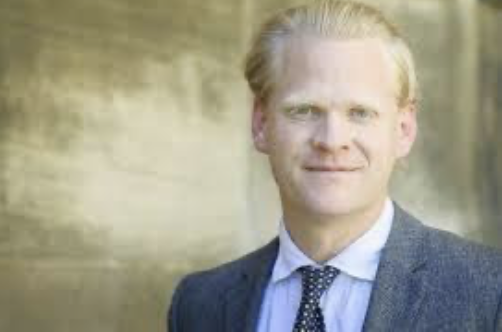
James Orr is an Associate Professor at Cambridge’s Faculty of Divinity and, since February 2026, Head of Policy at Reform UK. He has described Nigel Farage’s party as an “insurgent right-wing force” and Cambridge as a useful recruiting ground for a future Reform administration. He calls himself JD Vance’s British Sherpa.
An investigation by the Financial Times, published on 3 September 2026, sets out how Orr has combined his tenured Cambridge post with his Reform role. It also reports the outcome of a formal complaint made against him by one of his own PhD students. The particulars will interest anyone who has followed how Cambridge chooses which of its staff it disciplines, which it defends, and which it allows to make their own account of what has happened.
The complaint the University says was upheld
Earlier this year, Cambridge’s Office of Student Conduct, Complaints and Appeals (OSCCA) partially upheld a grievance of academic negligence and bullying made by a theology PhD student who had left Cambridge in January 2025 without completing their doctorate. The University was ordered to pay £5,000 to the student in lieu of tuition fees and for distress caused.
Among the complaints upheld are that Orr made belittling remarks to the student and had demanded an “excessive” and “unreasonable” amount of written work. The report also criticised “at worst inappropriate and at best thoughtless comments” made by Orr “in the equally inappropriate context of [Orr’s] own home”.
The Faculty of Divinity was directed to write a letter of apology. Professor Richard Rex, chair of the faculty’s board, duly did so. His letter acknowledged that the student’s experience had been “distressing” and “disruptive” and had not met the University’s expectations. He added that the faculty had taken.”appropriate action” against Orr “in line with the seriousness of the complaint findings”.
The account James Orr gives
James Orr has a rather different story.
He said he was unaware of the complaint finding or the compensation. He said he was “at a loss to know what any responsible supervisor could have done differently”. He said that “no disciplinary action of any kind” had been taken against him as a result of the investigation and its findings.
Two accounts, then, of the same events. In the first, Cambridge has taken appropriate action against a member of staff. In the second, the member of staff was neither informed of the findings nor subjected to any action at all.
The University was asked to reconcile the two. It replied that it takes complaints seriously and that in this case “recommendations were made and appropriate action was taken”. It declined to explain why Orr appeared to be unaware of the findings.
The earlier complaint
The OSCCA grievance was not the first. In 2022, another student, who has since left Cambridge, complained to the Faculty of Divinity about her experience with Orr. She alleged that, at a pub gathering of MPhil students in October 2021, she was the “focus of an unusual amount of attention” in conversations that made her feel “uncomfortable”, and that Orr had seemed to suggest that admission to Cambridge’s doctoral programme was within his personal gift.
Three months later, having subsequently attended events convened by Orr around their shared conservative Christian views, she was invited to his home and there informed that the faculty had decided she would not be awarded a PhD place.
In a letter to that student, a faculty member wrote that her complaint fell under the University’s procedures for inappropriate staff and student behaviour, and that the then head of faculty, Professor Jim Aitken, would speak to Orr about “the importance of not meeting students with whom he has a professional relationship in his home” and about “the importance of giving transparent and honest advice about graduate applications”.
Professor Aitken died in 2023. The student did not pursue a formal complaint through OSCCA.
Orr stated he was “never inforned” that a complaint had been made and that he did not receive any warnings about his conduct.
Two students, two complaints, two occasions on which the University appears not to have felt it necessary to inform the member of staff being complained about.
The residence and the supervisee
Orr and his wife Helen have made their £1.8 million riverside home outside Cambridge into what he has described on a podcast as “a compound” and what his wife, on her Substack, has described as “an alternative Cambridge College”, a monastic proto-college of which she is the “college mother”. Postgraduate students, chiefly from divinity, live in the outbuildings and adjacent flats owned by the family. They pay rent, do chores, and gather for Sunday lunch. The community has developed themed college scarf colours, a crest, a motto and printed rugby shirts.
Over the past academic year, three divinity scholars have been resident. One is a postgraduate student directly supervised by Orr.
The University’s staff and students policy “strongly discourages” close personal relationships between employees and students and requires that any relationship involving “any form of dependence, whether emotional, practical, financial or otherwise” must be declared. A former senior member of the university administration said that the sort of communal arrangement described gives rise to “significant safeguarding concerns” and that supervising a student living at one’s own home would be “pretty clearly, crossing a line into unacceptable behaviour”.
The University’s position is that Orr has followed the relevant procedures and is in compliance with policy. It declined to answer specific questions about the divinity scholar being directly supervised by Orr while resident at his house.
Orr said he had received “repeated assurances” from his employer that the arrangements were perfectly in order.
The Hungarian student
In 2024, Cambridge’s Faculty of Divinity admitted Dóra Szűcs to a PhD programme under Orr’s supervision. Szűcs is the former chief of staff to Balazs Orbán, director of Mathias Corvinus Collegium (MCC), Viktor Orbán’s flagship think tank in Hungary. She was also its former international director. She has no publicly recorded qualifications in divinity or the philosophy of religion.
Between 2022 and her application, Orr was speaking regularly at MCC events. During the same period, the Roger Scruton Legacy Foundation, of which Orr is a director, received £512,500 from MCC , almost all of its income. That foundation in turn funds the Cambridge Scrutonian Society, an invitation-only discussion group founded at Orr’s request. A grant application from the foundation to MCC states that the Scrutonian model is “intended to spread throughout the United Kingdom and Europe” and that the foundation would develop a “detailed plan to effectively influence British cultural institutions”.
Why was a candidate who appeared to be “politically connected” to Orr admitted despite an apparent lack of relevant qualifications? The University’s answer was that no one individual is ever responsible for admitting a student, that more than one academic is involved, and that offers must go to a degree committee for final approval.
The Vice-Chancellor’s own outreach
That Cambridge might have taken a particularly delicate view of a Reform-affiliated senior academic on its own faculty is perhaps easier to understand when set against something the Vice-Chancellor herself was reported to have said, in confidence, to her own governing body.
At a Council meeting in November 2025, Professor Deborah Prentice told colleagues that Cambridge, along with other Russell Group universities, had been engaged in “conversations with important members of Reform”. Her stated concern was the risk of a “Trump-style” overhaul of the higher education sector if Farage’s party came to power. She proposed a dedicated session at the governing body’s March away-day to assess “what a Reform government would entail for higher education”.
The remarks, as reported by The Times and Varsity in late November 2025, were not intended to become public. Cambridge declined to comment but “a source” said the outreach had been “informal”. The disclosure prompted an immediate row, coming as it did during a period in which senior Cambridge academics were publicly opposing Reform’s positions on immigration, on gender, and on academic freedom.
Set alongside that context, Orr’s Cambridge chair takes on an additional aspect. The University’s most senior officer had already indicated in private that Reform was an institutional risk to be managed and, where possible, engaged. And the most senior Reformer working inside the University was, by then, a tenured member of a Cambridge faculty.
The Byline Times investigation and what Cambridge did with it
In July 2026, the Byline Times published a six-month investigation by Nafeez Ahmed, Peter Jukes and Hardeep Matharu into what they described as Orr’s use of Cambridge University as a “recruitment ground” for a “hard-right, theocratic political project” bolstered by financial and organisational backing from Peter Thiel.
Among the specific claims made by the investigation, on the record and on the paper trail:
- That Orr’s 2019 Cambridge appointment to Associate Professor of Philosophy of Religion was “accompanied by a clandestine financial donation from the pro-Trump Palantir co-founder Peter Thiel”;
- That Thiel subsequently offered “life-changing sums of money to Cambridge University scholars in Orr’s network”;
- That Orr had housed students at his residence “in clear breach of Cambridge University’s safeguarding rules”;
- That academics and students had “consistently raised concerns about Orr’s conflicts of interest over funding, and dangers of breaching foreign influence legislation”.
None of this, we should note, is a new set of facts. Some of the same allegations, in similar terms, are found in the FT investigation of 3 September. What is instructive is what Cambridge, as an institution, did about the Byline Times reporting when it landed.
The University consistently ignored ‘Byline Times’ confidential queries about the concerns raised by James Orr’s activities. Instead, its press office has passed them on directly to Orr’s lawyers. The University has offered no explanation of, or comment on, the extensive findings of this investigation, including, extraordinarily, concerns of safeguarding in relation to its students.
Cambridge, on this account, met a serious safeguarding investigation into one of its own senior academics not by taking the matter internally, but by routing the queries through the professor’s private legal team. The University’s press office, which exists to answer questions of institutional accountability, appears to have functioned in this instance as a forwarding service for a member of staff’s own lawyers.
Our regular readers will note, without our having to point it out, the difference between this approach and the approach taken in the ‘Cambridge Whistleblowing’ case, where the same institution launched a two-year investigation against a whistleblowing professor on the basis of allegations the Tribunal later found had “scant particularisation, and no evidence to support them”.
What Cambridge does with the mechanisms it has
The pattern is now familiar enough that our regular readers will complete the sentences.
When Roshaan Khattak, a postgraduate researcher documenting enforced disappearances in Balochistan, reported explicit death threats referencing his personal details, Cambridge produced no relevant record of any response.
When Professor Wyn Evans raised concerns about the treatment of female staff at the Institute of Astronomy, he was subjected to a two-year investigation which the Employment Tribunal found to be “baseless”, “malicious and vexatious”, and “contrary to natural justice”. Eleven of fourteen alleged detriments were upheld against the University and named respondents, including Vice-Chancellor Deborah Prentice. The Tribunal described an “institutional mindset” that viewed Evans as “a source of difficulty and continuing reputational risk”. It found “ghostwriting” by HR for senior decision-makers, and “pre-determined outcomes” rubber-stamped by leadership.
Now consider the case before us. A PhD student successfully brings a complaint of academic negligence and bullying against a member of staff. The University is ordered to pay compensation. The Faculty board chair writes a letter of apology, referring to “appropriate action” taken against the professor in line with the “seriousness of the complaint findings”.
James Orr, meanwhile, states that he was never informed of the findings and that no disciplinary action of any kind was taken. Cambridge, asked to explain, does not.
Cambridge, asked separately by Byline Times about James Orr’s alleged safeguarding breaches, forwards the questions to his lawyers.
The pattern our readers will recognise
The Cambridge Whistleblowing Tribunal established, on the record and after weeks of evidence, that Cambridge is capable of running a two-year investigation against a member of staff on the basis of allegations the Tribunal found had “scant particularisation, and no evidence to support them”. The Khattak case suggests that Cambridge is capable of doing rather little at all when the person under threat is politically inconvenient.
The Orr case suggests something else. It suggests that when a complaint is upheld against a well-connected member of staff, the University is capable of producing an internal letter of apology stating that action has been taken, while the member of staff is, at the same time, apparently entirely unaware of the findings and confident, on the record, that no action was ever taken. It suggests, further, that when independent investigative journalists put safeguarding concerns to the University, its instinct is to hand the questions to the professor’s own solicitors.
Both the Faculty board chair’s statement and Orr’s own statement to the Financial Times were made to reputable publications in the same academic year, by employees or officers of the same institution. If both are honest and correct, then Cambridge has developed a system in which “appropriate action” can be taken against a professor without the professor ever needing to know that it has happened. That would be an interesting form of discipline.
Why this matters beyond Professor Orr
The Cambridge Whistleblowing judgment, the Khattak case, the Arday case, the Byline Times investigation, the Vice-Chancellor’s private outreach to Reform, and now the FT’s account of the OSCCA finding. Each of them stands on its own facts and concerns very different individuals with very different politics and very different work. What they have in common is not the substance of any particular complaint. It is the pattern of Cambridge’s response.
The pattern is that Cambridge chooses. It chooses which complaints to hear. It chooses which complainants to protect and which to investigate. It chooses which staff to defend from external scrutiny and which to expose to it. It chooses, in the case of politically valuable staff, to route serious safeguarding queries to their private lawyers. And when it is asked to explain those choices, it produces the vocabulary that our readers know by now: “procedures”, “policy”, “the recommendations were made”, “appropriate action was taken”, “informal outreach”.
There is a principle here that will interest even those readers who take a dim view of most of the professors and students involved. It is this: an institution which reserves to itself the right to decide, opaquely and without accountability, which of its members will be held to its own rules is not really an institution operating under rules at all. It is one operating on preference.
The Employment Tribunal in the Cambridge Whistleblowing case looked at that preference and called it “an institutional mindset”protective of institutional reputation. The Khattak case suggests the same mindset applied in reverse against a threatened researcher. The Orr case shows the mindset operating in one further direction: this time in favour of a member of staff whose politics have made him useful, whose connections have made him valuable, and whose alleged conduct has, at least publicly, cost him nothing at all.
Cambridge, we suspect, has not yet decided whether he was disciplined or not. It may be waiting to see how the story lands.
As Enough! as pointed out Orr is not a Professor; should be “The Curious Case of Dr James Orr”.
He’s listed as Associate Professor
https://www.divinity.cam.ac.uk/directory/dr-james-orr
Still, will change.
That’s (Senior) Lecturer in old money:
https://www.hr.admin.cam.ac.uk/changes-to-academic-titles-2021
“Assistant and Associate Professors will be referred to as Dr.”
Making that change is the right call, but you are still referring to him as a professor, or “the professor”, in three or four other places. You would do well to change those too. You will see that the Byline Times (see linked articles) has been careful not to call him a professor. If “associate professor” is too much of a mouthful and you don’t want to repeat his name you could call him “the academic”.Thanks for writing this article.
Also as an associate professor he does not have a chair
A $2.5m home but no chair?
Guess it was tabled
How many more scandals are necessary for Deborah Prentice and her Pro-Vice Chancellors to leave? Seriously, these people do not have any sense of dignity? Of course, the 21 Group compared 3 cases in this post but could have mentioned many more. Many of the practices are exactly the same in other cases.
I was asked earlier today if I was not satisfied with the current events that have been showing the real Cambridge to the public at large. My answer was that I will only be satisfied when the University—through the senior managers, not an anonymous spokesperson—apologizes to all the victims of this degrading culture of cover up and gaslighting.
More problems for Orr
https://www.bbc.com/news/articles/cr50ddzl97qo
It’s beautiful you brought this guy down procuring rigged surveys
“It worked – boom”
21 group has been warning the university for years what was coming.
The response of the university has consistently been to punish the messenger and ignore the message.
Cambridge chose its fate.
? ? 9 Aug · 18:57
If that is linked to the Cambridge Reform UK outreach effort reported around the same time, then Prentice is toast.
T TaPit 9 Aug · 19:04
She’s already toast. This will simply make her charcoal.
“Universities are places of learning, and arguably we can learn more from listening to views that challenge our thinking than we can from listening to views that confirm it. Learning ultimately comes not from shutting out what we oppose but from understanding a topic’s many sides and reaching our own conclusions. And that requires an environment in which all topics can be discussed and all points of view expressed. Freedom of speech is a fundamental element of a functioning democracy — as we will discuss, I think — and an enabling condition for university education. Free speech environments are not easy to create, and not always easy to inhabit, but they are the spaces in which learning can flourish.” — Deborah Prentice
It’s tempting to comment on the Channel 4 investigation but as it’s now a police matter, I won’t.
Plainly, Cambridge has a systemic, widespread problem with complaints handling and reputation management. It can no longer be trusted to decide its own cases, and the University should stop trying to pretend it can.
What’s the alternative? Serious complaints are no longer handled in-house. No more HR, OSCCA or Research Office involvement. Here I’m thinking of cases involving senior staff, consequences for institutional reputation, safeguarding or research misconduct. Instead this is contracted out to genuinely independent investigators. People with no career, pension or reputation invested in the answer. This will only be an expensive stopgap.
Cambridge could then turn its pathetic defensiveness into leadership by advocating for a sector-wide, national independent body, appropriately resourced, showing how it could work in practice for its own complaints.
“No more HR, OSCCA or Research Office involvement”
That is what many of us have been advocating for a long time. Cambridge University cannot be trusted when it comes to addressing its internal complaints, regardless of the topic and Department, because it will invariably cover up misconduct if it involves people that the University wants to protect. What the public has seen so far is a small sample of the problems the University got itself into because of this cover-up culture.
The Head of Research Office that handled our investigations have now left to be a wine dealer in 2024. The new Head has been in place for almost 2 years – has there been any changes to their protocols? Have there been any new investigation under his new head? Would the old one be held accountable?
Looks like the Netflix version of the Cambridge drama just acquired the plot for a second series
The CRUK Oncology/School of Clinical Medicine fiasco is another absolute classic.
It illustrates everything that Cambridge University and its HR/Research Office does worse. “The pattern is that Cambridge chooses…It chooses which complainants to protect and which to investigate”.
When malicious and entirely false allegations were made against a senior researcher they were not independently investigated. The University pre-decided who they were going to support and then twisted and bent the system to provide that support, in a series of predetermined steps.
All the hallmarks of the Evans case are seen in Oncology. Pre-determined outcomes, ghost written letters, Group mindset, perfunctory “reviews” with rubberstamped decisions (made behind the scenes by HR), punishment of young people, career wreckage of bystander scientists and the attritional use of years of time-wasting delays to wear down and destroy the people they wished to evict.
“Who are senior Reform officials who have quit over undercover sting?”
https://www.msn.com/en-gb/news/other/who-are-senior-reform-officials-who-have-quit-over-undercover-sting/ar-AA2bxCne
James Orr in the spotlight again with another media profile. Wonder how the communications team are handling this – isn’t it time for a statement from the VC?
The University is rather consistent in their approach to misconduct. Therefore, my guess is that if they decide to say anything about this case, they will start by saying it is a “vile campaign” against Orr and then will switch to the case is “an aberration” if/when they realize the former does not fly.
At this point the only message that would land would be confessional: reports were made to HR and not handled appropriately, it is clear from what I have learned in recent months that a profound cultural change is required at the university, none of these things should have happened and we take responsibility for that, we are setting out an immediate plan for greater procedural transparency, grievance timelines, external auditing and so on, under entirely new central function management, and a formal process to resolve the damage that has been caused to students and staff who deserved better.
This only works as the first speech from the next Vice-Chancellor.
Or without delay from the Chancellor direct. He would be signalling clearly what most staff and faculty have long since concluded. He has the authority, indeed, the statutory duty, to do so, without the Vice-Chancellor’s permission; as the official voice of the university community.
The upcoming annual Vice-Chancellor’s Address is due for the first Tuesday of October. That is just 32 days from now. Do you think she will go ahead with it?
She would attract even more negative attention if she didn’t turn up. Therefore, she will.
What matters more is events either side. How many signatures the HR grace gets. How the review(s) proposed by Council land. Whether any more scandals break…
Some news about Deborah Prentice, and from Princeton:
https://tigerroars.substack.com/p/princetons-cambridge-deja-vu
@PrincetonTiger, I guess this is not novelty for you?
For those who have not read the link, this pull-quote merits attention:
“These findings against Prentice — complaints ignored, dismissed without examination — bear striking resemblance to the treatment of the formal complaints I have lodged against Princeton’s President Christopher Eisgruber and its Board of Trustees, which have yet to draw even simple acknowledgment. Perhaps not coincidentally, Prentice served as Princeton’s Provost from 2017 to 2023, a period spanning every event underlying the allegations against Eisgruber recounted below.”
I did not know of Mr Hewitt’s Petition specifically, nor of his continuing (and admirable and necessary, in my view, effort to arouse Princeton trustees to perform their fiduciary duties) but certainly knew of the faculty complaint which was dismissed by Vice Provost Minter (then acting under Prentice).
But I’m not remotely surprised; indeed, Mr Hewitt supplies, in lucid particularity and in useful outline, confirmation of what I detect(ex) as the underlying strategies which motivate the patterns of Princeton’s capricious and arbitrary abuse of its structured discretions to exercise internal investigatory powers and to apply or fail to apply institutional sanctions – including, relevantly, when Prentice was Dean of Faculty and then Provos.
“This matter is closed”: this particular tactic is designed to set up the complainant as a vexatious busy-body, *even as the complainant shows there were materially serious deficits in the internal investigation, including a fundamental failure to address the right question and to consider mandatory relevant evidence*. The materiality of the deficits is so significant that it colours the very motivation for deciding to investigate in the first place, as well as the University’s compliance with procedures in the course of reaching its determination.
“We shall conduct an investigation – but only for the purpose of closing it, with (of course) our virtue unblemished. You’re troubled, even obsessed, and thus unvirtuous, for still insisting that no proper investigation ever properly occured.”
THIS
>> “This matter is closed”: this particular tactic is designed to set up the complainant as a vexatious busy-body, *even as the complainant shows there were materially serious deficits in the internal investigation, including a fundamental failure to address the right question and to consider mandatory relevant evidence*.
Basically, whenever you read the words “This matter is closed”, you know immediately that you have a court case ( and that they know it too )
@TheResearcher: thank you for alerting me specifically to Mr Hewitt’s substack. I will read his linked documents carefully.
Council has apparently decided the investigation and will announce terms of reference and composition shortly.
A great shame it wasn’t the Board of Scrutiny who got to compose it. This may not be marking your own homework but it’s picking the examiners. Still, let’s hope it isn’t all rigged.
It has to investigate senior figures. If the terms are limited to the Orr case the university sends a rather odd message to victims of misconduct: “we won’t really look at your grievance until it has become a national press scandal”
An associate professor in theology of Cambridge University by Day, and Head of Reform policy by night… Like some far-right academic Batman.
The FT has really done some digging, publishing one day before the investigation documentary Channel 4 released.
The faculty of Divinity and VC (or HR ghostwriter she uses) must address James Orr and these issues and his broader influence within the university thoroughly. The university leadership team is not just asleep at the wheel but actively sabotaging itself and taking the university down along with it.
Batman? Jekyll and Hyde more like it!!
If we think about it, it may be Arday and Orr to be the figures associated with this period of Cambridige history (sadly). And Cofnas – with Ghent University history. Strange to think
We have a video from Prentice:
https://www.youtube.com/watch?v=jpvKwiBBgB4
Will it include systematic bullying and psychological scarring of junior staff by management or do those cases have to become public scandals first too?
We are in full-scale Post Office scandal territory. And just like the Post Office, where Vennells would not resign because she was too complicit in all that went before, Prentice is also trying to control the narrative. By the time it hits parliament, expect her to claim she was “too trusting” of her subordinates and had not been properly informed about the problems. Expect witnesses to state that she knew all along. And expect this to drag out for 2-3 years while insiders try to cover their tracks and frustrate a full and impartial investigation.
Afzal is a hard-hitter. He isn’t someone known for making organisation’s lives easy. But the first part of the investigation has a really narrow remit – almost nothing at all. It is the second part that counts.
Agreed, on both counts. Afzal is credible and the timescale of 3 months is fast for the first part. Who knows when the second part will start.
https://www.cam.ac.uk/news/university-of-cambridge-launches-independent-review-following-the-death-of-professor-jason-arday says that the scope of the first part will not overlap with whatever the coroner decides to examine at the inquest. The first part could be completely hollowed out by the scope of the inquest.
And we only get a summary, not the actual full report?!
The comparison with the Post Office scandal seems overstated at first glance, but the big thing they have in common is that only external compulsion will bring the full story to light.
“We have investigated ourselves and found that we are innocent. We now consider this matter closed. Anything further from you will be considered harassment.”
Sadly my best intuition as to the sequence of events here, is that government has foisted Afzal upon the university as its own choice of investigator (he seems to me far too credible to have been the top choice of the Pro VCs alone), but then, the university went and “rigged” the terms of reference to neuter him from asking any serious questions. Alas the 3 month initial investigation will not it appears examine any of the substantive issues around hiring, nor bullying, nor use of expensive lawyers (Carter-Ruck etc, among many other concerns), but also, it will not look at failure of duty of care for all the many scholars who were subject to similar abuse internally. One can only infer that they are covering up for their mistakes, only now, the whole world can see what they are doing.
“expect this to drag out for 2-3 years while insiders try to cover their tracks”
True, and I would prefer a swift and fair process.
But for all the victims who were dragged through multiple years of complaints, fake grievance procedures, and eventual tribunal cases, there is something fitting about the leadership now staring down the same barrel: a coming 2-3 years of investigations, public scrutiny, and legal uncertainty.
So, did I understand it correctly that she did not mention the letter driven by students asking her resignation that has now over 8000 signatures, or the fact than an employment tribunal recently concluded that she and the University she manages engaged in whistleblowing retaliation? If someone got that part, please let us know as I could not really find it.
Not just a video from the VC, but we (well, staff) have an email too — count the trackers!
Is there a tracking pixel in that one too? These people are nuts.
Well, it finishes with a traditional tracker as a one-pixel gif, see
img src=https://internal.communications.cam.ac.uk/o/[long string]/o.gif.
But the link to the Staff Counselling Centre is not a direct link to staff.counselling.cam.ac.uk, but rather is a link to internal.communications.cam.ac.uk/c/[long string], which presumably enables tracking of people who click on that link.
Meanwhile, anyone who wishes to follow up “members of the Senior Black Leaders Group – which advocates equity for Black academic and professional services staff within the University – can also be
contacted confidentially by Black staff” will note that the list of five “Senior Black Leaders” can be found by following a link which first goes to internal.communications.cam.ac.uk with a long, and presumably trackable, url, and then goes to the staff sharepoint site which requires one to log in. (Three of the five names are the expected HoHs. None gives contact details.)
The links to the data protection statement and email privacy policy also appear to contain trackers. Even if it is only an appearance, it is not an appearance of being open, transparent and honest.
Sorry @watched, I had not seen your response here. I replied above and I am glad that others noticed that they continue with the tracking madness. These people never learn!
This video?
Yes! Now, one important question is who will be able to contribute to that investigation with information, namely regarding the response to reports of research misconduct, and how narrow they will make the investigation. If anyone can contact the investigators with information, it will be very interesting! We should receive details soon.
Compare that image with this, from 12 August, 2 days before Arday passed away, that comes with the “Statement from the Vice-Chancellor setting out the University’s approach to an investigation into the circumstances surrounding the appointment of Jason Arday.”
How did you post an image??
Drag and drop!
…
Have they finally done the right thing and appointed Wyn our fearless new VC or did I miss something
Not yet. Prentice and the rest of her gang still think that they can get away with it and stay. They are living the illusion where there are no more scandals to come. How wrong they are. The funny thing is that they know these scandals exist, that they contributed to them, and there is no reason why the people who know about them will not talk.
We cannot force them to leave, but if do not on their own, they will be working in a place where no one trusts and respects them. I would not be comfortable in that situation.
“The Vice Chancellor’s Position is Safe … For Now”
It should be drag and drop. This functionality was added over a week ago I believe.
Please note that the same guidelines apply as with written remarks.
“Cambridge University launches probe into James Orr after Reform donations sting”
https://www.independent.co.uk/news/uk/politics/james-orr-reform-farage-cambridge-university-probe-b3044931.html
“Cambridge has developed a system in which “appropriate action” can be taken against a professor without the professor ever needing to know that it has happened. That would be an interesting form of discipline.”
Not just interesting, but remarkably efficient, and it can be used against a professor, as well as in his favour. A HoD can investigate a professor for alleged misconduct, find him guilty, and penalise his whole Research Group, without ever telling the professor why he and his colleagues are receiving special treatment. It saves needing to take time gathering “evidence,” and there is no danger of a tedious appeal if the accused is never made aware of the investigation, let alone the verdict and punishment. Junior staff in the professor’s group may find contracts are not renewed, despite funding being available, but this can be put down to administrative inefficiencies rather than deliberate punishment, as can the failure to meet grant application deadlines, etc. The purpose of punishment is to give an accuser a feeling of satisfaction, and the accused does not need to be informed for this to be achieved.
If anything does come to light, review policy and procedure, for senior individuals are blameless, and it must be policy and procedure which constrain them to act in an illogical, immoral and ineffective manner.
There is an an obvious gap between the two investigations: the role of senior management in appointing a token then parading him before the media and attracting the outsize attention that led to the media circus.
I wonder how senior management actions accidentally on purpose got left out of Afzal’s brief which is laughably narrow.
UCam is doomed! Prentice is in full control because the oligarchy realized: to survive we must protect the American Queen. Lord Irrelevant is happy to remain Chancellor. Profs Smallman, Crookery, Teflon and Viciouswoman will also survive. Rumour has it that Viciouswoman will be the new Cancer Centre Director. She is DEI hence Prentice loves her!
What is meant by ‘she is DEI?’
Uh oh, I guess we are supposed to just take DEI (do you mean EDI?) as the dogwhistle that it is.
There’s something to it I’m afraid. You need to know the details of the big Clinical School scandal. Should be public soon.
DEI destroys.. meritocracy. Hence American Queen supports Prof Viciouswoman.
So Orr has fallen below the ethical bar to serve as advisor to Reform UK… but not the ethical bar to continue in his role at Cambridge? No suspension, jo resignation?
When I saw the Verbatim video and the bit where Orr talks about how his real job as a “policy advisor” is really to do fundraising (from any shifty source they can), it did make me think of how commonplace that is in Cambridge. Departments and colleges behave exactly similar, it is very normalised within universities.
That’s why Cambridge is the UK’s top employer.
Farage sniffed a scandal that could exposed him and immediately disposed of his two most loyal advisors. No forethought, care, nothing. Probably not even a goodbye card. Bad employer.
Cambridge found Orr to have engaged in misconduct towards students, got rid of the students, and stood by Orr to the end. That’s what it takes to be a top employer – it doesn’t matter what you’ve done, Cambridge stands behind its senior profs, even launching counterattacks against your victims. And if it all goes south, probably even offers you prison visits.
Good point.
But remember how the story of Arday went from a “vile smear campaign to undermine his credibility” to “this particular case is an aberration.” Dishonest people can change their minds quickly as a function of multiple factors, namely media pressure.
It’s all about power. If the person who is made most inconvenient by the accusation is the professor responsible, the university swings behind them to cover up their acts. It is only because the Arday scandal became inconvenient for someone more senior (the VC) that he was finally disposed of.
Lesson: if you want justice, you must escalate it to an institutional scandal. Otherwise —- expect nothing.
We are working on it, do not worry 😉
We are just in early September folks!
🕛
@Confused, when referring to the new email from Prentice you asked below, “Is there a tracking pixel in that one too? These people are nuts.”
This is what AI says when you feed AI the email and ask that question, “in short: yes — at least one explicit 1×1 open-tracking pixel, plus tracked links.” So, these people are nuts indeed.
“Ah yes, James Orr. A lot of us had been hazy about what it is exactly that associate professors in a divinity department do all day. It doesn’t seem to involve a lot of work: Orr is often to be seen at Reform events in London, which take up the whole morning even for those of us with offices down the road. Now we know he was also sipping cocktails while discussing ways in which wealthy foreigners might be able to get round the laws that ban them donating to the party.”
https://thecritic.co.uk/money-matters/
All statements quoted as per FT article
I always had an edge. But it was mispelt- hedges! My edge was to run grossly incompetent ‘investigations’ to cover the oligarchy! In the end they fired me under the cover of ‘early retirement’. NDA prevents me from telling you how much I was paid in severance. Prof Teflon really dupped me in doing his dirty work. He is a liar and manipulator.
Isn’t Professor Richard Gilbertson the Master of Gonville & Caius College and the Li Ka Shing Chair of Oncology at the University of Cambridge?
https://crukcambridgecentre.org.uk/users/richardgilbertson69100253
@Wine Dealer, do you know Rhys Morgan, your substitute in the Research Integrity Office? Next time you see him, mention my name and check his expression. I am looking forward to the external investigation on the report of research misconduct related to Jason Arday and other recent cases.
Surely the NDAs are unenforceable now? Everyone whose careers were wrecked by professor Teflon in Oncology has been threatened with dire consequences if they talk about what happened to them. But what can the university actually do to enforce these threats? The weaponisation of confidentiality is just another form of abuse. Why shouldn’t they be able to talk about the kangaroo courts which ended their careers on Cambridge?
The Higher Ed / Freedom of Speech Act rendered them unenforceable. At least, for sexual harassment and bullying. Consult a lawyer. You can probably talk about the grievances you had.
Fancy an article on Orr in The New York Times?
“In a statement after the exposé, Cambridge said it was “looking into these matters.”” Who exactly is looking into it? I hope it is not Kamal Munir.
https://www.nytimes.com/2026/09/05/world/europe/reform-uk-james-orr-expose.html
One of my favourite sections is, “That Mr. Orr’s reported comments in the recording appear to depart from ethical standards may be the result of loose talk or naiveté, Mr. Furedi argued, adding that to use them “as a basis to make hard and fast judgments about the moral status of the individual is wrong.””
Totally. People should never be judged on their criminal actions and recorded statements of intent — right? The wealthy have the right to be presumed innocent even after being proven guilty.
not just the wealthy. The astronomy Head of Department is in the same situation, remaining, as noted in the employment tribunal judgement, unpunished. Yet.
Definitely nothing suspicious going on here
why so serious?
🤡
What is there for Cambridge to “look in to?” All the evidence is there on camera! On the Verbatim video there is even a Director of the Electoral Commission reviewing it, judging it illegal, and calling for criminal charges.
I say over and over that for a certain subset of british wealthy and connected people they see Oxford and Cambridge as their safe place and their fief. The move to open it further to people of merit from outside their peer group undermines the rather cushy self satisfied existence they have maintained for at least the last century and half
Yes. Exactly so. And when it’s undermined, start shouting ‘DEI’ like not a few commenters here.
If there are any reserved posts, it is for the likes of Orr.
It’s difficult to think of a more elite ideology than EDI. It is the managerial framework of the modern liberal class. EDI is to Islington and Hampstead, that which shareholder value is to Kensington and Chelsea. It hands vast power to managers and HR.
Of course, its proponents are not all managerial or HR types. Elite professionals also instrumentalise EDI to compete against their rivals. Oxbridge used to be stuffed with upper-class British public school types. As the power of national elites have declined, elite universities have gone ‘global’ (see UCL). Oxbridge is now stuffed with the ‘international school’ elite.
What depresses me is how, no matter what system you set up, it will eventually be gamed. So if you say you want to hire based on “lived experience” then parents pay to put their kids on NGO missions to Africa, maybe even register them a charity. If you say race people check the “mixed” box, discover some 12-generation distant indigenous ancestor, or re-identify some other way. Now we have neurodiversity and suddenly a quarter of students have some condition or other, which seems unfair to the maybe 5% or so who genuinely need health services assistance.
The complexity of any system is inverse to its effectiveness and DEI these days seems mainly a method of weeding out honest people with integrity – who refuse to check the boxes and naively put their best foot forward – while rewarding climbers who know how to game the system, and are comfortable being dishonest to get an advantage other other people.
“What depresses me is how, no matter what system you set up, it will eventually be gamed.”
Some people play the system and the system doesn’t immediately play back so they keep playing the system until eventually they hit the response time for the system at which point the system starts to play back and it is only then they realise that playing the system when the system is not ready to play back is a very different experience to playing the system when the system is ready to play back and that playing the system might not have been such a great idea after all.
Sometimes the system plays with a person who doesn’t play the system and the person doesn’t immediately play back so the system keeps playing with the person until eventually the person starts to play back and it’s only then the system realises that it’s more difficult to play with a person who doesn’t play the system than it is to play with a person who plays the system.
This is how systems learn about people and how people learn about systems.
Can very easily think of a more elite ideology which is to hire exclusively people who “look the part” i.e. posh voice, the “right” schools, blond haired and blue eyed. But yeah, EDI is replacing one elite with another – the landed aristocracy with the international plutocrats.
These days roughly a third of the pupils at the ‘top’ UK public schools are international. The new elite is very cosmopolitan: all that matters is money. At university it is important the customer is treated with respect. That is part of the motivation for EDI training.
I think this may highly, highly depend on the department and subject. I looked at the Divinity demographics, and it is very different from the Biomed or West Cambridge, the latter now is mostly international rather than national. And in the latter group, people are even leaving from the lucky-to-have permanent positions, even full professorships, – previously to the US, now to Asia. Money being the factor
Money is a factor but so is professionalism. In the US or Asia (especially Asia) you are allowed to just get on and do the work. No bureaucracy, good HR and research services support, firm targets, good management. No one who is talented can subsist forever in such an arbitrary and mercurial system as ours.
Varsity, better late than never!
“The tribunal ruled that these grievances were made “in retaliation” for Evans’ original complaint, and were “therefore likely malicious and vexatious”.”
https://www.varsity.co.uk/news/31993
I feel like we are owed a list of all the people on Twitter and Bluesky who either:
1 – spent three weeks slamming Jason Arday, but are now posting contorted defences of James Orr; or
2 – spent three weeks offering contorted defences of Jason Arday, but are now slamming James Orr.
The ultimate litmus test of whether someone’s moral faculties are working and/or their logical capacities failing. All misconduct is wrong. Accountability matters more than partisanship.
If we are talking hypocrisy how about all of the cranially-challenged nitwits who call for the reintroduction of phrenology as a serious science, yet still slam Priya on X?
💯
We are all on the same side
Meanwhile, they continue to bother people with the cyber security awareness training course after using tracking pixels and other tracking links in correspondence with members… what a laughing stock:
“Please complete the University’s required cyber security awareness training course. As set out in the Acceptable Use Policy, everyone who uses the University’s information services is now required to complete this cyber security training course every year. This includes, but is not limited to:
Everyone issued with a CRSid
University and College staff and students
Visitors, temporary staff, and contractors who access University information services to fulfil their duties
The course is accessed on our MyCompliance e-learning portal. It only takes 20-30 minutes to complete. You must complete all parts of the course. Completion of the training will be monitored by UIS and/or appropriate University and College staff.
Queries and support
If you have any questions or feedback, please email the UIS Service Desk”
Well someone has definitely been giving whistleblowers a crash course in cybersecurity…
https://21percent.org/?p=4304
Wonder if the university is experiencing the same or if it was an inside job from some source or other?
They do not even know if their own emails are real:
Please do not respond to this email, the IT Announcements mailbox is not monitored for incoming emails
Dear all,
We are aware that many staff across the University have this morning received a suspicious email claiming to be a genuine communication and asking them to complete annual cyber security training.
This appears to be a phishing email — please do not click any links within it.
We are currently liaising with UIS colleagues to confirm its authenticity, and will provide a further update as soon as possible.
If you have any questions or concerns regarding this announcement, please contact the CSCS Service Desk.
Regards,
Service Desk
Clinical School Computing Service
University of Cambridge School of Clinical Medicine, Cambridge Biomedical Campus
CSCS Service Desk: 01223 336261
CSCS Self-Service Portal: https://itsupportcscs.haloitsm.com/portal/home
CSCS Email: [email protected]
Please note the CSCS Service Desk availability is 09:00 – 17:00, Monday to Friday.
You may receive an email outside of the above hours; please do not feel obliged to respond outside of yours
The plot thickens. Presumably both from the same source? Are there donors afraid of being exposed?
What is odd about this is that you cannot send an all-staff email unless you have the list from UIS? So that information had to come from inside.
In the IoA case, the head of department was given access to device logs from UIS. But who would be allowed access to the all staff mailing list?
It’s not clear that McMahon was given “inappropriate access” by UIS. According to our info this was “erroneously” put in place by one of his team, and in use for several years. It is also not clear what levels of access he was given.
Sounds inappropriate to me
They don’t know their arse from their elbow:
Dear all,
Further to our earlier message, we can confirm that this morning’s cyber security training email was a legitimate communication from the university. We apologise for any concern our initial message may have caused, it was not a phishing email — we would always rather err on the side of caution.
If you have completed the training this morning after receiving the email, you are now compliant and will not need to complete the training for another year.
Regards,
CSCS Service Desk
Any wonder CSCS were hacked?
Dear all,
A further update. This morning you received an email from [email protected] asking you to complete a cyber security training course. To be clear, this was not a malicious message but was sent in error.
It was intended for students and includes a link to the students’ cyber security training course. You do not need to take action following this email, but you will have done no harm if you have followed the link and completed the student course. The link to the staff training will be sent when it is due for completion. Students should complete the course as invited to do so.
If you are staff and have completed the students cyber security training, this does not count as your submission for the year. The staff course is the mandatory training for all staff members whereas the student course has less modules. If you wish to discuss completion of the student training instead of the staff training, in the first instance please contact the UIS Service Desk.
If members of staff wish to check when their annual cyber security training is due, they can log into MetaCompliance and check their course status. Instructions on doing this are on the UIS webpage.
Thank you to everyone who has questioned this email. It is always better to check the veracity of emails, and we apologise for any inconvenience and confusion caused by this error.
If you have any questions or concerns regarding this announcement, please contact the CSCS Service Desk.
Regards,
Service Desk
Clinical School Computing Service
University of Cambridge School of Clinical Medicine, Cambridge Biomedical Campus
CSCS Service Desk: 01223 336261
CSCS Self-Service Portal: https://itsupportcscs.haloitsm.com/portal/home
CSCS Email: [email protected]
Please note the CSCS Service Desk availability is 09:00 – 17:00, Monday to Friday.
Did UIS start blocking this site the morning the first FT article on Orr appeared? I still get through on my phone, but from laptop on the university network it seems like it was blocked since then.
Meanwhile, in the bunker….
“SS Baldrick: Excellent news, mein Richkanzler. We have taken down student and staff access to the 21percent website. You are now completely safe from online ridicule.
Richkanzler Prentice (for it is she): Excellent, excellent. Anything else?
SS Baldrick: Yes, we are about to put your video on X…
We have left the comments enabled so that the masses may express their adulation.”
What is also shocking, is that the compound doesn’t have planning permission. A planning inspector granted limited rental for an AirBnB, not for hand handful of guests. Not for students to be resident, and certainly not in the numbers stated. Neither has the swimming pool had any kind of planning. More recently, gates have appeared on the access road, which the Orr’s don’t own. This was made clear by the planning inspector. How all the expensive building works was funded is a mystery.
Ha funny how every UK news story sooner or later transitions to a story about property and planning permission
“funny how every UK news story sooner or later transitions to a story about property and planning permission”
Daily Mail suddenly wakes up to the story 🙄
Do you have any evidence about the planning permission status and the renting out to students?
He said recently on the Australian Christian podcast that “we have about 10 students living with us”. They used to run these as Airbnbs and the issue is that there were multiple planning permission disputes, some denied, and some with clear restrictions. If they were switched to rented student residencies that raises legal issues beyond simple safeguarding, but there is also a question for Cambridge as to whether academics can run what they describe in their own words as “unofficial” colleges.
It would be a very British conclusion to this whole saga if the end of “the residence” turned out not to be due to backdoor dealings in some London club to subvert electoral law — but rather, due to the rigidity of humble English planning procedure
“The Arday case should prompt a rethink of university autonomy”
https://www.timeshighereducation.com/opinion/arday-case-should-prompt-rethink-university-autonomy
This is tired bunkum, but okay, sure. Funny we don’t have articles on Orr saying he is the consequence of over-representation of posh white men in academia.
21 percent has an inclusivity and equality problem, that much is clear from regular posters.
There should be such articles written; but do you want to write one?
this is in reference to, “we don’t have articles on Orr saying he is the consequence of over-representation of posh white men in academia”
Haha the comments on this thread don’t exactly seem to me to be especially protective of “posh white men in academia”
The university’s differential treatment of Arday and Orr, on the other hand…
“Only about 8 per cent of senior university executives are ethnic minorities, as against 19 per cent of academics and 33 per cent of undergraduates”
This is the real story. A very homogeneous “lanyard class” of administrative paper-pushers whose “diversity” presentation involved pushing tokenistic academic hires for PR purposes. Do they apply those rules to themselves? Of course not
Okay, on closer look, it’s not as terrible as the first paragraph makes it seem but I am really tired of the dunking on basic principles of equality here, and the very obvious gap between the hysteria around Arday and relative mutedness on Orr.
“the very obvious gap between the hysteria around Arday and relative mutedness on Orr”
No-one here disagrees
It seems to be the case there that are areas of academic research in universities that have produced research in universities that when applied internally in university environments has the potential to generate significant problems for universities.
A “solution” being proposed in this article is for “some” outside oversight and intervention of universities in situations where academic research being produced by academic researchers in universities is being applied internally in university environments.
Is this not essentially asking people external to academia to scrutinise the academic work of academics as it is being applied internally in academic environments?
Is that not exactly what is happening now? Uncontrolled and uncoordinated scrutiny by those external to academia of the academic work produced by academic researchers as it is being applied internally in academic environments? Uncontrolled and uncoordinated scrutiny of academic work by those external to academia at variable levels of depth and accuracy? External scrutiny and intervention of variable accuracy and depth the intensity of which in relation to a particular individual is not controlled.
Autonomy is the maintenance of controlled and coordinated internal oversight and intervention. The first breach of autonomy is a loss of controlled and coordinated internal oversight and intervention at which point there is uncontrolled and uncoordinated internal oversight and intervention. If controlled and coordinated internal oversight and intervention – autonomy – is not restored then there is a reliance on controlled and coordinated external oversight and intervention. If that is breached there is then uncontrolled and uncoordinated external oversight and intervention.
I would have said universities are well into the external oversight and intervention regime at this stage.
If maintaining something – autonomy – is not important then not maintaining that same something – autonomy – should have no real consequences. This is not true of autonomy at any level – at the level of the person or at the level of a community of people.
The base unit for an academic community maintaining its autonomy as an academic community is each academic scholar in that academic community maintaining autonomy as an academic scholar.
To maintain high levels of autonomy it is necessary to sustain high levels of self regulation. Maintaining high levels of autonomy in an academic community is underpinned by sustaining high levels of self regulation with respect to an agreed set of academic standards that are communicated throughout academic community in an open and transparent way.
A person continuously self regulating with respect to a set of academic standards the person can comfortably sustain with low effort has a much simpler self regulation task that a person continuously self regulating with respect to a set of academic standards that a person can only sustain in a state of significant discomfort with significant effort.
Maintaining high levels of autonomy in a community whilst also supporting every other person in the same community to maintain high levels of autonomy means learning how to resisting undue pressure by others without resorting to undue pressure of others. Maintaining high levels of autonomy in a community whilst also supporting every other person in the same community to maintain high levels of autonomy means learning how to resist being oppressed by others without resorting to oppression of others. Equality can also mean the balancing of two sides of an equation. Continuously maintaining a state of equality can also mean continuously balancing two sides of an equation.
The complexity of the autonomy challenge in academia varies depending on the person, the academic community and the interaction of the person with the academic community.
Varsity has something to say on “Cambridge professor under University investigation after resigning as Reform UK policy chief”
https://www.varsity.co.uk/news/32028
“Cambridge said it had “no reason to believe that Dr Orr’s external roles have adversely affected his performance of his contractual duties””
Classic Cambridge. As the post here identifies, there are clear issues at stake regarding bullying / misconduct reports from students. Why is this being suppressed?
Check the thread on the planning permission thing below. If you check the Cambridge City Council Public Access portal and Planning Inspectorate appeals for The Moorings, Thrifts Walk, CB4 1NR (all public info) you can find the regulatory decisions and appeals, including the restrictions on how the residence was supposed to be used.
Nice house. How do i buy that on an associate professor salary? Does my wife need to be a vicar?
Come now. A vicar would never do anything wrong, surely?
https://en.wikipedia.org/wiki/Paula_Vennells
You should check out the covered swimming pool
“Nice house. How do i buy that on an associate professor salary? Does my wife need to be a vicar?”
Nope. Your father needs to be a corporate lawyer. Good connections preferable. Then you can land right in to a plum Cambridge job, monetise the Cambridge housing market as your main source of income (un-survivable to live in Cambridge on the official salary), pontificate on the occasional podcast, never publish another article, and then take up a second job helping Farage do backroom deals with American donors.
In short, a typical Cambridge appointment.
Orr represents everything that has gone wrong with academic standards at Cambridge. If we want to talk about failure of meritocracy, his case is far more representative than that of Jason Arday.
Also classic Cambridge nepotistic insider hire (MA and PhD from Cambridge). The path of least resistance: no challenge. No struggle to overcome. No innovation over what came before. Just a landlord making rentier capital. Getting from 2 to 1.
There is something very odd when this site is ahead of Varsity on a story about mistreatment of students, and then, students are apparently blocked from being able to read about it. I would escalate that.
“I would escalate that”
To whom? The Vice-Chancellor? She is busy!
It is both a freedom of speech and a safeguarding issue for the university. If active measures are taken to prevent student complaints being heard that requires a full investigation.
@N/A, there is no “full investigations” in UCam, regardless of the topic. What you just described as inappropriate is common practice in the University and the managers could not care less. It does not matter the evidence you have of misconduct because they will ignore it if affects people they want to protect.
But the best way to learn this lesson is to go ahead and raise the complaint. Expect a lot of gaslighting and denial from them. That is the only thing they know how to do.
Police open criminal investigation on Orr. Cambridge position looking hard to maintain.
https://www.msn.com/en-us/news/other/uk-police-open-criminal-investigation-into-whether-reform-uk-broke-foreign-funding-rules/ar-AA2bT2lO
Meanwhile in other news, SBC steps in to advise Orr on how to counter media onslaught:
Somehow, this captures the double standards perfectly.
If I were you I would focus on the investigatory process. The key thing is to ensure that Afzal has access to all documents from this group, and is not allowed to ignore them, or otherwise aware that he will later be asked why they were ignored if so.
The key question is: when we contact Afzal with information, shall we cc the relevant ministers or not.
Sharing with the shadow minister is more likely to prove effective.
Met Police open criminal investigations into Reform and Orr:
https://www.bbc.com/news/articles/cp3k72k1y3vo