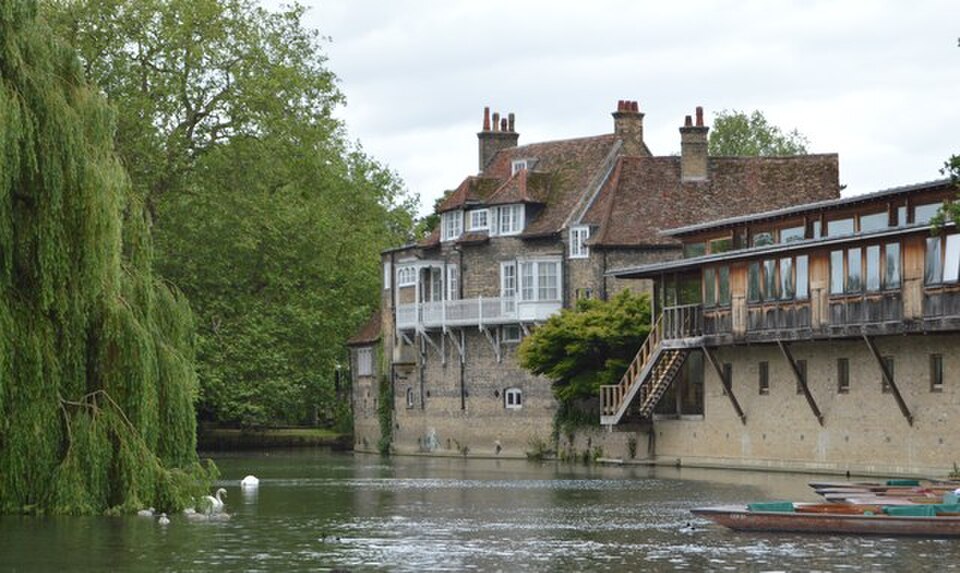
Professor Nigel Peake is scheduled to assume the Mastership of Darwin College on 1 October 2026.
His election took place before the “Cambridge Whistleblowing” Employment Tribunal, whose hearing was in June 2026, with further private hearings in July and August. The Tribunal’s subsequent judgment raises deeply troubling questions about Professor Peake’s conduct, decision-making, candour and institutional leadership. Those findings demand serious scrutiny of his proposed role as Master of a Cambridge College.
The 21 Group does not believe these matters should simply be brushed aside. Before making our concerns public, we sought to raise them directly with the Vice-Masters of Darwin College and give the College an opportunity to respond. We believe that was the responsible course of action.
Accountability matters.
One of the fundamental problems facing Cambridge University is the apparent absence of meaningful accountability when senior individuals make poor or damaging decisions with serious consequences for others. Too often, those responsible appear able to move onwards and upwards without properly answering for what happened, while those affected are left to bear the consequences.
That cannot be allowed to become the norm.
The 21 Group will therefore be publishing a series of blog posts examining Professor Peake’s record and leadership during his tenure at the School of the Physical Sciences. We will set out the evidence, examine the decisions that were made, and ask difficult questions about leadership, responsibility and accountability.
There are multiple incidents and multiple individuals whose lives and careers were affected by Prof Peake’s management of the School of Physical Sciences.
This is not simply about one appointment. It is about whether Cambridge University is prepared to hold people in positions of authority to the standards it expects of everyone else.
Cambridge deserves accountability. People affected by serious institutional failures deserve answers. And where a Tribunal has made significant adverse findings, those findings deserve to be examined openly rather than quietly forgotten.
Professor Peake’s lack of candour
One of the most significant criticisms made by the Tribunal concerns Professor Peake’s evidence about the End of Contract letter sent to a member of the professional services staff at the Institute of Astronomy, Dr Gudrun Pebody, in June 2021. The letter initiated the process that would ultimately have led to her redundancy.
The contemporaneous evidence showed that the letter caused considerable surprise within the School of Physical Sciences. Professor Peake himself described the letter at the time as a “surprise” and “absolutely inexplicable”. The Tribunal also considered evidence concerning the availability of funding for Dr Pebody’s continued employment and noted that Professor Peake subsequently appeared to agree that the letter should not have been sent.
Yet, in his witness statement for the Tribunal, Professor Peake described the End of Contract letter as “a routine letter”.
The Tribunal expressly rejected this characterisation as inconsistent with his contemporaneous reaction. It found that Professor Peake’s evidence on this issue was “not entirely candid”.
That is a serious finding.
The issue was not simply that the Tribunal preferred one witness’s recollection to another. It identified a clear tension between Professor Peake’s contemporaneous reaction to the letter and his later account to the Tribunal.
The Tribunal also observed that Professor Peake, like most of the Respondents’ witnesses, was “very cautious” about saying anything in evidence that might potentially be detrimental to the University.
For a senior University leader, that raises an obvious question: what standard of candour and accountability should Cambridge expect when its senior officers are called upon to explain their decisions?
Professor Peake’s prior knowledge of bullying
Professor Peake received repeated warnings about serious problems at the Institute of Astronomy.
The Tribunal considered evidence concerning concerns raised with Professor Peake about Dr Pebody’s employment and wellbeing, the effect of Professor McMahon’s actions upon her health, and the potential consequences for her arising from the handling of her employment.
Professor Peake subsequently accepted in the Tribunal that Professor Evans’s concerns about health and wellbeing were exceptionally serious and warranted immediate action. The Tribunal expressly recorded that evidence.
The criticism, therefore, is not simply that Professor Peake was unaware of the circumstances.
The evidence shows that serious concerns were brought to his attention and that he recognised the gravity of at least some of those concerns. The Tribunal subsequently found that Professor McMahon’s grievance against Professor Evans was retaliatory and that the University’s handling of the resulting process caused significant detriment to Professor Evans.
The question is why, given what Professor Peake knew and the seriousness he himself attributed to the concerns, the University’s response was allowed to develop as it did.
Professor Peake’s handling of the retaliatory complaint
Another important issue concerns Professor McMahon’s subsequent complaint against Professor Evans and two other professors.
By this stage, Professor Peake was already aware of serious concerns about the situation at the Institute of Astronomy.
Nevertheless, Professor McMahon’s complaint was accepted for investigation despite containing limited particularisation and despite the absence of supporting evidence.
The Tribunal identified serious shortcomings in the way the process was subsequently handled. It found that an investigation by a barrister was allowed to continue for an extended period despite the absence of supporting evidence. It also found that Professor Peake and Human Resources (HR) were on notice of the potential for retaliation.
The Tribunal was particularly critical of what happened after the University’s HR Director, Andrea Hudson, described Professor McMahon’s grievance as a “counter-complaint”. No one challenged that characterisation, yet the investigation continued for almost another year before the grievance was ultimately rejected as unsubstantiated.
The Tribunal said it was unable to understand how the investigation could have been allowed to continue in those circumstances. It found that Professor Peake was aware that it may have been retaliatory, yet the investigation had continued for nearly two years despite nothing being provided to support the complaint. The Tribunal further found that Professor Evans had been subjected to an lengthy investigation contrary to natural justice.
These are not minor procedural criticisms.
They concern the prolonged investigation of allegations against an academic who had made protected disclosures, despite the lack of supporting evidence and despite senior University personnel being aware of the danger of retaliation against a whistleblower.
Professor Peake’s changing evidence
Perhaps the most striking criticism of Professor Peake’s evidence concerns his description of Professor Evans’s conduct.
At the time, Professor Peake described Professor Evans’s proposals for resolving the situation at the Institute of Astronomy as “very generous”.
He told Professor Evans:
“I’m glad that you did make this complaint because I think in years gone by, people have just let these things ride…”
He also described Professor Evans’s decision to raise the concerns as “really commendable”.
Yet by the time Professor Peake prepared his witness statement for the Tribunal, his description was very different. He characterised Professor Evans’s actions as “ill conceived”, “extremely inappropriate” and “aggressive”.
The Tribunal did not accept that this represented Professor Peake’s genuine contemporaneous view. It noted that he had not expressed those criticisms at the time and concluded that the later characterisation appeared to have been included “in order to discredit the Claimant”.
That is a significant finding.
It means that the Tribunal identified not merely a difference in recollection, but a substantial change in the way Professor Evans’ conduct was characterised between the events themselves and the Tribunal proceedings.
Overall assessment
The concerns about Professor Peake fall into two related categories.
The first are about his conduct as a senior manager.
The Tribunal heard evidence that Professor Peake was aware of serious concerns about bullying and about risks to Dr Pebody’s health and wellbeing. It also heard evidence concerning his knowledge of the circumstances surrounding Dr Pebody’s employment Professor Peake’s response was both slow and ineffectual.
The Tribunal ultimately found that Professor McMahon’s grievance was retaliatory, that no supporting evidence was produced, that Professor Peake was well aware of the likelihood that it was retaliatory, and that the investigation was nevertheless permitted to continue for nearly two years. It found that Professor Evans had been subjected to an investigation contrary to natural justice. Professor Peake’s handling of this has exposed Cambridge University to serious reputational damage.
The second concerns Professor Peake’s evidence to the Tribunal.
Here, the Tribunal made specific adverse findings. It found his evidence was “not entirely candid” and identified a later characterisation of Professor Evans’s conduct which appeared to have been included in order to discredit him.
Taken together, the 21 Group considers that these findings raise profound questions about Professor Peake’s leadership, judgment, candour, integrity and accountability.
The findings that were made are serious.
They concern the conduct and evidence of a senior University leader who is now scheduled to become Master of Darwin College.
What happens now?
The 21 Group believes that Professor Peake should, in the wider interests of Darwin College, voluntarily step back from the Mastership.
If he does not do so, the Governing Body of Darwin College should independently review the Tribunal’s judgment and consider its implications for his proposed appointment.
Darwin College itself states that the Governing Body is the College’s main authority and that the Master is elected by the Fellowship and chairs the major College committees.
The question for the Governing Body is therefore straightforward:
In light of the Tribunal’s findings, does Professor Peake demonstrate the standards of candour, judgment, integrity and accountability that Darwin College should expect from its Master?
Cambridge cannot credibly demand high standards of integrity and accountability from its staff while failing to examine serious findings concerning those who occupy positions of senior authority.
Over the coming weeks, we will publish a series of articles examining Professor Peake’s record and leadership during his tenure at the School of the Physical Sciences. We will set out the evidence in other cases known to us and ask what those decisions tell us about leadership and accountability at Cambridge.
The issue is whether Cambridge — and specifically Darwin College — are prepared to apply high standards of accountability to those who lead it.
(The image file is licensed under the Creative Commons Attribution-Share Alike 2.0 Generic license. The attribution is Darwin College by N Chadwick)
I would be very happy to contribute to this series. I have also contacted Darwin College independently, namely Professor Angela Wood and Professor John Nilsson-Wright, and would be happy to describe in detail not only my experience in the School of Physical Sciences, but also Professor Peake’s intervention and how Darwin College responded.
To be clear, Professor Peake has no capacity to lead others and it is striking that he does not understand that. He first needs to find himself and apologize to those whose lives he, or those he managed, have damaged.
I sent Professor Angela Wood and Professor John Nilsson-Wright an email on 13 March 2026 asking them to confirm whether Professor Peake had disclosed these impending difficulties as part of the appointments process.
Both candour and transparency might be expected from candidates for a Mastership with regard to any possible incidents that might embarrass the College.
I was surprised not to receive any confirmation or response on this point from the Vice Masters.
I was even more surprised when Professor Peake — who was not a recipient of my email — subsequently produced the email in the Employment Tribunal as evidence of alleged misbehaviour on my part.
Clearly, Darwin College’s Vice Masters have questions to answer.
Problem is that Cambridge is full of Professor Peakes
The concern is not that Cambridge has one Professor Peake. It is that the conditions which allowed these events to occur can be replicated elsewhere.
If seniority brings protection from meaningful scrutiny, if uncomfortable findings can be minimised or forgotten, and if those affected are expected simply to move on, then changing one individual does not solve the underlying problem.
Cambridge does not need another exercise in institutional self-protection. It needs a culture in which seniority carries greater accountability, not less.
The question we should be asking is: “Why was it allowed to happen, who was accountable for it, and what has Cambridge done to ensure that it cannot happen again?”
Looks like Cornell have momentarily taken the heat off Cambridge
https://people.com/cornell-student-alleges-frat-members-gang-raped-her-2-expelled-others-wrote-essays-lawsuit-12141236
Essays as a punishment for gang-rape is something only a senior university leader/HR person could come up with. Still, I expect normal Cambridge service will be resumed shortly