Background
Prof David Sabatini is a prominent molecular biologist, who was a professor and principal investigator at the Whitehead Institute for Biomedical Research, affiliated with MIT in (New) Cambridge, Massachusetts. Prof Kristin Knouse, then a junior scientist, worked within the same research environment. Their professional relationship developed into a sexual relationship in 2018, which ended in 2019.
The subsequent dispute centred on allegations of sexual harassment and the abuse of professional power. Sabatini maintained that the relationship was consensual and that Knouse’s allegations had caused him substantial reputational and professional damage. Knouse, conversely, argued that the relationship involved a serious imbalance of power and alleged coercive sex.
During 2020–2021, the Whitehead Institute investigated allegations concerning Sabatini’s workplace conduct, including sexually inappropriate discussions, laboratory culture, intimidation and retaliation. The investigation concluded that Sabatini had violated institutional policies, including its sexual harassment policy. Sabatini disputed both the findings and the fairness of the investigative process. He subsequently resigned from Whitehead, while MIT also conducted its own investigation.
These institutional proceedings became central to the subsequent litigation, particularly the question of whether statements made during an institutional investigation could attract liability in defamation.
Defamation proceedings and verdict
On 20 October 2021, Prof Sabatini commenced proceedings against Kristin Knouse, Ruth Lehmann (Director of the Whitehead Institute), and the Institute itself. His principal allegations concerned defamation and tortious interference with his professional and business relationships. He argued that false statements had damaged his professional standing, employment prospects and ability to earn a living.
Knouse denied wrongdoing and brought counter-claims against Sabatini, including allegations of sexual harassment and retaliation. The litigation consequently involved competing legal claims concerning reputational protection, workplace misconduct and the responsibilities of academic institutions.
The early hearings addressed two distinct questions: whether Sabatini’s defamation claims could proceed and whether Knouse could pursue a sexual harassment claim directly against him.
In January 2025, the Massachusetts Appeals Court concluded that Sabatini’s claims against Knouse had a sufficient basis to proceed. However, it dismissed his claims against the Whitehead Institute and its Director, finding that relevant communications attracted conditional privilege.
In May 2026, the Massachusetts Supreme Judicial Court decided that Massachusetts law permits an individual to bring a sexual harassment claim directly against the alleged perpetrator in an academic context, rather than limiting liability to the educational institution. Knouse’s counter-claim was remanded for further proceedings. Significantly, this was a ruling on the availability of a legal remedy, not a determination that sexual harassment had occurred. The allegations remained to be tested at trial.
Last week, following a three-week trial at Suffolk County Superior Court, the jury found decisively in Sabatini’s favour on his defamation and tortious interference claims, awarding him $6 million plus interest in damages. It also rejected Knouse’s counter-claims of sexual harassment and retaliation.
The full written verdict is not yet publicly available. However, newspaper reports of the trial and judgment, including that in the Boston Globe, provide an insight into the evidence.
Of particular significance was Knouse’s admission in court that she had been selective in what she reported to the Whitehead Institute’s investigators. The disclosure of withheld written records, and the deliberate filtering of evidence, appear to have been influential in the jury’s assessment of the case.
The verdict represents a major legal victory for Sabatini. Knouse’s legal representatives have indicated that they intend to appeal.
Why did Knouse lose?
One central issue was the nature of the relationship itself.
Knouse maintained that Sabatini’s seniority, mentorship and influence over her academic career created a power imbalance that made the relationship coercive. Sabatini argued that it was consensual and that Knouse’s subsequent allegations arose after he ended the relationship and pursued another woman.
The jury therefore had to consider more than the existence of a sexual relationship, which was undisputed. It had to evaluate the circumstances in which the relationship developed and the competing accounts of consent, professional influence and subsequent conduct.
Documentary evidence, particularly the extensive text-message exchanges between the two scientists, featured prominently. Sabatini’s legal team relied on the messages to support its contention that the relationship was consensual and that Knouse had subsequently sought to resume it.
Knouse’s legal team, meanwhile, sought to place the relationship within the wider context of Sabatini’s professional authority and the sexually charged workplace culture she alleged existed in his laboratory.
The jury also heard conflicting testimony from former laboratory members. Some described a highly inappropriate and sexually drenched working environment; others defended Sabatini’s conduct and his approach to mentorship.
Ultimately, the jury accepted Sabatini’s claims of defamation and professional interference and rejected Knouse’s counter-claims. Its decision was unanimous.
The verdict must, however, be distinguished from the earlier findings of the Whitehead Institute’s investigation. That investigation had concluded that Sabatini violated institutional policies and that his laboratory had an inappropriate sexualised working culture. The jury’s verdict does not automatically invalidate those institutional findings. It determined the specific legal claims between Sabatini and Knouse that were put before it at trial.
General Implications
The case illustrates several important tensions.
First, the difficulty of distinguishing consensual relationships from those shaped or constrained by professional power imbalances.
The distinction is particularly complex in academic environments, where senior academics may exercise considerable influence over junior colleagues’ research opportunities, career progression, professional networks and future employment.
In response, many universities have introduced policies restricting or prohibiting intimate relationships where a direct supervisory or evaluative relationship exists. Whether such restrictions are always proportionate, however, remains open to question. There is an awkward tension between protecting junior colleagues and respecting personal autonomy.
Second, the importance of evidential rigour in institutional investigations.
This is perhaps the most troubling aspect of the case.
Those familiar with investigations at Old Cambridge may be less than surprised by suggestions that the Whitehead Institute’s investigation was directed towards a particular outcome. In light of what emerged during the trial, there are reasonable grounds to question the integrity and impartiality of those who oversaw the process.
University investigations are rarely conducted in a vacuum. They can be shaped by pre-existing assumptions, institutional pressures and reputational considerations. The danger is that an investigation ceases to be an open-minded exercise in fact-finding and becomes a process for validating an established narrative.
That is precisely why evidential rigour, disclosure and procedural fairness matter. An investigation that selectively considers evidence is not simply flawed; it risks destroying careers on an unreliable foundation.
Third, the legal vulnerability of those who report alleged misconduct — and of those who make allegations subsequently found to be defamatory.
The distinction is important. Individuals must be able to raise legitimate concerns about workplace behaviour without fear of retaliation. But making an allegation does not confer automatic immunity from defamation proceedings.
The case of Evans v McMahon provides a relevant illustration from Old Cambridge.
Professor Neil Wyn Evans, an academic at the Institute of Astronomy, brought defamation proceedings against Professor Richard McMahon following allegations made against him. These included assertions that Evans had knowingly made false accusations and had acted dishonestly in his treatment of a more junior colleague.
The High Court found the relevant imputations highly defamatory. McMahon subsequently conceded that the allegations were untrue and undertook not to repeat them.
There is also a striking contrast in how the two cases were funded. In the Cambridge case, Professor McMahon’s legal expenses were, incredibly enough, paid by Cambridge University. Professor Nigel Peake bore responsibility as Head of School for this abuse of funds.
Professor Knouse was less fortunate: she had to meet her own legal expenses.
Lined Up Against the Wall and Shot
But what happened to the people who worked in Sabatini’s laboratory?
When the Whitehead Institute closed the laboratory in 2021, it contained 39 people, including 21 postdoctoral researchers and graduate students. Its closure disrupted their careers. Research projects remained unfinished, and some scientists left academia altogether.
No two academic cases are identical. Nevertheless, having read about events at Old Cambridge reported in “Lined Up Against the Wall and Shot“, the choreography can feel remarkably standardised.
First, an allegation appears. If it fits the institution’s preferred identity narrative — a woman or minority complainant versus a white male professor — administrators may discover that “investigate” has quietly become “believe”. To be clear: complaints must be taken seriously, and complainants must be protected from retaliation. But so must everyone else.
Then comes the familiar sequence: isolate the professor; freeze the lab; frighten the trainees; restrict communication; call the destruction “interim measures”; invoke confidentiality; and allow rumour to perform the public-relations work.
The lab is dismantled before the evidence is tested. Students lose years. Staff lose jobs. Collaborators disappear. Grants, experiments, and careers are placed in administrative quarantine.
And if the original allegation proves false, unsupported, or substantially different from the early narrative? Well, that is an awkward detail. The lab does not reassemble. The professor’s reputation does not reboot. The trainees do not get their lost time back.
Meanwhile, the person who made the allegation may remain protected — or even be promoted — because institutions are generally better at rewarding the appearance of moral certainty than correcting a damaging mistake.
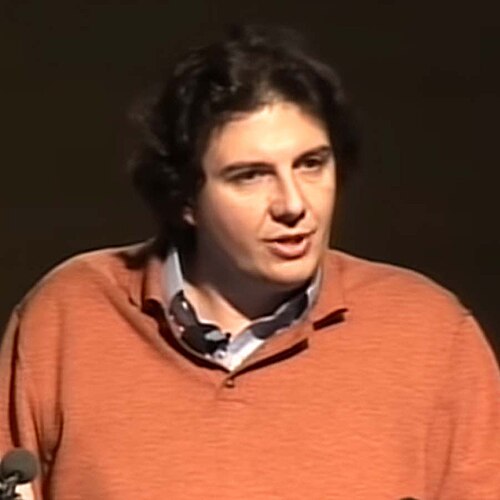
(The image of David Sabatini belongs to the National Institutes of Health, part of the United States Department of Health and Human Services. It was taken or made as part of an employee’s official duties. As a work of the U.S. federal government, the image is in the public domain.)
Fascinating case
“The disclosure of withheld written records, and the deliberate filtering of evidence, appear to have been influential in the jury’s assessment of the case.”
This is cherry-picking the data. Every good scientist knows that you should not do this. This is also damaging to your credibility. So, it’s no surprise that Knouse lost. Case likely turned on this
The person who raised the false allegation against me did the same. Provided one email instead of the entire chain to suggest that what I’ve done is potential research misconduct. I was grilled by the investigating officer until I said I can provide the entire email which put things into perspective. Why are these people so hell bent on destruction!
“Why are these people so hell bent on destruction!”
HR advice to senior managers is now to avoid referring to individuals by name in communications about cases, grievances etc. making it difficult or impossible to later obtain relevant evidence via DSAR.
Amusingly this has resulted in evidence of HoD communication in Astronomy requesting the omission of references by name because the individual in question (who was quite evidently not being treated fairly and whose reputation was being deliberately tarnished ahead of a contract renewal) “had a history of freedom of information”
“HR advice to senior managers is now to avoid referring to individuals by name in communications about cases, grievances etc. making it difficult or impossible to later obtain relevant evidence via DSAR”
All we need is one example of this or one person willing to testify and we have evidence of intent to break the law before then doing so.
“McMahon’s legal expenses were, incredibly enough, paid by Cambridge University. Professor Nigel Peake bore some responsibility as Head of School for this abuse of funds.”
No surprise there. Nigel Peake has been involved in so many bad decisions. Pity poor Darwin College
Anyone wondering about the suitability of Peake’s appointment, start with paragraphs 113–115 and 191–192 of the Tribunal judgment. They contain particularly important findings about his evidence. Then examine the Tribunal’s wider findings concerning his treatment of Evans.
https://assets.publishing.service.gov.uk/media/6a7c97d49cba0097fdd83239/Professor_Neil_Wyn_Evans_v_The_Chancellor__Masters_and_Scholars_of_the_University_of_Cambridge___Others_3307960.2023___others_FMH_Reserved_Judgment.pdf
The 21 Group used to run a series about the fictional antics of college Masters, including Lord Glossover, Master of St Machiavelli’s College (https://21percent.org/?p=2655). I have a feeling we might see that series make a comeback soon. 😅
Sabatini may have won, but I’m not sure many people would be too keen to work in his lab. It sounds a nightmare
Yeah but just look at that hair 🙂 would have found it hard to focus during his lectures not gonna lie
I feel this case makes me very conflicted. It does rather seem like the “academic” retake of Depp vs. Amber Heard (another hlghly conflicting case with a lot of gray areas).
In my view, David absolutely should not have had a relationship with someone in his lab — and especially not with someone under his direct line management. That should have been disclosed so MIT were right to sanction that.
But a bad break-up isn’t an excuse to make up stories and if appropriate boundaries had been set from the start perhaps Sabatini might have avoided that outcome too.
Agreed, a messy story with no angels
Making false allegations damages actual victims of harassment who are then treated with greater scepticism
No angels in the Sabatini case, no, but there are villains? MIT HR led a biased investigation to justify a predetermined outcome even once they found out the initial evidence wasn’t there. If they had acknowledged that at the time, they could have easily found a solution for everyone. But it seems that instead they acted in a way that has destroyed the lives of both Sabatini and Knouse.
His “double collar” fashion faux pas is kind of charming… in a “big bang theory” I’m-a-nerd-and-I-don’t-care kind of way
asymptotically the n of (hot professor ^ works at MIT) will always revert to its historical baseline of 0
David Parsons showered the CRUK accuser with free legal services from the outset. She was able to use his team of lawyers as if she was their valued client, rather than the initiator of a highly contested dispute which was still under active investigation. She also access to expensive external law firms,who would issue letters at her request.
Of course the 25 young people whose lives were turned upside down when their employment was suddenly destroyed were not offered anything at all by Parsons. If they wanted access to legal support they had to pay for it themselves. Young lab scientists with children to support could not possibly afford to do this. So they all had to meekly leave and find jobs elsewhere as quickly as possible.
Why did Parsons gift free legal services to one side of the dispute but not the other? It isn’t his money to give away. University resources seem to have been controlled by his personal whim. Hopefully Parsons will be called to the High Court to give evidence under oath in the CRUK/Oncology We might then hear how he justifies these arbitrary and unjust decisions.
Don’t forget to ask Parsons in court why he drafts letters for the Vice-Chancellor to sign. If you need evidence of this ghostwriting, I’d be happy to share it.
Very interesting. Someone, presumably with Parsons’ knowledge and approval, gifted lots of free legal services to Prof Richard McMahon to defend himself in what the University alleges is “a personal matter”
We now know that McMahon’s allegations against 3 academics were (i) defamatory, (2) untrue and (3) breaches of employment law as retaliation against whistleblowers.
The case has damaged the reputation of the Vice Chancellor, Prof Nigel Peake, Prof Tim Harper, Prof Beverley Glover, Prof Cathie Clarke and Prof Eilis Ferran. It has cost in excuse of > £1m and is still climbing.
After the Evans Tribunal, most academics asked the questions: why has the Head of Legal not been sacked? Why has the Head of HR not been sacked? They didn’t ask can we have an outside inquiry to distract everyone’s attention.
“After the Evans Tribunal, most academics asked the questions: why has the Head of Legal not been sacked? Why has the Head of HR not been sacked?”
Why has McMahon not even been suspended?
Why is the relevant HR Business Partner not facing an investigation?
Do you mean the most discussed Lead HR Business Partner in the 21 Group? She may not face an investigation—for now—but I wonder how many people still trust her word.
Not only did Parsons refuse to offer me legal advice as a staff member but he later opined that the bully had done nothing wrong in what is black and white contrary to law. It will be fascinating to see if the judge “agrees”.
Worth pointing out that in the “old” Cambridge the woke narrative is just a fig leaf. The only thing that matters is power and connections. The roles of abuser and victim have every possible gender and racial pairing. What is constant is that the bully is a long-timer who is senior in the hierarchy and on first name terms with HR and the management team.
“the jury found decisively in Sabatini’s favour on his defamation and tortious interference claims, awarding him $6 million plus interest in damage”
I fear Cambridge (England) is heading for a similar outcome next year. It would appear multimillion payouts are quite the thing in academia these days.
I should have thought the quantum of the damages which the Massachusetts *jury* awarded Sabatini is unlikely to be equalled or even nearly approached by a court or tribunal in England and Wales. Generally, the power of a jury in a US State, on its determination of factual liability, to nominate a specific liquidated sum as a remedy for “damage” is pretty much at large.
In E&W, it’s the judge who must *assess* the “damage” and determine a quantum. Such a judicial assessment is constrained by multiple factors which don’t apply equally to the determination of a jury.
That said: I would assume that E&W provides more legal avenues, & causes of action (including those in equity), for challenging adverse domestic judgements of University bodies than the US, mainly if not only because its applicable law doesn’t (eg) axiomatically “defer” to the domestic judgements of “private” universities. The majority of US claims against “private” universities fail on the inevitable “motion to dismiss”.
Further, courts and tribunals in E&W can award costs against a University defendant. Largely, the US is a no-costs jurisdiction.
Interesting article by Roger Mosey, former Master of Selwyn, in The Times today: https://archive.ph/bDrOf It’s particularly good at explaining how Cambridge “works” for those outside the system.
Worryingly, he quotes the University’s own recent description of the Regent House as its “primary legislative and electoral body”. This is the perniciously downgraded wording the Board of Scrutiny just took issue with.
He suggests the ballot on the new COO post happened because some staff disliked the reporting lines. But the Regent House agreed with the Council by a comfortable margin. About 75%, on a turnout of 30%, well above the more usual 20%. There will be a COO. The Regent House can and does agree with the Council when the case is made and communicated convincingly. The Vet School saga is a good example of the system working the other way around: democracy correcting a bad decision, not blocking a good one.
When a former adviser to successive VCs says the current system is holding Cambridge back, and quotes a Council member calling it “terribly outmoded”, it lends credence to the idea that a deliberate move to reduce the Regent House’s powers is brewing. Ironically, any such change would need the approval of the Regent House itself, and it is not easily fooled.
Good timing! You had just posted the articled while I was writing my post on it. 😂
Again the idea that “change” is a priority at Cambridge, while the malpractices continue and the Vice-Chancellor knows it very well. Make no mistake, until the current leadership leaves, nothing substantial will change.
https://www.thetimes.com/article/0ea30b73-f126-4b06-bbed-1121d2506049?shareToken=1564db0a89033cd2063ad0bf27efbb2f
Malpractice is all too common across the sector. Cambridge isn’t the only university that needs to change. The risk is that any new leadership inherits the same institutional mindset.
The mistake that has plagued Cambridge for too long is a default position of mistrust of its own academics and their preference for self-governance.
The solution is not a clipping of the Regent House’s wings, which is the way we seem to be heading. The solution is openness (minute the SLT and publish Council/General Board papers), rebuilding trust (consult early, consult often, publish robust evidence for decisions, respect ballot results), and accountability (individuals owning decisions, and openly learning from failure). If the current leadership can’t see this and won’t make it happen, then I agree they should make way for others. Just changing the faces at the top isn’t enough.
I definitely agree that changing faces while allowing the same malpractices to continue will make no substantial difference. What I meant is that the current leadership should step down, and the Cambridge community should be informed of the reasons for their departure, including a clear account of their own malpractices, and be reassured that these practices will change.
Given that the current leadership has been involved in past malpractices and is clearly unable to acknowledge responsibility or apologise, they will continue to cover up their wrongdoing while pretending to address the mess they led us into.
Agree. What is needed is a publix “charge sheet” against each senior member of the university listing every case, the allegations they face, and the evidence to date. Not only from Wyn’s case but from CRUK, the earlier ETs, POLIS, MRC, Arday, Homerton, Clare, the college sexual assault cases, accounting fraud, police abuse, Education and corruption.
I would be glad to assist in delivering the proposed project. My suggestion is to host an open disclosure link on which participants can “drop” copies of their evidence bundles, emails or other documents, under assurance that these will not be available to the general public in their full original form.
Then, the individual personal profiles would be auto-generated via an AI agent hosted on the server. These could be updated on a daily basis using any new evidence uploaded.
This approach is the right approach. It ensures legal compliance as each allegation would be evidence by specific audit trail evidence, and also, avoids any form of personal interpretation or “framing” that might be viewed as a result of personal animus or prejudice.
If you want a “21leaks” website design, please let me know. This is the right approach to delivering academic integrity — one that “reverses the gaze” from the powerless to the powerful, with an eye that is unblinking, unsleeping, and incapable of being bought, bargained with, or disabled, not even by its own creator.
Self governance is about autonomy – if only a small fraction of Regent House are active participants in the decision making of Regent House – active voters – then the autonomy of the academic community can be quite low despite having a structure like Regent House to support self governance of the academic community & that’s is the case even if the small fraction of Regent House who are actively participating in the decision making are taking decisions having first internalised high accuracy, high completeness information in relation to the decision being taken.
A high-autonomy academic community is more conducive to governance speed & accuracy – i.e. dynamic accurate responsive self governance – than a low-autonomy academic community.
Cambridge as an academic community has the power to select members of its own academic community. If Cambridge has selected large numbers of people to join its academic community who are unwilling to actively participate in governance decision making or who Cambridge does not trust to make sound governance contributions the it has to be asked what has Cambridge been selecting for when evaluating potential members to join its self governing academic community, an academic community that is not going to stay in a high autonomy self governing state without members who are willing to actively participate in governance decision making and who can be trusted to make sound governance contributions.
An individual exercises individual autonomy in seeking a court judgment after a potential substantive unfair dismissal from an academic community & whether to seek a reinstatement/re-engagement remedy if a substantive unfair dismissal from an academic community is judged to have occurred.
A court offers a neutral adjudication on a case of potential substantive unfair dismissal from an academic community & on the range of reasonable remedies in a particular case if a substantive unfair dismissal from an academic community is judged to have occurred.
An academic community exercises community autonomy in taking a collective governance decision on whether to comply or not comply with any reinstatement/re-engagement order from a court i.e. whether to readmit an individual to an academic community after a substantive unfair dismissal from an academic community has been judged to have occurred in a court.
If the relationship between an individual & an academic community has broken down the relationship cannot always rebuilt irrespective of whether there was fault on one side or both sides, whether one or both sides admit fault & whether there is willingness on both sides to rebuild the relationship. An individual & a community can but exercise autonomy in any case of potential substantive unfair dismissal from an academic community & explore what happens – such is the nature of consensual individual-community relationships.
“But the Regent House agreed with the Council by a comfortable margin. About 75%, on a turnout of 30%, well above the more usual 20%.”
Members of Regent House can try to blame the current VC or last VC for every systemic problem that has been allowed to accumulate over the last decades but if 70% of Regent House doesn’t show up to vote – i.e. community autonomy is low – that’s not something that happened over night or in the last couple of years and it’s not something a VC can single handedly fix, a VC cannot show up & vote in a case where a member of Regent House doesn’t show up & vote.
Regent House didn’t even react when the chair of the internal board of scrutiny was put through a no fault substantial unfair dismissal, proved that in a court & got a re-engagement order from the court that the university refused to comply with. 0% of Regent House showed up on that situation, 0 academic community autonomy on that situation.
*substantive unfair dismissal
Members of an academic community can try to continuously have all the rewards/benefits of self governance without continuously shouldering the costs/risks of self governance but all that happens is the costs/risks of self governance that are not being borne by members of the academic community start to build up & at some point all the accumulated costs/risks of self governance that have not been continuously borne become due at which point no member of the academic community can avoid bearing the costs/risks of self governance as the costs/risk are at that point so great than in order to bear them as an academic community every member of the community must bear the costs/risks of self governance.
Eileen – thanks, and I agree with much of what you say. Self-governance only works well when participation is high. The recent record for turnout on a ballot was for the Employer Justified Retirement Age in 2024, at 49%. You would have hoped that it would be higher for a policy which affects so many.
But participation is dependent on trust. People vote when they believe their vote counts. Advisory Graces aren’t helping. People will only sign flysheets and speak up at Discussions when there is no fear of repercussions.
Your example of a former Board of Scrutiny Chair suggests that even serving on the University’s own scrutiny body offers no protection. I don’t believe the Regent House had a role in that case. If there were a new policy that Council reported to Regent House whenever the University lost an employment tribunal, with what it thinks went wrong and how it intends to respond, at least Regent House would be better informed.
“Your example of a former Board of Scrutiny Chair suggests that even serving on the University’s own scrutiny body offers no protection. I don’t believe the Regent House had a role in that case.”
I don’t see how Regent House did not have a role in that case. It was a significant governance decision – not to comply with a re-engagement order from an employment tribunal after a no fault substantive unfair dismissal & to resist an application for judicial review of the organisational decision making in the case – as it set an organisational precedent on the organisational approach to employment rights in such cases.
If a person does not have the right to not be substantively unfairly dismissed through no fault of their own then a person does not have employment rights. If an academic doesn’t have the right to not be substantively unfairly dismissed through no fault of their own an academic doesn’t have academic freedom.
To be able to keep employment in exchange for passively accepting arbitrary employment actions at the whims of an organisation – that could enter into a state of deep irrationality in times of rapid societal change due to its organisational & informational complexity – is not the same as having employment rights.
“But participation is dependent on trust. People vote when they believe their vote counts. Advisory Graces aren’t helping. People will only sign flysheets and speak up at Discussions when there is no fear of repercussions.”
The chair of the board of scrutiny – internal speaker upper in chief – went through a no fault substantive unfair dismissal & got a re-engagement order from a court that was not complied with setting an organisational precedent in such cases & Regent House had nothing to say & saw no role for itself in that case.
Did that increase trust in Regent House? Did that increase the probability a member of Regent House will believe any vote they make as a member of Regent House not only counts but has the potential to contribute to better overall governance decisions? Did it increase the probability of members of Regent House speaking up in discussions in Regent House without fear of repercussions?
“But the Regent House agreed with the Council by a comfortable margin. About 75%, on a turnout of 30%, well above the more usual 20%.”
Regent House autonomy is so low it would be possible to win a no confidence vote on a no confidence vote held by Regent House.
What is Regent house going to do? Hold a no confidence vote in a VC where the turnout is suddenly 100% & then as soon as one VC is removed and a new VC is brought in to replace them go back to a turnout of 20% for every other governance vote until unhappy with that new VC at which point turnout suddenly goes back up to 100% again for the no confidence vote in the new VC?
Show up en masse to put the blame on a person for the accumulation of organisational governance problems over years – decades & then disappear for years – decades again when there is any less exciting & more mundane governance work to be done until the next point where it becomes possible to vote to blame one person the accumulation of organisational governance problems over years-decades again?
People get what they are willing to work for.
If people are not willing to work for effective governance people will not get effective governance. Flying a person half way across the world to put all the blame on that person for a collective lack of will to work for effective governance could give the appearance of effective governance to the external world but anyone who has seen the governance innards of Cambridge will know that it’s not effective governance it’s just another sign of a collective lack of will to work for effective governance.
If an organisation would have to correct a fundamental organisational problem – low levels of organisational autonomy in a self governing organisation i.e. in an organisation designed to operate at high levels of organisational autonomy – before it could hold any person in any organisational role to account is this not a sign the organisation is potentially concentrating fault for the emergence of organisational problems on too limited a subset of people in the organisation.
The Dr Catherine MacKenzie case means the self governance route is blocked in Cambridge. Anyone capable of self representation and of solving their own problems in relation to Cambridge is currently blocked by the decision to not re-engage after a court order in a case of a no fault substantive unfair dismissal.
What is a person supposed to do in Cambridge – go to Regent house who won’t intervene in an individual case & who also won’t do any work to open up the self governance route to give people the necessary working conditions to do something about their own case.
Go to a union? if politics is an extreme mess it means there is some probability that political error correction mechanisms – e.g. unions – are in an even bigger mess to the extent the political error correction mechanisms themselves – e.g. unions – could be going even more wrong than politics & making a significant contribution to the mess politics is in.
If it gets to the point where an employee is taking a union to court as an employer it’s a sign of potential problem with a political error correction mechanism – unions – & a lack of political skill in unions. You would normally expect to see an exceptionally high level of political skill in unions in a healthy state to the extent no union would end up in that type of position as a union.
It’s not that Regent House could or should intervene in any or every academic probationary process or that a court can regulate academic standards it’s that if a chair of the internal board of scrutiny identifies a potential problem with probationary processes and the regulation of academic standards & gets an independent check done in an external court that confirms a potential problem with both for there to be no further checking of the case by an academic community – no rerun of the probationary process with checking from external examiners – doesn’t seem like the response of an academic community that wants less problems for itself in future rather than more problems for itself in future.
If the people who avoid all tasks unconnected to their own research and those who do the all the tasks unconnected to their own research that need to be done in order to maintain a functional environment in which every person can do research are expected to produce the same level of research output in an academic probationary process then its not a fair & reasonable academic probationary process. If there is no weighting of differences in governance load & teaching load when evaluating differences in research output then it is not a fair and reasonable academic probationary process.
Specialist academic streams – e.g. research pathway and teaching pathway – might suit some but for others it’s just one more unnecessary constraint on what a person can do as an academic & forcing a person down a specialist academic stream against their will is just one more way to restrict a persons autonomy as an academic.
It get’s to the point where an internationally competitive university is advertising a new type of teaching & scholarship role where a highly specific type of research would be necessary to troubleshoot the evolution of in that new type of teaching & scholarship role to ensure it effectively serves a university & the university is completely closed to a person in that role doing any research – possibly because that university has been burned in the past by a person doing research unconnected to and/or detrimental to a teaching & scholarship role.
Some individual positions are better to probe systemic autonomy from & some places are better indicators than others.
Agreed.
Academic autonomy cannot simply be about protecting institutional rights; it also demands a willingness to exercise them responsibly.
When difficult issues emerge, members of the academic community have a duty to contribute to the debate, participate in addressing the challenges and play an active role in shaping solutions. The credibility of self-governance depends not only on defending the right to make our own decisions, but also on being willing to shoulder the responsibility that this entails.
I’ve always viewed a university’s Code of Behaviour as primarily for the benefit of the senior management team and then the senior staff – senior academics and professional services staff – as then if that behaviour is promoted by them and trickles down as a result of it being practiced, then the culture takes on these aspects. But if staff see that the senior management team and other senior staff are acting inappropriately, and getting away with it, whilst ignoring the Code of Behaviour they themselves have signed up to, and want to influence better behaviour, and there is a mechanism to do this through, in this case, Regent House, they have to engage and vote. Regent House should surely be seen as a huge benefit to the senior management team to gain feedback on big decisions, and not as a likely stricture every time new developments are planned, or solutions to major strategy or financial issues are needed? The senior management team still has the role of initially addressing the issues and coming up with options to address each one (and provide the reasoning of course). If Regent House are split on the recommended solution, the senior management team still need to make the call (and provide the reasoning), so don’t lose a suitable level of authority.
Code of Behaviour-
We are each individually responsible for our own actions and for recognising the impact of our behaviour on others.
* Foster a trusting environment that enables honest and supportive working and studying conditions
* Recognise that our actions can impact others and show courtesy and consideration in our interactions with others, even if we disagree with their views
* Discuss views that others may find disagreeable or distasteful in a constructive and lawful way, in line with the University Code of Practice on Freedom of Speech
* Treat each other fairly and without bias
* Promote a culture where colleagues can speak out about inappropriate behaviour
* Support our colleagues experiencing inappropriate behaviour by intervening, speaking out and helping where we feel able.
As others have said before, none of the senior management behaviour as reported in these posts and adjoining comments seems to adhere to the above elements (these are just a few, taken from the Code’s list of expected behaviours).
Universities have plenty of experts on hand to advise on the causes of, and solutions to, people process issues, and particularly if some of the current senior management and HR’s chosen practices are causing harm.
Here’s a local example –
Professor of organisational theory, Thomas Roulet, at the University of Cambridge Judge Business School, quoted by the BBC WorkLife website, comments amongst other things, on toxic cultures-
“High-pressure contexts are more likely to lead to toxic workplaces as stress and anxiety trickle down the hierarchy,” says Roulet. “But large organisations are also more likely to have good systems in place to address toxicity, for example, with opportunities to reach out to HR and initiatives to act on bullying behaviours. For many smaller companies, or organisations within industries typically considered kinder or more democratic, toxicity can still be an everyday occurrence.”
This may be the case, but systems need senior individuals to be brave enough to take action.
Roulet goes on to say-
“It’s both about how people behave poorly, and how others are affected. A toxic workplace is often also riddled with political behaviours – individuals trying to gain influence without thinking about the consequences for their collaborators.”
(And the local Management School should and could be usefully co-opted in some way, if not by a senior management team, by any group, to provide study evidence to support joint personal experiences of inappropriate behaviour by that senior management team and/or senior leaders.)
University of Cambridge is a place where
The Head of HR will dismiss you for reporting suicide and then bully you directly until you make another attempt
Two committees of your colleagues will be informed of what happened and completely dismiss independent whistleblowers in order to take part in your death
Not one single professor or senior administrator over a two year period who is informed of your distress – not even one single person at all – will express any form of concern, ask what happened, or otherwise assist in any way
The same professors will then cut you off until you are finally dead
After your death they will set up a student prize in your honour and everyone will sound very “shocked”
@anonymous,
As someone who has experienced this, I ask you to consider reporting your experience to those who still do not know how bad the situation is at the University of Cambridge. No one may be able to give you back what you have lost, but you can still prevent others from losing the same. That is what keeps me going.
They are breaking as well. I sent an email to Mr Parsons and his entire team earlier today and received several automated replies, some explicitly stating that they were unwell.
To all those who think it is impossible to find justice in a system where the perpetrators control the rules, remember that once we know how to play the game, we can use those rules against them, and we have the strength of numbers on our side. I think it is the responsibility of those who already know how to play the game to teach the rules to newcomers as quickly as possible.
The University of Cambridge is a place where
the disclosure of concerns for the health and safety of an individual subjected to ferocious bullying by senior staff with eager support by HR, will act as a trigger for advice to the perpetrator to do much worse.
If the victim stays alive and well enough to continue in the job, HR will continue with malicious recommendations, informed by OH statements, medical reports or further communication from concerned colleagues – until the nastiness and toxicity is too much to take, or the financial detriment just too onerous to survive, or until the bullying has finally resulted in the victim’s death.
Then, indeed, everyone will be very “shocked”, while laptops and PCs are searched for evidence to destroy, and colleagues bound and gagged by “confidentiality” clauses, so the victim’s history can be rewritten, and responsibility delegated to those unfortunate mental health issues, all based on “gremlins” and personal matters, which had absolutely nothing to do with work.
I am so sorry to hear about what you have been through. I experienced something similar and at my lowest, I asked my partner “If I died, would the University be sorry” – he said no and that they would probably be glad that the problem is “resolved”. It took a lot of private counselling, a supportive partner and several good friends for me not to do any damage to myself. And I agree with my partner, the University wouldn’t even care if I died. I can no longer work in academia.
Unfortunately for Cambridge HR, sometimes people live
Or, even worse, pass over, hold conference and return with a new mission objective
The amoral – or, more accurately, programmatic cynicism – seems to be a feature of University managerialism tout court. At Princeton, the person whose terrible travails you detail would uniformly be described in terms by administration as “a red flag”.
No angels in the “Lined against the wall and shot” case, no, but there are villains? YES: UCam HR and SCM leadership.
HR and SCM led a biased investigation to justify a predetermined outcome even once they found out the initial evidence wasn’t there. If they had acknowledged that at the time, they could have easily found a solution for everyone. But it seems that instead they acted in a way that has destroyed the lives of the ACCUSED (who had not committed any ‘offense’) and his group. In contrast the ACCUSERS (who had started totally baseless allegations) have moved on or are comms darlings at UCam.
Cambridge comms department is pretty much a pure disinformation operation now.
Dear friends, do not be shy. In August, the poster Sam Levans gave us some hints about who these people are when they said, “Next year we’re likely to see the key players in Oncology and the Medical School (Maxwell/Gilbertson/Abraham) in the High Court, on a witness stand and under oath, being cross examined for hours by a competent and well briefed barrister.” (https://21percent.org/?p=4173)
Does Sam Levans mean Professor Patrick Maxwell, Professor Richard Gilbertson and Professor Jean Abraham? If I got the names wrong, please let me know and I will be happy to contact them and apologize for the misunderstanding.
Is it possible for the general public to watch a livestream of high court cases just as we can for Employment tribunals? When are the dates?
You have identified the key players, but one is missing: the former Director of CRUK-CI (RIP). Several others also contributed, including a number of Responsible Persons.
The Angel comes when the time is due. Everything that will be has already been; and time is fixed in every block. Whatsoever you do will be or has been done unto you, now and forevermore.
Next year the Angel will pass over again. And again, and again, and again, until repentence is done.
It’s right to get all this into the open. HR shut down a lab and destroyed 26 people’s employment because they couldn’t admit they were wrong. Then they have the gall to insist that everyone has to remain silent for the rest of time? This isn’t Bletchley Park. The silencing is entirely self serving. Some terrible decisions were made at the Clinical School. They know it. They want to bury it. I guess they are in the School of Medicine. They say doctors bury their mistakes.
This has happened to 4 or 5 research groups now. HR know only how to destroy young lives and careers. Whatever a university is for, they have done the exact opposite.
Greg Hannon was the Director of the Cancer Institute. He shut down the Caldas lab and threw 26 people into unemployment. He was [REDACTED]. Why didn’t the Office of the Regius display moral courage and sack him? Rather than allowing his impaired judgement to determine the lives of 26 people? Was this the same Regius who didn’t bother to investigate the allegations coming out of Oncology?
REDACTIONS BY 21 GROUP. Please post proof, otherwise the material should remain redacted.
whatsoever be done be done unto you
whomsoever gut cancer research shall be struck there by the same
whomsoever break the hearts of youth shall stop their own from pumping
whomsoever take his child shall lose their own
whomsoever sexually abuse will become impotent
whomsoever denies voice will never safely speak in public again
—-
Every line has a name, many more may come.
If anyone did a serious assessment of the cumulative cost of damages the figure would have to be immense. For each young researcher whose career was ruined, just think of the decades of lost income, grants, and impact contribution. Now multiply that by 20, 50, 100 people. A phenomenal waste of human talent and ambition.
Patrick Maxwell gets paid more than £200k per year to lead the School of Medicine in Cambridge. But he decided he wouldn’t get involved in a routine departmental spat when Jean Abraham accused Carlos Caldas of research misconduct. Academic medicine is full of these warring egos. It’s mixed martial arts for nerds. Maxwell’s job is to be the referee. But he decided not to get involved at all. He just deferred to HR. Why do we pay these people if they won’t do their job?
Why hasn’t Maxwell denounced HR for destroying his School? That’s his job, they are supposed to work for him not the other way around.
The line manager of the HR Business Partner is not the Head of School. HR don’t even report to the Head of School
The Head of School, like the hapless Nigel Peake in the Astronomy debacle, is there to take the blame when the HR Business Partner gives terrible advice
Look how powerful they are. HR misled the Vice Chancellor, so that she lied on oath. The Vice Chancellor, whose reputation has been shredded, is so powerless, she can’t even sack the people who destroyed her.
“Why hasn’t Maxwell denounced HR for destroying his School?”
Why doesn’t the Chancellor act?
Why doesn’t the Vice-Chancellor act?
Why don’t the Pro-Vice-Chancellors act?
Why doesn’t the University Council act?
Why don’t the Heads of Colleges act?
Why don’t the Senior Tutors act?
No one does, and the problem extends far beyond the University of Cambridge!
Why do UKRI and BBSRC refuse to intervene in cases of reported research misconduct when they are the funders, and instead refer whistleblowers back to the University?
Why does the Royal Society refuse to intervene when its Fellows fail to follow its Code of Conduct, and instead refer whistleblowers back to the University?
They are all aware of the University’s current degraded state and choose not to intervene. But here comes the main lesson about their character that people should be aware of: if you persist in reminding them of their obligations, they will act against you.
The good news is that, with so many parties involved failing to do their jobs properly, we are about to reach the Parliamentary Ombudsman! 😉
“Why doesn’t someone do something” is the question I was asking for years while suffering abuse at Cambridge.
The answer is simple: they do not care. Your life or death doesn’t matter to them, that’s the simple truth.
Ms Catherine Upton directed laboratory members to wellbeing services (see below) but said that we could say only that a formal process had affected our wellbeing and could not discuss the specific allegations or individuals involved. Extremely unhelpful and complete lack of care!
Internal Support Services – services offered by the University
Occupational Health – available to staff only
Counselling service – available to staff and students
Mental Health First Aiders – available to staff only
Dignity@Work Contacts – available to staff only
Mediation – available to staff only
Human Resources – available to all ; https://www.hr.admin.cam.ac.uk/contact-us
Chaplaincy – available to all
College Tutors/Pastoral Contacts – available to students only
External Support Services
Qwell (online counselling and wellbeing platform)
“we could say only that a formal process had affected our wellbeing and could not discuss the specific allegations or individuals involved.”
They wish! Ask Ms Catherine Upton, Assistant HR Adviser, what the legal basis is for that enforced confidentiality, and tell her that you are aware that confidentiality is being used to manipulate information at the University of Cambridge. If she pretends not to know what you are talking about, feel free to tell her that I would be happy to contact her and provide evidence of this.
Trust me, all the staff services are completely useless. Dignity at Work did absolutely nothing for me for years, “mediation” is something I have never even heard of, and though I didn’t go to Chaplaincy, I think it is fair to say that only divine intervention would have made HR do anything at all
And don’t even get me started on UCU
UC Who?
Treat people’s lives as worthless, then don’t surprised when they treat yours the same way
Maxwell knows full well that HR is a total catastrophe and need to be cleared out entirely.
If he is a man worthy of his honours then he will do his duty and say so in open court.
Part 2 of Independent Review of the Arday case:
https://www.youtube.com/watch?v=WoYwnA285sQ
A solid 7/10 for effort. Jason Beer KC’s credentials and his terms of reference are solid. He encourages Council to publish the full report, but I’ll be surprised if that happens. Conflicts of interest have been suggested in the panel (see Priyamvada Gopal on X today). The initial timeframe of 6 months is ambitious and the terms of reference allow for it to be extended. I’d be willing to bet this happens. It may report into a very different environment than we have now, and any individuals whose decisions are criticised in the report are likely to have moved on.
Meanwhile Council has responded to the proposed HR Grace in today’s Reporter. Don’t worry, they say, we don’t need a separate audit, we have it all covered in the Whyte review. (They don’t). The important difference is that this review needs to be accountable to Regent House, not Council. The Council is asserting its own power over the Regent House again, which it will keep doing unless the Chancellor rules otherwise. So having explained why the Grace can’t take effect, they say ‘let’s have a vote anyway!’ What a farce.
Why is Council defending HR? It is not an investigation in to the Council. What are they so afraid of? What abuses are they guilty of?
There are certainly people on the Council who couldn’t be accused of that motive. But the Whyte Review was commissioned by the Council, through its Deputy Chair, and reports back to the Council (via the Audit Committee). However independent its panel, it isn’t independent of the body it answers to.
A correction to my comment above: the Council has put the Grace forward, but there doesn’t have to be a ballot unless 25 members of Regent House now request it. If not, it’s approved by default. It could be better to not have the vote and for Council to explain why the substantial differences (which in their notice they call merely “detailed arrangements”) make the Whyte review more appropriate.
“having explained why the Grace can’t take effect, they say ‘let’s have a vote anyway!’ What a farce.”
That shows you the real character of this leadership.
Whether or not there’s a vote, yesterday’s Notice is yet another example of a recurring blind spot on the optics of the University’s communications.
Comms around the vet school were a complete mess. Part Two of the Arday Review will specifically examine how the University decides to make public statements, and with what thought for their consequences. Now we have the Council authorising a Grace and explaining in the same breath why it won’t matter. Tone-deaf.
If the grace is going ahead, then that is good. But the failure of communications here is really rather silly. They could so easily just have said, “this shows the strength of demand for change, and we hear this message entirely. We support our community fully in delivering the accountability that they deserve, and will take whatever hard decisions may be recommended by any investigation”.
The Grace is not really going ahead. It is a farce:
https://www.admin.cam.ac.uk/reporter/2026-27/weekly/6842/section1.shtml#heading2-6
“The Council has therefore decided to authorise submission of the initiated Grace (Grace 2, p. 96), noting that any actions arising from the Grace, if approved, have been taken already by the setting up of the Whyte Review.”
In short, they are going to approve it and do nothing. The Whyte Review is very different and they know it.
But if the Whyte review is not public how would anyone know that were true, and not just another lie?
Say what you like, but neither Afzal nor Beer seem like pushovers. Curious to know how much this was forced on the uni or whether there is willingness to hear hard truths.
I don’t know what happened behind the scenes to bring about the appointments of Afzal and Beer. I do think the senior leadership wants to restore trust, and the undoubted credibility of both is necessary for that but not sufficient.
The Whyte Review has an independent chair but an incomplete panel, but like the Arday reviews currently lacks two things that would help it restore trust: full publication of its findings, and accountability to someone other than the Council that commissioned it. Yesterday’s Notice was carefully crafted, as they always are, to assert the Council’s authority over the Regent House. It was silly, especially in light of the Board of Scrutiny report, but not a mistake.
Neither Afzal nor Beer seem like people who will politely nod and move on if Cambridge decides to bury their reports without any substantive reforms or change. More concerned about the Whyte review, though, her previous HMRC report was published so could see her being less than happy if Cambridge simply buried it and spun its own dishonest “summary”.
The most alarming thing is indeed only Council will see these Reports.
The rest of us will get a cherry-picked summary.
Right. People of this stature have their own reputation to protect and may speak out if their reviews are misrepresented or go nowhere. That’s a very real risk Cambridge will want to avoid, but may well fall into.
For example, Dame Laura Cox’s 2018 review into the bullying culture in the House of Commons was published in full. But a year later she issued her own statement to all staff decrying the lack of progress on implementing its central recommendation.
There’s something deeply unjust about every detail of Arday’s life being pored over by the press, yet when it comes to exposing those in power, they get to withhold the report and write the public “summary” of their own acts.
It’s an implicit no confidence vote in council by Regent House at a point in time when Regent House itself is in a state where it would be possible to win a no confidence vote on a no confidence vote run by Regent House – i.e. in a low autonomy state. That is why that particular grace ends up being symbolic.
Members of council who have ended up in dispute with the university discover there is no self governance route. Members of the Board of Scrutiny who have ended up in dispute with the university discover there is no self governance route.
As a result of the blanket EJRA it’s got to the point where members of council are being dismissed by the university themselves & it’s unclear whether they have been substantively unfairly dismissed by the university.
As charity trustees a member of council may have a legal obligation to go to an employment tribunal to check if they have been substantively unfairly dismissed by an organisation they are a trustee of but what good is an employment tribunal issuing a reinstatement order to an organisation with a history of non compliance with reinstatement/re-engagement orders from an employment tribunal?
The self governance route is completely blocked in Cambridge.
There is no external jump start here – it’s bootstrapping self governance.
Work-related stress regulation is an unusual type of regulation, it’s global regulation – i.e. it has implications every aspect of the operation of an organisation even more so that financial regulation – so you would expect it to reduce autonomy at all levels of an organisation but it seems to have the opposite effect of increasing autonomy at all levels of an organisation conditional on getting it right. Can use it to bootstrap self governance.
the strongest accountability check on the Whyte review is going to be ease of being termed “Whyte-wash” by press if doesn’t come down hard on uni HR
This is exactly what happened at SCM/oncology/CRUK scandal:
“First, an allegation appears. If it fits the institution’s preferred identity narrative — a woman or minority complainant versus a white male professor — administrators may discover that “investigate” has quietly become “believe”. To be clear: complaints must be taken seriously, and complainants must be protected from retaliation. But so must everyone else.
Then comes the familiar sequence: isolate the professor; freeze the lab; frighten the trainees; restrict communication; call the destruction “interim measures”; invoke confidentiality; and allow rumour to perform the public-relations work.
The lab is dismantled before the evidence is tested. Students lose years. Staff lose jobs. Collaborators disappear. Grants, experiments, and careers are placed in administrative quarantine.
And if the original allegation proves false, unsupported, or substantially different from the early narrative? Well, that is an awkward detail. The lab does not reassemble. The professor’s reputation does not reboot. The trainees do not get their lost time back.
Meanwhile, the person who made the allegation may remain protected — or even be promoted — because institutions are generally better at rewarding the appearance of moral certainty than correcting a damaging mistake.”
Presided over by yours truly: Smallman, Teflon, Drinkalot (RIP), Viciouswoman and Crookery. With some help from Bullshitmore. Greek tragedy it was not! More like Shakespeare McBeth- lots of treason, falsehood, vengeance and pure evil.
Oddly though, young males tortured until suicide don’t seem to merit investigation even after years of complaints from doctors. I guess not all lives matter after all
There’s a lot more to come out in this appalling scandal. SCM Leadership and their HR “Business Partners” knew that one of their key senior decision makers was severely impaired by substance abuse but lacked the courage or moral authority to do anything about it. It was easier just to stand aside and watch 26 people lose their jobs.
Clinical School HR is finally sinking. The Head and her Business Partners are abandoning ship and looking elsewhere before they can be held accountable.
Huge scandals in the School of Physical Sciences, its HR Business Manager should have been suspended by now, pending full disciplinary investigation
Ms Louise Akroyd may be thinking that she will get away with it without consequences.
Let’s see what the coming cases where she is involved will show. 😉
How is it possible they weren’t all fired after the whistle blowing case? It is hardly as if there aren’t a lot of capable people trying to find work right now
It is disgraceful, no repercussions for any of the perjurers or the wrong’uns, except Prof Nigel Peake who was promoted to Master of Darwin College
HR “Business Partners” can abandon ship at the Clinical School all they like. But their attendance at the High Court Civil Case will be at the Judge’s direction. If they try to dodge that, they’ll be held in contempt. So they will eventually have to explain their actions.
In my view, this is why High Court cases are so desperately needed. First, at High Court the disclosure rules are much stricter, with the possibility of rather severe penalties should defendants demonstrate contempt for court. Second, there is a real power to compel witnesses at the discretion of the judge and serving orders for witnesses to attend (again, with heavy consequences for those who refuse). And thirdly, High Court judges are not known for their soft touch on matters of procedural compliance or weak excuses, even (and perhaps especially) from organisations as powerful as Cambridge. Cambridge already had a rough run in with High Court justice last year over the injunctions, and seem set up to repeat the experience now several more times. In my view, it will be a restorative shock for a system too attuned to lax standards and easy cop-outs.
The list below are the individuals who knew about and/or contributed to the CRUK-CI SCM/Onc scandal and their current status. Unsurprisingly, many have abandoned the sinking ship. Plus the current Head of HR did play a role in helping the UniCam but she was not the one that was responsible for the three most torturous years – she’s left in 2023!
Director of CRUK-Cambridge Institute – resigned and RIP
Head of Department of Oncology – resigned and Masters of Gonville and Caius
Head of the University Research Office – left Uni in 2023
Head of Policy, Integrity and Governance Research Operations Office. – remained
Research Governance Officer, School of Clinical Medicine – remained
Head of HR – School of Clinical Medicine, School of Clinical Medicine – left Uni in 2023
Interim HR Adviser, School of Clinical Medicine – left Uni in 2023
Assistant Director of Operations (Research), CUH – remained
CI HR Manager – left CRUK-CI in 2022
Acting Directors of Operations – left CRUK-CI in 2021
Acting Directors of Operations – remained
Director of Operations – remained
Director of Breast Cancer Unit – remained
Regius School of Clinical Medicine – remained
Deputy Head of Department of Oncology – remained
Who funded that research? UKRI? Wellcome? Someone else?
I would be interested to know how the funders responded to this case, as my understanding is that they tend to avoid intervening, even when doing so means disregarding the terms and conditions of their grants.
It could be useful to compare and categorise the justifications they provide across different cases.
The postdocs went to the funding agency (CRUK). Professor Sir Leszek Borysiewicz was in charge of CRUK’s governance in 2022, serving as the Chair of the Council of Trustees.
His previous position was (surprise, surprise) Vice Chancellor of Cambridge University. Much more competent than those who followed him, he still declined to intervene in CRUK-Cambridge scandal.
Borys is the only full-time VC, apart from Williams (who oversaw the handover and therefore doesn’t count) not to have provoked widespread fury across the University.
Interesting observation. I think you’re right. Borys’ tenure wasn’t without controversy though. Old Schools was occupied by students over tuition fees in late 2010. He later ruled some amendments to a Regent House ballot on tuition fees inadmissible. There was discontent over a matter of national policy, but no internal warfare. He spent much time building relationships over the University and presided over a period of relative financial stability.
I think that no VC other than Prentice has presided over so much anger beyond the University, and damage to its reputation.
Prentice has certainly set new standards. She’s desperately unimpressive, lacking any warmth or humanity, and she has presided over numerous mistakes, for some of which she must be held personally responsible.
These include (1) her perjury in the whistleblowing case and (2) her public description of Jason Arday’s appointment as an “aberration” when at most she should have said there will be an investigation that follows due process. She should have already gone, if she had any awareness or self-respect.
Can the university appoint a new VC if there is evidence the HR division is in need of an audit or if HR is in the process of being audited?
Did Prentice know the organisational position with respect to HR audit before interacting with HR processes?
“Borys is the only full-time VC, apart from Williams (who oversaw the handover and therefore doesn’t count) not to have provoked widespread fury across the University.”
The chair of the internal board of scrutiny was put through a substantive no fault unfair dismissal under this VC, no independent investigation after an external court judged re-engagement to be within the range of reasonable remedies, no effective remedy of the situation.
There seemed little point in raising any employment error after that – the internal employment error correction system seemed to be out of order. The problem progressed under the next VC, the application for judicial review of the employment processes that were unable to correct employment errors in the case of the chair of the internal board of scrutiny was blocked i.e. the employment process error correction mechanism was then out of order.
A member of council was furious with the university about errors in their own employment that were not being corrected with the internal employment error correction system. The problem is a persons employment errors are considered their own private employment errors including any employment errors made by the university so it’s up to the person to get their own private employment errors fixed with the out of order internal employment error correction mechanism and the out of order employment process error correction mechanism.
If an organisation makes a series of employment errors and puts a person in a role in the performance out of bounds, overwork, under resourced regime then it is a valid employment action for a person to optimise performance in the role to check if it is possible to get into the performance within bounds regime for the role.
If that generates employment errors & both the internal employment error correction mechanism and the internal employment process error correction mechanism are out of order then it is valid employment action to continue to optimise performance in the role for the probationary period of the role to check if it possible to get into the performance within bounds regime for the role.
It was CRUK who did not respond to most of our emails except the one about our grievances. They did email the University to ask about status but then swallowed the explanation by the University. When we asked the Responsible person that CRUK should be notified, his internal comm with HR said “there is nothing to report” but for HR to prepare for a response if we went to CRUK ourselves!!!
We had no support from our major funding body.
“Who funded that research? UKRI? Wellcome? Someone else?
I would be interested to know how the funders responded to this case, as my understanding is that they tend to avoid intervening, even when doing so means disregarding the terms and conditions of their grants.”
They all want the security of a legal judgment. A person is expected to go to court before going to them. This after a human rights legal academic got barred from taking legal action against a university in the courts & had a charging order put on a home they owned with another person by a university to recover university legal fees in the case.
That is how effective the legal dispute resolution mechanisms are in the UK. If every single person in a legal dispute is a legal academic it is still not possible to get a legal dispute resolution mechanism to work without a legal academic being barred from court & having a charging order put on a jointly owned home by a university with a law faculty.
Is UKRI funding research in law? What is the return on investment for the public of the UKRI funding research in law? When the public & employers are taxed on employment is that money going towards maintaining & advancing effective legal dispute resolution mechanisms such that the public & employers can maintain themselves in a healthy state conducive to continuously maintaining effective employment relationships?
The woman (if I’m correct in my assumption) from that sorry group continues to destroy cancer research in Cambridge, given her current interim role. You may add mediocrity to her list of issues as well, and perhaps it’s the cardinal sin at Cambridge.
I sat next to one of the Chairs of some independent advisory thing into the SCM situation at dinner recently. Not only was the Chair horrifically indiscreet, she was also incapable of any kind of dispassionate view of the matter.
Mediocrity is indeed the cardinal sin at Cambridge. From the top down that’s the key selection criterion: never hire or retain anyone who makes you feel insecure about your own capabilities.
So now we have Debbie to remind us how good we each are at PR and management, and we have academic zeroes running our schools to remind us what good researchers we are.
When I was a young academic there were routinely several FRSs and FBAs amongst the Professors and Readers on Council and amongst the members of the General Board. Now we have a single FRS on each and one of those is an external.
I don’t think academic eminence correlates with administrative competence. That said, your observation rings true.
So why aren’t eminent academics standing for Council and other leadership roles in the numbers they used to? Could it be because the real decisions are taken by the Senior Leadership Team, the unminuted shadow Council? Eminence does correlate with feeling able to challenge authority and ask awkward questions, and for people to listen when you do so. If the decisions that matter are made elsewhere, a seat on Council isn’t as attractive to the people with the standing to openly and effectively challenge them.
So while they gagged us that we are so traumatised, she is telling the world about us to gain sympathy?!
Do you mean Professor Jean Abraham?
https://crukcambridgecentre.org.uk/users/jeanabraham
It says that she is the “Director, Cambridge Breast Cancer Research Unit” not interim, so perhaps it is another person?
Interim Cambridge Cancer Centre Director replacing Professor Richard GIlbertson who left to be Masters of Caius.
She is co-director of the Cancer Centre (https://crukcambridgecentre.org.uk/content/our-organisation). It used to be Gilbertson before he nuked his own department and went off to Caius.
The most astonishing part in the outcome of the recent Employment Tribunal is, as some have already pointed out, that HR actors deeply implicated in the matters which were judged, have not been removed from positions where they can (and still do to this day) influence in a harmful way the lives and careers of those who have testified against them.
Louise Akroyd remains the SPS Lead Business Partner, with influence over the Institute of Astronomy.
As those who attended the tribunal will remember, Louise Akroyd was also, alongside Sam Gardner, the main University representative during the Employment Tribunal, instructing and advising the barrister throughout proceedings.
It seems that Ms Akroyd does not understand that she is making her situation worse by remaining at the University of Cambridge. However, Blacklisted, do not worry as her time will come. People in the School of Physical Sciences are now aware of her character and have little trust in what she says.
One course of action that members of the Institute of Astronomy who have been directly or indirectly affected by her and the Evans case could consider is going on strike, on the grounds that they do not feel safe while Ms Akroyd remains in her position without being suspended and investigated for alleged malpractice. I would be happy to provide witness statements about what I know regarding her conduct to support such a strike.
Surely we are due an article at some point on all the people found responsible for abuse and misconduct in Cambridge court cases who are still employed or were even promoted afterwards?