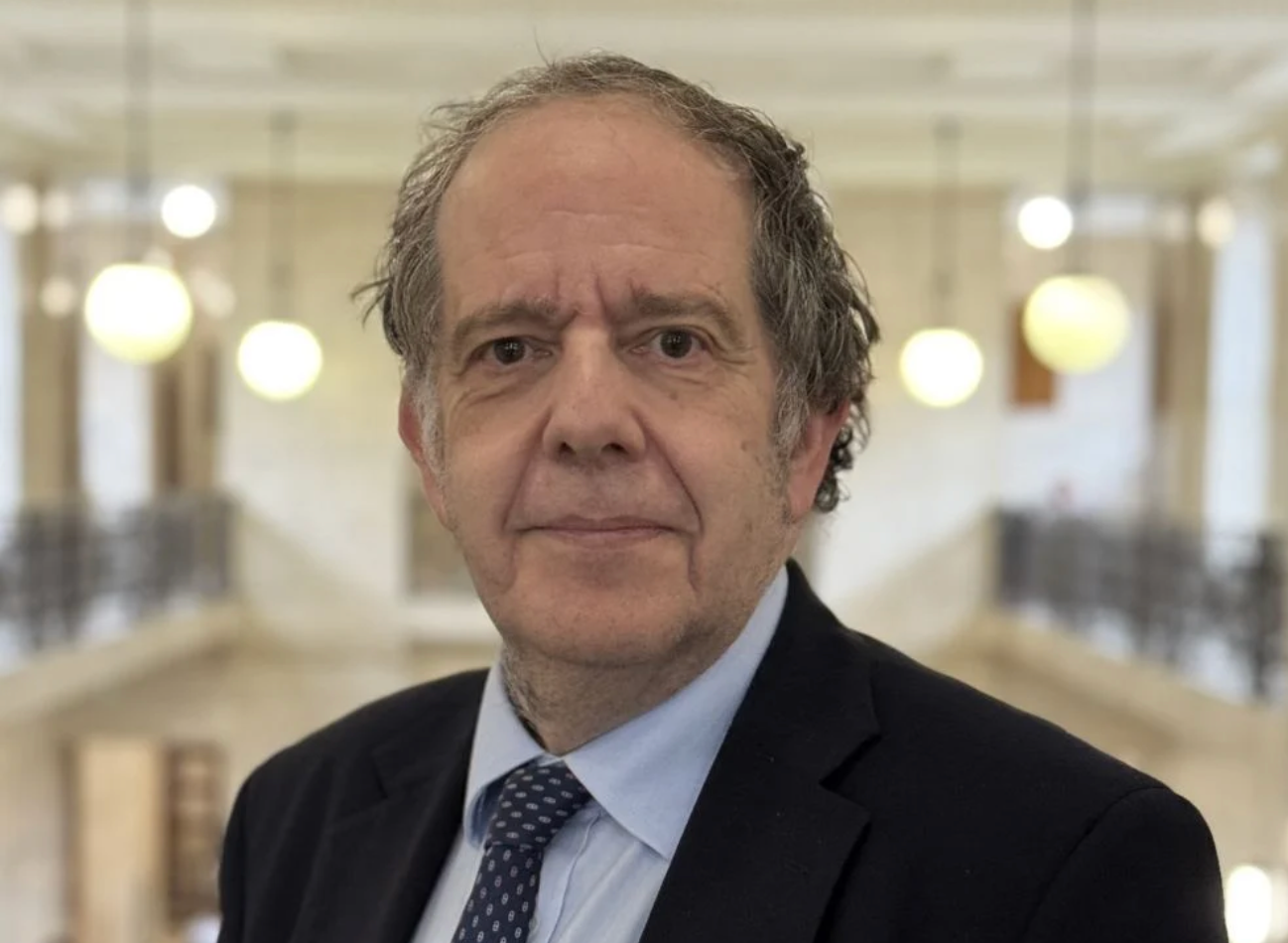
Professor David Latchman has just been appointed Vice Chancellor of the University of London. He has prospered mightily, despite a checkered past.
During the 2000s, David Latchman ran a laboratory at University College London (UCL), where investigators subsequently identified manipulated, duplicated or unreliable images and data. Latchman later became Master of Birkbeck College, while retaining his professorship at UCL. After an anonymous whistleblower raised concerns, UCL investigated dozens of publications. The investigations identified serious problems in multiple papers, leading to a mixture of retractions and corrections. There are now more than 70 papers of Latchman’s listed on pubpeer as probably containing doctored images.
There was no finding that Latchman himself fabricated data or knowingly participated in the manipulation. A final UCL disciplinary hearing in 2018 found insufficient grounds for dismissal or formal disciplinary action against him. However, the investigations were highly critical of his oversight of the laboratory and described his failure to properly supervise the research as “reckless”.
The 21 Group would argue that, whatever the conduct of the junior researchers involved, the senior author and head of the laboratory cannot simply disown responsibility for research produced under his supervision. Professor John Hardy, another senior UCL scientist, publicly called for Latchman’s resignation in 2020 as reported here.
Latchman was an author on eight papers that faced retraction, while other problematic papers were corrected rather than retracted. Latchman blamed the falsification on junior members of his team, including researcher Dr Anastasis Stephanou, who acknowledged inappropriate manipulation in at least one case.
There is unusual element to the story. Latchman is the nephew of Maurice Wohl and has served as chairman and trustee of the Maurice Wohl Charitable Foundation. The foundation made substantial donations to Birkbeck during Latchman’s tenure, including funding for molecular biology laboratories, a PhD scholarship and the Toddlerlab research facility. There is no claim that these donations were improper, or that Latchman personally benefited from them.
Latchman was also among the highest-paid university heads in Britain. Birkbeck’s own accounts record total remuneration of around £408,000 in 2017–18. More recently, however, the university reported that he voluntarily reduced his salary by £50,000 a year in 2022 because of Birkbeck’s poor financial position.
Rather than ending his career, the research controversy was followed by continued advancement up the academic ladder. Latchman remained at the top of Birkbeck for roughly two decades, subsequently becoming Deputy Vice-Chancellor of the University of London in 2023.
Then came another episode of turmoil at the University of London. Following bullying allegations, Vice Chancellor Wendy Thomson was suspended in 2025, as reported here. She is currently suing the University of London.
Against that backdrop, the University announced David Latchman’s appointment as Vice Chancellor on 23 July 2026.
So there we have it. A scientist whose laboratory became embroiled in a substantial research integrity controversy, whose oversight was criticised as reckless, who nevertheless remained at the top of British higher education for decades, and who has now reached the very top of the University of London.
Nice to see that strategy, networking and playing the long game win out in the end.
Of course, the contrast with Jason Arday is stark.
Latchman’s is a remarkable (and troubling) tale of ascent despite findings of research impropriety.
Thanks for the new post, 21 Group. I suppose I should just get ahead of the curve and point out that comparisons will be made to a certain former Cambridge professor? Might be worth pointing out that Latchman himself was cleared of intentional fraud… though investigators upheld a charge of research misconduct by “recklessness” for failing to manage the lab appropriately which probably is not a great CV note for someone running a huge university network. I guess the real question is why, of all the candidates for the role, would his CV jump to the top of the pile?
I suppose I should just get ahead of the curve and point out that comparisons will be made to a certain former Cambridge professor?
Indeed.
Exactly. If we are going to talk about unexplained survivors in UK academia let’s start from the top.
No wonder UK universities are so averse to investigating research misconduct and plagiarism if those in charge know they will be the ones facing the hardest questions!
Another shot of sanity from Emmanuel Ayoola (https://www.youtube.com/watch?v=FhsP_hO28W8). Plenty of second-generation Nigerians, Ethiopians, and Kenyans feel the same way. Don’t give in to the racist narrative. Don’t ever let them divide us. We were not made black and white but are all one human race and equal before God.
Once Kamal Munir steps down, I’ve decided I will apply for the Pro-Vc of Community and Engagement position
Should be fun for all concerned.
Good. We need a Pro-VC with moral clarity and integrity. Meanwhile Homerton seems like a den of race-baiting and is home to Woolley, Cremin, and yes also Munir. And let’s not forget the death threats against Bradley Smart, a Homerton student who received attacks “from other students at Homerton College” who subjected to abuse in a student group chat, where individuals from the college wrote: “I’m going to kill him,” “kill him”, and “he needs to die” (https://thetab.com/2026/05/05/cambridge-university-fails-to-suspend-students-who-sent-death-threats-over-israel-trip). According to his testimony “Bradley claimed he reported the threats to the college’s harassment channels, but was told to either speak to welfare staff or consider moving out.” And that’s the college claiming to lead the charge against racism? Seriously? While trying to stoke a race war? Is that what we have come to?
Well, you will have a very low bar to cross. Munir’s legacy as Pro-VC for community is that he managed to plunge not only Cambridge – but the entire UK – in to a race war.
Even if that were his deliberate goal that would have been almost impossible to pull off. Literally anything would be an improvement on that record.
And embroil the Vice Chancellor in a losing Employment Tribunal in which the VC’s own evidence was not believed
Note the announcement of his leaving happened shortly after the Tribunal ended.
Kamal has many more achievements of course. Let’s have a full list. He was a disastrous appointment
At least he helped to make Cambridge University the “UK’s Best Employer”
https://www.cam.ac.uk/news/cambridge-named-uks-top-employer-by-financial-times
“I am very proud of this important recognition in the Financial Times, which reflects the hard work of many colleagues. We are committed to continually improving the working environment and supporting academic and professional excellence.”
Has FT not retracted it yet? Even before recent events, was already awkward they somehow jumped Cambridge from below 500th (not on the list) to 1st in space of a single year.
Obviously nothing happened during those 12 months to justify it. Could only have been a result of methodology not reality. Undermines validity of entire assessment.
But accompanying FT article simply adds more awkward questions. Press office putting forward Munir to tout his “accomplishments” but we know he was due to account for whistleblower retaliation.
Raises too many questions about ties between Cambridge, GLP, media (BBC, FT, C4), and political establishment. Too many cover-ups over CUH, CRUK, Astronomy, Arday to hide. FT reputation hinges on accuracy. If the “employer of the year” has staff suicides and judgements of systemic staff retaliation surely time to amend and update.
“Has FT not retracted it yet?”
No. I contacted them multiple times and talked to multiple editors. If you mention my name to them I can assure you that they remember it. I suggest that if people feel that this ranking is an humiliation for victims of serious abuses at UCam, reach the editors of FT and express your concerns. I wonder if this programme is one of the reasons for their ranking and refusal to retract it:
https://www.jbs.cam.ac.uk/executive-education/strategy/cambridge-and-financial-times-strategy-programme/
Isn’t Kamal Munir at the Cambridge Judge Business School?
That is interesting. We did not know of links between the FT and the Judge Business School (to which Kamal Munir will shortly return to focus on research & teaching)
Of all the main newspapers, the FT has been surprisingly reticent over the last year in reporting the troubles at Cambridge. Just a coincidence, we’re sure
hahahhahahaha well done!
Does that mean you can be the Chair of the HR Committee?
I can already imagine the face of a few people once they get the good news.
Tick tock tick tock tick tock
Meanwhile, I was told that more victims are coming forward 😉
If more victims are coming forward then the HR committee must be terrified already…
And yet, at the very moment that I write this message, they continue with their malpractices and want to have conflicted people involved in investigations These people do not learn.
The end of the circus is near. Let’s keep pushing.
Hearing this too. Even after the ET judgment there are new reports of whistlblower retaliation.
Please believe that nothing has changed. They continue with the same practices of cover up and retaliation against whistleblowers. It will only change if and when some key people are sacked.
This is concerning to hear. If even the Evans judgement has not caused them to reflect, reconsider, and change course, I don’t think people will wait more years for their cases to reach court. That doesn’t mean they will back away. With the press hungry for stories I would imagine it would instead all play out in public before summer is done.
♬ ♬ …dreaming of cremification… ♬ ♬
“With the press hungry for stories I would imagine it would instead all play out in public before summer is done.”
I was told that people are working on it 😉
Everybody just yells and screams at each other. Nobody’s civil anymore.
Can I please be your campaign manager? It should be fun to be a fly on the meeting room wall when they discussed this? If they reject your application, can we ask them for their reasons?
I was thinking VC position but one can wait.
Well that prospect has cheered me up!
In these straitened times you could be on to a winner if you make it your aim to save your salary many times over by cutting tribunal and severance costs.
If we are going to have a national conversation about race and structural injustice I would have hoped Cambridge of all places would be leading with the facts instead of stoking culture wars and racial divides.
For example, both Cofnas and his so-called (though somewhat symbiotic) critics like Woolley and Abbott like to cite this statistic about there being only 1.2% of professors who are black against 4.4% of the UK population. But the black population is also a lot younger, and when you control for age that narrows significantly – only around 2-2.5% of the UK population of professorial age (40 and above) is black.
Then of course if you control for educational attainment it disappears almost entirely. So the real debate needs to be around how to improve inner-city schools, childcare, early-life family structures and home learning in black communities etc. But that’s the conversation wealthy urban liberals like Joylon don’t want to have because it would mean significant tax and spend to address the root causes of social injustice, via sustained state intervention. Much easier to make token diversity hires and pretend everything is ok all the while black communities still struggle with insecurity, skills shortages and lack of new business creation and investment.
Exactly. It’s not about facts, not about race, it’s all about politics. Don’t get suckered in.
Why not hold up Kemi Badenoch, who completed her A-levels while working at McDonald’s, then became a software engineer, then somehow managed to get the rank and file membership of the Conservative Party to vote for their first-ever Black woman leader – beating off Jenrick to go lick his wounds with Farage in Reform UK.
If that isn’t winning the game of life in “Hard Mode” I don’t know what is.
This is exactly correct. It’s also the reason the SWP want to turn this into a question that is only (rather then partly) about race. Despite their rhetoric, they are largely middle class pseudo-Marxists.
Yeah. Kemi may be the boss queen who deserves to be Britain’s next PM, but instead — thanks to Cambridge — we’re going to end up with a smarmy swindler who spends his time arguing with a bin. Thanks, Cambridge.
“we’re going to end up with a smarmy swindler who spends his time arguing with a bin”
Now then now then. Farage may be trash, but I dispute your characterisation of Count Binface as a “smarmy swindler”
Exactly- the attainment gap starts very early in life for many minorities, the cause is lost far before they get to university age
True as a general fact: but worth reminding so-called “race realists” that among British Nigerians, for example, who are 0.5% of the population, the rate of school pupils getting five A* to C grades at GCSE is actually 22% points higher than the rest of the country. There are plenty of amazing role models for young black scientists and entrepreneurs and innovators to follow whose credentials are 100% legit.
@Realist
Thank you. For all of us here who oppose racism — *this* is the message that should be broadcast. Black and minority ethic students are perfectly capable of competing fair and square and smashing it on academic performance. Hard work and achievement is how we prove the racists wrong.
This argument (implying that the percent of the population should be necessary mirrored in the certain positions, such as professorship or in educational attainment) – is literally the same argument used in the Soviet Union, that made citizens of Jewish roots make an extra mile to attain (top) universities. I personally knew brilliant mathematicians who first went to army or vocational school, or a very non-prestigious place… And those are successful cases we know about. One would have hoped that such practices are known and learned from… but here we go again
A great read about the Chief Exec of Bolt who fired his entire HR department and found that all the problems suddenly disappeared…Should other organisations follow this seemingly practice?
https://www.telegraph.co.uk/news/2026/08/19/ryan-breslow-bolt-sacking-hr/
If admin is now 50% of spend (vis a vis departments) and legal is some further crazy figure itwould be marvelous to know how much salary bonus we would be in line for from implementing that change
Interesting point. Don’t forget the additional massive savings from the current sunk costs (loss of productivity caused by the detrimental impact on staff and students by recent HR processes. Time spent by staff at all levels to try to repair the damage caused by these processes. Legal costs of court cases that might be prevented by these HR processes.
It’s interesting that the Telegraph are covering this. This topic came up recently on this blog when it was covered by TheHRdigest back in May:
https://www.thehrdigest.com/bolts-ceo-fired-his-entire-hr-team-instead-they-now-have-people-ops/
https://21percent.org/?p=3662#comment-6477
There was a lot of coverage at the time in HR circles.
I would say that we could achieve a lot of cost saving by replacing the entirety of HR with an out-of-office autoreply message. Except that is basically what we have already
Hilarious comment (and not hilarious at the same time).
People Ops and HR are quite different.
The former is about seeing its employees as a key resource and empowering them by providing support and adopting a data driven approach to improve practices with a more given and take approach rather than the rigid, policy enforcement and compliance nature of HR.
The latter deal with employees according to what is best for the organisation regarding a specific matter. In stark contrast, people ops consider the whole of an employee in their approach with a goal to help them realise their potential within an organisation, so that it is win-win for both employer and employee
A helpful summary is on bamboo or indeed:
https://www.bamboohr.com/resources/hr-glossary/people-operations
https://www.indeed.com/hire/c/info/people-operations-vs-human-resources-vs-human-relations
I think some on this forum might say HR is less about compliance than finding ways to ensure that non-compliance is never detected.
I would!
My comments above simply reflect the general role definitions of HR, rather than how they may be manifesting in a HR division at a given organisation.
I think that we agree with each other in that what is HR on paper is not what employees are witnessing down on the ground at certain organisations. My point was really that there is a modern alternative to HR. People Ops is used successfully in a lot of companies. It tends to feel much more professional and it is a positive approach towards employees.
“…’People Operations’ consider the whole of an employee in their approach with a goal to help them realise their potential within an organisation, so that it is win-win for both employer and employee.”
I agree with your two comments above @Anon43770 and having read the first article you cite, the contents of which try to explain the ideal emphasis of the two areas of larger HR departments. I have always presumed the overriding role of a Departmental Administrator in a University is the People Ops role as per the quote above. They also have to liaise and negotiate with the central HR officers and this is where sometimes friction can, but not always, occur, as central HR oversight doesn’t see the detail of what’s going on in the department and takes a more overall stance. If there is a departmental position taken which is at odds with central HR, senior academic departmental staff, if they agree, need to support the Administrator and a resolution found. It should go without saying that Senior leadership teams should have the above quoted consideration when individual staff issues are escalated to a high level. Unfortunately, as in these reported cases and in other media reported instances in other universities, the ‘…consideration of the whole of an employee in their approach…’ has been lost.
‘HR’s typically strategic approach treats the workforce like human capital that exists to serve the company’s needs.
People ops views employees as complete, unique individuals.
When it comes to people ops and. HR, people ops takes a more holistic and empathetic approach. The ultimate goal is to empower employees to discover and reach their full potential—the company thrives when they thrive.’ [bambooHR – People Operations]
“I have always presumed the overriding role of a Departmental Administrator in a University is the People Ops role as per the quote above”.
Departmental Administrators are now called Business Operations Managers.
People…? What people…?
That said, a knowledgeable and competent BOM makes a lot of difference. Lucky are the departments that still have one.
Once the title of ‘manager’ is used, particularly in universities, everyone else is suspicious and it takes some time to win people over. When you add ‘Business’ to the title, it’s even worse. Its the right number of the right people (right outlook and approach) in the collection of university administrative roles which is most important but the titles need a rethink also.
Has the Charity Commission offered any opinion on the appointment of so many “business managers” and “business operations” roles? By statute the university is a charity, not a business and the taxable treatment of the university is based precisely on it not being a business, to describe its officers as business officers could invite some scrutiny.
Anyone else find it weird that last year Cambridge fought and lost a high court case to shut down peaceful protest, and this year they are petitioning the government to end press freedom?
Lord Smith of Finsbury’s article is here
https://archive.is/L5ATb
Insufficiently critical of the role of Cambridge, though behind the scenes he is probably saying harsher things
“You’re not here to learn to be clever; you’re here to learn to be kind”
I promise that when I read this phrase, I thought it was written by HR.
It is rather unfortunate that Lord Smith failed to address the issue of hiring of Carter-Ruck or calling the police to silence a journalist that was doing his investigatory work. Or the fact that the University, namely the senior leadership, knew about the allegations and didn’t act, except perhaps contributing to the silencing of a student who reported the incident. Lord Smith claims that the 249 articles on Arday, over 70% of which after he resigned, was an act of racism, but he failed to note that when Arday resigned he denied the allegations against him, the implication being that journalists were not reporting the truth. If Arday had openly assumed at least some of the obvious issues, would the press continue the reporting on him? I would argue if he had assumed the obvious flaws, they would switch most of the focus to the University instead.
Lord Smith knows about several cases of serious abuses at Cambridge University for many months. What exactly has he done to address them? “As Chancellor, I have no authority to intervene” reads to me as an excuse to avoid intervention. He has enough influence to make a difference, and still the abuses continue in the background. This said, at least he wrote this article while the VC not even this did.
Cambridge senior leadership team does not listen to anyone, from Chancellor downwards
If that is the case, which makes sense, then that should be a key message from the members of the Cambridge community, from Chancellor downwards, namely in the press. It needs to be clear to the public at large what is happening in this institution. Blaming the press will not solve the many problems of Cambridge University.
To clarify, I am not arguing that the press should not be evaluated, but instead that the members of the Cambridge community, including Lord Smith, look inwards and ask what they can do to change the situation. If the leadership does not listen to members, including the Chancellor, this needs to be reported, and ideally as a collective report with as many signatures as possible. On that day, the leadership will listen or fall.
But Smith states it clearly, no? He admits that he has no authority to intervene. Just as we are powerless passengers on the boat he’s saying he is powerless as the masthead. Meanwhile the true captain, Debbie, has been sighted only once, by accident, getting booed at a vigil.
“But Smith states it clearly, no? He admits that he has no authority to intervene.”
My point is that he can do much more than what he claims he can. If he contacted the leadership and they ignored his concerns, as they did to other members who contacted them, then that in itself is a message that the general public should know because most people still have a misleading idea of UCam. In my view, it is the responsibility of all members to give a more accurate picture of the University regardless of their seniority. NO ONE assumed any fault for what happened or even felt the conscience to resign.
Regarding our great leader, it is always a good opportunity to watch her in action. If you feel depressed, watch this and you will feel better. It makes me smile:
https://www.bbc.com/news/articles/cy9wzr5545yo
@Researcher
Thanks for resharing that BBC link. Must say that I find myself in agreement with that SWP woman here. She articulated with great clarity what a lot of us are feeling (“shameful, you didn’t attend the students’ one when it was outside your uni – yeah, walk away!”)
When I came to Cambridge, I knew kindness.
By the time I left, all I knew was hate.
Bradley Smart was a Homerton student who received attacks from other students at Homerton.
They wrote explicit death threats: “I’m going to kill him,” “kill him”, and “he needs to die”.
The master of Homerton College is Lord Woolley; Cremin and Munir are also fellows.
He was also subject to a “cancellation” campaign via defamatory social-media posts, attempts to damage his career prospects, and exclusion from college clubs.
He reported the threats to the college’s harassment channels and was told “to either speak to welfare staff or consider moving out.”
The failure of the college to protect him led him to seek police support. The police dismissed it as “academic” or “educational” matter.
On review Lord Walney, the former government counter-extremism tsar, stated that the college’s response was “wholly inadequate” and set “a dangerous precedent that intimidation and threats of political violence will be tolerated”.
A Cambridge SU investigation found that around 26% of Cambridge porters were previously employed by the police or armed forces.
also the abusers were allowed to stay at homerton while smart had to leave
UK policing in a nutshell
Cambridge Professor: A journalist is about to expose my academic misconduct. Can you arrest him for me?
UK Police: Sure – let me get right on to that.
Cambridge Student: I am being sent explicit death threats. Here is the evidence. Here are the names, times, and risk of imminent harm.
UK Police: Sorry mate, sounds like an academic matter to me
“They wrote explicit death threats: “I’m going to kill him,” “kill him”, and “he needs to die”.”
FT employer of the year!!!
Can you remind us what was the response of OSCCA? Did Bradley Smart have the privilege of interacting with Nikki Bannister or Sarah d’Ambrumenil? They act as Louise Akroyd and Andrea Hudson, respectively, for students by the way.
I stress that when the leadership wants to expel a student, they do it. While death threats may not be sufficient to expel a student, emails reporting misconduct of senior may.
Sounds like if there is an institutional racism problem at Cambridge, the issue is institutionalised antisemitism?
You don’t cure one racism by introducing another.
exactly the same as would have happened to the Labour Party if the extreme-left faction had been allowed to take control and implement a purge
“A Cambridge SU investigation found that around 26% of Cambridge porters were previously employed by the police or armed forces.” Good information.
https://www.varsity.co.uk/news/28363
Cambridge: We were unable to examine PhD plagiarism allegations against a professor because it was the responsibility of degree-granting institution.
Ghent: Got it, makes sense. Still, want us to fire one of your former academics for reporting it after he left Cambridge and came here?
Cambridge Legal “Sued The Chancellor, Masters and Scholars of the University of Cambridge in the County Court for negligence and malicious falsehood in providing a poison pen reference that led to their former employee being dismissed from her new job, resulting in early settlement and the payment of compensation and legal costs.” https://www.cambridgelegal.co.uk/profile/
Thus, it would not be surprising if Cambridge contacted Ghent in the background, hoping to deflect accountability or for pure retaliation. One of the consequences, of course, is that the topic will remain in the news for longer… But at least we now got an email from Prentice-Vira-Munir (interesting order by the way), where they tell us they are very concerned!
What happened in that other case?
If that were true – though, I feel it important to acknowledge that is little more than speculation at this point based on extrapolation of past conduct – then we would be entering full-on Post Office territory. The story will continue to run and run in the press for month if not years, with each successive episode like this bringing the story back to the top and dragging the university reputation another notch lower.
If this is how Cambridge treats forner faculty then I am not surprised no-one wants to resign.
What about resignation?
“Dear colleagues,
Today marks a week since the tragic passing of our former colleague Jason Arday. Last Friday we heard the terrible news of his death and this past week has been a time of profound grief and deep reflection in our community. We understand the pain, sadness and anger that many of our colleagues, staff and students are feeling. We have been reaching out to meet as many of you as possible, to hear from you, and will continue to do so.
At the heart of these terrible events are people who are hurt and grieving. We are appalled that many of our Black students and staff, as well as members of our Faculty of Education, continue to receive racist, hateful and abusive messages in online forums and on social media, and condemn all forms of abuse.
We have been coordinating with external providers to enhance our provision of culturally and racially-sensitive support for staff and students, and this information is being shared with those directly impacted. More information on other forms of practical support will be shared with University institutions next week.
The University is committed to learning lessons from this tragedy, and is taking steps to establish an independent process that will enable thoughtful and thorough reflection as an institution. In the meantime, we are focused on supporting members of our community and ensuring that our staff and students have the care and support they need.
With best wishes,
Professor Deborah Prentice
Vice-Chancellor
Professor Bhaskar Vira
Senior Pro-Vice-Chancellor for Education and Environmental Sustainability
Professor Kamal Munir
Senior Pro-Vice-Chancellor for University Community and Engagement”
Does this one having a surveillance tracking pixel too?
ChatGPT says, “This email definitely contains a tracking pixel, and it also uses tracked links.”
People should not be surprised as UCam takes time to learn lessons!
There really needs to be a clear statement from staff that i) consent has not been provided to engage in online tracking, ii) has no objective justification, and iii) to cease and desist from further violations of the The Privacy and Electronic Communications Regulation. Any continued failure to comply with the law should then be immediately subject to legal action.
It could be that they feel they can do this because the emails are sent out and received via the UCam email system, and that all such emails are ‘owned’ by the University and can therefore be reviewed or tracked by HR and management etc at will.
However, they will certainly get into serious difficulty if they are tracking email sent outside of this system.
No, privacy law also applies to staff, not only third parties. This is well-established case law. An employer cannot subject staff to covert surveillance (such as the use of hidden tracking links in emails, which supply personal information automatically to the sender), without having secured either their prior consent or a strong ground of justification. Can you imagine the furor if a Research Ethics committee were asked to sign off on such a research design? There is already a strong case for legal action based on internal communications alone.
I personally think the practice is despicable, which is likely a problem at many Universities.
I do wonder though that by signing up to University email/IT accounts staff may be inadvertently giving their permission for all sorts. Also, what really counts as ‘personal’ information in this legal context? Does this include the username of the work email account for example? Or would a conversational email between work colleagues count?
I recall submitting a GDPR SAR request a while back with another institution. It seemed that the data protection officer that handled the case had the capability to scan all University inboxes for emails with my name in them. I thought this was strange at the time.
That is common in many institutions, namely in Oxford for example. In Cambridge, the system is much worse. James Knapton contacts individuals named in the SAR and asks them to do a search “to the best of their ability” by your name or whatever keyword you give them.
And yes, Cambridge can, and does whenever necessary, screen mailboxes from staff and students without their permission or knowledge.
Tracking pixels can reveal highly personal and sensitive information including your location (via IP address), time zone, and notably, the identities of anyone forwarding the email to someone else (unless they are smart and view in text only without rendering the html or have image loading blocked on their client). They are a flagrant violation of PECR. This has been tested already in court. No company has the automatic right to use them. It is a big court headache in the making if the university does not comply and ban their unmandated use.
What about Professor Aston? Wasn’t the issue also about Research Misconduct?
Interesting to see who is not in these email as well as who is. The Prentice-Vira-Munir troika is visible here for all to see but no-one else from PVC group (Aston), Council, Registrary, or HR. I also note that Smith’s one major statement on this (in the Telegraph) lead on the importance of academic standards.
“members of our Faculty of Education, continue to receive racist, hateful and abusive messages in online forums and on social media”
This is a really weird statement.
First of all, as regards social media, the Faculty of Education is not the “recipient”. There are doubtless many social media messages about them posted online, but the recipient in that case is the general public. These are not private communications meant to be read by them specifically, and the public has a right to debate their conduct and exchange views openly.
Second, most messages as far as I can tell are about matters of integrity and academic standards. There are surely racist messages but most social media platforms (e.g. Reddit) have moderators to screen those out and even X has a function to flag abusive content or correct misinformation.
Third, this is a real failure of accountability. They (and the authors of the email) bear no small share of responsibility for this outbreak of critique. Had the issues been handled privately in good time, there would have been no scandal for the press to attach to.
Fourth I see no attempt to engage here with the substantive matters of critique e.g. were academic standards violated, were whistleblowers ignored, and was the scandal mismanaged by engaging in denial – not only prior to public exposure, but even in the early stages of media and public attention.
It seem that Prentice, Vira and Munir are latching their fates to that of the Faculty of Education, and taking the standing of the entire university down with them. Have colleagues been consulted in this decision? Does it reflect the consensus of the Regents, Council, or alumni community?
Exactly. There has been no apology for what has been allowed to happen, yet very clearly enormous mistakes were made by some individuals. Many would argue that the three signatories bear some responsibility
While I am not entirely surprised that Cambridge has adopted such as response, I would like to point to the contrast between the conduct of the Cambridge leadership and that of the Metropolitan Police.
Immediately upon public disclosure of the fact that the Met had investigated journalist Jack Grove, the Police Commissioner Sir Mark Rowley gave a public interview to the media in which he acknowledged fault for the force’s conduct, and then, when asked if an apology was due to Mr. Grove, immediately issued an apology without hesitation.
Why have we not seen any of these three individuals offering interviews to allay public concerns, and might it not be reasonable to infer that, had such interviews been made from the outset of this horrendous affair, the matter would have settled early without the awful cycle of escalation that followed?
^ Fourth ^ You can say that again.
https://x.com/USAmbToBelgium/status/2090820596632289384
The United States Mission to Belgium condemns, in the strongest terms, Ghent University’s retaliation against an American scholar following his accurate whistleblower reporting on academic fraud.
The United States government regularly funds and supports research, academic exchanges, and other engagements with overseas universities. Dishonest, corrupt institutions that engage in, or reward, scapegoating mob behavior are not desirable partners for us. This is particularly true where the purpose and effect of the scapegoating is to punish accurate journalism unearthing academic dishonesty. We are therefore reviewing any relationships we have with Ghent University.
Bad-faith idealogues will try to make this a referendum on the content of Cofnas’s scholarship – or polemical distortions of it. That’s wrong. Free speech means that controversial views are protected. And Cofnas’s views were known to Ghent University when he was hired.
The ultimate purpose of freedom of speech is to overturn lies, fraud, and false ideologies. This is precisely what Cofnas was doing, and precisely the reason his home institution wants to silence him.
Thank you for your attention to this matter.
It would be nice if matters de-escalated.
One of reasons for continued escalation is Cambridge’s refusal to admit any blame. Prentice needs to say, on behalf of the senior leadership, we made mistakes
Alternatively, she needs to say “I resign because I realized that I do not have the leadership skills necessary for addressing this issue and I do not know how to apolagize in the name of the institution that I run”
Oh dear. I fear, sadly, that this will only reinforce the sense of righteousness of the hardline factions within the academy, all the while those of us who would rather get on and do our research are going to be held hostage by this nonsense (it pains me to say) for a long time to come.
This is actually a major, major problem for Ghent. All academic institutions depend heavily on US research collaboration and grant inclusion as well as American visiting students.
Makes me wonder what is going on behind the scenes at Cambridge too. The US Ambassador was here to launch the new US Centre right before all this blew up. Surely there have been awkward conversations. The pressure from both sides must be impossible to balance.
The world watching the leadership of Cambridge “fixing” the situation:
https://x.com/venturetwins/status/2090168833231503530
News just in
“Cambridge leadership breathes sigh of relief as hitherto unknown Belgian university volunteers to play human shield for Arday fiasco”
well that’s a relief
when the Arday scandal is finally revealed to have led to a crushing decline in Cambridge’s academic rankings the jury will be out of whether this was due to loss of reputation
or because the entire university spent the most productive research month of the year glued to social media trying to figure out what the fuck is going on
More like: Cambridge Comms Office breathe sigh of relief as they go home on Friday evening to their first free weekend in a month without being the world’s #1 disaster uni
https://x.com/21percentgroup/status/2090867280435445887
The Cambridge University press statements are shockingly passive, as if they were mere bystanders. If you want to stand by staff don’t accept their resignation, don’t launch an inquiry. But if you do, own that. Currently looking like you want to be all things to all people…. (Lucy Easthope)
“The Cambridge University press statements are shockingly passive, as if they were mere bystanders”
That’s because they are mere bystanders. The culture of secrecy is so pervasive that they were behind the press the whole time because the university did not do even basic investigations to figure out the truth!
They can own nothing. That is why they are poor leaders.
A bit weird that so many post-ers on here are treating Cofnas–clearly racist, openly white supremacist, manifestly tied in to far-right networks with big funders–as some kind of regular just-doing-his-job ‘whistleblower.’ Perhaps you mean Dogwhistle-Blower.
The United States embassy statement and attempt to throttle Ghent is shameful. A person who makes racist statements HAS to be investigated. Sorry if that’s too DEI for you. Where I agree is that this should all have been dealt with at Cambridge. This is all too little too late.
The origins of all this mess go back to Toope and the freedom of speech (non) controversy. Prentice took from that the idea that all standards of community conduct should be abandoned enitrely, and that’s how we ended up with Faragists like James Orr calling for Muslim deportation, the faculty of education hiring quasi-Islamists, and in the middle, all manner of radical woke activists unrestrained. The moderate centre / centre-left has eroded and the university has become ground zero for a culture war most academics would (still!) rather have nothing to do with.
@Madam Speaker
I agree with you but the issue is one of due process. Ghent hired Cofnas knowing in full his views and public statements. They were content to have hm as a member of their community on that basis. Given that, it is hard to avoid the conclusion that they fired him, not for his racial views, but because he acted as a whistleblower over research misconduct. There is no doubt that he would still be employed at Ghent had he not made a public report regarding plagiarism.
I thought Cofnas had already been investigated and let off? I think it would blow most of his critics minds to find out that he supports having quotas to hire more Black academics and believes in universal human political equality and civic rights.
His views on racial differences in the ability to pass quirky IQ tests is puzzling and clearly open to abuse by people who are legitimately racist (a key reason why I oppose it vigorously in addition to the many and serious evidentiary problems) but if you think that is racist while believing in human equality, you’d have to believe that people who advocate for quotas to overcome neurodiversity obstacles to test performance are “able-ist” (as it is basically the same argument logic).
As stated I think he is utterly and completely factually wrong and rather “spectrum-y” in his apparent blindness to how his arguments are liable to misuse by those who are genuinely despicable racists, but I would rather engage (and refute) him on the empirical arguments (e.g. around how IQ tests are not objective but can be trained for, or how IQ scores have increased in many countries or social groups over time due to socioeconomic factors), because I am confident that “race realism” can be falsified and discredited via empirical evidence and scientific argument, without need for a helping hand from cancel culture, which I fear actually only “empowers” such viewpoints among the wrong kind of “anti-intellectual” audience.
I am stunned at how no-one – no-one! – has noticed the biggest irony of the whole Cofnas vs Cambridge Faculty of Education saga.
If Cofnas reframed his argument as: “standardised tests discriminate against black students by focusing on cognitive faculties such as numeracy or literacy at which they are on average weaker, while ignoring other equally or more important aspects of intelligence such as emotional fluency, creativity and imagination” then his “race realist” argument would be identical – IDENTICAL – to that of Hilary Cremin.
Let that sink in!
Ouch. After four weeks of online bile that simple cogent observation is probably the most damning critique I have ever seen of the Cambridge Ed Faculty worldview.
Madam Speaker, what’s shameful is people who report misconduct can be retaliated against with accusations of discrimination, just because the plagiarist happened to be a racialised minority and the person reporting is white. (Before you object, it is a known fact that Cofnas is racist: I’m not debating that).
There’s a pretty high statistical likelihood the reporters of misconduct WILL be white at Cambridge, if you look at how few academics from under-represented groups are there. Does that mean white peoples’ allegations of research misconduct should be thrown out if the accused happens to be black or brown? And who is the Almighty Judge of racist versus not racist people? Does that question turn on skin colour, too?
When you live in Nigeria, there’s no such thing as being a racialised minority / black person in Nigeria, because the majority of the population is black. You become black in the West. If you think that means there’s no discrimination or unconscious bias in Nigeria, you’re mistaken. Everyone is capable of holding discriminatory views and being a bigot, no matter their skin colour. Discrimination can be based on tribe, religion, other factors. No one ought to be getting a pass card b/c the accuser whose got evidence is white, and the accused is not white, or vice versa.
You literally can’t be arguing the plagiarism and research misconduct of Dr Arday (RIP)- including the TurnItIn report- are all just racist lies. Okay, you dislike Cofnas and abhor his ideologies. Join the club! It doesn’t mean he’s incapable of reporting facts. The plagiarism and data falsification is extremely clear. The cover up by Cambridge is clear.
You keep going on about Cofnas and focussing hard on Dr Arday’s colour rather than considering what it means that a university can openly retaliate against someone for reporting misconduct that’s painfully clear for all to see. You can hate the racist headlines and resent that a Racist lad broke the story. I do. But that doesn’t justify dismissing the egregious research misconduct.
It also doesn’t justify reducing Dr Arday to nothing but a skin colour. He was a CAMBRIDGE prof and research misconduct demands investigation. The public has a right to know the plagiarised research and falsified data they can’t trust.
“Trump official intervenes in suspension of Arday critic Nathan Cofnas”
https://www.thetimes.com/us/american-politics/article/jason-arday-critic-nathan-cofnas-t6lpnrbft
The Guardian published this one with some interesting views:
https://www.theguardian.com/uk-news/2026/aug/21/the-many-tragedies-of-the-jason-arday-case
“A straightforward mea culpa from Cambridge University would be more appropriate than expressions of sorrow over the tragedy of Jason Arday’s death.
The proper way to address the underrepresentation of black academics is to commit sustained time, effort and resources to the pipeline – from GCSE and A-level through undergraduate and graduate education to research fellowships and academic appointments.
Instead, Cambridge chose to make Jason Arday’s appointment into a highly public symbol of its commitment to diversity.
In doing so, the university inevitably focused exceptional attention on one individual and created circumstances in which both his record and his subsequent difficulties would receive exceptional scrutiny. Whatever the rights and wrongs of the allegations subsequently made against him, the immense pressure that followed was surely foreseeable.
Universities should address structural inequalities structurally, rather than place the burden of representing institutional progress upon individuals.
Prof John Ellis
Gonville and Caius College, Cambridge”
That is quite rich coming from The Guardian.
It was The Guardian (along with BBC) that made several high profile pieces of Jason Arday in 2023.
None of the “journalists”* made any due diligence, they accepted everything that Cambridge put on their plate and were one of significant contributors to this disaster, precisely by not doing their jobs.
*Yes, i am perfectly aware that the profession has been taken over by activists.
“Professor David Runciman, former head of the politics department at Cambridge University, has written an essay about the Arday affair… It reads like one long shrug”
https://www.ian-leslie.com/p/politics-is-making-academia-stupid
Former head of POLIS ….
Did David Runciman also discuss the scandals associated with POLIS?
Hopefully BreakerMorant will give us some news soon on one of our favourite Departments in Cambridge University. Ssssshhh for now!
For those who remember it “one long shrug” is also a great description of how the Regeni scandal was handled
https://www.devstudies.cam.ac.uk/news/giulio-regeni-1988-2016
A scandal in which the university came in for direct criticism from the Italian Prime Minister, who stated:
“I don’t understand the reason professors at such a prestigious global university would think that Italy would accept their silence; to me it seems inexplicable”
https://www.theguardian.com/world/2016/aug/01/italian-pm-joins-attacks-cambridge-university-giulio-regeni-murder
Any similarities to the Arday affair are, I am sure, entirely coincidental
plenty of background info here. back in the day when varsity still covered university scandals.
https://www.varsity.co.uk/news/9873
We should do a list of scandals they decided not to cover…
Did they cover the Whistleblowing Employment Tribunal already? Really odd, the Vice-Chancellor of the University was shown to engage in whistleblowing retaliation and Varsity did not write a line on it. Perhaps they are waiting for the damage hearings?
@Servity
What a lovely find. This obscure article offers wonderful insight in to the pathologies that have afflicted the university during the recent Arday scandal.
First – we get a statement of moral clarity that is from the local MP:
“The brutal murder of Giulio Regeni absolutely must be investigated by the UK government and international bodies, so that we can learn the truth about what happened to him. While this can only provide scant consolation to his friends and family, we can try to ensure that these atrocities do not happen to anyone else.”
Second – we get reaction from a Cambridge “anonymous spokesperson” who completely fluffs the ball (denying any need for accountability or responsibility):
“A university spokesman refused to explicitly endorse the specific requests in Huppert’s comments.”
And third – bonus! – we get confirmation that the short, vacuous and spineless “letters” sent by HODs and HOS were really just “ghost written” statements prepared behind the scenes:
“he revealed that the letters issued in the name of Professor David Runciman, the Head of Department at POLIS, and Professor Susan Smith, Mistress of Girton College, were also drafted on behalf of the university as a whole.”
It seems that Cambridge – much like the Bourbons – has learned nothing, and forgotten nothing.
Like most people here I was never a fan of Cofnas to say the least. But af least he did an interview right away with Belgian TV to clarify his views after being suspended. Where are the interviews with Cremin, Vira, Prentice and Co? Do they not think the public, minority scholars or alumni deserve answers?
The weekend dinner rumours are there were 3 or 4 other scandals that were about to drop before the whole Arday thing blew up but were held back due to fears that the Arday frenzy would drown out public attention, does anyone know anything more about those?
It’s Cambridge, there are always more scandals
There is no doubt that Arday was a fraud, or that Cambridge failed in its duty both to him and to standards of academic integrity.
But there is another backstory here – one of factional politics that has been playing out for years at Cambridge as the university has expanded both far-woke factionalists in Education and Gender, and a far-right cell around the Divinity School.
Exhibit A: The Arday scandal largely eclipsed the recent Byline stories about James Orr and the formation of a radical right network within Cambridge. The timing is hard to deny. It was pushed immediately before the Orr story was going to make big news. It distracted almost all attention.
Job done.
Exhibit B: But who was also involved in that investigation? None other than… yes, the Good Law Project! Indeed GLP wrote a clear expose piece about it in February 2026:
https://goodlawproject.org/putins-megaphone-orbans-far-right-push-into-uk-universities-is-fuelled-by-russian-oil/
So GLP had already made themselves a target. They didn’t push the Arday story so much because they cared about him, but because they were fighting another agenda – a culture war at Cambridge in which they were involved, when suddenly Arday appeared as a useful pawn in their game.
That of course made GLP an easy target in turn. In this way, Arday became collatoral damage in a longer-running GLP/Cambridge gender/education-nexus battle.
Exhibit C: The other person involved in the Foundation is Michael Gove. Why is he of interest? Because for more than a decade his “self-declared” (though not reciprocated) nemesis at Cambridge was one Hilary Cremin (who admittedly, literally invited this attack by baiting it for many years). She was never subtle about this; she even organised petitions against the man.
Exhibit D: Shortly after the Arday scandal broke, Hungarianconservative.com breaks another story, this time exposing the Gender Studies Centre at Cambridge (https://www.hungarianconservative.com/articles/culture_society/cambridge-university-woke-doctoral-thesis-topics/).
Hungarianconservative.com is a magazine within the pro-Fidesz media network in Budapest. It is closely aligned with, and largely audience-shares with, Mathias Corvinus Collegium (MCC).
To Cambridge be the link not subtle. James Orr, of Byline fame, is the MCC “International Guest”, and MCC lists him as a Budapest Lectures speaker. The Roger Scruton Legacy Foundation has received £512,500 (over 90% of its funding) from MCC since 2023, as per the Good Law Project (yes, them again!)
Exhibit E: Why else is that of interest?
Because for years this Cambridge network has been feeding stories to the press about wokeness at Cambridge – over the Cambridge University Society of Women (CUSW), the Ally Louks “politics of smell” PhD. Maybe worth noting that an unrelated target for the right-wing press had been Priyamvada Gopal, but back in 2020 (arguably her principled position on the Arday affair is praiseworthy for breaking the intended factionalism).
Exhibit F: Back to GLP: GLP is one of the most active pro-trans-rights litigators in the UK, and by 2025-26 that had become arguably its largest campaign area.
So by mid-2026 GLP was simultaneously (1) the leading pro-trans-rights litigator against the UK government and EHRC, and (2) the organiser of the highest-profile institutional-racism intervention in the Arday case. That dual identity is a large part of why the Arday letter attracted such fierce right-wing pushback – the same outlets already treated Maugham and GLP as adversaries in the gender debate.
Many of us knew this was coming and tried to issue a warning. We knew that the far-woke and far-right factions needed restraining. We knew they were game for a public showdown.
Did the Cambridge leadership listen to us?
No.
They took the side of the “insider” factions and we were attached and victimised instead.
The Good Law Project is a key actor in this saga. They are right to call for an investigation – but they are the ones who need investigating.
Through 2026, Maugham and GLP escalated a long-standing but previously more litigation-focused political programme into a more openly partisan campaign posture, with Reform UK and its Cambridge-linked network as an explicit target.
On 12 February 2026 GLP published Alice McCool’s “Putin’s megaphone” [https://goodlawproject.org/putins-megaphone-orbans-far-right-push-into-uk-universities-is-fuelled-by-russian-oil/], tracing £512,500, over 90% of the Roger Scruton Legacy Foundation’s funding, from Viktor Orbán’s Mathias Corvinus Collegium to a foundation of which the Cambridge theologian James Orr was a founding director. MCC’s endowment includes a 10% stake in the Hungarian energy group MOL, which refines majority-Russian crude. The timing was pointed: five days before Orr was announced as Reform UK’s Head of Policy on 17 February, and two months before Orbán lost the Hungarian election on 12 April. A companion GLP piece on 16 February, days before the Gorton and Denton by-election, named Reform candidate Matt Goodwin [https://goodlawproject.org/orbans-pay-checks-reform-candidate-fuelled-by-profits-from-russian-oil/] as an MCC-paid visiting fellow.
Companies House shows that on 31 March 2026 a UK trustee company, “Good Law Project Trustee Limited”, was incorporated with Maugham as director [https://find-and-update.company-information.service.gov.uk/company/17129642/officers]. GLP publicly announced its new ownership structure on 8 May 2026 [https://goodlawproject.org/our-ownership-structure-is-changing/]: the UK-registered operating company would now be owned by a Jersey non-charitable purpose trust rather than by Maugham personally.
It’s worth being precise about what this changed. GLP was set up in 2017 as a UK not-for-profit company limited by guarantee and has never been a UK registered charity. Maugham has always said this was deliberate. As GLP’s own May 2026 post explains [https://goodlawproject.org/our-ownership-structure-is-changing/], he wanted “the public interest features of a charity” but “outside of the moving political guardrails policed by the Charity Commission”. Charity status under CC9 would forbid the party-political litigation and named-target campaigning that is GLP’s core business, and GLP has itself repeatedly deployed the Charity Commission against right-wing charities including the LGB Alliance, the Institute of Economic Affairs [https://goodlawproject.org/update/charity-commission-iea-must-change-to-address-political-bias/], the Global Warming Policy Foundation [https://www.theguardian.com/environment/2024/apr/05/mps-accuse-charity-commission-of-legal-breach-over-climate-sceptic-thinktank], Policy Exchange [https://goodlawproject.org/charities-regulator-opens-case-against-policy-exchange/] and Sex Matters [https://www.civilsociety.co.uk/news/ongoing-compliance-case-into-gender-critical-charity-revealed.html]. The Jersey structure adds charity-like architecture (an asset lock, no personal owner, existence for a defined purpose) because English law only permits purpose trusts for charities. GLP’s operating company remains UK-resident for tax purposes, so the “offshore” element is ownership and confidentiality, not tax base.
All of this precedes the Arday affair and provides its context. GLP entered summer 2026 with a well-developed anti-Orr and anti-Reform investigative programme, a fresh ownership structure that widens the space for openly partisan campaigning, and a proven method: petition, open letter and judicial-review threat.
When Cofnas’s plagiarism substack landed on 21 July, GLP moved fast. Maugham has confirmed in his own 8 August substack [https://www.whatthelawdoes.com/p/good-law-project-and-dr-jason-arday] that he was approached by “a senior Black member of the academic community (not Dr Arday for the avoidance of doubt)” to carry an open letter, and that GLP decided to publish it on 26 July. The solidarity petition [https://goodlawproject.org/petition/stand-in-solidarity-with-jason-arday/] went live on 28 July, calling the plagiarism allegations “entirely false” and framing them as a right-wing racist smear campaign.
On 5 August, Arday’s resignation statement was published as “An update from Jason Arday” on GLP’s own website [https://goodlawproject.org/an-update-from-jason-arday/] rather than through Cambridge or a personal channel, a marker of how deeply GLP had by then absorbed the role of Arday’s primary public representative.
Arday was found dead in Battersea on 14 August. Within 24 hours GLP had launched a second petition, “Demand a public inquiry now” [https://goodlawproject.org/petition/jason-arday-letter/], which reached 30,000 signatures within 48 hours per the BBC [https://www.bbc.com/news/articles/cwymmp30711o] and 90,000 by 17 August.
The petition originally carried a donate button, which Benjamin Ryan captured on screen [https://x.com/benryanwriter/status/2089577641892262019]. GLP removed it after the BBC put the fundraising question to Maugham on air. That does not affect data harvesting. Every signatory supplied a name, email and postcode which, per GLP’s own privacy policy quoted by the Telegraph [https://www.telegraph.co.uk/news/2026/08/11/theres-nothing-good-about-jolyon-maughams-good-law-project/], are used for “offering you ways to fund our work” and “inviting you to campaign with us”. Both petitions therefore functioned simultaneously as political pressure, mailing-list acquisition, and, initially, direct donation funnels, flowing to a UK-taxable operating company whose ultimate ownership now sits inside a confidential Jersey purpose trust.
Not only Jolyon, there are also questions around Lord Woolley. I have heard rumours that he was next in line after Arday for press exposure. I will not lend credence to such hearsay but more than one person has remarked on it.
Lord Simon Woolley has led the College since 1st of October 2021. Like Arday, his appointment was heralded as the “First black man to head an Oxbridge college” and reported on BBC News and The Guardian. Woolley left school without any A-Level qualifications but his accomplishments as a campaigner and activist are not in doubt and have made transformative changes to British political life for the better. This is an achievement and to be welcomed.
I celebrated his appointment then and I celebrate it now. I have only admiration for his life achievements.
However, four issues have attracted concern in the interim. These four issues are employment disputes, accounts management, racism, and academic standards, and must be considered fairly just as they would be for any other person, regardless of colour, creed or caste.
On the first and second of these, since 2021 there have been three employment tribunal cases against Homerton: one unfair-dismissal claim now on the record (Hardingham), plus multiple other claims.
In 2024 alone the Homerton legal fees came to £266,000, more than the College’s fundraising income that year. The College deficit also widened to £1.13m.
Figures for 2025 have not been released. They are widely anticipated.
Meanwhile, the third and fourth other matters have thrust Homerton in to the limelight in recent months, with press stories on each.
The third issue concerns the scandals around racism and antisemitism; the Smart case was widely discussed just months before the recent Arday revelations, drawing a direct challenge to Lord Woolley from historian Simon Sebag Montefiore (https://x.com/simonmontefiore/status/2051591848158785616).
The final matter relates to growing concerns around declining academic standards. Each year, Varsity publishes the “Tompkins Table”, ranking each college according to the exam performance of its undergraduates ((https://www.varsity.co.uk/news/30105)). Most recently Homerton was ranked in last place among all Cambridge college. This is an abysmal outcome for any college, but especially one closely linked to the Cambridge Faculty of Education. Asked for comment, a student from Homerton told Varsity that the college instead encourages students to “excel in skills and experiences outside your degree”.
Hopefully when the College accounts for 2025 and 2026 are available for the Charity Commission, it will become clear that the red warning signal of 2024 led to a turnarond and that the highest standards of integrity were upheld.
I take the point about Homerton but returning to the original post, it is important to be aware that many of the worst scandals are those surrounding the old white men and women at VC level. Those need to be covered too.
OK, this is serious and embarrassing…
“Why Are Academics Falsely Claiming Plagiarism Can’t Be the ‘Mere Overlap Of Sentences’ In the Wake of Jason Arday’s Death?”
https://benryan.substack.com/p/why-are-academics-falsely-claiming
Seems unwise position to take with student legal challenges over plagiarism penalties in the pipeline?
True.
And isn’t Eva Hartmann a Professor at the Faculty of Education at Cambridge? Seeing non-academics arguing against plagiarism in the case of Arday is one thing, but seeing academics doing the same is seriously disturbing. Do they encourage these practices in their students?
Right, I mean anyone looking to challenge their mark from the Education School could cite that as evidence right?
Just read the piece. Puts all these people in a really difficult position if a future student reuses text from elsewhere. Means they can no longer enforce the plagiarism policy without their words being cited against them.
It must be baffling for the comms team to get in this morning and realise that the story still hasn’t died. Host of new stories and youtube videos over the weekend. Even Count Binface has referenced it when he was asked in an interview about whether attending Oxford made him part of “the elite” (to which he replied “yes but I didn’t plagiarise anyone”). It is becoming a permanent cultural reference point.
Even the Tory leader has something to say about Cambridge…
“it’s really Cambridge University and others in that education department who have a lot of questions to answer and how they failed in their duty of care.”
https://www.telegraph.co.uk/politics/2026/08/23/kemi-badenoch-jason-arday-death-press-freedom/
Kemi can really make hay with this, her personal backstory is a one-woman refutation of racism. But more broadly, when it takes a Tory leader to stand up to protect a successful black British-Nigerian journalist at the Guardian, you know the left has seriously judged the situation wrong.
Not only that mate. The journalist (Bakare) is everything that Arday pretended to be. Guy has written a book on “Black Culture, Resistance and Community” in “Modern Britain”, and that one is actually readable. Also contributed to a journalistic investigation in to the paper’s historical links to transatlantic slavery. Man is the person Arday pretended to be, got credentials that are unassailable, political suicide for white liberals to target him for points.
Story is not going away. It has set off a national dialogue around EDI now. Everything is just footnotes to the original coverage.
I guess the 21 Group will be covering this…
https://goodlawproject.org/petition/jasonarday-student-statement/
“Racialised and marginalised”… What does “racialised” mean, in this context? It feels as if the university was puting BAME students in the certain ‘race’ category forcefully. Anyway, polarisation is here, with thew very opposite views on what ‘racist attack’ it was
It states that “University of Cambridge students, staff and alumni: 65+” already signed but I am not sure who was contacted to draft the text. I was not. The students of Cambridge missed an important opportunity to put the problems of the University into a wider context. In particular, they could have reminded the readers that the Vice-Chancellor herself was recently accused of engaging in whistleblowing retaliation and victimisation, which alone is a good reason for resignation. But anyway, meanwhile, the memoir of Arday will still be published in the UK:
https://www.timeshighereducation.com/news/ardays-memoir-be-published-planned-honour-his-wishes
Is it 65 or “65+”? Sounds like they got stuck on 65 and were holding out for a 66th Cambridge student to join. Anyway you can get 65 students to sign anything and I should know I’ve signed all kind of things in my time but they don’t let you take the signature back
Are they just going to keep filing petitions week after week until they hit a formulation that works? I feel the public attention span for GLP is fading fast.
To be fair switching from attacking the press to attacking failure of duty of care at cambridge to its students is actually a campaign that has some evidentiary merit.
Methink when the betting odds favourite to be next Prime Minister (Badenoch) doth accuse your university of breaking the law (duty of care) that is usually the cue for someone to resign ..
When the Conservative leader and Jolyon Maugham agree on something (and it may be only thing), and that something is your need to resign, it is fair to say you are likely pretty burned.