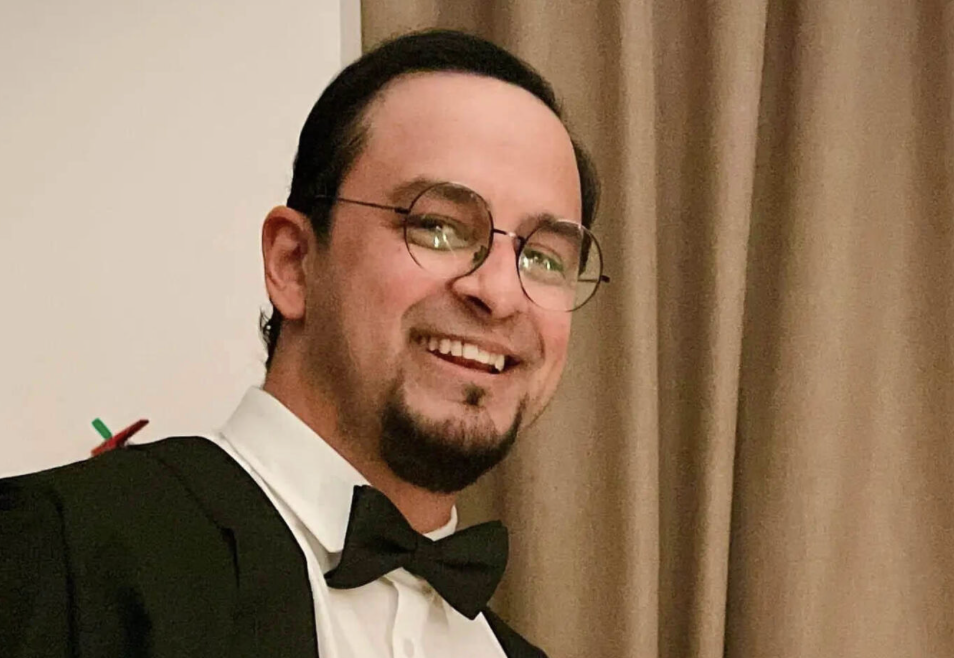
Roshaan Khattak is an exiled Pakistani documentary filmmaker. Until 18 December 2025, he was a postgraduate researcher at Wolfson College, Cambridge, working on enforced disappearances and state killings in Baluchistan, a province of Pakistan through which the China-Pakistan Economic Corridor also happens to run.
His cousin, the human rights researcher Idris Khattak, has been in a Pakistani military prison since 2019, serving a 14 year sentence handed down by a secret court on espionage charges that Amnesty, the UN and Freedom House regard as fabricated.
The 21 Group has been asked to look at his case. Having done so, we think our readers should know about it. The Index on Censorship article contains many disturbing details of Cambridge University’s failure to protect Roshaan Khattak.
What happened at Cambridge
Before he took up his place in September 2024, Khattak discussed with the University the politically sensitive nature of his research and the risks that flow from it. Cambridge accepted him anyway. His work, according to his proposed supervisor Dr Thomas Jeffrey Miley, was distinction-level and “one of the strongest doctoral projects produced in the Department in recent years”.
Then, in the space of a few weeks in late 2024, the following happened.
On 30 November 2024, Khattak organised an online solidarity event for his imprisoned cousin.
On 3 December 2024, residents of his postgraduate hall of residence reported two “strange blasts” that caused a near-complete electricity outage. Khattak states that evidence was concealed. Wolfson College took no follow-up action. Instead, the College terminated his accommodation contract, changed the locks on his room while he was abroad, and powered down the computer that held his research data.
On 21 December 2024, he received a specific and detailed message via X mentioning Cambridge by name. He reported it. He was told to call the police. The police told him that because he was abroad it was outside their jurisdiction, and later, once he was back, that no criminal threshold had been met.
Between February and May 2025, without a proper explanation, Cambridge informed him he would not be permitted to progress to the doctoral stage of his PhD.
In June 2025, Wolfson asked him to leave his accommodation for a second time. He lost all his belongings.
By late 2025, the threats had become explicit. He was told he was “waiting for the bullet”. The messages referenced his passport number and other private details that no private person could plausibly have obtained.
On 17 November 2025, he formally notified Cambridge. He heard nothing. On 15 December 2025, he wrote again. On 18 December 2025, the final day of his enrolment, he forwarded the whole correspondence to a College Tutor at Wolfson.
Later on 18 December he received his answer. His enrolment was over. The Universit, he was informed, no longer owed him any duty of protection.
The pattern that will not go away
Two months earlier, Khattak’s barrister Ben Keith had already written to Cambridge arguing that the University’s conduct was unlawful and violated Khattak’s rights under the Higher Education (Freedom of Speech) Act 2023 and Article 10 of the European Convention on Human Rights. The letter was ignored.
In February 2026, the Committee for Academic Freedom wrote to Vice-Chancellor Deborah Prentice with six questions: Did the University treat Khattak’s notifications as engaging the new statutory duties? What assessment was made of the chilling effect on his lawful research? What measures had been considered? Who was responsible for triage and escalation? What contemporaneous records existed?
Almost seven months on, the questions have not been answered. Cambridge, our regular readers will not be surprised to learn, has produced no response.The Vice Chancellor has been silent.
Compare this with the response Cambridge described in the Guardian, in August 2026, to threats received by the late Professor Jason Arday:
Cambridge, therefore, does possess ample mechanisms for screening mail, upgrading CCTV, installing alarms, and adapting security arrangements around a specific individual under threat. It simply chose not to make them available for Khattak.
What Cambridge’s own academics have said
His supervisors all have high praise for Roshaan’s intellectual abilities.
Priyamvada Gopal, Professor of Postcolonial Studies at Cambridge and a member of Khattak’s proposed supervisory team, wrote to University officials and the Office for Students: “Cambridge University is deeply imbricated with the financial and political forces that sadly shape our society right now, and you are not wrong to sense that outside pressures have contributed to this situation.”
Thomas Jeffrey Miley, Associate Professor of Sociology and Khattak’s proposed PhD supervisor, wrote in March 2026: “The circumstances surrounding Roshaan’s case smell of the university bowing to pressure and being complicit in international repression of dissident voices. The department pursued a policy with Roshaan that is virtually unprecedented in my experience of over a decade and a half of teaching here at Cambridge.“
Clive Stafford Smith, the human rights lawyer who had agreed to serve as Khattak’s external supervisor, put the matter to the University in terms that will interest anyone following the wider Cambridge story: “Where a researcher is documenting allegations of atrocity crimes and is targeted as a result, institutional choices that assist attempts to silence that research are not merely unfortunate, they raise questions of facilitative complicity.“
What we notice
The bureaucratic vocabulary is by now familiar to readers of this website: capacity, protocol risk assessment, well-being framework, safe-guarding review.The technical language of institutional care, deployed to conceal the political fact that a threatened researcher was progressively stripped of his accommodation, his data, his supervisor, his doctoral progression, and finally his enrolment, and told at the end of it all that the University owed him no protection.
We are told that further information may soon emerge concerning the resources Cambridge has allegedly deployed to build a case against Khattak, including the reported involvement of external advisers at considerable expense. We will not repeat those allegations here until they can be substantiated on the record. We note only that a member of staff is reported to have raised concerns through appropriate channels, and that we look forward to seeing what emerges.
Why this matters beyond one student
Balochistan is not a subject Cambridge is going to comment on lightly. The China-Pakistan Economic Corridor runs through it. Cambridge has received tens of millions of pounds in China-linked funding in recent years. Its £200 million TusPark venture at the Cambridge Science Park is a Tsinghua Holdings vehicle. Several senior academics have reportedly told Khattak, in as many words, that.topics deemed politically sensitive — Uyghur persecution, China’s overseas footprint — are off-limits.
There is a principle here that will interest even those readers who could not readily place Balochistan on a map. It is this: if a student’s lawful academic research can be effectively obstructed because it attracts threats, political pressure, or discomfort from influential external actors, then tomorrow the same treatment can be extended to any Cambridge academic whose scholarship troubles a powerful interest. The Employment Tribunal ruling in favour of Professor Wyn Evans in August 2026 established that the University does retaliate against those who raise inconvenient concerns. The Roshaan Khattak case suggests it also retaliates against those who become inconvenient by being threatened.
Cambridge, the correspondent who brought this case to our attention observes, should not have to experience another tragedy before these questions are confronted.
The Committee for Academic Freedom, Index on Censorship, Freedom House, ARTICLE 19, the National Union of Journalists, Amnesty International, the UN Special Rapporteur on Human Rights Defenders, the former Shadow Chancellor John McDonnell MP, and the signatories of a cross-party Early Day Motion have all raised concerns with the University. The University has, to date, replied to none of them.
We suspect this is not because the Vice-Chancellor and the President of Wolfson have been too busy.
We suspect it is because, once you begin to answer the questions, you have to answer all of them.
“once you begin to answer the questions, you have to answer all of them.”
Afzal will quickly realise the same. Any limitation of scope in one area is an attempt to conceal the truth about all areas.
This is what MPs told the university: “any curtailing of Mr. Khattak’s research or yielding to intimidation would not only threatens academic freedom but may also embolden those behind these threats, potentially leading to more severe attacks or oppressive measures in the future”.
The response appears to have been to yield – and allow threats to fundamental British freedoms to continue to escalate. What leverage does Pakistan have over Cambridge university?
Authoritarianism anywhere is a threat to democracy everywhere.
It establishes a dangerous precedent. All dictators have to do is threaten an activist… and Cambridge does the rest of the job for them. Soft silencing.
“Authoritarianism anywhere is a threat to democracy everywhere.”
We have mental systems for evaluating the rationality of self governance. These mental systems can be applied at the level of the person or at the level of the group. There is a stress-linked self-correction mechanism that means the further a group diverges from rational self governance as a group the higher the variation in self governance that emerges at the level of the person i.e. the higher the independence of thought that emerges at the level of the person within that group.
If rational dissent of governance at the level of the group is silenced there is a higher probability of the group diverging further from rational self governance as a group the net impact of which is to produce even higher levels of rational dissent of governance at the level of the group. The further the group diverges from rational self governance the higher the energy cost to the group.
It’s a continuous exploration in self governance space – at all levels in society – in response to shifts in the physical environment.
Advances in rational self governance are possible by going from rational self governance at one level of complexity to rational self governance at a higher level of complexity. The ability to reach higher complexity rational self governance states determines survival probability in response to shifts in the physical environment.
There is group social stress response mechanism that decreases the coupling of a person to a group – taking cues from inside the group – and increases the coupling of a person to the rest of the environment – taking cues from outside the group. This is the basis of switching to exploration of self governance states at the level of the person while strongly coupled to the group and exploring self governance states at the level of the person while weakly coupled or not coupled to the group.
A society responds to shifts in the physical environment – a collective societal stressor. That induces an exploration of collective self governance space by a society i.e. it induces increased variation of self governance at the level of the person in that society increasing the probability of new forms of collective self governance emerging in that society.
This results in one of three outcomes for a society – undue internal pressure (civil war – collective suicide), undue external pressure (external war – collective homicide) or the discovery of a rational collective self governance at a higher level of complexity (more advanced self governance – enhanced pressure balancing capability – collective adaptation of the society to the shifts in the physical environment).
There would be increasing numbers of people in a society exploring self governance space at the level of the person before the outbreak of a war. That could result in outcomes – suicide, homicide, discovery of rational self governance at a higher level of complexity/adaptation to an increased level of stress. Changes in the rates of suicide, homicide and raising concerns in relation to collective/societal risks would be expected to be seen before the outbreak of any war. This means there is a possibility of a war being predicted & prevented.
Prentice and her management team are a total disgrace. I used to be proud of UCam. Now I am embarassed every time I get the question whenever people find out I am in Cambridge: what the hell us happening at your place? It looks worse than the Post Office.
It is as bad as the Post Office in terms of embedded institutional corruption
Princeton, when Prentice was Provost, kicked me out of my graduate university dwelling with 6 days’ notice, then cancelled my visa status, forcing me to leave the US within 15 days (back to Australia). My Department informed me by email. The “appeal” to the Graduate School & the Provost was a farce.
My crime: two papers (the last of 12) in my 3rd year prior to Generals were one week late. Why were they late? My sister in AU, for whom I was a trustee, attempted suicide. The quality of my 6k word papers: both As, one “publishable”. Assessed by professors now with emeritus status.
Prentice’s Office – a sub-Office of it – for the purpose of my appeal, insisted that I need not supply it with evidence of my sister’s predicament or of my duties as her trustee. Official outcome: there is insufficient evidence to grant the appeal.
I also lost all of my property at Princeton, including $$$ books and my research notes, save what I could stuff in one suitcase on my compelled flight back to Australia.
This is shocking. Did you take legal action? Did they compensate you for damages? What happened next?
At the time, the only jurisdiction to litigate in was the US, since the graduate fellow contract was formed and performed there. Lawyers I consulted wanted at a minimum a $10k “retainer” upfront. Also, the US is generally a no-costs jurisdiction: even if you win, you’re not awarded costs. Princeton of course knew and knows all of this.
Thank you for your sympathetic remark. This is the first time I have disclosed the issue to anyone but family and friends. I was so shocked myself that I’m still somehow internally constrained to be repressively laconic about the ordeal.
Thank you for your courage. Your story is not the only one.
Do you know if Prentice was involved in the handling of the appeal? I ask because there are other documented cases of similar matters being referred to her attention. If you have not done so already you should also reach out in confidence to [email protected] for support.
Thank you. I shall email confidentially. I don’t know if my partial disclosure were courageous, but I’m somewhat bouyed by the support.
I don’t have evidence that Prentice was alerted specifically to my application to Princeton’s Vice-Provost’s Office (the responsible Officer was Michelle Minter)
I can only assume the Office of General Counsel was – certainly, I have reason to infer so.
@PrincetonTiger, thank you for sharing. Appeals are a farce in UCam as well. It does not matter what evidence you have and very many people know about this shameful culture. They continue business as usual after all these scandals.
Among decent and honest scholars the embarrassment is widely shared.
But for those in power, we see no signs of shame.
This is what higher education has become. Instead of finding a way to protect activists who ask the real questions – the questions that hold power accountable, that make elites uncomfortable – the academic system has shut down such work on “safety” grounds.
The consequence? True progressive activism has been substituted by a “fake” version concentrated on “first-world problems” centred around the self-centred victim narrative of the professional middle classes, cented on identity grievance narratives and perceived “micro-aggressions”.
Meanwhile, from the Middle East to South Asia and Africa, macro-aggression continues – acts of violence, rape and torture – and the universities ignore it. No, no, no…. Far safer to engage in naval-gazing “discourse analysis” and meaningless psycho-babble waffle than try to improve the lot of the Wretched of the Earth.
There are internal problems and external problems. If the ability to continuously solve internal problems is lost the ability to continuously contribute towards the solution of external problems will also be lost.
It is not possible to sustainably contribute towards the improvement of the lot of the external world – i.e. to drive reductions in the probability of macro-aggression externally – by losing sight of the need to maintain/improve the lot of the internal world – i.e. by overseeing increases in the probability of macro-aggression internally.
“Cambridge, our regular readers will not be surprised to learn, has produced no response. The Vice Chancellor has been silent.”
I used to say that it is a waste of time to contact these people when it became clear to me that regardless the seriousness of the case and the evidence we have to support our claims they will not respond or will gaslight us. But reporting is not a complete waste of time because the record itself is important, namely when considered side-by-side with other cases because the pattern across the institution is unambiguous. One real danger is when we engage with these people naively thinking they care and that they believe on what they preach in their welcome statements or annual speeches. Dear reader, if you never experienced this yourself, please believe on those who did: the leadership of Cambridge University could not care less and a key reason why they do not stand me is that I tell them directly and report their behaviours to external parties cc-ing them.
Regarding this case in particular, do you guys know if Roshaan needs help at this stage? Is there anything we can do to support him?
On some other news. Cambridge University got early this week the news that they have to deal with another judicial review claim. It is not as easy as filling a claim in the ET but anyway, it is not hard. We have to keep pushing so if any of you is considering that route, feel free to get in touch and I am happy to share my experience in case you find it useful.
Good question – what is his status now?
What infuriates me about this is the hypocrisy. The university is now handing out “free” PhDs every year (“by special regulations”) for nothing to people who are mainly insiders with connections. They don’t have to come to Cambridge and study – it is just a freebie benefit to anyone with the right connections who can file the paperwork and steer it through the committees. The shame around this system is so deep that the university has stopped publishing the list of people it awards these to. They obviously know it is a scandal for Cambridge to be giving away free doctorates without studying here.
Meanwhile, at exactly the same time, a student who asks real questions is being thrown out for doing so. We are no longer a place for research, just a credential-granting mafia.
See the University’s Statutes and Ordinances: Ordinances, Chapter II, ‘Incorporation’, pp.167-8.
This is a mini sub-scandal of all of its own. If you check out the list of “special” MA recipients in recent years most seem to have gone out to random service roles in CUPA – people working in PR, executive assistants, that kind of thing. Of course, on the uni admin side you can be sure that the heads of HR, the odd college principal in need of an academic CV booster, and their assistants all got one too. Why study for a degree you can acquire for free?
Once more, see the University’s Statutes and Ordinances: Ordinances II, ‘Master of Arts’, p. 167.
If there are awards of MA’s and PhD’s that go beyond these regulations, please post those examples.
Isn’t the PhD by special regulations the process you go through to be awarded a PhD on the basis of a body of published work? There was an anonymised list of them up to 2022 here https://www.whatdotheyknow.com/request/phd_under_special_regulations_ev presumably you could do a further FOI if you wanted more up to date information. Are you actually aware of specific instances of unmerited PhDs being awarded under these regs?
It is. Thanks for the FOI link. It should be done again, but with the names of the PhD topics. It is astonishing this information is not fully public as with regular PhD awards (why keep it secret?)
In terms of merit, that is a hard one to answer. I think if you have people who already had a PhD from a lesser institution but then simply wanted to “upgrade” to a Cantab one using their personal connections then, hm, that’s something to raise as a problem.
Want to destroy a world-class university?
I have prepared the recipe, darling, specially for you.
Add one top-tier researcher, and subtract their dignity, pride, and sense of self-worth. Reduce until crisp. Now add another, and another, and another. Keep separated from any source of support or point of contact. Allow them to marinate together to form a single group.
Keep adding victims until the pot is full.
Now put a lid on it. Turn the temperature to max.
It’s been a long day, love. It is time to rest. Time for you to sleep now.
Don’t worry about the food.
It will all be fine tomorrow.
Sweet dreams.
At this point the university’s problem is no longer a few “disgruntled former staff”! Colleagues are being hammered now with inquiries from journalists, human rights lawyers, activists and investigators. The cats are all either out of the bag, or on their way out…
Agreed. I’ve never before been given “lines to take” by the comms office for enquiries, and even the recent open days.
I think we’d all love to know what that “lines to take” cheat-sheet looks like!
Not that exciting I’m afraid. It basically forbids anyone talking to the press, but if you do get cornered the lines to take mirror their public pronouncements word for word. The very fact it needed to be issued is the point.
How rather depressing. If this were Boeing or Wirecard one might expect this manner of enforced secrecy. But: we are talking here about a public charity under parliamentary scrutiny, with a very open statement about its commitment to freedom of speech. I do hope the recipients of such “advice” act as citizens first, and not only as employees.
What does the answer guide say if people ask about “freedom of speech” and “independent thought”?
It says “sorry, I’m not authorised to speak to you about that”.
We could use a spoof of this. Where is a good cartoonist when you need her!! 🙂
Here
Not sure the reason for the delay, but Malin Ekman just put up her interview with Nathan Cofnas she did with him the morning after Arday died. He actually looks quite saddened.
https://www.youtube.com/watch?v=kc9khT9NrH8
But her questions are great. She skips the race stuff and keeps the focus back to issues of power, truth, and institutional failure. It is probably the only good interview.
These are all examples of her questions.
– “Were you ever afraid to pursue this story?”
– “Obviously there is a power imbalance between an independent researcher and Cambridge University.”
– “The focus has been on Arday himself and not the university. But as you point out they were knowingly covering up the truth. This raises a lot of questions about the state of higher education and the truth seeking these institutions used to be known for.”
– “You would think that people in academia would stand above this, you are supposed to be the most brilliant people on earth, you are supposed to be above [popular] trends. It is hard to believe how at Cambridge of all institutions that the leadership would be this stupid [and] obviously this is calculated but it is hard to grasp.”
– “Why do we invest so much money and prestige in such institutions?”
– “What does this mean for society? Would you say that the status has decreased will prestigious firms still employ people from elite institutions or look for talent elsewhere?”
– “A lot of alumni have been very critical of the colleges. Would you say that something is shifting?”
– “You took Cambridge University to court, and do you want to tell us what happened, what did the court say?”
Congrats to Malin for doing a proper interview.
Utter nonsense. You can’t set race aside when Cofnas entire existence is predicated on the pseudo-notion of ‘race science.’ Cofnas set off a racist frenzy and he–as well as his fanboys–will bear lifelong responsibility whatever Jason Arday’s own mistakes may have been. Cofnas has absolutely no cause for complaint–he was allowed to stay and finish his fellowship despite work of absolutely no merit and advocacy of a discredited ‘science.’ He failed to secure a victory against Emmanuel, rightly so.
Unclear how this bears on a thread about Roshaan Khattak anyway.
Enough, with respect, the issue is about power imbalance, cover-ups, and institutional hypocrisy with respect to basic discussions of procedural integrity and accountability. I feel that is the link to the post and more broadly all of the topics discussed in this forum.
From the video it is clear she is someone who is caring and empathetic, and simply wants to understand what is going on, as any good journalist is supposed to do and be. I note you have not criticised any of the questions that she asks.
This Malin Ekman? Yes, very impartial and non-racial correspondent.
https://mediamatters.se/article/3e4322b0-fd33-41e6-b89d-4c482546f324
I feel this is a very biased hitpiece profile. Here is her wikipedia entry. She was US correspondent for a major centrist Swedish paper and won awards for her work. Eventually she resigned because though she wrote pieces critical of Republicans, the editors didn’t want pieces that were critical of the Democrats as well.
https://sv-wikipedia-org.translate.goog/wiki/Malin_Ekman?_x_tr_sl=auto&_x_tr_tl=en&_x_tr_hl=en-US&_x_tr_pto=wapp
I’d have thought that those loudly promoting and institutionalising ‘representation’ under the banner of EDI, the other side of the Cofnas coin, enjoy some responsibility too.
The reason they are calling Ekman “racist” (even though her US correspondence included interviews with black mothers) is because they don’t want you to hear this.
“Ekman: And how much of this scandal was Jason Arday, he himself taking advantage of Cambridge’s vanity, and how much of it is Cambridge taking advantage of Arday?
Cofnas: Out of respect for Arday. You know, he, he, is now deceased as of yesterday.
But I’ve always said that this story is not really about Arday. It was about the system that that elevated him to this position that was not suitable for him, that didn’t hold him to account the way other people are held to account.
The story in in my view is really about the people who knew better and who set him up for this. And ultimately they did so to Arday’s own demise. They really, they really set him up, and I, I, think that they that they should really be held accountable.
Ekman: It seems like so far they have not. It seems like focus has been on Arday himself, and not so much about the university’s responsibility. As you point out here it seems like they were knowingly covering up the truth. And I think that raises a lot of questions about the state of higher education and truth seeking and these ideals that these institutions used to be known for.”
The worst form of injustice is pretended justice.
“A little while ago, before I ever heard of Jason Arday, I went away and read some of Cofnas’s published academic work. And here’s the thing: the scholarly quality is high. The first piece I read was a complex argument about our evolutionary history, and the constraints this imposes on morality. Not only was it good, I agreed with the argument. But this had absolutely nothing to do with race.
So I turned to his much more controversial philosophical defense of race realism as a legitimate scholarly inquiry. There he claims that the best explanations for variation in IQ are ultimately genetic, and that until social science accepts this fact, we will inevitably do bad social science. And the truth is, I’m not at all surprised that it passed the rigors of peer review at a proper academic journal. In this case, I had quite a lot of objections to his argument, but it was without doubt serious work. Whatever else you might say about Cofnas, the man is no intellectual fraud.” That’s Dr Paul Sagar, King’s College, one of the brightest young minds around in political theory, probably because he is the sort of person who actually does the reading. I don’t give a s—t about Cofnas but he didn’t get a Leverhulme for work “of absolutely no merit”. You can condemn his racist views and those parts of his work that propound them, you can despise him and hold him responsible for what ultimately happened to Jason Arday, but you can’t come on here saying things that are not true, scolding everyone else and not expect to get called out.
Thanks for sharing. The bits at the end got to me, where he talks with nostalgia about his undergrad years, and how free and good-spirited campus culture used to be, even if people robustly disagreed. I wish I could have experienced that.
I’m sorry you didn’t. The 90s/early 2000s wasn’t all great – especially as a woman – but the students I now teach are scared to say anything besides platitudes that they think are “correct”. It’s sad and incredibly boring. I’m leaving HE as even if you can hold on to your job (everyone please occasionally remember the redundancy bonfire/binfire happening beyond Oxbridge!) I think it’s basically impossible to do anything in the neoliberal university other than cosplay education, at least that’s my experience in Arts and Hums. Good luck everyone!
A part of this story I do not understand is how Cambridge justified their decision to remove him from the university (and Wolfson College). Did they offer no explanation at all? Or did they (perversely) claim that it was some kind of “safeguarding” decision to cut him off?
Either way, my sense is that it simply cannot be allowed to pass. If this decision is allowed to stand unchallenged, universities will use exactly the same logic to shut down researchers investigating Russia, Gaza, Kashmir, organised crime groups, or any number of critical yet sensitive research topics.
You are too late. Ethics and safety review committees have long since killed off all trenchant research on the study of human rights, crime, corruption or regime brutality at UK universities. All that remains is dross.
Well done bringing this to light! I hope it gets some decent traction. Remember folks: we only need fake impact for the REF! No real-world consequences.
Cambridge professor: Someone is questioning my research. They say there is plagiarism and research misconduct.
HRlegalblob: This is a very serious reputational risk. We have notified the police, hired lawyers to silence journalists, and have the press office on standby.
______________________
Cambridge student: Someone is questioning my research. They are threatening to harm me and my family for legitimate investigation of human rights abuses, corruption and ethnic violence in Pakistan.
HRlegalblob: This is a very serious reputational risk. As of now, your status at Cambridge is officially revoked. Please vacate your desk, college accommodation, and accounts, return all keycards, and remove all affiliation with the university from the internet and public records.
Astute. Though of course Arday was also failed when he became the reputational risk, rather than accusations against him.
All large organisations choose to do what is best for itself when an alternative course of action might be actually best for an individual. When a large business such as a bank screws up though, it is just being a bank and its actions are consistent with its purpose as a profit-making business. The same was even true of the Post Office.
What I find difficult to fathom about the Roshaan Khattak case is that Cambridge acted at complete odds with its mission and purpose as a University. We even have ‘core values’ for freedom of expression and strong support for individual researchers. Of course there has been silence. There is no conceivable justification, and to answer the questions raised on this case could draw adverse press attention.
Cambridge, University of Sanctuary? This case makes a mockery of that.
“When I alerted Cambridge to the issue, I did not expect the university to fight a war on my behalf. I was asking for what all institutions of learning claim to stand for: protection of the vulnerable, space for free expression and dissent.
But Cambridge did not tell me I was safe. Rather, it responded with managerial detachment. Citing spurious pretexts, Cambridge sought to evict me from my student accommodation. In January 2025, right after threats, the locks were changed by Wolfson College. Rather than ensuring that my room was secure, they secured it from me. Instead of defending my right to research, Cambridge ejected me from what I had believed to be a place of academic freedom. They did this administratively. Neatly. Like a liability item quietly struck from a balance sheet.”
Can someone ask him if this was done through OSCCA?
OSCCA is as corrupt as HR and guess what: who is the direct line manager of these people? Dr Mike Glover, the Academic Secretary and acting Registrary. Remember what Ron Heal wrote about him recently after describing his experience at Warwick:
“Glover’s corruption and dishonest has been rewarded by a senior post at Cambridge University. Apparently, Glover has the right modus operandi for Cambridge University?”
https://x.com/HealDr68644/status/2087489157153104041
Did Dr Glover found out about this text? The X link is now faulty but luckily, I have the full text of Ron Heal so feel free to get in touch!
Meanwhile, in an office in Islamabad…
Lieutenant Colonel Malik:
“Sir, with due respect, our association with the University of Cambridge requires reconsideration. In view of their endless and repeated scandals, we must protect the good name of our own institution.”
Rendered…
I think for a case like this it is necessary to analyse from first principles.
The most fundamental question to ask is : If the PhD student was not doing the academic research then what other section of society could potentially be doing similar activities to those the PhD student could be engaged in. In this case it could potentially fall under this category of activities – policing of the military in a nuclear capable military block.
This means that the PhD student is undertaking activities that could potentially fall under this category of activities : gathering intelligence in relation to the policing of the military in a nuclear capable military block from the physical location of a different nuclear capable military block.
In terms of invoking academic freedom and article 10 of the European convention of human rights (freedom of expression): If an academic from a nuclear capable military block was undertaking academic research inside a nuclear capable military block in relation to that nuclear capable military block itself then it is clear that rights of this kind could be invoked directly by an academic.
If an academic from one nuclear capable military block is working inside a different nuclear capable military block and undertaking academic research of that type in relation to their home nuclear capable military block then it’s not clear that these rights – academic freedom/freedom of expression – could be invoked directly in relation to that academic research activity.
Academic freedom protections could then be being used to protect activity that consists of gathering intelligence in relation to the policing of the military in a nuclear capable military block from physical location of a different nuclear capable military block with no external checking mechanism in place. Academic freedom protections in this case could be conditional on an external checking mechanism being in place, could be expected to sit at the level of the United Nations (UN) and could need to be agreed with the UN before the research activity starts.
Academic freedom protections could therefore sit at multiple levels extending up to the UN level – university, state in which university is based, UN. The top layer would then be the gatekeeping layer for academic freedom protections and would need to be continuously engaged for the layers beneath that top layer to also be continuously engaged. Loss of the top layer of academic freedom protections – academic freedom protection at the level of the UN – would imply loss of all layers of protection.
The top layer of the safeguarding system necessary to make this particular type of academic research practically possible could need to extend up to 24/7 security protection of a person by those with military training to cover the full range of potential safety risks. This could mean securing permission to invoke close protection security through the UN in response to the emergence of a security threat during the research activities.
Safeguarding arrangements for this particular academic research activity could then sit at multiple levels extending up to the UN – university level safeguarding, state level safeguarding, UN level safeguarding. The top layer of the safeguarding system – UN level safeguarding – would need to remain continuously operational for the layers beneath to remain continuously operational.
Thinking in terms of the academic backgrounds that would be expected in the academic supervision for academic research of this type : one critical element that would be expected in the academic supervisory team would be an academic background that relates to the analysis of military risk in order to minimise the generation of military risk during the academic research activity.
This takes into account the additional first principle thinking : any person undertaking academic research in relation to a nuclear capable military block is implicitly recognising a duty of care to all inside the nuclear capable military block they are undertaking research in relation to. This duty of care combines the standard duty an academic has to ensure the academic research is accurate – including subjecting any high-sensitivity high-precision academic work to external scrutiny at the highest levels of error correction possible in the academic system – with the additional duty to not apply the academic research being undertaken in relation to a nuclear capable military black against the interests of those within that nuclear capable military block.
If the military in a nuclear capable military block is applying undue military pressure internally within that military block – high levels of internal repression – or externally in relation to a different military block – high levels of external repression – an effective error correction system would consist of the accurate calculation and careful application of a counter pressure. The application of a counter pressure in response to undue military pressure does not imply increased probability of : entry into war (civil or external), loss of life and/or a breakdown of relations (internal or external). An accurate correction of undue military pressure should reduce the probability of : entry into a war (civil or external), loss of life and/or breakdown in relations (internal or external).
Academic research of this type would come under high-sensitivity high-precision governance research at this governance level : military. This would usually be expected to be done internally within a nuclear capable military block and not externally from the physical location of another nuclear capable military block. The maintenance of high autonomy requires the maintenance of high accuracy of governance internally at all governance levels – political, judicial, military.
If research activity of this type was being pushed out of a nuclear capable military block and into other nuclear capable military blocks i.e. a basic internal safeguard that would be expected to be being actively maintained in a nuclear capable military block was failing – then the net result is likely to be increasing undue military pressure internally over time and potentially also increasing undue military pressure externally over time. Neither would be in the interest of those inside the nuclear capable military block. Restoration and active maintenance of this internal safeguard would be in the interest of those inside the nuclear military block.
Cambridge has a responsibility to every member of its academic community individually and to its academic community as whole to actively maintain an effective safeguarding system.
If a person in one nuclear capable military block is subject to direct threats from the military in an different nuclear capable military block this could necessitate round the clock military level protection to effectively counteract the threat type encountered. This is not something a university alone could provide or something that could necessarily be done while the person is physically located in the university. It is also not clear that this is something the state could provide in relation to the particular academic research activity under consideration. It could be academic freedom protections would need to be secured at the level of the UN and be underpinned by a commitment to provide an enhanced level of safeguarding – close protection services – in response to the emergence of specific type of threat in order to practically implement the academic freedom protections that have been granted at the level of the UN.
The question of whether Cambridge wants to protect a student could yield to a much more fundamental question of whether Cambridge can in practice implement the safeguarding mechanisms necessary to protect a student in a given case.
Being a university of sanctuary implies a university could give a person who is fleeing a war zone academic sanctuary – a place of safety to pursue academic research in general – but it doesn’t imply a university can offer a place of safety to a person pursuing academic research in relation to policing of the military in a nuclear capable military block from the physical location of a different nuclear capable military block. That type of academic research could require academic freedom and safeguarding mechanisms being put in place at the level of the UN before the research activity starts.
That means the problem in a case like this could be being generated before the PhD starts but only becoming apparent during the PhD. Setting up a PhD involving this type of research activity could involve these types of questions : Is academic freedom being granted at the level of the UN in relation to undertaking research that relates to the military in a nuclear capable military block. If so is that academic freedom being exercised inside or outside the nuclear capable military block the research is being undertaken in relation to. Has the UN granted the ability to invoke access to close protection services in response to an emergent threat as part of the safeguarding arrangements to practically implement academic freedom protections that have been granted at the level of the UN.
This would come under this class of activities : internally driven conflict prevention activity that works primarily through increasing information accuracy to support higher levels of governance accuracy and higher levels of autonomy within a nuclear capable military block.
Something is very off about this case. This week the head of MI5 wrote a piece in the Independent warning of the growing threat to British democracy from hostile state actors. Cambridge is meant to be bastion against such actions, not a gateway. There must be more to the story than what has been revealed so far.
“Cambridge is meant to be bastion against such actions, not a gateway.”
It should, but it is not currently. Can you name someone from the senior leadership that is not involved in the multiple scandals the University is grappling with? Tell us just one. Make no mistake: A corrupt institution is run by corrupt people. I do not know what the head of MI5 said and if he mentioned Cambridge University in particular, but I would be happy to talk to them about the current degrading state of UCam.
“I set up a scholarship for students from Africa, Asia, and Latin America, only for Cambridge to accuse me of “racism””
https://benedictwestenra.substack.com/p/i-set-up-a-scholarship-for-students
They apparently did this for reputational management issues. Not sure that is working out very well.
Top comment on blog: “As I have no close family and no friends in need, I have been planning to leave a substantial legacy to my Cambridge college, which has not so far been closely implicated in any of these bush fires which break out with increasing regularity. But it is all one academic ecosystem and I am now having very serious doubts.”
bro wire me the money and you can tweet whatever you like
So hang on, a bit of due diligence based on (i) someone else’s screenshots, (ii) an ex out for revenge and (iii) a tabloid journalist hungry for a story, and Cambridge finds itself on the wrong end of a live defamation case? Dear oh dear, as the Cambridge Trust patron might say.
This case is unreal. It is worth reflecting on what happened here.
In the rarefied bubble of university administrators, the biggest possible scandal they could conceive of – the biggest of all – was accepting a donation from a sponsor who at some point in time, in the distant past, sent a few tweets that were vaguely and obliquely critical of the political left. Never mind that they reflect a sentiment that is widespread among many people on the left, and that Labour politicians hear every day from their own supporters.
Somehow, **that** was the only issue. It never figured in their minds that it might be a scandal to cut off funding that was intended for marginalised groups from Africa, India or Latin America, or that students from those places might wonder if they could have secured that support if it had been approved.
Good the university refused a scholarship from someone who is very clearly a bigot and unhinged to boot. Occasionally they get things right.
“The donation to the Trust is c. £95k to support two Masters’ students [redacted] Trustees considered that given the reputational risk, the Trust could not accept this donation and should return the full funding”
Oh, it turns out they didn’t refuse it. It exists. Good, more money from an unhinged bigot is just what it needs. Being a white saviour doesn’t exempt you.
21 percent continues its reputation as a whinge-platform for STEM people pissed they can’t be as openly racist as before.
Agree 100% the university doesn’t need money from white saviors, and we didn’t need that Gates Trust money anyway …
Am sure the recipients will understand 🙄
If the donor were a bigot, it was perhaps an odd way to express their bigotry by funding scholarships for under-represented groups from the Global South?
I mean they could have done far more bigoted things with it, like… say… funding a secret far-right cell at Cambridge with links to Reform and the MAGA movement. Not that that would ever happen. Just sayin’.
The odd thing here is that the original tweet wasn’t even Islamophobic. A lot of politicians would say, yes – Benedict is right – in the last two decades we’ve worked hard to understand the faith of our Muslim constituents, and publicise that fact.
As far as I can tell he did not say that was a bad thing. He did not criticise Islam or any religion. I’m not even sure that was implied. Seems like his tweet was just commenting on how left politicians had shifted from secularism to interfaith outreach.
If Galloway tweeted the same words it would be seem as pro-Islamic.
@Enough! Very few people think that about the 21 Group. You are so absorbed by your narrow minded intellectual obsessions that you don’t realise that almost no one else gives a fig.
Unlike the poseurs of the arts, humanities and social sciences, natural scientists tend to be genuinely anti-racist. After all it was the enlightenment that eventually came for racism, even if it hasn’t yet eliminated it. And yes, it did take two centuries to get to the present state, but let us not pretend continental philosophy would have begun to tackle it, when it refuses to privilege one claim over another.
https://en.wikipedia.org/wiki/Mertonian_norms
Given that one the university’s apparent experts in continental philosophy is one Dr. James Orr, don’t think the progressive case against the natural sciences here is quite so cut and dry
This whole story is comedy gold. If you pitched it for a script they’d ask you to tone it down. Let’s see if I get this right.
1. Donor provides money to Cambridge, and as a cute touch, names the scholarship after his cat (“Tigris”).
2. Donor later ends up in custody battle with his ex over said cat. In apparent spite, ex contacts Cambridge lobbying to terminate the scholarship named after disputed cat (“Tigris Scholarship”).
3. Cambridge takes allegations seriously, a formal meeting is held, it is decided to end the scholarship named after disputed cat (“Tigris”).
4. Donor clarifies matters with Cambridge, who learn of mistake – but instead of rolling things back, apparently cannot alter the committee decision. Cambridge now needs to justify the outcome… by whatever means.
5. Deputy Director of Partnerships and Communications (Miranda Williamson) and Head of Media (Farah Jasset) bounce feverish emails over wording of a press statement to justify the ending of the Tigris Scholarship when asked by the media – steadily escalating accusations against the exasperated donor from the mild and inconsequential (“provocative language” on X) to entirely unsubstantiated attacks (“racist”, “homophobic”, “Islamophobic”, “misogynist”).
7. Money is returned to donor. Donor uses the money to take the university to court for defamation.
8. Cambridge loses both the good-faith gift that was intended for students from poor countries; ends up spending an additional tens or hundreds of thousands in legal fees instead.
I feel bad for the students who could have received the money, but you have to admit, this is kind of funny.
I feel bad for Tigris. He only wanted to stretch a paw to those less fortunate 🙁
First the Vet School saga – and now this. The Armando Ianucci screenplay version of this episode is going to have a field day
In the Ianucci version, it is a donation to the Vet School
Because of an internal bureaucratic decison to close the School, they spend the episode coming up with steadily crazier reasons to trash the donor as a racist and misogynist bigot and refuse the money…
…Then 5m after sending out the press release they release the donor was actually a cat and Malcolm Tucker is on the scene and on expletive-laden form 😬
Sad kitty 🙁
Meanwhile, the terms of reference for part 1 of the Arday review are out: https://www.cam.ac.uk/news/nazir-afzal-obe-launches-part-one-of-the-independent-review-following-the-death-of-professor-jason
They look robust and well written. Afzal will make his omissions clear and encourages Council to publish the report in full, not just a summary.
There’s one important gap: how the scope of his review interacts with the inquest. It’s a matter of timing. There’s been no pre-inquest review yet to establish its scope, although an interesting team of lawyers has been appointed: https://www.leighday.co.uk/news/press-releases/2026-news/inquest-into-the-death-of-professor-jason-arday/
In the early weeks of Afzal’s work, the Coroner may not be able to provide any guidance. Afzal may therefore have to take a conservative approach and there’s no mechanism for coming back to deferred matters after the inquest, unless the framework of Part 2 is amended to allow for that.
Thank you for sharing, I would agree the terms are worthy of scrutiny. On a naive pass, it seems that there are some positives here.
A first potential positive concerns transparency around legal advice, which I hope is intended to avoid a long tail of investigations by the SRA, in the manner of the Post Office. Early and voluntary disclosure here will be essential to the legitimacy of the review: after all, it is hard to believe that most of the key communication in a case such as this was not conducted without legal advice at every stage.
Second there are also good provisions here to allow the review to challenge any failure of disclosure and to adhere to document preservation.
Third the review has a stated purpose of identifying institutional decision-making and organisational processes, rather than specific failures to the Arday case. Those with experience of patterns relevant to institutional and organisational processes should be able to provide input to the review at all stages; that will be essential to its remit of establishing systematic rather than isolated procedural failures.
Here’s wishing all the best to Jacqueline McKenzie and her team in conducting the inquest. Hopefully they will do a thorough job that will examine any failure of psychological support, employer duty of care, and the opportunities there had been to handle this matter fairly, discreetly and maturely at an early stage.
Cross-posting this comment from “Grace Update” post (https://21percent.org/?p=3993)
———
The grace publication approaches (23rd). The response will be interesting to see. In the meantime multiple people are submitting grievances against HR, some addressed to the outgoing Prof Munir and to the VC (not outgoing yet). Proof of numbers of grievances isn’t technically proof that they are valid, but it adds weight to the idea that there are increasing problems with HR at Cambridge.
What is interesting is how much has changed since this started. Prof Evans won his Tribunal. Prof Arday hit the news, and ultimately ended his own life. The VC has ended her run of not addressing the University. This bodes well for the future (boding is not a guarantee of future success!) but won’t help the many people bullied, abused and forced out in the interim, or indeed before hand.
We need a process with teeth. I know from experience that “dignity@cam” is not that process, and HR certainly haven’t had a part to play thus far. I look forward to being on the right side of this Grace, and winning, and some positive change happening.
On that note, sharpen your drafting pencils for a vote on this Grace, because I can’t see “The Management” not trying to push back against the remit and saying “we already have a review in hand, with a tighter remit”.
The American Queen regime is ending! Scandals are unstopabble! The biggest one will be the SCM, oncology/CRUK one! Brace for it!
Just a reminder that the HR Grace closes for signatures at 5pm today.
Any response from Council is likely to cite the Bagley review as already in train, though we’re yet to see its terms five weeks after its announcement. We need to see the terms of this review before the Grace is put to the vote. By contrast, the Afzal review shows that the administration can move at pace when it wants to.
There is a letter that has now been signed by several members of Regent House pointing out limitations of Nazir Afzal’s brief which by his own admission is narrow. The letter calls for more management accountability. Interested Regents may email [email protected] to look at a copy with a view to signing. Please write in your own name, and from your cam address.
It’s going to be a busy and interesting October.
The worst is not
So long as we can say, “This is the worst.”
It will be particularly busy and interesting when they announce the details of phase 2, and people can start reporting to the investigators what they know about how the University has addressed reports of research misconduct, the involvement of Carter-Ruck to silence journalists, and what has happened to those who reported.
I think people can begin sharing information already right now the report via [email protected].
I had this star brilliant comment from a 21 percent groupie today who later invited me to look at 21 percent, eager to do a ‘gotcha’ on me. I am, of course, cited in this blog. Bunch of DEI race-baiters who can’t even read -PG
“I’m a former Cambridge alumnus and remain involved with various groups and issues around the University.
Since you’ve been very vocal about problems at Cambridge, particularly where questions of race and unequal treatment are involved, I thought I should bring this case to your attention. I’m fairly sure you may not be aware of it, as I haven’t seen you comment on it.”
I don’t think anyone is a race baiter. The proof is that not a single person on the Khadra post even mentioned his race (unlike on every other platform)
And that is exactly how it should be. The issues that matter are standards and integrity, everything else is a distraction.
This person clearly is by raising the issue of race– as were a GREAT MANY on this site commenting on DEI and Arday. Your denialism doesn’t mean the rest of us have to pretend there isn’t a problem.
I take it by ‘Khadra’ you mean Khattak? Or do ‘foreign names’ not matter?
“I take it by ‘Khadra’ you mean Khattak? Or do ‘foreign names’ not matter?”
It is the next post after this one and I fear you have just answered your own question
The two cases (Khadra and Khattak) are distinct.