A Grace has been drafted for signatures.
Integrity and the highest standards of conduct are foundational to the University’s mission. Research must be carried out honestly, rigorously and responsibly to sustain public trust, safeguard the credibility of academic work and ensure that knowledge advances for the benefit of society
Statute A V 1 makes the General Board responsible for the academic and educational policy of the University, but that responsibility is subject to the power of the Regent House to make Orders by Grace provided for by Statute A III 3.
Upholding research integrity is essential to the University’s commitment to excellence in education, learning, and discovery. This Grace seeks to reinforce that commitment by strengthening the General Board’s Procedure for the Investigation of an Allegation of Research Misconduct (Statutes and Ordinances, pp.242–253 ) to ensure it reflects the full scope of the University’s responsibilities.
Paragraph 2.1 of the Procedure currently reads as follows:
“This procedure applies where there is an allegation of Research Misconduct (as defined in section 3) against any person undertaking research either as a member of or whilst connected to a University institution or using University facilities or funding. This includes, but is not limited to, University employees and workers (staff), students, visiting scholars, emeritus staff, individuals with an honorary contract or voluntary research agreement with the University, and those holding honorary clinical contracts. (See paragraph 4.3). This procedure does not apply to staff engaged for employment under Statute J 6 when undertaking research in the service of the Press and Assessment Department.”
An amendment to the procedure is necessary to ensure that the University can respond appropriately to serious concerns about research integrity, regardless of when they arose. Past misconduct does not lose its significance upon appointment; rather, it may bear directly on current responsibilities, the integrity of ongoing research and the University’s duty of care and professional oversight.
Without this clarification, the University risks being unable to address conduct that could undermine its standards, reputation, and the trust placed in it by the academic community and the public.
Formal text:
That the General Board amend paragraph 2.1 of its Procedure for the Investigation of an Allegation of Research Misconduct so as to read as follows:
“This procedure applies where there is an allegation of Research Misconduct (as defined in section 3) against any person who is undertaking research, has undertaken research, or has been involved in research activities that are connected with a University institution, or that use University facilities or funding, whether as a member of the University or otherwise.This includes, but is not limited to, University employees and workers (staff), students, visiting scholars, emeritus staff, individuals with an honorary contract or voluntary research agreement with the University, and those holding honorary clinical contracts. (See paragraph 4.3). This procedure does not apply to staff engaged for employment under Statute J 6 when undertaking research in the service of the Press and Assessment Department. Allegations of misconduct against a person that concern research activities that occurred before their connection with the University may be investigated at the discretion of the General Board, provided that the matter is relevant to their current or former research activities, role, responsibilities, or relationship with the University.”
Academic integrity is the foundation on which Cambridge’s reputation is built. Grassroots academics have a responsibility to defend the standards that define our institution.
Any credible concerns about past research misconduct must be examined transparently and fairly. Where improvements are needed, academics should be given clear guidance and support to ensure the highest standards of research practice. This is part of the duty of care that the University has to its employees.
If you are a member of Regent House, please consider signing the Grace. The link is here.
Please also consider signing the earlier Grace initiated by Ronald Haynes, which calls for an audit of the Human Resources Division. Given the importance of academic standards and oversight, it would be logical for the review to also include the Research Integrity Office.
It’s our University. We run it.
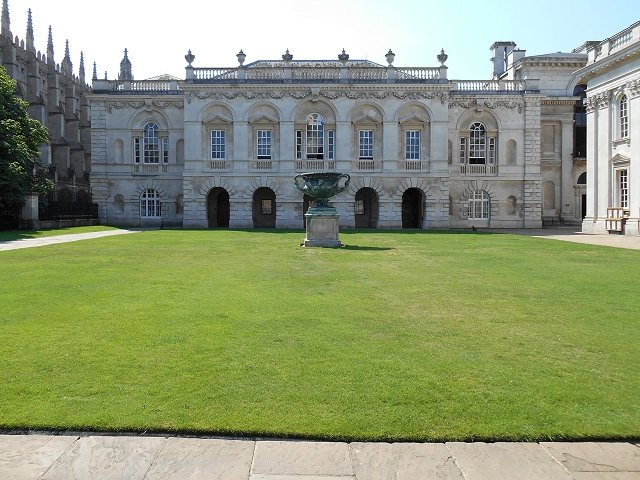
(Image is licensed under the Creative Commons Attribution-Share Alike 2.0 Generic license.
Attribution: The Old Schools, Cambridge by David Dixon)
How do we sign?
Seems like a distraction from the real grace which is in to human resources. Actually it was HR that fucked up over the Arday appointment, because it was their job to do the background check and reference verification and they didn’t.
Come on, you know how this ends. Arday wins. You lose.
The book launch is next week. He’s going to rake in the money. Big time.
Millions.
Then the book tour, podcasts, he’s going to be a fucking celebrity.
It is a one-way ticket.
So long, suckers.
Next thing you know, Trump has appointed him education tsar and he’s on Rogan with Candace Owens.
It is well worn territory.
Think Andrew Wakefield meets Meghan Markle.
So congratulations, Cambridge.
You’ve been punked.
“it would be logical for the review to also include the Research Integrity Office.”
It would be great if reassurance about this additional review could be obtained otherwise we need to submit another Grace just for the Research Integrity Office. There is a lot to uncover in that Office.
While the situation in the right-wing press is truly regrettable, there is no need to be concerned.
Some reputation damage to our great institution, however unmerited, may not be disregarded.
On the other hand, we cannot jump to the conclusions or actions without understanding the core problem.
The core problem is the overwhelming workload and below the market remuneration of the HR and Research Integrity Office – both limit their ability to recruit and retain key talent limiting their ability to manage such situations in the future.
Therefore, I move to double the HR and triple the Research Integrity Office budgets. In the view of the situation, I also propose to institute a new office to oversee the activities of the above mentioned offices to be called the “Trust for Research, Academic Standards, & Honesty” (not to be abbreviated!).
This modest increase in the spending proposed will undoubtedly improve the situation. Yet, the reactionary elements in the press and certain blogs could never be dismissed. There is no absolute certainty, like for anything in life, that a similar situation would not be repeated. Hence, we must review the situation and adequacy of the budget in a year.
Sincerely yours!
Excellent suggestion. And obviously we need to fire all researchers. No researchers — no more problems with research integrity!
Most HR & Research Integrity letters can be outsourced to AI. Usual shitty outcome, but at least cheap
“Thank you for raising the matter that Professor Oompus-Bompus may have plagiarized your work. After a full investigation, we have decided that the matter is out of scope.
Should you wish to appeal, nothing will change. Claude will generate the same letter in 6 months”
New story at Persuasion:
https://www.persuasion.community/p/jason-ardays-fabulism-is-an-institutional
“Surely Liberals Can Agree That Plagiarism Is Bad
Institutions need to uphold standards. No exceptions.”
“If the Cambridge administration continues to defend Arday or to wish away the very clear evidence of academic malfeasance, then their embarrassment at the hands of academic vigilantes will be well-deserved. Unfortunately for the institution, that seems to be the direction that Cambridge is continuing to move in—choosing to view the whole episode as a culture war issue as opposed to applying common-sense academic standards. Alternatively, the academy can treat an event like this as a wake-up call—a moment to realize that they have strayed too far from their core mission and that there really is no substitute for meritocracy. But to do that requires a degree of self-awareness and humility that higher education seems to have entirely lost.”
And at The Critic:
https://thecritic.co.uk/a-comedy-at-cambridge/
” A comedy at Cambridge. Satirists like Ben Jonson would relish the Cambridge plagiarism scandal “
The university cannot act as it is now paralysed by the overgrowth of HR / comms. HR (and their besties in Comms) turn everything they touch into costly disaster. The Faculty of Public Health has just recommended that dysfunctional HR in the UK is now causing so much harm that it should be classed as a public health hazard, alongside smoking, drink driving and knife crime. See https://tinyurl.com/fwb8feb2
The Cam Onc CRUK debacle is an absolute classic HR clusterf*ck. When the initial false and malicious allegations were made, the HoD (an academic clinician with a deep knowledge of how research labs and trials work) didnt get involved in any way. He immediately passed it on to the “HR team”, a gallant crew of complete idiots. As a result, a regiment of uninformed midwits with scattered expertise in Welsh, social policy, Sainsburys retail and wine selling were placed in summary judgement over one of Europes most productive cancer research laboratories. They didnt have the faintest idea how such a lab is run, and what it does. But it didnt stop them from shutting it down.
One aspect of the Arday saga is that the press are on the look-out for more Cambridge HR stories
“He immediately passed it on to the “HR team”, a gallant crew of complete idiots”
Problems then intensify as the gallant crew of complete idiots write the letters for those in positions of power to sign…
…making those in positions of power look like complete idiots – and unable to recall in court how and why they ever got to write such idiocies…
The Guardian article (you linked to) is excellent. Missed it when it came out
Badly handled disciplinary proceedings damage not just the staff involved but also their colleagues and the organisation that employs them, according to the UK Faculty of Public Health (FPH).
Poorly conducted or harsh workplace investigations into alleged misconduct cause such harm that they should be seen as a threat to public health like smoking or bad diet, the standard-setting body for public health specialists said.
UK employers undertake about 1.7m disciplinary cases a year that cost £28.5bn, mainly from the dismissals and resignations such actions lead to, according to research by the conciliation service Acas, which helps employers and trade unions to resolve disputes.
The Responsible Person, a prominent psychiatrist, suggested “The Talking Therapies”, “The Richmond Fellowship”, “Maximus” and “Living Life to the Full”. CUH HR then added a long list of internal and external “support” options. When we asked whether, given that all communications were “STRICLY CONFIDENTIAL”, we were free to discuss them, HR replied: “….. it would be reasonable to disclose to an external support service that you feel an on-going formal work-related process has impacted your wellbeing and explain the personal impact it has had on you; but it would not be reasonable or permitted to go into specific details about the allegations and/or the individuals involved.”
In short: empty gestures, no real support, and resistance when we asked for private counselling for current and former staff. We paid for counselling ourselves and got through it on our own. The full truth will be shocking when it comes out.
Cambridge University cannot enforce confidentiality in these cases. Every single attempt they tried with me failed because I spoke with even more people. Confidentiality is used to conceal and manipulate information. You should have asked the legal basis for those measures.
Good information thanks
Followed the UCam IoA ET. The HoD and HoS seem to have been in the know — perhaps even with a finger in the pie. Maybe the HoD for UCam Onc was in the know too, and a finger too…..
This Grace looks like a recommendation that could come out of an audit of the Research Governance and Integrity office. It’s the right change to be made, and the sooner it happens the better. I hope it will be seen as uncontroversial.
From an organisational chart of the UAS, research integrity and HR are entirely separate. They’ll argue that an audit of research integrity is therefore out of scope for a HR audit. However, carefully written terms of reference could include HR matters arising from research integrity?
Anyone who is a member of Regent House may sign here
https://universityofcambridgecloud.sharepoint.com/sites/RegentHousePetitions/SitePages/NWE01-Initiated-Grace-research-misconduct.aspx
“Carter-Ruck Silenced Times Higher Education for Ten Months; Memoir Publishes August Eleventh”
https://www.techtimes.com/articles/322930/20260804/cambridge-professor-jason-arday-faces-188-sentence-plagiarism-finding-charity-claims-disputed.htm
“What Cambridge Has Not Said: The university’s response has consisted of three elements: asserting that Arday was cleared by Liverpool John Moores and the relevant journals; describing the campaign as “vile”; and declining to reopen any investigation. Cambridge has not addressed the specific statistical finding of 188 near-identical sentences. It has not addressed the Retraction Watch reporting that Carter-Ruck suppressed the Times Higher Education investigation for ten months. It has not addressed the documented sequence of retroactive web page edits at institutions that previously cited Arday’s charity totals. Robert Dingwall, the sociology emeritus professor, said this week that there “should be an independent investigation” by scholars from outside the UK to ensure impartiality, if neither university is prepared to conduct its own. The Office for Students, England’s higher education regulator, has not commented.”
Breaking in the states…
https://nypost.com/2026/08/04/opinion/cambridge-u-s-fibbing-prof-tests-academias-deep-dei-delusions/
This is a most excellent Grace! Cambridge absolutely deserves the power to investigate misconduct committed at other UK universities, and potentially to declare some of their degrees to be effectively void. As research is often done in teams, and arguably PhD research always involves a team of at least two (student and supervisor), this gives welcome and sweeping powers to investigate people at lesser institutions. It is proper recognition of Cambridge’s excellence at running investigations and of its position of unimpeachable integrity.
If it makes certain senior staff at other institutions reluctant to write decent references when members of their teams apply for posts at Cambridge, all the better! We get too many external applicants for vacancies anyway.
We would oppose any hint of reciprocal rights for other universities over Cambridge, or any hint that it would be acceptable to investigate our administrative staff for any misdemeanours that they may have committed before being appointed at Cambridge.
[To those who thought I was dead, my knee-jerk reaction is still strong.]
Cambridge University should certainly reciprocate if there are allegations of research fraud/misconduct conducted here.
Better still to have an independent body (as Prof Dorothy Bishop of Oxford advocates)
Sorry but no
Cambridge standards are “supposed” to be higher than LJMU
They didn’t even bother to use Turnitin
But apparently Cambridge in fact as bad or worse
What an embarrassment
Another from The New York Times,
“Questions Mount Over a Star Scholar’s Life and Career”
“A knife-wielding masked man. A pig’s head outside his parents’ door. Running 30 marathons in 35 days. The Cambridge professor Jason Arday, accused of plagiarism, says he’s been through it all. Not everyone believes him.”
And another at The Times:
https://www.thetimes.com/uk/scotland/article/jason-arday-professor-cambridge-glasgow-university-6nl2kxnjh
I guess that the return of Prentice & Helm from leave is not changing the dynamics…
Actually, the article on NYT is the same, not sure why it is announced as released in the last 48minutes… sorry about that. But the one in The Times seems new.
How many journalists are now working on this?
And it is seriously proposed that his biography will be be launched in 6 days by Simon & Schuster with a US press & media blitz
There’s an inferno, and Simon & Schuster are shovelling tonnes more gasoline on it.
From what has been seen of the biography, it will raise many more questions
I think they are taking turns so that everyone can share a piece of the pie…
If there is a lesson that Mr Parsons & Mr Helm should take is that bullying and harassing journalists with Carter-Ruck and the police is not a good idea. I hope they learned at least that one but only the future will tell.
Every ballsup only generates more business
For legal, everything bad is good
“For legal, everything bad is good”
It depends. What if it becomes clear that it was Mr Parsons who was involved in the hiring of Carter-Ruck to silencing journalists about academic misconduct? Not sure if it would look very good in his CV, even if that meant having some extra hours of paid work in Cambridge to address the issue. But perhaps I am wrong, only Mr Parsons can answer us!
Were you missing an article from The Telegraph?
https://www.telegraph.co.uk/news/2026/08/04/journalist-questioned-by-police-for-investigating-cambridge/
” Police investigated journalist who tried to expose Cambridge professor ”
The responsible for this is a disgrace and an embarrassment for all honest members of Cambridge University.
And another in The Wall Street Journal
https://www.wsj.com/opinion/free-expression/old-university-new-problem-ff89516a
And an interview at UnHerd:
https://unherd.com/watch-listen/the-jason-arday-scandal-explained/
“The university denied it was them.”
Did people ask Parsons & Helm or only the “spokesperson”?
“A spokesman for Cambridge University said: “The university did not make any complaint to the police against Jack Grove in 2025. Neither was it aware of any such complaint being made.””
Where is this from?
The veracity of this statement turns on what is meant by “the university”
It is from the new article at The Telegraph:
https://www.telegraph.co.uk/news/2026/08/04/journalist-questioned-by-police-for-investigating-cambridge/
It is impossible that the “University” did not know, but obviously it was not the “University” that called the police. Remember what the Guardian said a few days ago. The “University” was aware of the alleged harassment against Arday more generally and did not know about the case with journalists!??!?!
“The Guardian understands that after Arday reported the first intrusion to the university, enhanced CCTV was placed in the faculty and a panic alarm was installed in his office. The professor said he hit the panic alarm during the second confrontation, but that no one responded. It should have triggered an alarm alerting the faculty’s security team, all of whom were present at the time of the alleged incident.”
“The university did not make any complaint to the police against Jack Grove in 2025. Neither was it aware of any such complaint being made.”
I would definitely look in to that claim. Hard to believe that if the police ran a 4 month investigation, they never have contacted the university at any point during that process.
Also Jason is an officer of the university (and as a professor, quite a senior one) so a priori the claim seems false.
Though the logic of their statement does imply that the university administration considers only ***itself*** to be “the university” —– and not the Regent House.
Revealing.
https://order-order.com/2026/08/04/exc-prestigious-us-university-says-it-has-no-record-jason-arday-was-visiting-professor/
He was never visiting Professor at Ohio State University
“a vile campaign to undermine his credibility”
Elon Musk in the house, again…
https://x.com/elonmusk/status/2084678514402271486
Jason is a liar.
This is what happens to liars who get caught out
All he had to do was be honest
Shame
2.6M views in 3h…
Daily Mail perhaps?
https://www.dailymail.com/news/article-16027305/Now-THREE-universities-dispute-claims-Cambridge-plagiarism-row-professor-holds-academic-positions-charity-casts-doubt-volunteering-record.html?ns_mchannel=rss&ns_campaign=1490&ito=social-twitter_mailonline
“Now THREE universities dispute claims Cambridge plagiarism row professor holds academic positions with them – as charity casts doubt on volunteering record”
I guess this is the last one of the day, now from The Times:
https://www.thetimes.com/uk/education/article/jason-arday-cambridge-professor-plagiarism-l8jztkhbw
“Jason Arday: a Cambridge professor’s brutal unravelling. A vicitm of ‘dark arts’ or a plagiarist? he professor of sociology of education is at the heart of a storm that threatens both his reputation and the institution’s
“The matter is doing enormous damage to public confidence in the universities. It is doing enormous damage to the prestige of Cambridge. It is doing enormous damage to the credibility of sociology. It is doing enormous damage to the perception of black scholarship. So there does need to be an independent inquiry into the matter, preferably by the Office for Students.”
Best of luck with the Grace. As an ex “Old School minion” I would observe that staff there are acting individually in their own best interests – to keep their jobs in order to be able to pay their bills. It is not necessarily incompetence but rather pragmatism. Trouble makers there get pushed out as everywhere else.
More importantly, Prof Arday was appointed to his current role not by HR, Comms etc but by a committee of Cambridge academics, despite his highly questionable prior track record . They should be held accountable for this decision before anyone else at the University.
“It is not necessarily incompetence but rather pragmatism.”
Or dishonesty. Ask the most discussed Lead HR Business Partner in the 21 Group how many lives she damaged and continues working as usual. Her reckoning will come as well.
A new article by Andrew Gelman, “Why do David Agus and Jason Arday annoy us so much?”
https://statmodeling.substack.com/p/why-do-david-agus-and-jason-arday
“Cambridge has behaved worse. USC just brushed their scandal under the rug and acted like it had never happened. Cambridge is the org that hired the evil law firm and sent out their pitiful, sorry-ass press agent to falsely say that Arday was a “victim of a vile campaign to undermine his credibility” and that he had been cleared of “allegations of plagiarism regarding his thesis and journal publications.””
The composition of the Board of Electors for Jason Arday’s Chair appointment show Education networks are increasingly centred on Becky Francis, herself the subject of a bullying report at UCL IOE where she was briefly Director and Dean.
Several members of the Board had established professional relationships with Professor Becky Francis that extended beyond ordinary disciplinary acquaintance. Louise Archer was a long-standing research collaborator and co-author, Martin Mills was recruited by Francis to a senior professorship at the UCL Institute of Education and became a close institutional colleague (along with nine other IOE appointments from the University of Queensland within a very short period). Baroness Sally Morgan has long occupied the same senior education policy and governance networks and later chaired the Education Endowment Foundation, where Francis became Chief Executive. Other members, including Paul Ramchandani, were also senior colleagues within the UCL Institute of Education. None of this necessarily implies impropriety, but it does illustrate potentially disproportionate influence by a single person at the centre of a hub of significant influence and unchecked patronage.
Certainly curious that two external members were from UCL (Archer & Mills)