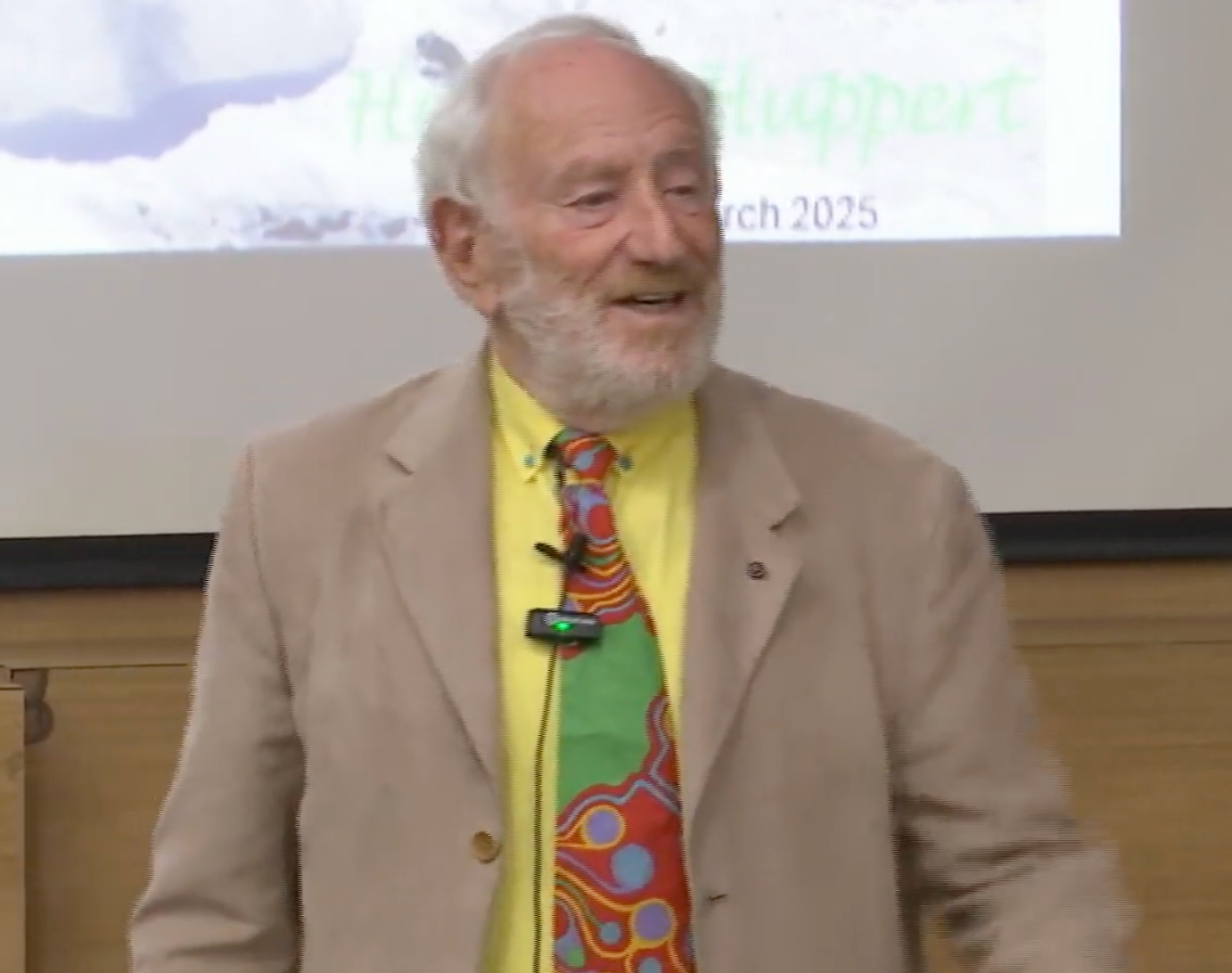
The 21 Group predicted that 2026 would be the Year of Scandals for Cambridge University. Those scandals are now arriving thick and fast.
The Simon Goldhill Affair involved a distinguished classicist at King’s College, Cambridge. Allegations of sexual misconduct against him were upheld by the University. His “touchy-feely” behaviour had long been an open secret within both the Faculty of Classics and King’s itself. However, King’s only learnt about the University investigation from articles in The Times.
Now, The Times reports that the geophysicist Professor Herbert Huppert has been excluded from King’s College following complaints of harassment, inappropriate touching, sexualised remarks and other unacceptable conduct. The apparent concentration of cases at King’s strongly suggests that the source of these disclosures lies within the College.
I was once a Fellow of King’s, albeit many years ago. Whilst I did not personally witness inappropriate behaviour, I do recall that Professor Huppert was, among some Fellows, nicknamed “Humbert Humbert,” after the central character in Vladimir Nabokov’s novel. This was because he was often unduly attentive to younger female undergraduates. Concerns about his conduct had circulated within academia for years and were widely known, well before formal action was eventually taken.
For avoidance of doubt, there is no implication that Prof Huppert has done anything illegal.
Perhaps the most troubling aspect of this latest case is, once again, the culture of secrecy that continues to envelop Cambridge University regarding bullying and harassment.
Cambridge imposed “access restrictions” on Huppert in 2018 after earlier allegations about his behaviour. Despite that he had been in regular attendance at Cambridge events and was subsequently accused of harassing a female staff member at a formal dinner at Jesus College [The Times]
Jesus College is the home of Dr Julian Huppert, the former Liberal Democrat MP for Cambridge from 2010-2015. The date of the alleged harassment at Jesus College has not been disclosed. It appears that, despite the “access restrictions” imposed in 2018, Professor Huppert continued to attend university functions and college events in subsequent years. At Cambridge University, the privacy rights of the alleged harasser seem, all too often, to take precedence over safeguarding concerns.
In 2023, further restrictions were imposed when Professor Huppert was barred from attending the Centre for Mathematical Sciences, except under very limited circumstances, by its Head, Professor Colm-cille Caulfield.
Dear all,
I regret to inform you that I have had to restrict significantly the access to CMS of the retired member of DAMTP Professor Herbert Huppert FRS, effectively to the immediate period (+ 10 minutes before and after) of relevant seminars/events which he has been given explicit permission to attend. I would ask that if you encounter him at other times, and especially at any time in the office parts of the pavilions, that you contact reception immediately.
Thank you
Colm-cille Caulfield
Head of DAMTP
The latest investigation seems to have been carried out at King’s College very recently — in 2025, following two further complaints from female staff. However, King’s appears to have been unaware of any previous investigations and restrictions.
Details of the restrictions imposed on Huppert by the university in 2018 do not seem to have been passed to King’s College, where he had been a fellow since 1970. King’s College has been unable to say whether it informed the central university authorities about its 2025 investigation [The Times].
Prof Huppert is now no longer a Fellow or even Member of King’s College. He has been removed from the list of Emeritus Fellows (by contrast, Prof Goldhill remains listed as an Official Fellow, though currently banned from College).
The most disgraceful aspect of this matter is the difference between what Cambridge University says and what it actually does. Here is a statement from the Pro Vice Chancellors, Professors Kamal Munir and Bhaskar Vira, on ‘Breaking the Silence‘ about sexual harassment.
Like most official pronouncements by Cambridge University on bullying and harassment, it is just untrue. It is pure propaganda. What is its purpose?
“In my study of communist societies, I came to the conclusion that the purpose of communist propaganda was not to persuade or convince, not to inform, but to humiliate; and therefore, the less it corresponded to reality the better. When people are forced to remain silent when they are being told the most obvious lies, or even worse when they are forced to repeat the lies themselves, they lose once and for all their sense of probity. To assent to obvious lies is in some small way to become evil oneself. One’s standing to resist anything is thus eroded, and even destroyed. A society of emasculated liars is easy to control”. [Theodore Dalrymple]
Finally, I note that the University’s lawyer’s attempt to impose reporting restrictions and anonymisation on the forthcoming Employment Tribunal (1 to 26 June 2026) regarding events at the Institute of Astronomy was withdrawn last week.
The long years of cover-ups are finally coming to an end.
Professor Wyn Evans (Institute of Astronomy)
Motivation of the ‘King’s College Leaker’ is unclear. Quite possible that the leaker is someone fed up of all the cover-ups. Maybe a good angel?
@Xerxes, read the bottom of the previous post and things will make more sense. Ask yourself who is involved in Roberto Foa Versus The Chancellor, Masters, and Scholars of the University of Cambridge. Why don’t we know the outcome of this story yet? What is the Department involved in this story? Who are the people involved? What is the College of a leading actor of this story who is incidentially is also associated with my own story?
It is pretty clear who the person is, and it is pathetic if she thinks that her own story will not be known.
tick tock tick tock tick tock
If it was the defendant in that case then that is ironic as it would mean that both sides in that case wanted to see more transparency around misconduct.
Every single case seems to involve HR coordinating retaliation against whistleblowers.
Could be an ex-Fellow of King’s College with interests in bullying & harassment? Do we know anyone fitting that description? 😉
@Leaks, it definitly could but that Fellow would not focus only on King’s as he is aware of many scandals across Cambridge 😉
What we really need is a Grace asking for an external audit of HR practices to know who is with HR/Leadership that covers them, and who is not. Such a Grace is a priority now.
Foa was always pretty clear in stating that perpetrators should be named unless the university took appropriate action.
The perpetrators in the Foa Scandal will be named in due course.
Ssssssshh, it is confidential…
I think it could be a great idea to show up to the Employment Tribunal that will sit at Bury St Edmunds on 1–28 June 2026 wearing a t-shirt with this slogan and the logo of Cambridge University. The alternative could be “Breaking the Silence” 😅
“it is pathetic if she thinks that her own story will not be known”
Other leaks were carter-fucked.
Why not this one? Or the previous one?
And who would have made that decision?
She bullied under lots of women too. A lot. A lot a lot.
Funny, nothing from The Guardian yet on the scandals associated with King’s, as if they could not or preferred not to get involved, but the Guardian of Sri Lanka published something on this story:
https://slguardian.org/cambridge-scandal-deepens-as-veteran-professor-ousted-over-harassment-claims/
Who is drafting the Grace and when can we all sign it? The oligarchy must be panicking now! They covered HR all these years! They know the structure is overseen by a lady named like a NA bay. Such lady has presided over the HR mafia at UCam. She could only keep being the true monster she is because the VC, ProVCs and Council allowed her!
“She could only keep being the true monster she is because the VC, ProVCs and Council allowed her!”
Don’t forget the legal team.
Don’t forget Fireman Mike!
No one wonders why it is The Times specifically publishing all these stories? Perhaps they were gaged by the University in the past and now it is payback time… Who doesn’t remember the post below BreakerMorant in October 2025 (https://21percent.org/?p=2757)? It seems they did kill it in the end, but cannot kill what is coming now…
“*** CARTER-FUCKED ***
Sunday Times delays plagiarism story after pressure from University
They’re going in really hard, will they kill it?”
Times, Guardian and Telegraph were all blocked in the recent past. Blocking journalists from covering stories in like a red flag to a bull, it only encourages them to double down and of course they all know each other and exchange tips and leads. End result: leveraging spiked (for now) stories to extract 10 more, meanwhile university won’t be getting its money back from its media management consultants for this amazing outcome
We should show some respect to the University of Cambridge as after all we are talking about the “UK’s best employer” according to Financial Times. Hopefully they will also have something to say soon, such as apologizing for that humiliating ranking and lack of transparency regarding the data used.
“A society of emasculated liars is easy to control”
It is a society with less overall control over itself. It is a society with less overall societal power.
The thinking that creating a society of emasculated liars is going to create a society that is easy to control doesn’t stand up to scrutiny. The more accurate the information available to a person in a society the higher the levels of self-control a person can achieve in a society. The higher the levels of self control a person can achieve in a society the higher the power attainable by a person in a society. The higher the level of power attainable by a person in a society the higher the overall power of a society as it is the combined power of all the people in that society.
The thinking is that an entity with less overall control of itself is easier to control than entity with more overall control of itself but this is clearly false because the entity with more overall control over itself has more information relevant to the control of itself than the entity with less overall control of itself as evidenced by the fact that it is the entity with more overall control of itself. Self-control is the most efficient form of control, societies that support the development of a persons self control are easier to control because society then organises itself to self control as a society.
Societies with higher levels of self control are more powerful. Developing more advanced self control is a way to increase societal power.
>> A society of emasculated liars is easy to control <<
Oh goodness. Well, some might say that, it is only when someone decides to flip the switch and blow the pagers that, it becomes embarrassingly clear who has done their homework, and who was set to be "emasculated" (metaphorically speaking of course).
I love this quote made by Evans in his post:
“In my study of communist societies, I came to the conclusion that the purpose of communist propaganda was not to persuade or convince, not to inform, but to humiliate; and therefore, the less it corresponded to reality the better. When people are forced to remain silent when they are being told the most obvious lies, or even worse when they are forced to repeat the lies themselves, they lose once and for all their sense of probity.”
This strategy was used by Prof Smallman and Prof Teflon to destroy a group in the School of Clinical Medicine in the cancer research scandal. It will all come to light eventually! Tic toc tic toc toc toc… BOOOOOOOOOOOM!!
In our experience, academics at Cambridge from an Eastern European background recognise quickly the nature of our HR department
They have seen it before.
Ask them what happens if people do not accept being humiliated and keep talking even after being expelled. What is the next stage? 😅
We at HR, under NA bay-named boss, have learned lots from Stasi and KGB. We love psychological torture. And we know the second rate psychologist that runs the place does not mind- she makes LOTS of money to be the Queen!
My guess is that this behaviour is pretty widespread amongst Fellows of King’s aged 70 plus. A certain aggrandisement or machismo was needed in those days, and times were lax. A rather casual attitude persisted in sexual relations between Professor and student until quite recently, after all.
Or Fellows of any other College aged 70 plus for that matter
It is definitely not specific to any one college, though that makes one wonder why all the leaks focus on just one college rather than the whole lot of them. Either someone with media contacts is from King’s who is now spilling the beans or someone with a lot of influence has focused an insane amount of energy and resources on digging in to them for some reason.
— …punish everyone, including queens
one cannot help but notice that all the focus is on King’s, so perhaps Queen’s are more in control than you think? 🙂
— just a thought 😉
Dare I presume that you are male? Dear reader the sorry truth is that this kind of behaviour is as rampant as it ever was. The over 70s don’t get called out because they are more lecherous than younger fellows, my friend, but purely because it is so much more gross of an experience coming from them, and obviously entirely unflattering and just a little gruesome. Without change, the likely result? Today’s suave things become tomorrow’s handsy toads, and the whole cycle continues.
I would like to highlight this key phrase from Professor Evans above,
“I note that the University’s attempt to impose reporting restrictions and anonymisation on the forthcoming Employment Tribunal (1 to 26 June 2026) regarding events at the Institute of Astronomy was dismissed last week.”
It is great news indeed, but the fact that the University attempted to gag in itself should lead to an article in national newspapers.Of course, now people are even more interested to know what happened and why the University was so keen to keep it private…
We forgot to keep track on this story,
https://www.theguardian.com/education/2026/may/17/sons-scholars-facing-death-penalty-cambrige-judge-business-school-saudi-defence-ministry
“The sons of the two men prosecuted for almost a decade by Saudi courts have called on Chris Smith, Cambridge’s chancellor, and Prof Deborah Prentice, its vice-chancellor, to halt any deal.”
Good luck with that! If they reply is to say the normal bullshit.
The VC signed off on the Saudi deal… a deal with dictators, and this is the same VC who gave a lecture on the future of democracy two years ago, but seems the money carries the vote that counts …
From the first annual address of the Vice Chancellor Prof. Deborah Prentice,
“Much of the work of the university this year will focus on people, for people are at the heart of everything we do. People are the means and the ends of the work of a university. I have talked about the opportunities and challenges of aligning the academic and public sides of Cambridge’s mission, but none of that matters if people do not want to come to work here. It is people who animate the community of scholars, and people whose imaginations and ambitions fuel the impact of the public institution.”
Do you think this person can be taken seriously? What people is she referring to here?
The Vice-Chancellor of Cambridge University has also said that free speech is “critical”
Hard to know what to say sometimes … Either she is a liar or she actually has no idea what is going on. I think it is the latter — which is actually more alarming. There is now a palpable sense of drift, lack of communication, and increasing hopelessness at the course the University is taking.
If she spends her time talking to Kamal Munir, she is unlikely to have a balanced picture.
“Either she is a liar or she actually has no idea what is going on.”
The VC knows what is going on. She absolutely knows what was done to me for example. If she decides to just listen to what Munir and others tell her, while ignoring evidence of misconduct that other members send to her—multiple times—it is her fault. The word of Munir cannot be more important than the word of more junior members and the evidence they send to support their claims, and if she thinks otherwise, she must leave. Unfortunately, she is not alone when it comes to the choice of whom to listen. The Master of her own College too aligns with the views that are put forward by more senior members who rest on their word alone, against more junior members and the written evidence they submitted, which is not even considered.
The VC of UCam is not just clueless, and even if she was, after several years of UCam and seeing multiple scandals, she should have spotted that something is going wrong.
TheResearcher is correct. Generally speaking, VCs will usually know what is going on with their immediate subordinates and senior HR, and in all likelihood they are providing the green light for untoward activity, especially against whistleblowers, and especially against Professorial whistleblowers where VC authorisation is usually required for their dismissal.
At another University, I directly witnessed a Professor being brutally persecuted for whistleblowing and speaking out against abuse of staff and what was viewed as clearly illegal activity. The Professor concerned made a point of letting the VC know what was going on to prevent the scandal getting worse for all concerned, only to find that the VC fully supported the action against the Professor and just let it happen. It is simply not possible to be this incompetent, and in my opinion the refusal of executives to intervene when warranted amounts to active participation.
Part of the VC skillset, and part of the reason why they are paid silly amounts of money, is that they give the impression that they are simply incompetent or ignorant to what is happening. They will even openly admit to it when it suits them (https://21percent.org/?p=2298).
In this same case, the whistleblower requested an investigation, including into alleged illicit activity involving the Director of HR. The VC just forwarded the letter directly to the Director of HR for processing, and of course the whole thing went nowhere, and the Professor was subsequently and unlawfully dismissed. This particular VC was up to her neck in it, and I’m sure readers of this blog would be very interested to know who that individual was. All will find out eventually, when this is fully exposed.
“Finally, I note that the University’s attempt to impose reporting restrictions and anonymisation on the forthcoming Employment Tribunal (1 to 26 June 2026) regarding events at the Institute of Astronomy was dismissed last week.”
I have no doubt that the University concerned will attempt a gagging order in this case when it approaches the tribunal (especially as the case may lead to criminal charges being raised against some of those concerned). They can try.
21Group – If and when possible, please do post details of this gagging attempt by UCam, and how and why it was dismissed, for the benefit of other victims that are also raising cases in the courts and tribunals.
It is likely a combination of both – people say the VC is sharp when matters are brought to her attention, but she is hard to reach, and relies on insiders with much to hide, which is pretty much the entire leadership at this point. This means the ship cannot change direction until the iceberg is right there in view. The whole architecture of the senior management lacks the ability to either a) perceive risks or b) react in an agile fashion. You would need to have a parallel information channel to circumvent the whole HR/legal nexus and an executive core to steer around problematic actors, and the whole design of the university works against that. Ironically this group probably has better visibility on a lot of the former, or at the very least, no incentive to hide awkward truths from those in charge (or anyone else). But there’s no decision making process to circumvent those who are trying to delay, hide and cover up, so the result is perpetual paralysis (not least as the latter keep advising to “ride it out”). Same true of Chancellor but for all his good intentions his powers are limited and he’s no longer on the ground able to gather his own info from dinner rumours and personal chats.
@17c, the idea that the VC is sharp and is just misinformed is very dangerous. Our VC knows very well what is happening in the University and chose to prioritize institutional reputation over truth, regardless the human costs that comes with. Unfortunately, it is clear now that the new Chancellor too chose to look the other way. He has enough power to intervene and has chosen not to, even when he sees institutional bullying and harassment against members to challenge the culture of cover ups at Cambridge.
Keep an eye in the upcoming Employment Tribunal cases.
“against members *who* challenge…”
If academics within a nation state are facing the death penalty for engaging in academic research then the fundamental conditions for continuously maintaining academic freedom in that nation state are not being met.
These are unforgiving academic freedom conditions. The probability of an academic achieving a state of continuously high academic freedom over sufficiently long timescales to solve any difficult academic interest/real-world problem in service of a nation state is not high in these conditions.
An internal scholar has a higher probability of achieving academic freedom in these conditions than an external scholar. An academic with deep relationships within a nation state and/or a deep relationship with a nation state may be able to derive the mental strength necessary to isolate the mind – from the threat of facing the death penalty for engaging in academic research – to achieve a state of academic freedom in service of that nation state.
It is a significant challenge for an internal scholar to achieve a continuous state of academic freedom in service of a nation state in these unforgiving academic freedom conditions – a person has to find a way to make peace with a nation state that is not necessarily in a state of peace with respect to a person. A person has to be capable of sustaining a highly non reciprocal interaction with a nation state.
If a nation state is proposing to interact with an external academic on academic research the academic freedom conditions that exist in that nation state are the relevant academic freedom conditions that apply to an external academic engaging in academic research in service of that nation state.
The more unforgiving the academic freedom conditions in a nation state, the lower the probability of finding any academic – internal or external – who can achieve a state of continuously high academic freedom over the timescales necessary to solve any difficult academic interest/real-world problem in service of that nation state.
If a nation state has academics facing the death penalty for engaging in particular academic research it means that nation state is highly sensitive to that particular academic research. It’s a sign particular academic research is of significant importance to that nation state & that the particular academic research has particular meaning for that nation state.
This means a nation state has particular academic research that is pulling academic freedom conditions in that nation state to an unforgiving region. That is a particularly delicate situation for a nation state to be in and one that is unlikely to be made any less delicate by that nation state engaging external academics in the same unforgiving academic freedom conditions.
It is unclear any of the external academics would have a higher probability of achieving academic freedom in service of that nation state in these unforgiving academic conditions than the internal academics. If academic freedom cannot be achieved there is then higher potential for the generation of inaccurate information/solutions.
If a nation state has reached that position it is critical for a nation state to find its own way out of the unforgiving academic freedom conditions i.e. for a nation state to find a way to carefully work through the particular academic research – of significant meaning to a nation state – internally without destabilising the continuous operation of that nation state. It’s a case of finding the right way, the right pace and the right conditions for a nation state to make stable progress on that particular academic research.
If a nation state can find a way to return its academic freedom conditions to a forgiving region that nation state is then in a position to secure input on its whole range of academic interest/real-world problems from internal and/or external academics in conditions that support academic freedom and increase the probability of finding accurate solutions to academic interest/real-world problems in service of that nation state.
Don’t be naive. 4+ big media scandals in as many weeks – that is more than the average in a whole year, in fact several years. All timed to appear right at this exact point in time.
It takes huge amounts of time, resources, and high level connections to pull off an operation like this. Each one would have to be sourced, pass legal review, undergo editorial sign off. This would have taken months – if not years – of patient planning. Who knows how much more is yet to come. Someone has been working hard.
“Who knows how much more is yet to come.”
Ask Kamal Munir! The scandals wil not stop being published while he and others like him are around. He is an embarassment for the University of Cambridge and its members. Remember,
“We are crystal clear that harassment and sexual misconduct are unacceptable. We have an obligation to prevent it, and everyone at the University has a role to play. That’s why it’s important that all our staff understand our policies and what is expected of them, including what to do if they receive a report.”
“Someone has been working hard”
It was just indigestion earlier.
Now I’m throwing up.
Beans and all.
Sexual relations are the most complex relations a person can have with another person, they are the relations with the highest potential impact on a persons life, they are the relations with the highest potential for the highest life alteration of any relations, they can bring a person to the greatest heights of human happiness or the greatest depths of human despair.
Entering into sexual relations with a person who doesn’t know how to have sexual relations with others is not going to teach a person how to have sexual relations with others and is not going to bring a person to the greatest heights of human happiness. If a professor is putting undue pressure on a student to have sexual relations with them then the professor doesn’t know how to have sexual relations with others.
Universities select people for their ability to solve difficult academic problems. Universities don’t select people for their ability to have sexual relations with other people. There is no reason to suggest that a person who has made it to the greatest heights of academic success in a particular academic field knows how to have sexual relations with others.
Students who enter into a university should be free to develop other less complex relations with others in a university without undue pressure to enter in sexual relations with people who don’t know how to have sexual relations with others.
This was a standalone reply to the Huppert Scandal and not a reply to the Saudi story.
From LinkedIn –
Sean O’Neill, Senior Writer at The Times –
‘Another Cambridge professor losing a college fellowship over harassment and misconduct allegations. What is really striking about the series of stories we have covered in The Times in the past few months is the way the UK’s world leading universities handle such cases. No transparency, no sharing of information, no warnings to staff or students … in one case the provost of King’s College at University of Cambridge only found out about an investigation report into a senior professor when she read about it in the newspaper! Secrecy seems to trump student welfare. It reminds me of reporting on Church cover-ups.’
Anna Bull (Director of The 1752 Group and academic expert in sexual misconduct in higher education & inequalities in music education) –
‘…the latest in Sean’s important coverage over recent months of the routine ways in which universities handle sexual misconduct by staff.
Sean has written about all this before, for example, in his coverage of the humanitarian sector sexual abuse scandals in 2018. It seems that, for the HE sector, we need people from outside our bubble to shed light on just how non-transparent and ultimately unjust and unsafe our processes are.
Having said that, as I’ve commented in this piece, I know from my wider research and activism that these levels of secrecy are not specific to HE, even if they are compounded by its arcane structures and entrenched power hierarchies.
This means that, in the forthcoming ‘all reasonable steps’ guidance, we need greater transparency and protection from victimisation across the board, in every sector, for those trying to report sexual and gendered harm’s at work and study.
But on top of this, HE has specific problems to address. The humanitarian sector made changes post-2018, setting up the Misconduct Disclosure Scheme to stop passing perpetrators, and now has some sector-wide infrastructure.
When will HE catch up?’
And a comment from a Professor of Public Health –
‘Agree strongly. I watched the scandal in humanitarian sector unfold and the steps taken to improve with some awe, combined with frustration that the HE sector seems completely unwilling to follow suit.’
——– Breaking News ——-
The University wants to prevent the Commissary from considering my appeal regarding my formal representation under Statute AIX sent to the Vice-Chancellor. How you may ask? Calling him a “visitor” and invoking the Higher Education Act 2004 that reads:
“20 Exclusion of visitor’s jurisdiction in relation to student complaints
(1) The visitor of a qualifying institution has no jurisdiction in respect of any complaint which falls within subsection (2) or (3).
(2) A complaint falls within this subsection if it is made in respect of an application for admission to the qualifying institution as a student.
(3) A complaint falls within this subsection if it is made by a person– (a) as a student or former student at the qualifying institution, or (b) as a student or former student at another institution (whether or not a qualifying institution) undertaking a course of study, or programme of research, leading to the grant of one of the qualifying institution’s awards.”
…
“Accordingly, the University’s position is that, as a result of the terms of the Higher Education Act 2004, the Commissary does not have jurisdiction to consider any part of the complaint made by Dr Oliveira, regardless of the nature of the complaint.”
In short, students from the University of Cambridge cannot appeal to the Commissary but can use Statute AIX. Are students aware of this? Another set of questions: Why has UCam always resisted to consider my complaints? Why did it dismiss my requests for an external investigation, or the whistleblowing disclosures from third-parties also requesting an external investigation, and now even wants to prevent the Commissary from considering the case by calling him a “visitor”?
Meanwhile, the student was expelled without even seeing the evidence that led to his expulsion, namely the “witness statements” from those he had complained about, and his rights were removed from him even before his appeal was considered. All this speaks for itself but if you ask Kamal Munir and others, they will find it reasonable.
The withholding of evidence is an unfair and cowardly act. The senior management team are highly qualified academics, HR and legal counsel, who, given they are part of a university, should be able argue their case in an open, honest and analytical fashion. As they appear to have repeatedly refused to do this and hidden behind their own perceived authority and processes, one can only conclude that they are trying to cover for someone’s mistakes. If they have refused to investigate allegations repeatedly then they are also avoiding their own accountability for the inadequate and unfair process from the beginning.
36 months of dishonesty and counting. UCam became a swamp of lies and cover ups, but you still find a lot of people who expect that you accept it, and many others who simply look the other way.
https://www.admin.cam.ac.uk/reporter/2025-26/weekly/6813/section7.shtml#heading2-14
“It also notes that ‘the current Commissary has confirmed that his office is subject to the exclusions relevant to Visitors’ as set out in this Act. The Privy Council’s current guidance on ‘petitioning’ a Visitor explains that ‘the Visitor no longer has any jurisdiction to consider complaints made by students or former students (or complaints made in respect of an application for admission)’. That need is now met through the Office of the Independent Adjudicator (OIAHE).1 Also excluded are complaints to a Visitor ‘from members of the academic staff in relation to an employment dispute’, for whom there is an avenue of recourse through an employment tribunal.”
“The Commissary’s present jurisdiction is deemed to be ‘analogous to judicial review’ ”
The Commissary role originally conceived as a judicial role seems to have descended into an external sign-posting role. The Commissary seems to have little to no present jurisdiction at all. Commissary reports seem to consist of pages of legal analysis to justify a non-intervention followed by pointing a student to the Office of the Independent Adjudicator or a staff member to the employment tribunal.
If the Commissary’s present jurisdiction really was analogous to judicial review – which would be of use to the university – then Dr Catherine MacKenzie could have applied to the Commissary for an internal process analogous to a judicial review and would not have had to apply for a judicial review in the courts which the university subsequently blocked. That substantive unfair dismissal case had already been through an employment tribunal – during which the university conceded the substantive unfair dismissal and was unsuccessful in arguing against a re-engagement order being made – and yet the employment dispute remained unresolved at the end of the “avenue of recourse through an employment tribunal.”
If the Commissary’s present jurisdiction really was analogous to judicial review then Dr Anita Faul could have applied to the Commissary to have whistleblowing concerns addressed instead of having to raise those whistleblowing concerns with the Office for Students. Regent House could also have raised Dr Faul’s whistleblowing concerns with the Commissary. Instead the whistleblowing concerns seemed to go no where – the department didn’t report on them, the university didn’t report on them, the Office for Students didn’t report on them, Regent House didn’t report on them – it’s not clear anything was done with the whistleblowing concerns.
The avenue of recourse in my case was through the health and safety executive. It was a breakdown in trust and confidence on work-related stress regulation. The health and safety executive as a health and safety regulator is highly sensitive to health and safety issues in general and to that particular type of breakdown in trust and confidence in an employment relationship – work-related stress regulation – & can respond on faster timescales than an employment tribunal.
Employment tribunals are not currently set up to handle that particular type of breakdown in trust and confidence in an employment relationship. Employment tribunals leave people stuck in a legal process for years especially if it’s a “complex” case which it will be particularly given the length of time it will take to get it into a court. Whilst employment tribunals are more sensitive to employment issues in general and to the different types of breakdown in trust and confidence that can occur in employment relationships the expertise on that particular type of breakdown in trust and confidence in employment relationships – work-related stress regulation – will be being concentrated in the health and safety executive as it is now responsible for overseeing work-related stress regulation in organisations.
I would trust the health and safety executive over the employment tribunal on that particular type of breakdown of trust and confidence in an employment relationship – work-related stress regulation – or any other health and safety issue. On anything else to do with employment I would trust the employment tribunal over the health and safety executive.
I would trust the health and safety executive and I would trust a court at the level of the high court or above but I would not trust any court below that level.
I would trust the Commissary over in-house legal or HR.
There is a legal obligation is to raise concerns, there is no legal obligation to seek a remedy in an individual case – a person cannot be forced to go through further dehumanisation in a legal process designed to deliver a remedy in an individual case to comply with a legal obligation to raise concerns.
The present Commissary (Sir Patrick Elias) and the preceding Commissary (the late Lord Igor Judge) are at a completely different intellectual level to anyone in in-house legal or HR.
Their opinions on matters are well-worth seeking. They are/were independent, thoughtful & scrupulously honest.
“Their opinions on matters are well-worth seeking. They are/were independent, thoughtful & scrupulously honest.”
Fully agreed.
Any issues of independence would be at the University end, with regard to the transfer of information.
“The present Commissary (Sir Patrick Elias) and the preceding Commissary (the late Lord Igor Judge) are at a completely different intellectual level to anyone in in-house legal or HR.”
I think that is the right level of judgment, judgment at the level of the high court or above. On anything related to employment other than a breakdown and trust and confidence on work-related stress I would trust judgment at the level of the employment tribunal.
I would trust the commissary, the health and safety executive, a judge at the level of the high court or above, an MP or a member of the house of Lords. This is the level of judgement I would trust.
I did trust my head of department in that situation but my head of department didn’t trust me in that situation. I think the Commissary is then the right level of judgment in that situation. I think that is the level of judgment that head of department would have needed in that situation in order to avoid a breakdown in trust and confidence on the regulation of work-related stress.
There is insufficient health and safety protection in a whistleblowing case in an employment tribunal. If a person has a mental breakdown during one of these work-related stress regulation situations – more likely in a protracted adversarial employment tribunal process taking years – and is detained by the state under the mental health act then a person can be kept in detention and forcefully medicated by the state and the person is reliant on the mental health tribunal system. The level of judgment being applied in the case is too low at all times and that increases the overall health risk in the situation. A person has an increased risk of losing control over their own health risk and their own medical treatment.
If a person is interacting with the health and safety regulator during one of these work-related stress regulation situations, the overall risk of having a mental breakdown is lower because the focus is on minimising health and safety risk in the situation and the interaction is with a health and safety regulator. If a person has a mental breakdown during one of these work-related stressors regulation situations and is detained by the state under the mental health act the person has access to the high court and/or the European court of human rights. A higher level of judgment is being applied at all times in the case which reduces the overall health risk. A person can block the state from detaining them under the mental health act and from keeping them in detention and forcefully medicating them in an unresolved whistleblowing situation via the high court and/or the European court of human rights. A person has a lower risk of losing control over their own health risk and their own medical treatment.
The health and safety executive informed me that it was not the appropriate regulator to take these health and safety concerns. The health and safety executive recommended that I instead interact with three organisations – Office for Students, ACAS, EHRC – but these organisations are not responsible for the regulation of work-related stress and none has the expertise to accept & evaluate health and safety concerns. I trust the health and safety executive more than any of these organisations on health and safety regulation and on the regulation of work-related stress even after it made an error in turning me away with the concerns. The health and safety executive is the appropriate regulator and the health and safety executive cannot refuse to take the health and safety concerns without giving me direct access to the high court and/or the European Court of Human rights i.e. judgement at the level of the high court or above which is what is required in the situation and what offers the right level of health and safety protection.
The health and safety executive interaction gave me consular access, the power to ask two other states for assistance to deal with a third state, access to legal aid in another state to pay to instruct a legal representative to prepare a case for the high court and/or European Court of Human Rights, access to the high court and/or the European Court of Human rights. Access to the highest levels of judgment possible, access to the highest health protection possible in the situation.
The interaction with the health and safety executive meant I was no longer reliant on the judgment of a single state in the situation – there were two other states and a court outside the state that could be called an independent judgment in the situation – but it never reached the point where I lost trust and confidence in the judgment of the state where the whistleblowing situation was generated in or in its courts.
I didn’t lose trust in the health and safety executive because I already knew it as a national regulator in another context – lab safety regulation – where it is a competent health and safety regulator which meant that I had the confidence it could become a competent health and safety regulator in a new area of health and safety regulation – work-related stress regulation.
I understood this type of health and safety regulation – work-related stress regulation – would operate at a significantly higher level of complexity to some of the other types of health and safety regulation that the health and safety executive had already established competence in – e.g. lab safety regulation. I understood that certain types of errors were likely in the process of establishing competence in this new area of health and safety regulation given the employment regulation that was in place when the legal obligation to regulate work-related stress was introduced.
The errors the health and safety executive made did not cause me to lose trust in the health and safety executive because there were the types of errors I would have expected and therefore they were the types of errors that the health and safety executive could correct in order to establish competence in this new area of health and safety regulation.
While expecting the types of errors that were made may have altered the emotional pain impact of the errors it didn’t eliminate the emotional pain impact of the errors. If a person expects to be punched in the face then a person will feel themselves being punched in the face if that happens – the fact the punch is expected doesn’t eliminate the pain impact of the punch.The only difference expecting to be punched in the face makes is that there is the additional dread of being fairly certain of being punched in the face. I didn’t lose trust in the health and safety executive but it was not a health and safety regulatory interaction that I would like to have to repeat.
In terms of trust in the courts : when I look at the judge who wouldn’t recuse himself & as a result removed the legal blockage in the post office scandal and also the subsequent public inquiry into the post office scandal I trust there are judges in the courts at the level of the high court and above who could accurately judge this type of whistleblowing case on work-related stress regulation.
I would trust the judgment of my MP in the situation. There are members of the House of Lords whose judgment I would trust in the situation.
It’s a new type of health and safety regulation – it’s high risk to a society if a society gets it wrong but it’s high reward to a society if a society gets it right. The reward is a healthier society, a society that is better able to take care of people, a society that can function at a higher level, a society that can advance at a higher pace, a society with higher levels of resilience.
“A person can block the state from detaining them under the mental health act and from keeping them in detention and forcefully medicating them in an unresolved whistleblowing situation via the high court and/or the European court of human rights.”
To be clear: I would not stay in a workplace if an employer indicated that I was not permitted to stay in a workplace even if I had no other workplace to go to but Cambridge/Cambridge colleges had control of my home & I would stay in my home even if my employer indicated that I was not permitted to stay in my home if I had no other home to go to.
If having gone to the health and safety regulator – who refused to investigate the health and safety concerns on work-related stress regulation – the state were then to send the police into my home at the request of my employer to remove me from my home when I had no other home to go to & I were to have a mental health breakdown then I cannot be forcefully medicated & detained under the mental health act as a way to remove me from my home.
I can ask the Irish Embassy for emergency assistance to leave the UK.
The health and safety executive prosecutes preventable deaths in mental health units, clearly if the health and safety executive won’t take the work-related stress regulation health and safety concerns then I cannot be detained in a mental health unit in the UK.
I am responsible for my actions except if a state is medicating me with mind-altering medications against my will.
A person cannot be forced to go into a mental health unit against their will. A person can be put in prison but not in a mental heath unit.
A person cannot be medically treated against their will.
“That need is now met through the Office of the Independent Adjudicator (OIAHE)”
OIAHE will not address the fact that the University of Cambridge/OSCCA did not even consider my complaints as OIAHE can only intervene when complaints are considered. A termination letter needs to be produced and OSCCA does not even acknowledge the complaints. I have tried this route many months ago and know for a fact that OIAHE will not intervene. That is precisely why OSCCA is not even considering my complaints, so that no one does after. It is surreal, but true.
More on the Huppert Scandal at The Times
https://www.thetimes.com/uk/education/article/royal-society-professor-sexual-misconduct-nzwb36jx9
“There was no formal communication relating to any specific allegations made against Professor Huppert but there were informal communications in June 2020 that involved individual academics from Cambridge University and representatives of the Royal Society,” it said.
“In those exchanges references were made to concerns about the behaviour of Professor Huppert. There was also information shared about restrictions placed on him by his department but we were advised that no formal investigation had taken place.”
What did the Royal Society do? I can tell you what they did when I contacted them about my case involving a FRS also from DAMTP! NOTHING!
And the Herbert Huppert Award goes to…
https://www.royalsoc.org.au/awards/student-awards/royal-society-of-nsw-herbert-huppert-award/
Welcome back, Herbert Huppert blog post. It’s kind of crazy that Shakespeare Martineau made 21 Group remove this page when this story had already been reported in The Times, but that act reveals a lot about their position on freedom of speech, and is rather consistent with their position on the civic right of protest (as reported by The Guardian). I guess it is one law for them, and another for the rest of us! And also nuts that Royal Society has not removed that page yet. It is not exactly a great look for them.
Here is a story that’s currently doing the rounds and causing quite a stir:
https://www.thehrdigest.com/bolts-ceo-fired-his-entire-hr-team-instead-they-now-have-people-ops/
While I feel that the author slants slightly in favour of HR, out of the many issues covered, a core item for me is that the CEO concerned said “We had an HR team, and that HR team was creating problems that didn’t exist,” and that “those problems disappeared when I let them go.”
While no details are provided on why this was the case, I do wonder if the CEO is referring to the same issues that are reported on this blog. Readers here will have seen many accounts where HR (and senior managers) invent problems out of thin air, without any evidence whatsoever, to get rid of undesirables (i.e. those that speak out against wrong-doing, whistleblowers etc).
The idea of replacing HR with something else has been raised in the context of academia, but it’s not clear what effect this would have. This CEO actually did it, and so perhaps this case could act as an
important empirical data point on that question (or at least could do after detailed follow-up, which the author of the article quite rightly refers to)?
The author notes that HR’s role is supposed to include, among others things, “overseeing workplace culture, keeping employees in check, assessing workforce morale, and ensuring the business is compliant with … employment laws and regulations.”
In UK academia, that is very definitely no longer the case, if it ever was, especially when HR (and senior managers) can be key perpetrators of abuse and cover-up, and in some cases outright illegality. When such toxicity overwhelms HR departments across any sector, including Higher Education (or at least senior personnel within those depts.), then a very serious and dangerous
problem has taken grip, which is devastating for all concerned. The ideal HR concept, where HR are supposed to protect staff against abuse, has totally collapsed, at least in academia. That aspect of HR must now be taken out of their hands.
[…] well-known in the Classics Department and covered up. Similarly, the Herbert Huppert Scandal (see here) was an open secret at his College, Department and even the Royal […]