
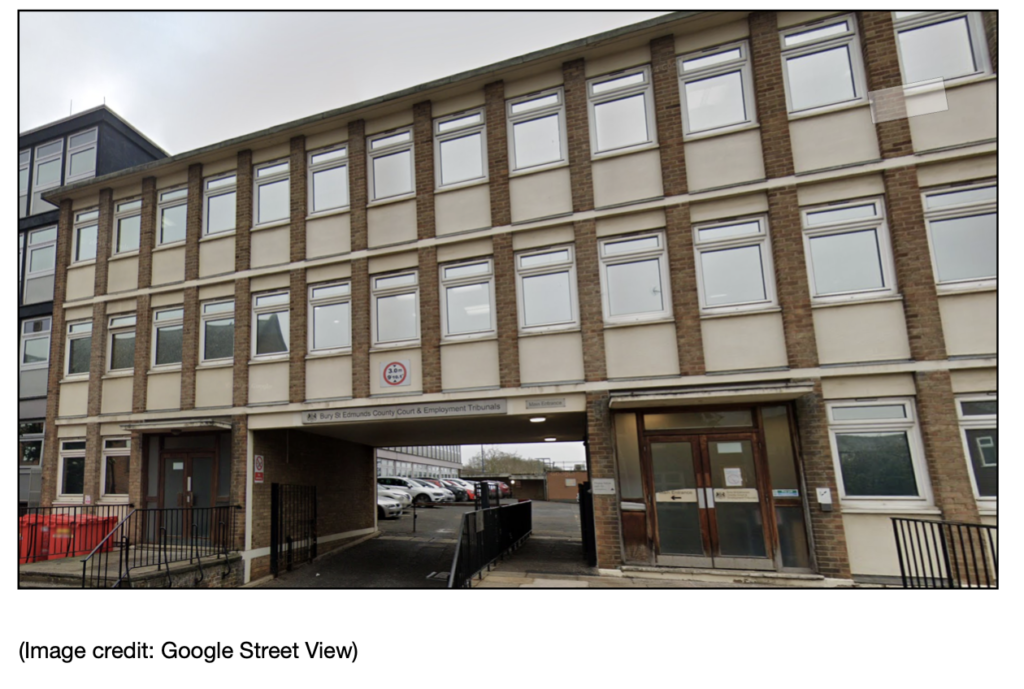
Day Nine concluded the cross-examination of Dr Mike Glover, Ms Emma Rampton and Ms Louise Akroyd.
Today, we will hear from Prof Eilis Ferran and Prof Kamal Munir.
There will be one more day of cross-examination on Monday 22 June. This includes the Vice Chancellor.
Please keep comments coming.
Until cross-examination is over, please refrain from other than factual comments about the proceedings in Court.
Thank you 21 Group for this update. Do we know at what time approximately Professor Munir will take the stand? I presume the Monday schedule remains to be determined based on the length of today’s proceedings. Also should we understand therefore that Andrea Hudson will not be presenting for cross examination at all?
Andrea Hudson is not a witness. We can disclose this as it can be inferred from material in the public domain.
It is expected Prof Munir will be cross-examined on his evidence in the afternoon, so possibly 14:00 hrs
Is there a reason why Hudson did not appear as a witness? That seems really odd, because if she was the subject of a grievance over all this, then you would expect her to defend the actions of HR no?
Day 9.
Nine days of trial for Wyn Evans? Wishing him the best. He deserves it.
I missed the cross-examination of Dr Mike Glover. Will video recordings be available later?
Thanks Wyn Evans for your courage and perseverance. May justice prevail. Whistleblowers like you are creating a better future for the rest of us.
Day 9.
Nine long days of trial for Wyn Evans? Wishing him the best. He deserves it.
I missed the cross-examination of Dr Michael Glover. Will a recording be available later?
Thanks Wyn Evans for your courage and perseverance. May justice prevail. Whistleblowers like you are creating a better future for the rest of us.
This trial is a landmark case in demonstrating why freedom of speech for whistleblowers is so fundamental for the future of British academia.
All the victims of the past will finally have their justice today.
Also a landmark case for why open justice matters. Congratulations to judge Graham for his honour and integrity in upholding such rules. No more blocking up the system with extending never ending cases.
The case is landmark, that’s right. It’s also costing loads of time, money, health and resources from the victims. There are a lot of victims who couldn’t afford all the costs this one took. A law colleague said the university cases we hear about are the ones where people either had tons of money or time to pursue the complaint.
Most people here probably know the internal routes where the university is investigating itself are a trap. So the choice seems to be either walk into that trap, and be trapped for years, or somehow come up with loads of money to hire a lawyer and go to court or an employment tribunal. What will happen to your research and life in the meantime?
It seems like for most of the 21%, there’s no good option. A person might have a strong case against the university but no way to pursue it.
That’s why seeing Wyn’s perseverance matters a lot to me.
Dear all,
Before watching the hearings of Prof. Kamal Munir later today, please watch the video that is a humiliation for all victims of abuses at Cambridge University who reported their experiences and were gaslighted:
https://www.youtube.com/watch?v=pizOGdQK4tE
It is also a good opportunity to remind everyone that it was Prof. Munir who dismissed, without conducting any investigation, whistleblowing disclosures and safeguarding referrals made by third parties about the abuses of Cambridge University against me and how they were affecting my health as given by detailed GP letters. If this was not enough, Prof. Munir then told Daniel Zeichner MP that my health was the priority of “all of us” at the University. This is the person who will talk later today.
I hope the 21 Group will not delete this comment because it is factual and I tried to be respectful, even though the people involved showed everything except respect for me.
https://www.breakingthesilence.cam.ac.uk/breaking-silence-university-statement
“We are crystal clear that harassment and sexual misconduct are unacceptable. We have an obligation to prevent it, and everyone at the University has a role to play. That’s why it’s important that all our staff understand our policies and what is expected of them, including what to do if they receive a report.”
Professor Kamal Munir, Pro-Vice-Chancellor for University Community and Engagement
This kind of behaviour is endemic across the entirety of UK higher education. The same HR personnel and legal advisers hop from one institution to the other, and have established a set of practices which have become the norm across the entire sector. Cambridge is no exception, even the solicitors involved are the same as those working in other big cases.
Just take a look at the highest rated comment on the Reddit thread about this case:
“As someone who worked as an external consultant over multiple years with a uk uni (not Cambridge) I can attest to this treatment of people who stand up for themselves. Toxic and damaging doesn’t even approach it. Legal processes are instigated where none are needed and cause serious damage.”
Thanks for this note about a Reddit threat. I’m going to have a look now.
While we are quoting Reddit, here is another one:
“The lesson is this: what you get for whistle-blowing is the full legal and financial might of the university used to ruin your existence.”
The Vice Chancellor is going under cross examination on Monday.
Let’s not forget this is a person whose individual and unique contribution to the field of social psychology is on the topic of “pluralistic ignorance”.
This she defines as a phenomenon where individuals privately reject a norm but go along with it because they wrongly assume others accept it, and which she rightly says results in a “spiral of silence”.
Here is a quotation among many:
“People are reluctant to express views if they don’t know how they’re going to be received […] There are people holding back their views because the forum out there for expressing them is too scary or not receptive.”
Perhaps one could ask how the recent behaviour of the university , not least of all in expending vast sums to silence whistleblowers and intimidate through brutal legal costs and actions, letter action threats, threats to newspapers and media, and defamation against those who speak up, is consistent with such a public image and profile, and whether she, either in a personal capacity or as Vice Chancellor of the university, approves of such decisions.
These are questions that journalists should ask her directly as I believe the claimant’s KC is not being very aggressive. I would not mind asking her myself, but the University forbade me from contacting her and hundreds of others—even after expelling me—so Prof. Prentice has an excuse for not replying to me if I contact her anyway…
Regardless, I am looking forward to Monday. I hope the Fellows of Christ’s College and Lord Simon McDonald in particular will watch the cross examination. Will Prof. Prentice keep her Fellowship at Christ’s after all this mess? As a member of Christ’s College myself, my view is no. She should step down as Vice-Chancellor and leave both the University and the College. She has been an embarrassment; we do not need fake people. From her first annual address:
“Much of the work of the university this year will focus on people, for people are at the heart of everything we do. People are the means and the ends of the work of a university. I have talked about the opportunities and challenges of aligning the academic and public sides of Cambridge’s mission, but none of that matters if people do not want to come to work here. It is people who animate the community of scholars, and people whose imaginations and ambitions fuel the impact of the public institution.” (Prof Debbie Prentice)
We have heard very senior people (Pro-VC, Registrary) stating their reliance on HR to draft their letters (responses, decision-making, outcome).
We have heard the statements of an HR individual (“HR Business Manager for the School of Physical Sciences”) who takes part in meetings with senior academics in a college garden, listens to “concerns” and advises on next steps without taking notes.
We have heard that same HR individual affirming the relevance of her view (in terms of propriety) on decision-making by academic staff to discuss the implications on academic freedom of interference by a director in the grants of another colleague.
We are still waiting to hear who, in this university, could reassure us that the concepts of fairness and justice apply or are even understood.
Alternatively, there might be clues as to why “people do not want to come to work here”.
As we get close, you whisper, “Coco”
I hold you in my arms and you say, “Jamboo”
Scream and shout, turn and say, “Colombo”
Now I gotta go, so coco
Put me up, put me down, put my feet back on the ground
Put me up, take my heart, and make me happy
Yeah-yeah-yeah, Coco Jamboo, yeah-yeah-yeah
– Deborah Prentice
The complication in a whistleblowing situation is that a group norm can be in conflict with a societally encoded norm – an existing law – and that can lead to a situation where a person is privately rejecting a group norm that is in conflict with a long-established societally encoded norm – a long-held existing law – in favour a private views that are compatible with a long-established societally-encoded norm. This might put the person at odds with the group immediately surrounding the person but not at odds with the rest of society whose norms more closely align with the long-established societally encoded norm – a long-held existing law.
One exception to this is if the long-established societally-encoded norm – an existing law – is becoming obsolete & doesn’t closely align with a norm operating in society in which case the persons privately held views could be at odds with the group immediately surrounding the person & with the rest of society. A new norm is effectively operating in society having established itself without society having had to encode that new norm – introduce a new law – and that new norm has effectively dispensed with a long-established law – a long-held societally encoded norm.
The person then rejects a group norm in favour of privately held views that are consistent with a long-established societally-encoded norm – existing law – but are at odds with an operational norm in that society. The long-established societally-encoded norm is effectively dormant as there is still a person who privately rejects the group norm in favour of long-established societally-encoded norm – existing law – and since that long-established existing law has not been repealed, that societally encoded norm could in response to subsequent societal shifts re-establish itself as an operational norm at any moment.
Another possibility is that a group norm can be in conflict with a newly societally encoded norm – a new law – and that can lead to a situation where a person is privately rejecting a group norm that is in conflict with a newly societally encoded norm – a new law – in favour of building a new norm that is not in conflict with a newly societally encoded norm.
This scenario puts the person at odds with the group immediately surrounding the person & at odds with the rest of society. This is a significantly higher risk situation because a newly encoded societal norm – new law – might not generate a stable operational norm in that society. It might not be possible to build a new norm that is not in conflict with the newly societally encoded norm because newly societally encoded norms – new laws – are not always well thought out and don’t always have the intended outcome when enacted in society.
It is possible for a society to encode a norm – introduce a new law – that generates so many conflicts with other existing norms – not yet encoded norms (unwritten rules operating in society) or already societally encoded norms (existing laws) – that the new law is unworkable in localised internal environments (groups in that society) at the time it is introduced although the same new law may turn out to be workable if introduce at some future time point into the same society.
In whistleblowing situations a person might not pay too much attention to whether others accept the group norm they are privately rejecting or not if it’s clear to the person that the group norm that is being privately rejected is somehow in conflict with long-established existing law and/or with newly societally encoded law and that rather than looking to whether others accept the group norm it is better to look at whether the problem is with the group norm itself or with the long-established and/or newly societally encoded norms – laws.
The interesting thing about this newly encoded societal norm – work-related stress regulation law – is that in building a new norm that is not in conflict with this new law a person gets insight into the true underlying basis – stress cost (physical basis) – that is determining the dynamics of group norms in rapidly shifting environments. This new law seems to point to the type of law that is the basis of effective law building, it seems to point to the type of societally encoded norm that could drive the emergence of most effective group norms possible in a given set of social & physical environmental conditions.
The building of the new norm itself seems to suggest that with an effective work-related stress regulation system in place – i.e. after building a new norm in response to the introduction of a new law calling for the implementation of work-related stress regulation – it is possible to shift workplace culture in ways that are likely to generate better workplaces than existing workplaces and to avoid shifting workplace culture in ways that are likely to generate worse workplaces than existing workplaces. It is possible to build more effective group norms in workplaces in relation to every aspect of the workplace by using work-related stress regulation as an indicator of whether the direction of travel of the workplace culture shift is the right one or not i.e. a direction that is likely to be sustainable over longer timescales.
Changing the leader is not changing the group norms, what is Cambridge going to do change leader every 2 years, push on through for that “Liz Truss moment” of absolute clarity and rude awakening and then change leader a couple more times in quick succession just to make absolutely sure that changing the leader is not changing group norms …. one more leader, surely this is the one that can fix all our problems for us ….. how long will they last? how long can we live in the group delusion that all our lives are going to significantly change by us changing just one person and not by us changing ourselves?
From
https://www.cl.cam.ac.uk/archive/rja14/Papers/commissary-complaint.pdf
The real aim of the Employer Justified Retirement Age is :
“When the forced retirement policy was last reviewed, in April 2016, I was a member of Council, elected to represent the professors and readers. We were assured by the responsible Pro-Vice-Chancellor that the policy would only be used to get rid of dead wood, and that productive professors could stay on so long as they could raise grant money to support this. The late Professor Hawking was given as an example. As a result I did not oppose the policy to the extent that, with the benefit of hindsight, I should have.”
The stated aims of the Employer Justified Retirement Age are :
Ensure inter-generational fairness and career progression;
Enable effective succession-planning;
Promote innovation in research and knowledge creation; and
Preserve academic autonomy and freedom.
Look at that gap between the real aim and the stated aims of the employer justified retirement age. The culture is one of abuse of process. The idea that any of the stated aims of that policy can be achieved by an abuse of process to achieve the real aim of the policy is irrational.
The last two VCs didn’t bring that abuse of process culture, that abuse of process culture was in Cambridge before they arrived.
When should we hear the ruling on the tribunal?