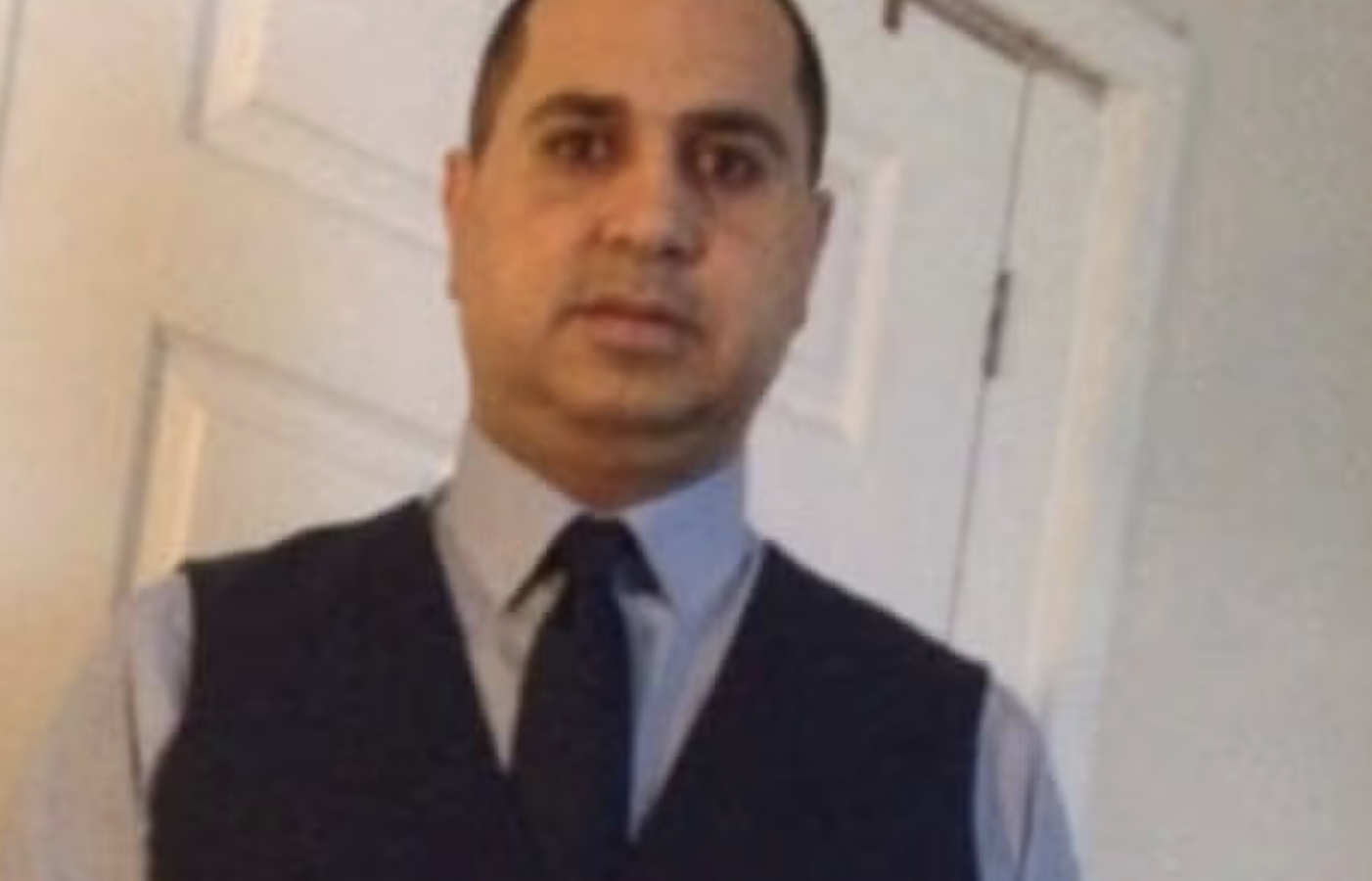
Female students make serious allegations about a Professor’s conduct. The Professors is dismissed after an investigation. Police are investigating.
And yet some of the students who raised concerns were reportedly not told what the University’s investigation had concluded.
That is one of the troubling aspects of the case involving former University of Strathclyde Professor, Dr Ibrahim Khadra. It raises questions about how universities treat students who have the courage to come forward with complaints about people in positions of power and whether institutions are sufficiently transparent with those who place their trust in them.
It has uncomfortable echoes of the way Cambridge University handled the bullying cases involving Dr James Orr.
What happened?
Dr Ibrahim Khadra was a Professor of Pharmaceutical Sciences at Strathclyde and had a long association with the university. He first studied there as a PhD student and subsequently returned as an academic, eventually becoming a Professor in December 2024.
Then came allegations from female students concerning his behaviour. They alleged that Khadra requested intimate photographs, repeatedly contacted them by telephone and text, and sent sexual images. Some students reportedly said they felt pressure to respond because of his academic position and alleged influence over their progression.
Strathclyde University investigated the matter and sacked Dr Khadra.
The University has said that he was suspended when it became aware of the allegations, that a full investigation was carried out, and that he was subsequently dismissed.
In cases involving allegations against senior academics, Universities have often faced criticism for the secrecy surrounding disciplinary proceedings, for protecting institutional reputations, or for failing to give complainants a clear account of what happened. The cases of Cambridge Professors Simon Goldhill and Herbert Huppert, among others, have raised questions about how universities respond when allegations of sexual misconduct are made against academics.
The Strathclyde case is therefore unusual in one very important respect: the University does appear to have acted decisively once the allegations came to its attention.
What did the university actually find?
Here the picture becomes much less clear. Strathclyde University has confirmed the investigation and dismissal, but it has not publicly released the investigation report or provided any detailed account of the evidence considered.
We therefore don’t know from the public record exactly which allegations were substantiated, which were not, or how the individual pieces of evidence were assessed.
There are legitimate reasons why universities may need to protect sensitive personal information, particularly where students are involved. But confidentiality need not mean complete secrecy. Universities are well practised in the art of redacting documents to protect identities and genuinely sensitive information. A suitably redacted version of the investigation report should therefore be published, allowing us to understand what was investigated, what was established and why the university reached the decision it did, while protecting the privacy of those involved.
Were the students told what happened?
According to reports from people connected with the case, some students who had raised concerns were not told the outcome of the University’s investigation or initially told that Khadra had been removed from his position.
A student who has taken the difficult step of reporting an academic has potentially placed herself in an extremely uncomfortable position. The person she has complained about may have influence over her education, her research, her references or her future career. She cooperates with an investigation. Then the investigation concludes — and she doesn’t know what happened.
A University cannot necessarily disclose every detail of a disciplinary case. There may be legal, privacy and safeguarding reasons why it cannot tell a complainant everything. But there is a difference between protecting confidential information and providing no meaningful information about the outcome.
Students need confidence that when they speak up, they will be listened to and kept informed.
What about the police?
Police Scotland has confirmed that it received a report concerning “inappropriate communications” and that enquiries are ongoing.
The University’s disciplinary process and the criminal justice process are separate. As things stand, there is no publicly reported criminal charges arising from these allegations.
But it would also be wrong to minimise what has happened at the University. Strathclyde investigated the sexual harassment allegations and dismissed him, which is extremely unusual in UK Universities.
The questions Strathclyde should answer
The case raises some straightforward questions: When was the first complaint made? How many students came forward? Were all of their allegations investigated? What did the University actually establish? Were there previous complaints or concerns about Khadra? Why were some of the students who had raised concerns reportedly not told the outcome of the investigation?
The real test of a University’s safeguarding culture isn’t whether it has a policy sitting on a website.
It’s what happens when a student actually uses that policy. Does someone listen? Are they protected from retaliation? Are they kept informed? Are complaints investigated independently and properly? And when the process is finished, does the student understand what happened?
Those questions matter enormously. Students who came forward deserve to know what that investigation concluded — within the limits imposed by privacy and law. If they were left in the dark, that is not a minor administrative detail. It goes to the heart of whether students can trust their university when they speak up
Eww these allegations are creepy. The only justice is open justice.
The allegation in the Reddit thread, based on the original Glasgow Live report, is that he “demanded female students send him nude pics or he would fail them.” Apparently multiple cases, allegations of getting inappropriate access to young women’s private phone numbers and then making these requests. As for Strathclyde, it seems they deserve praise for acting, but it is not clear action was immediate: “one alleged victim reported that students were not necessarily informed of the investigation’s outcome or his removal.” It is disappointing that even after several months, the exact texts, acts, and communications are not detailed in full. In a case such as this, it is vital that the facts be on public record in order to prevent false narratives from circulating, and allow universities to learn the right lessons in respect of safeguarding and accountability.
It seems that the evidence must have been clear-cut for Strathclyde to take the steps they did. They have to be confident that it would stand up in an Employment Tribunal if Dr Khadra sued for unfair dismissal,. So the evidence must pass the balance of probabilities of test.
Successful prosecution of a criminal case requires a higher standard of proof, of course.
Credit where it is due, groups like 21 and 1752 have also changed the culture. Universities know that the era of “extend and pretend” is over. For all perpetrators of harassment, bullying, and retaliatory abuse, the message is clear: tick-tock.
“There are legitimate reasons why universities may need to protect sensitive personal information, particularly where students are involved.”
Of course, there are plenty of reasons for confidentiality in situations like this, 21 Group. Let me give you 1 example totally hypothetical. Imagine a student who made reports of misconduct and other malpractices regarding senior staff. Imagine that the University never investigated these reports. Imagine that the student started to escalate the issues externally including talking to MPs and funding bodies such as the Royal Society, UKRI or the Gordon and Betty Moore Foundation, among others. Imagine the University decided to do a countercomplaint against the student and enforced confidentiality throughout the “investigations” against him, including prohibition of contact with hundreds of people, not least all University HR and all the senior leadership, co-authors of his research where he was the senior, last and corresponding author. Imagine that the student ignored and continued to talk to a range of bodies, cc-ing all those who were bullying and harassing him after he had reported serious malpractices in the University. Imagine that then the University asked all those who the student had reported for their malpractices and who were never investigated, to write witness statements against the student. Imagine that then the University used these statements to expel the student, but never showed them to the student because it was afraid that the student publishes them all and exposes all the corruption that exists in that pathetic University.
In such an extreme case, it is totally understandable that the University wants to protect the personal information of the poor senior staff that was accused of misconduct by this vile student who suffered from this condition called “unreasonably persistent behaviour.”