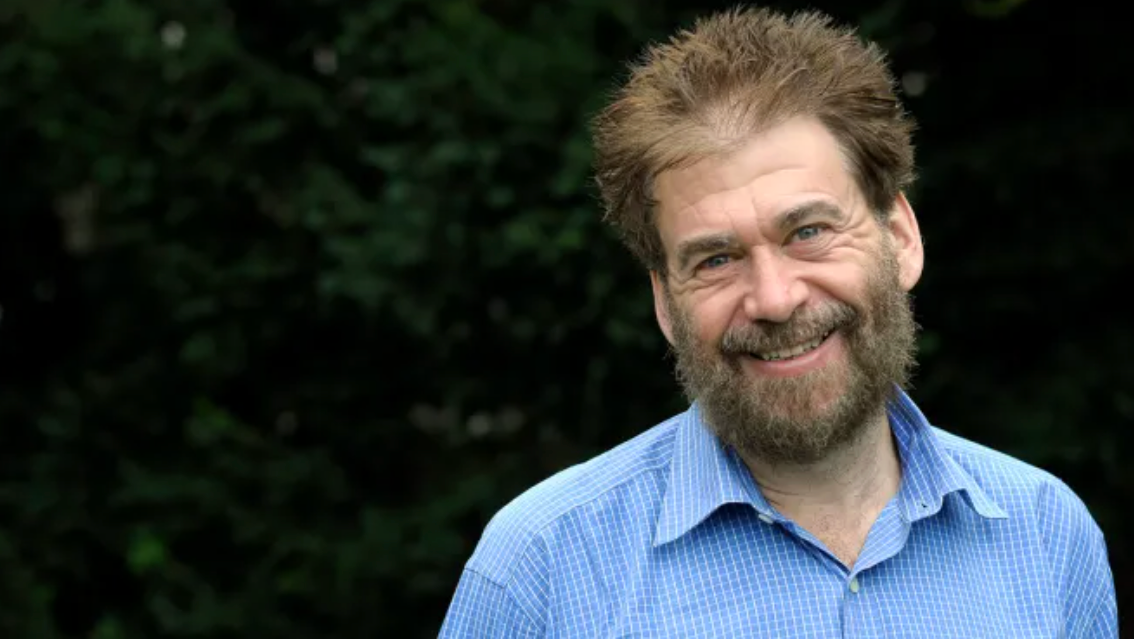
As reported by The Times here and Daily Mail here, Prof Simon Goldhill of King’s College, Cambridge and the Faculty of Classics has been found guilty of sexual and professional misconduct.
The only thing at all surprising about this is Cambridge University has actually managed to find someone guilty.
There have been a series of problems with regard to sexual harassment at Oxford University over the last few years. From Al Jazeera’s ‘Degrees of Abuse’ podcasts to the recent scandals involving the Saïd Business School, the trouser-dropping behaviour of Prof Miles Hewstone and the conviction for rape of Prof Tariq Ramadan, Oxford has built a huge reputation for persistently minimising or overlooking sexual misconduct.
Cambridge is no different to Oxford. It has simply been even more reluctant to admit it has a problem and even more efficient at protecting and covering up harassers. Nothing has leaked — until now thanks to the actions of a brave student who has come forward and exposed Prof Simon Goldhill.
Simon Goldhill has been at King’s College since his undergraduate days in 1978.
Decades of self-mythology — the “beloved maverick,” the “irreplaceable scholar” — were sustained by the College that long found accommodation easier than confrontation. Alongside that sits an unshakeable belief that years of service have purchased permanent insider status for people like Simon Goldhill, beyond the reach of regulations or meaningful accountability.
What follows is typical of Colleges — a culture of tolerance of the unacceptable. Concerns are softened into “misunderstandings,” bullying behaviour is ignored, complaints are absorbed and deflected, reputations are protected at the expense of those with less power. The hierarchy does the rest. Students learn the cost of speaking up. Colleagues learn the value of looking away.
And so the myth endures, not because it is true, but because it is convenient.
It all took place in the Senior Common Room, where Simon Goldhill slobbered on a student, stuck a tongue in her ear, touched her inappropriately and claimed no consent was needed
Goldhill, whose academic works include studies of sexuality in Ancient Greece, admitted kissing the woman, who is in her twenties, in a way that was “over exuberant” and “no doubt slobbery”. The investigation report found he had also stroked the woman’s body, touched the zip on her trousers and put his tongue in her ear. The report said the touching of her ear “could have been unintentional”. It added: “At no time in his evidence did he provide any direct evidence that he had asked for and received consent. His stated belief was that he did not need it for a goodbye kiss or ‘friendly snuggle’.” [The Times]
Simon Goldhill wrote an execrable book called ‘Queer Cambridge’. It’s a hugely misleading title, as it’s really a discussion of privileged, well-connected, mostly male, intellectual networks at King’s College rather than anything wider. But it does contain a description of Prof Michael Jaffé’s attempted seduction of Prof John Dunn
“For decades King’s had prided itself on the lack of distance between students and fellows, especially when they shared the institutional encouragement of a club or society. They [Prof Dunn and Prof Jaffé] sat quite close together, as the seating space was quite confined, and talked, and had a drink, though neither drank very much. ‘Then Michael leant forward emphatically and put his tongue in my ear.” [‘Queer Cambridge’ by Simon Goldhill]
For Simon Goldhill, a tongue in the ear was always an anecdote told with laughter over wine in the Senior Common Room.
University of traitors and perpetrators
Cambridge Five were Trinity rather than King’s College … though they’ve had some questionable fellows too
https://en.wikipedia.org/wiki/Alister_Watson
What is this with tongues in the ear and King’s Fellows? Do they think they are Labradors?
“The only thing at all surprising about this is Cambridge University has actually managed to find someone guilty.”
Was the University that found him guilty or King’s? Put differently, was this the result of an investigation promoted by OSCCA or an internal investigation at King’s College? It makes a big difference. From the description, it seems that the abuses happened in the SCR and thus in college premises, so I would be very surprised if the University would get involved and knowing OSCCA, I would be surprised if they would consider that complaint valid for an investigation. Colleges and the University love to say that they are independent from each other and they use this argument to avoid being involved in the context of misconduct, even if the staff involved belongs to both the college and the university…
Now, is Prof Simon Goldhill still a Fellow at King’s and a Professor at the University after this, or just lost a week of free meals at college as reprimand?
The Times article says
“Cambridge commissioned an external consultancy to conduct the investigation which produced a report this February. It concluded that Goldhill had a case to answer under several university policies including the code of behaviour for “sexual misconduct by making unwelcome and unpermitted sexual advances in the form of an embrace, touching and kisses without reasonably believing that [the student] had consented to this behaviour”.
The university told the student that Goldhill was on “amended duties” but added that she was not entitled to know any further details of the disciplinary process.”
This makes it sound as though the University was responsible.
Also, the article says a complaint of professional as well as sexual misconduct was upheld, but there is no information on the professional misconduct.
I do not have access to the article, but by “university” here Times may be confusing college and university as if it the abuses were just in college premises, it is hard to believe that the university would get involved or why King’s would not promote the investigation itself. Anyways, it would be interesting to know the external consultancy, Reveles PD? 😅
Try https://archive.is/l7JIX#selection-1481.0-1499.161
Thanks. It seems this story has more to it than what was published and the missing parts may explain why the University got involved (and why it was not mentioned!). For OSCCA to consider the complaint as valid, the evidence must be overwhelming…
Keep up the good work
Oxford + 6 months = Cambridge
From Twitter/X
“What the hell kind of SCR is Kings_College running that men can predate over women in it? [REDACTED], people have whispered about it for decades. I hope more women have the courage to come out about [REDACTED] over many many years.”
What are the Fellows of Kings doing after this? It is not just the victims that need to step forward but the colleagues of the abusers who need to ask for explanations and step forward as well. This said, I wonder who the witnesses of the student are. Perhaps SCR members disgusted by the situation they witnessed? Only with very strong witnesses would OSCCA and the University consider the case valid for an investigation. But again, the parts that are not disclosed on professional misconduct can be particularly damaging for the University.
Statement from King’s College
“We take this matter extremely seriously and would like to offer our sincerest apologies for any discomfort caused. The situation described does not reflect the values or standards we strive to uphold as a community.
That said, the College is constrained by its founding Statutes. At no point in the Statutes does it explicitly state that a Fellow may not sexually abuse a Junior Member of the College. No violation of the Statutes has taken place.
After careful consideration and a thorough review, it has been determined that no further disciplinary action will be taken against Professor Simon Goldhill at this time. We believe this outcome allows all parties to reflect constructively while maintaining the collegial spirit that defines our institution.
We remain committed to fostering an environment of mutual respect, open dialogue, and — where appropriate — a clearer understanding of personal boundaries.“
I really hope this is a joke…
I honestly do not understand how/why Fellows of King’s do not feel ashamed by this situation and do not step forward in case they did not do it yet. But this text reminds me posters that we can all read in the Buttery of Christ’s College and how serious they are about those statements:
“Christ’s College has a legal duty to protect its students and its academic and non-academic staff from sexual harassment, abuse and other inappropriate or unwanted behaviour. We will take immediate and appropriate action to address any such incidents.”
What is surreal is that I cannot tell if it is a joke or not because they really do say things like this. There are emails just like this internally.
All the Kings fellows knew about this and protected Goldhill. And he in turn did their bidding when needed to get them off the hook. People who would surprise you to learn that they were glad to protect a predator.
The 21 Group is aware of a serious case in the University where a UTO and Fellow of Trinity Hall was accused of repeated molestation of students
The UTO argued that it was not stated in his employment contract that he should not molest the students.
The University accepted that the argument had legal force & did not dismiss him
That is in fact why intimate, sexual relationships between Cambridge University staff and students were finally prohibited on 1 July 2024, if the staff member has direct or indirect academic or professional responsibility for that student.
The 21 Group have some of the documents — folks, please keep leaking material to [email protected].
We can change universities for better. We do not have to put up with all this.
We are the University, not they.
According to Daily Mail, the student wrote:
‘Receiving the complaint outcome letter from the university, which essentially said ‘your complaint has been upheld, we will not tell you any consequences we may hand out, goodbye… ‘It felt like a punch in the gut after a harrowing, year-long process. It makes me feel like the university does not take the safety of their students, especially women, seriously’.
This is the Cambridge I know! But someone should tell the student she is lucky for not being investigated and accused of abusive behaviour for damaging the reputation of senior staff and the University itself. The evidence must be really overwhelming. Regardless, nothing prevents the Fellows of King’s to step forward and talk about this because they are responsible for what happens in their SCR!
When were the alleged Trinity Hall abuses taking place (approx dates)?
< 2017
“The 21 Group is aware of a serious case in the University where a UTO and Fellow of Trinity Hall was accused of repeated molestation of students
The UTO argued that it was not stated in his employment contract that he should not molest the students.
The University accepted that the argument had legal force & did not dismiss him
That is in fact why intimate, sexual relationships between Cambridge University staff and students were finally prohibited on 1 July 2024, if the staff member has direct or indirect academic or professional responsibility for that student.”
What came first – Trinity Hall as an academic community or an employment contract as a written legal agreement? What came first – an employment contract as a written legal agreement or the principle that an academic community needs to maintain trust & confidence – i.e. a healthy working relationship – with each member of the academic community in order to keep functioning as an academic community?
If the leadership of an academic community allows an academic in the academic community to keep going around molesting students in the same academic community – based on the legal argument offered by the academic that it was not stated in the academics employment contract that they should not molest students – is it possible for that academic community to maintain trust & confidence with any student molested by that academic in that academic community or with any other student in the same academic community for that matter?
Not sure if people realized this but this comment was deleted from Twitter/X… shouldn’t it be deleted here as well or who asked for the comment to be deleted is not aware of it yet?
Thanks, we have redacted part of the comment.
Surely every fellow at King’s knew about this for a long long time. Decades. Yet they remained completely silent – why?
True though this likely means the Provost decided that time was up for Goldhill. Doesn’t look like he had much protection from the top, and by Cambridge standards, this was pretty fast (one year). They really aren’t doing anything to defend him from exposure (e.g. not the way Oxford colleges let their own perps hang on and on and on). I think they are cleaning house.
Who leaked the independent Report to The Times ?
A UK newspaper would not dare publish this without a copy of the Report as protection against a defamation claim.
The student at the centre of this almost certainly would not have a copy of the Report to give, the University would have just provided her with a summary of the findings at most.
So someone else leaked this to The Times.
One domino falls, the rest are lined up
It is Oxford November 2025 folks
Buckle up hard
It feels more like St Petersburg, November 1917 .
We’re looking at multiple “resignations”.
Scapegoats are being lined up by those with sensitive political antennae.
The goats may not even realise yet. Emma Goat has already been scaped.
Louise Goat is next
Someone should tell her that because she continues business as usual. I received fresh new data against me earlier today that, I was told, can work against me on Monday if it breached the “Rules of Behaviour”. It even included my posts in the 21 Group! It is not hard to know who is promoting all this. Perhaps our goat is upset because now very many people know who she is and her character after I sent all the material to the Fellowship of Christ’s. I guess I broke a few more rules…
Interesting to speculate on how much time senior HR staff spend trawling the blog.
This is a good moment to say that the 21 Group has a great deal of sympathy for the junior HR staff. Many of them look very miserable in meetings, as though they are unhappy with what they’ve been told to do. Many of them look as though they are being bullied by senior staff.
I can assure they spend a lot of time reading my comments! Incidentally, they missed the blog specifically on me (https://21percent.org/?p=3449) … Why? Because they are too embarassed to consider this in their investigation against me? Not sure!
It starts with professors bullying students and other professors. The latter complain, so HR piles in to back up the perps. Junior HR feel uncomfortable with this, fail to comply, and eventually senior HR bullies them too. Mid-level HR now feels uncomfortable and all go off sick or quit.
Let’s not forget – this is a Human Reources department, my friends. “People skills” are meant to be their ONLY professional competence. A professor might be given a free pass for a few awkward remarks or missed emails, if she can still deliver the research. These people (HR) have NO other reason to exist
HR only do what they are allowed to do. Many are incompetent and dishonest; there is no doubt about that. But it is their managers who allow them to behave as they do, either by looking the other way, or consciously protecting them. If we remove all the bad HR or even change the entire HR division but their managers stay, the culture will remain the same. The scary thing is that there are very many people involved and you cannot sack them all, which means that many will continue their deeds. Living with the knowledge that the abuses you experienced can and most will happen with others because people who do not assume their mistakes will repeat them, is not pleasant namely when there is not much you can do apart from reporting what you experienced. Believe it or not, this deeply affects me.
“Louise Goat is next”
Redacted Goat thereafter…?
In HR, there’s always another goat lined up 😉
That may well be true but none compares with the most discussed Lead HR Business Partner in the 21 Group! Her losses of memory unique, too much goat cheese I guess….
I admit it.
I am a goat.
I ate all the evidence.
Redacted Goat why have you been leaving Concerned Face alone with all the problems of your School piling up while you are so focused on me? I wonder which of you will break first. Do you know? Regardless, friendly advice, do not eat too much evidence as you may choke yourself!
‘Concerned Face’ will never be Master of Darwin.
Ultimately, it is up to the Fellows to decide, but the key question is, do they know what he has been up to and what will happen in the June? Regardless, I think they will like to know if and why a Cambridge student is expelled for what happened in his School, but let’s wait and see what will happen in the next coming days. I am looking forward to knowing how low these people will get with their misconduct.
As with all revolutions the secrecy that once served the regime is ultimately what destroys it. The lies and cover ups blind those in power from changing course until far too late….they continue to believe they are loved and admirable by their “People” while facing the rage of the crowd outside their palace
A pertinent observation.
It’s true, the extent of the wrongdoing is largely hidden from the Pro-Vice Chancellors, whilst the Vice Chancellor seems almost completely disengaged.
It’s going to come as a huge shock when the Employment Tribunals put so much wrongdoing in the public domain.
Consent is the basis for building any type of shared relationship and/or future with another person – personal, professional. If a person in a community thinks it’s acceptable to significantly increase the closeness of any type of relationship – personal, professional – with another person in the community without that other persons consent then the person who thinks it’s acceptable to do this is not interested in building any type of shared relationship and/or future – personal or professional – with that other person in the community. That can then lead to abusive interactions and/or relationships in a community.
People tend to underestimate the impact on a person of this type of behaviour. There is the impact of the direct interaction – if a person in a tight-knit [i.e. high trust] community suddenly sticks their tongue in another persons ear without and starts stroking another persons body without warning, that other person is suddenly placed in a position where they are unable to predict where that situation is going & how that close-knit, high-trust community will react to the final outcome of that situation.
When others evaluate the impact of the situation it is from the position of indirectly experiencing the situation – one factor in underestimating psychological impact – but it is also an evaluation from a static perspective where the situation is already under control, limited, not dynamic & where the outcome doesn’t need to be predicted because it is already known – bigger factor in underestimating psychological impact. The situation is then being evaluated by others from a significantly different psychological perspective to the person who has directly experienced the situation at the point in time when it was still dynamic and the limits of the situation were still unknown – instantaneously after there was a dramatic shift in the closeness of a relationship with another member of a close-knit, high-trust community.
A person directly experiencing the situation is forced to reckon with the reality of the dynamic situation they themselves directly experience & not the alternative reality of the static situation others indirectly experience when evaluating the same situation. If I allow this person who is part of the same close-knit high trust community as me to do this – lick me in the ear, stroke my body – what could happen to me next in this close-knit high-trust community? If I don’t object to this behaviour now what could potentially happen to me next in the same community? What will this person do to me next? If I become known as the person who lets others in the community – lick me in the ear, stroke my body – what will others in the community do to me that they wouldn’t have done to me had this other person not chosen to – lick me in the ear, stroke my body – & had instead went off & done this to another person in the same community or to a person outside the same community?
If I stand up & say this is not acceptable which would then force this academic community to scrutinise: me, the person who chose to – lick me in the ear and stroke my body – & itself as a community, what will the eventually outcome be? Will people think I am overly sensitive for putting a stop to a situation early in order to prevent the possibility of that situation escalating to the point where a significantly higher level of scrutiny would be required something which would be much more painful & psychologically costly for the whole community?
People also tend to underestimate the indirect impact on a person of this type of behaviour. The loss of trust a person can experience in a whole academic community that has been nucleated by the actions of one member of the academic community. The mental blocking effect of one of these situations which means a persons mental energy is taken up with a person who has no interest in building any type of shared future – person, professional – with the person. Both of these factors can then work in concert to reduce the chances of a person finding the people in the community who do have an interest in building a shared future with the person and going on to thrive in a community.
I think there is a general misunderstanding in society about what it takes for a person to be free. If a person was the only person on earth a persons ability to (a) get to know the non-human environment – earth – in great depth in order to precisely predict it (b) get to know the risks of the non-human environment in great depth in order to precisely minimise any risks to a persons own ongoing existence (c) traverse the whole non-human environment & safely interact with the whole non-human environment & (d) set up a reciprocal relationship with the whole non-human environment – care for the non-human environment & be cared for in return by the non-human environment – is what it takes for a person to be free – to live in peace in an environment while exploring an environment at will.
If a person is a member of a community of people what needs to be done in relation to the non-human environment in order to be free doesn’t go way. In this case what needs to be done to be free becomes a collective task for the whole of humanity albeit one that could be done by a subset of humanity if that subset of humanity could be trusted to do that collective task & if the rest of humanity trusted that subset of humanity to do that collective task for the whole of humanity. If a person is part of a community of other people what it further takes to be free whilst being a member of that community is for a person in that community to be able to build shared relationships with other members of the community that are dynamically free of any unnecessary constraints.
When people think of reasonable adjustments they think of organisations – groups of people – adjusting for illness and/or disability and/or neurodivergence but two people being able to dynamically reasonably adjust for each in a relationship is the basis of a shared relationship where each person in the relationship is dynamically free from any unnecessary constraints. It is the basis of a persons freedom in a relationship something which is only possible if consent is the basis of the relationship because if a person doesn’t consent to a relationship with another person then it is not possible for the two people in that relationship to truly know each other without which it’s not possible for the two people in the relationship to dynamically reasonably adjust for each other. The absence of consent in a relationship means that both people will be subject to unnecessary constraints in that relationship & neither person will then be free in that relationship.
I think one of the difficulties that can arise in any type of situation where a person is asking for the support of others in a community to deal with a difficult a situation that has arisen with another member of the same community is the general attitude of others to the person asking for the support of others in the community.
Others in the community may have faced similar or worse situations & found a way to handle those situations themselves i.e. learned how to accept such situations are a part of life and/or to directly challenge the behaviour of the other person themselves & ensure through their own actions that the person never repeated any behaviour towards they didn’t want repeated. The general attitude of others can then be that the person enlisting support from others in a community could – instead of asking for the support of others in the community to deal with that difficult situation – become more “resilient” & do the same as they themselves did i.e. could also learn to accept that such situations are part of life and/or could learn how to directly challenge the persons behaviour themselves and ensure the person stops behaving like that towards them.
One problem with this thinking is that if the behaviour itself serves no real purpose in the community, if it is not only of no real value to the community but also potentially actively harming the community then why should people be being encouraged to learn to accept it as part of life? Just because a person can do something – accept some situations are a part of life – it doesn’t mean that a person should do that something or that the something is the optimal thing for that person to do for themselves and/or the wider community in that situation.
It’s not clear that measuring a persons resilience by the amount of dysfunctional behaviour – serving no real purpose within a community & having no real value to a community – a person is psychologically able/willing to accept from others in a community is a better measure of a persons resilience than measuring the amount of dysfunctional behaviour – serving no real purpose within a community & having no real value to a community – a person is psychologically able/willing to challenge & to actively resist from others in a community. There are many ways for a person to become more resilient, one of them is to resist dysfunctional behaviour that serves no real purpose within a community, is of no real value to a community, that a person doesn’t want in their own lives and that no one else in the community wants in their lives either.
The is now a second problem with this thinking, those in academic communities now seem to be expected not just to look out for themselves but also to look out for others in the same community – be an active bystander – which means that it may not now be enough for a person to resist the dysfunctional behaviour of other members of the community & ensure it stops in relation to them only. It may now also be necessary to resist the dysfunctional behaviour of others members of the community in relation both to both them and to all other members of the community & ensure the same dysfunctional behaviour doesn’t happen to any other member of the community in future. That means for some dysfunctional behaviour – above a certain threshold and with a significant risk of repetition – it’s no longer enough for one person to challenge another person directly & ensure the behaviour is stopped with respect to themselves, it has to be challenged through a community process to ensure the dysfunctional behaviour of one member of the community is stopped with respect to the whole community i.e. is also not repeated for another member of the community.
I don’t think those in academic communities have really thought through the full implications of these types of situations – that includes Professor Simon Goldhill. College fellows like Professor Simon Goldhill live for decades in a healthy & functioning academic community that was in the past and is now currently continuously generated by the collective actions of others in the same academic community who knew/know how to build a healthy & functioning academic community for others – where the others who benefited from those collective actions taken over hundreds of years includes Professor Simon Goldhill. The healthy & functioning academic community was built by the collective actions of those who did/do respect both the bodies & minds of others within the same academic community as without that core protection with an academic community it would not have been possible to build an academic community that has persisted over hundreds of years.
If everyone in King College Cambridge was allowed to get as drunk as they wanted at which point they could take whatever interest in Professor Goldhill’s body they wanted & needed no consent from Professor Simon Goldhill to do whatever they felt like doing to him – inspired by a favourite period of college history perhaps – choose a previous nadir of college dysfunction – and/or by the line of academic research they happened to be pursuing – and all that was required to “clear the air” afterwards was a text message then it’s not clear Professor Simon Goldhill would have stayed for decades at King’s College Cambridge.
Apart from the huge psychological toll of a person being in a community where no one is interested in building any shared relationship – personal, professional – with the person there would also be the practical cost of being continuously at the mercy of the whims of hundreds of drunken people – neither is likely to improve a persons health and/or academic performance. Those addicted to alcohol are not free, they are unnecessarily constrained by a dysfunctional relationship with alcohol. If others around those addicted to alcohol don’t learn how to resist the unwanted drunken actions of those addicted to alcohol they too will find their lives unnecessarily constrained by a dysfunctional relationship with alcohol – albeit a dysfunctional relationship they don’t directly have with alcohol – and they too will experience a general loss of freedom.
Agreed. If something is corrosive, the virtuous response isn’t to grow thicker skin — it’s to stop the corrosion, preferably before it becomes institutional heritage, as seems to have happened at King’s
I was a Fellow of Kings before leaving in ~ 2010. Whilst I never witnessed any sexual harassment, I did see much aggressive behaviour by Prof Simon Goldhill.
Simon Goldhill, together with a small clique of senior Arts and Humanities Fellows, was extremely influential in the College. Many of the younger Fellows — especially on the Arts and Humanities side — were scared of him because he was very powerful both in Cambridge and on the national and international stage. He was known as someone not to cross if you wanted your career to prosper.
The atmosphere in King’s College engendered by people like Simon Goldhill was the main reason why I left.
I was then a junior academic. I did not call his behaviour out, but left. However, there were many powerful and senior academics at King’s who knew what was happening and did not call his behaviour out.
One extremely distinguished King’s Fellow described Prof Goldhill to me as a bully. But he did not think it was his responsibility to act. The same person, now emeritus and even more distinguished, years later described me as a troublemaker when I ran for the Chancellorship in 2025 on a ticket of staff welfare.
“But he did not think it was his responsibility to act.”
That alone reveals his character, which later became even more clear with the labelling “troublemaker” to those who try to act. Let’s just be silent while witness abuses and carry on… This is a key component of the culture that needs to change.
Silence from King’s College.
This is placing its Provost, Gillian Tett, in a difficult position.
Tett has written lots about this in the Financial Times. She has argued that before #MeToo, sexual harassment was widely known but rarely openly discussed, especially in workplaces and elite industries like media/film/academia. She has highlighted how behaviour (like that of Harvey Weinstein) could be an “open secret” for years without ever being publicly challenged. She calls this “social silences” — things people collectively avoid talking about even when many know they exist.
She well knows that harassment persisted not just because of individuals, but because institutions and cultures enabled silence. She has written repeatedly in the FT that the most important risks in organisations are often the things people know about but do not talk about.
So, now she has to decide what to do about Goldhill. Make no mistake, many Fellows in King’s will be arguing that Goldhill should not lose his job for “just one kiss”
This scandal has still some way to run, and may yet embroil the Provost.
Perhaps I should ask her to change from Christs to Kings as I am not a big fan of “social silences”… I am sure many people in Christs would love that idea!
“He was known as someone not to cross”
Which means he crossed a lot of people and will never know which of his “friends” betrayed him
“Simon Goldhill, together with a small clique of senior Arts and Humanities Fellows, was extremely influential in the College. Many of the younger Fellows — especially on the Arts and Humanities side — were scared of him because he was very powerful both in Cambridge and on the national and international stage. He was known as someone not to cross if you wanted your career to prosper.”
Once complaint – sexual and professional misconduct – upheld against Professor Simon Goldhill in relation to a person, from that point on Professor Simon Goldhill plays no role in that other persons academic career, is not placed on any panels – fellowships/job roles, funding – evaluating the person in an academic context, persons academic career is from that point forward insulated from the influence of Professor Simon Goldhill.
“One extremely distinguished King’s Fellow described Prof Goldhill to me as a bully. But he did not think it was his responsibility to act. The same person, now emeritus and even more distinguished, years later described me as a troublemaker when I ran for the Chancellorship in 2025 on a ticket of staff welfare.”
There is a difference between a troublemaker – Professor Simon Goldhill – a keen observer of troublemakers – extremely distinguished King’s fellow – & a person who recognises a legal obligation to act in relation to any troublemaker identified by a keen observer of troublemakers over long timescales [possibly decades] – Wyn Evans.
Bullying behaviour serves no purpose in an academic community & is of no value to the academic community. Every person in academia could bully any other person in academia capable of bullying & let themselves be bullied by any other person in academia not capable of bullying, every person in academia could grow an infinite thickness of skin, wouldn’t change the fact bullying serves no purpose in an academic community & is of no value to the academic community, it’s just significant amounts of energy expenditure for no gain in functioning of the academic community & no advancement of the academic community.
‘These people (HR) have NO other reason to exist’
— now now that’s very unfair!!! Apparently they are fantastic property managers. Just ask anyone at the Eddington site.
My gut feeling is that even before the reports from Employment Tribunals are out, there will be some burnouts and an increasing number of sick leaves by senior HR who cannot handle the pressure. We know for a fact they read these posts and see lots of people trolling them. They surely already realized that an increasing number of people know who they are, not least the most discussed Lead HR Business Partner in the 21 Group. I guess that at some point it must be really tough to be surrounded by people who no longer trust them… But I should stop now as otherwise all these comments will be used against me in the totally unbiased tribunal of the University of Cambridge!
If this situation did not actually damage many people’s lives it would be even funny.
The situation has been damaging innocent lives for years. Our goal is simple – to end this damage. That might involve hardship for those who did wrong but also I think a huge amount of relief for everyone else and I hope some forgiveness for those who regretted their actions and are ready to place their faith in humanity, redemption and a spirit of loving-kindness. Life is a morality test. The score is based on your choices. Loving your enemies while securing justice is the hardest challenge.
“Loving your enemies while securing justice is the hardest challenge.”
Honestly, I do not see these people as enemies at all. That requires a level of respect for them that I do not have. People who use power differences to manipulate and humiliate others do not deserve my respect and I doubt that will ever change. Until they assume what they did to me and others, and are willing to change, they will never have it. The reason so many people in Cambridge do not stand me is because I pushed them to reveal their real character and they did not like what they saw.
A person can label another person an enemy but a person cannot force another person they have labelled an enemy to label them an enemy in return. It’s not necessary to attach any label to a person to resist any undue from a person.
Person raises an institutional problem – if multiple people in the same institution want to label that person an enemy as a result of the existence of a situation arising out of an institutional problem does it make any sense?
Person not labelling anyone an enemy as a result of the existence of a situation arising out of an institutional problem because person has reached the conclusion that it is pointless to do so.
Were it not for the institutional problem, the situation would not exist, person in the situation wouldn’t then be raising the institutional problem. Were it not for circumstance another person would be in the situation raising the same institutional problem.
https://www.reddit.com/r/classics/comments/1sgnotw/worldleading_classicist_simon_goldhill_outed_as/
Wow. That reddit thread tells the whole story.
https://www.reddit.com/r/classics/comments/1sgnotw/worldleading_classicist_simon_goldhill_outed_as/
Comment after comment from former students reporting their experiences of the same. Abysmal failure to protect students and apparent total complicity of his colleagues. Everybody knew. But for decades all were silent.
One of my favourite comments is “It all fits with the bullying and harassment issues highlighted last year” and then cites the article published in the Guardian on the cover ups about bullying and harassment. If this student knew that in Viva Engage that comment would be deleted and a charge would be presented to them… They are lucky that Reddit is not Viva Engage!
Instead of patrolling these blog pages, the most discussed Lead HR Business Partner in the 21 Group could perhaps extend her activities to reddit
Indeed, but not only she patrols these blogs, she also patrols all the emails I send internally and externally where I mention her activities specifically. I appreciate that alone is a lot of work and all the evidence showing that I broke the “rules of behaviour” need to be gathered carefully, so I am not sure if she has time for reddit!
Let’s not ignore this one from a verified user either: “I read classics at Cambridge… Am I shocked that Cambridge shielded a predator or that he was at Kings – hell no“
From a verified reddit account: “About time. That entire department is one of the most disgusting, incestuous places in Cambridge. And King’s should be ashamed of themselves, they absolutely knew he was a sex pest. Everyone knew. Tutors and supervisors would warn women students to not do one-to-one supos with this creep. For. decades.” Says to me there are still deep cultural problems there around power, hierarchy and gender.
I wonder… does Financial Times know that their “UK’s best employer” is a place for unwanted “slobbery kisses” between Professors and students? How embarrassing for Financial Times…
The Financial Times could consult their star journalist, who made her name on the paper
Gillian Tett, Provost of … err … King’s College, Cambridge
I guess someone could tell the news to Financial Times and cc Gillian Tett, without forgetting Kamal Munir of course…
Better to tell Bloomberg 😉
I am waiting for Monday. It will sound very differently if I say it as a current Cambridge student who reported misconduct of senior members and was ignored versus a past Cambridge student who reported misconduct of senior members and not only was ignored but was expelled for abusive and “unreasonably persistent” behaviour.
I wonder if Goldhill’s victims were also told that they were being ‘unreasonably persistent’ for insisting on any kind of justice or safeguarding
It depends on how many times the students asked. The relevant section of the Student Complaint Procedure is point 2.18
“Abusive or threatening behaviour and language will not be tolerated, including unreasonable persistence, unreasonable demands, lack of co-operation, or any aggression or threat of aggression. If, following a warning, a Complainant behaves in an unacceptable manner, the Case Handler, the Complaint Officer, or the Reviewer may terminate the complaint without further consideration.”
Christ’s College has a similar point in the College Policy that allows them to not even run an investigation if they simply label the complaint “vexatious.” And if they do this, they can afford to ignore the evidence of misconduct submitted and OIA cannot do much because they are effectively following the stated policy. The “Complaints Officer” (Senior Tutor or Master) has the power to consider a complaint as vexatious even if they have conflicts of interest. I would be surprised if King’s and other colleges do not have the same mechanism when they feel they are trapped.
Now, do not be naïve, unless this particular victim had multiple witnesses with her in the SCR that supported her claims, she would hardly succeed if powerful people at the University/College did not want it.
Not to state the obvious but the only person who was being ‘unreasonably persistent” was goldhill? .. you really have to read the pathetic and cringe worthy emails in the Times piece… Eeeeewwwww. It is so stomach churning and gross and just embarrassing
The silence from King’s fellows is deafening. Normally you would expect a half-hearted chorus of face-saving outrage on X and Bluesky if only in self-justification. But nope. I guess they all take his side?
Why not ask them and see if/how they reply
https://www.kings.cam.ac.uk/research/fellows-and-researchers?page=1
I am happy to contact them all, but most likely they will not answer me. They do not have to. Even my own Fellows do not reply to me and pretend it is not their business. However, Fellows of Kings should reply to the president of their JCR and MCR if they write in representation of all students. Students, as a collective, will be addressed.
We would suggest an open letter to Gillian Tett, Provost of King’s College — if no statement by the College is forthcoming
Hmm. Well, I noticed the following line in Tett’s FT column today:
“[We] need to get better at imagining — and pricing — once unimaginable disasters.”
Sage advice. Perhaps directed at the university itself? Or just an accidental slip, what do you think?
King’s probably just a holding pattern for Tett before her next gig so likely thinking of the outside audience not just the inside one.
To its credit the FT took a big stand by exposing Crispin Odey over allegations of sexual assault, though, hasn’t always been 100% consistent (e.g. editor prevented an article about sexual misconduct allegations against Nick Cohen). Not sure why editors block stories because when these things do eventually appear that fact ends up being part of the story as well.
She didn’t get editor as the role needs someone with really solid reporting detail and journos are picky about that. There’s a great bit of investigative work to be done in her new home patch, though so that could be a turnaround as I am sure she has accumulated plenty of leads and if nothing else I am sure there’s a great novel or film script if nothing else.
The most likely sequence here would have been:
1. Student raises complaint in Kings, either gets totally ignored by Goldhill’s protectors or they even work with him to retaliate
2. Complaint goes to university
3. University has to commission external report to prevent same individuals disrupting process
4. Report finds what was obvious from the start -he’s a creeper and serial perpetrator and “did the thing”
5. Report goes to King’s lodge …. rubbish bin
6. Report goes to some committee full of Goldhill’s chums who waffle and dismiss it
7. Student receives generic letter, thank you for your interest in raising this issue, and losing 12-18 months of your life pushing us to do nothing, wifwafwaf
8. Student does what they should have done from start in the first 10 minutes – tell the media and let the truth be told
Note that the jump between 1 to 2 is not trivial at all. The University (OSCCA) does not have to accept any complaint when it is related to a College and happened in college premises. The descriptions available suggest that it was an issue that happened in the college so I can definitly imagine OSCCA using that to tell the student her complaint would not be considered. Therefore, there is some important missing information…
This is true. Getting complaints of any kind handled at the university level is exceptionally difficult. That is the case even when they do occur on university rather than college premises. Knowing how these things work and the amount of lobbying required, one might infer that last year someone had the Goldhill case expedited.
Funny that the Telegraph covered this but the Guardian did not
Do you mean this?
https://www.telegraph.co.uk/news/2026/04/09/cambridge-professor-investigated-student-slobbery-kiss/
I thought that the Guardian tried to publish a scandal about Cambridge last July and could not so perhaps they are still waiting for some gagging order to be lifted… that story will be a funny one too. Meanwhile, sssssssh, silence please!
Apparently Goldhill is involved in that case too. There’s never only one incident.
I can imagine that the university asked him to work as “Responsible Person” for that case… Now, fun fact, the Head of Department associated with that (yet) unpublished Guardian story was one of the chosen as “Responsible Persons” for my own case, and I had to explain to her directly that I knew what had happened in her department under her leadership. I do not think she liked what I wrote… It will be interesting to contact her again when that story is finally out and ask her if she does not feel embarassed for continuing working as Head of Department for all these months despite knowing what had happened in her department, her contribution and the response of the University!
Omfg
https://talks.cam.ac.uk/talk/index/27144
The other fun fact is that she is a Fellow of King’s.
Guess that exchange didn’t work out then
Is it normal for HR to appoint people as RPs while they are themsleves under ongoing HR investigation for bullying and harassment?
No-one with any sense or self-respect or instinct for self-preservation should agree to be a Responsible person with the Cambridge HR division in its present state.
Our understanding is that they are finding it difficult to identify individuals willing to act. So anyone — no matter how compromised — would be accepted as RP.
We urge anyone asked to be a RP to decline until the HR division has been reformed.
Ongoing HR investigations for bullying and harassment of senior staff will not go anywhere if the respondent helps the University in other cases, namely as RP. As all these investigations are supposed to be “confidential,” no one actually knows what is happening in the background except HR and some senior management. If complainants go to the media, hypothetically The Guardian, then a gagging order needs to be put in place or a threat to the journal noting that they will be sued if they publish the story.
You can imagine that if you know all this, tell the people involved that you know once they were selected as potential RP in your own case, and further tell them that you do not consider that they can act as a “responsible person” for another department when they could not even have their own department out of scandals, you will hurt their feelings.
I respond here to Anonymous. Yes, it is common for HR to appoint people as Responsible Persons once that individual is under investigation for some other matter, as this ensures that they sign off on the outcome that HR decides. Though by definition such a conflict is predetermined, given that the HR Director is under investigation for multiple grievances over a sustained period of time, some of which have already been upheld.
“HR Director is under investigation for multiple grievances over a sustained period of time, some of which have already been upheld.” Can this possibly be true? This is a very extraordinary situation, no?
@GD, who do you think should do something about it if it is true? The VC? The ProVCs? Do you think they do not know what is happening in UCam and did not contribute to the problems, at least by ignoring what members reported to them directly? They are now trapped as well, and this all became a massive mess. You would think that they would at least slow down the malpractices, but I do not see any evidence of that.
Upheld and then dismissed by the members of this committee:
https://www.governanceandcompliance.admin.cam.ac.uk/university-committees/human-resources-committee
How do you know all this? So is what you are saying is that we have:
1 – an HR Director being investigated for grievances that will be pending outcome decision by the HR Committee
2- members of said HR committee who are also subject to grievances being managed by HR Director
3- members of HR committee who are also acting as Responsible Person on other (related or unrelated) grievances at behest of same HR Director while the latter is managing grievances against them
4 – No declaration of conflict of interest or transparency on any of this?
We can attest that 1,2 and 3 are correct statements of fact. We have no evidence of any declaration of interests.
Presumably Pro VC is aware of all this if he chairs the committee. Is he also subject to grievances too or just some of the committee members? Are they all aware, including those who do not at present face investigation of serve as RPs for HR?
Now, with the information posted above, pause to think about this. The Director of HR is the designated safeguarding lead, responsible for “Any matter relating to Children or Adults at Risk” and perhaps that will affect your sleep:
https://www.governanceandcompliance.admin.cam.ac.uk/files/university_safeguarding_statement_may_2025.pdf
“We have no evidence of any declaration of interests”
Burp
What I find hilarious about all this is that it is an HR Committee. That is, in theory, a group of people who are supposed to know something about management best practice. And, chaired by a professor from the business school, who really ought to know in any case as he teaches this stuff.
It is a blatant HR breach to let anyone serve on it who is under HR investigation. In fact at most companies, you’d be career barred from HR oversight if you had a lot of cases cumulatively. Likewise members should not serve as RPs while on it, nor anyone personally familiar with or associated with key HR personnel.
Redacted Goat, you remind me the Master of St Machiavelli’s College who told his student when he stressed and showed that the Master had conflicts of interest in addressing his complaint: “By taking issue with the actions of everyone in College who interacts with you, you create conflicts of interest in your own mind.”
This person is disgraceful and I do not think he liked what the student did next.
Thanks for Telegraph link
https://archive.is/d2O6f#selection-3449.0-3449.182
“The process mentioned in the article is being managed by the university, not King’s College. We do not comment on active investigations, either within the college or outside of it.”
So it is a University process.
Bad though the University is, there is zero chance of any real justice if a College investigates one of its most senior Fellows. The Report always runs something like this : “Simon is Simon. That’s why we in the Fellowship all love him. It was not even a kiss. It was just a slobbery transfer of saliva. She could have walked away. Quite wrong to penalise loyal servant of the College over a simple misunderstanding. Suggest disciplinary action against the student for bringing College into disrepute ” said Prof Groper, Chair of the Harassment Committee
Still, the University always gives the perpetrator every benefit of the doubt, so the evidence must be overwhelming for a conviction. And if it is all over the press, then Times, Telegraph & Mail are sure they won’t get sued for defamation.
The chapel is one of the oldest structures at King’s. Strip away the gold and the ornaments, knock down the statues and the pillars and this is what remains.
https://www.youtube.com/watch?v=znUjXW-akqw
Beware the long hand of Lady Olenna
In that case this had to be an inside job. Either someone working in HR or otherwise in the loop, like the RP.
Alternatively, though, could be someone who has left the university along with the crown jewel documents (no pun intended), and is now going “full Snowden” by dripping them to the media bit by bit from a sense of public duty.
Quite a few people have left HR while the rest seem pretty miserable and desperate for change.
More in The Times today on Goldhill
https://www.thetimes.com/comment/columnists/article/universities-must-more-stop-sexual-harassment-staff-8pmhpgxsn
“There is some positive news: a good-quality investigation was carried out by an external specialist firm. But beyond this, there are many failures. Why did Cambridge allow the professor to continue teaching for several months while they investigated this serious complaint? Did the university consider there might be a risk to other students and staff?
Cambridge has also blatantly failed to follow national guidance that states that students should be offered remedy after an upheld complaint. The student should have been offered what she needed — a fees rebate, specialist counselling, an extension to her studies — so that any negative impacts were minimised. She was offered nothing. Not only that, but it took almost a year for her complaint to be investigated. Even after the end of the process, the university has not told the student whether or not the professor will be allowed to stay in his job” [Anna Bull, 1752 Group]
This needs to be contrasted with
https://www.breakingthesilence.cam.ac.uk/breaking-silence-university-statement
“There is no place for any form of harassment or sexual misconduct at the University of Cambridge. The University is committed to creating and maintaining a safe, welcoming, inclusive and diverse community that nurtures a culture in which we treat one another with courtesy and consideration. All members of the University community must be able to thrive without fear of sexual violence, abuse, coercive behaviour or related misconduct.
Any form of harassment or sexual misconduct is unacceptable and contrary to the values and ideals of our shared community. The University will work continuously to prevent harassment and sexual misconduct and to respond to any instances of it. Staff and students must feel able to make disclosures and report harassment and sexual misconduct without fear of reprisal. Support will be available to help those in the process of doing so and for anyone recovering from the impact of an incident of harassment or sexual misconduct.”
A statement from the two ProVCs — Kamal Munir and Bhaskar Vira
Every word of their statement is a lie.
These failures that Anna Bull stresses are true and important, but once people know those associated with cover ups of bullying and harassment, they will be shocked. This story of Simon Goldhill is largely presented as misconduct of one individual, and I can imagine that the University can even claim that they took the complaint seriously and that is why they conducted an external investigation (as if all external investigations are independent and reliable). But when the stories of institutional misconduct involving many individuals across the University are out, the real Cambridge will be exposed.
Given that we now have the voice of a victim published in the press, we should ask the communication office of the University to include her words side-by-side Munir’s and Vira’s in their very sincere campaign “breaking the silence.”
Good to see The Times picking up on this issue, and leading the rest of the UK press. Let’s hope a big paper like The New York Times or Bloomberg can carry the debate forwards to the next level on what has really been going on behind the scenes.
Hopefully while the University of Cambridge is the “UK’s best employer” according to Financial Times. Seriously, what a joke of people!
I fear that, as is often the case around here, the headline story may be about bullying or harassment, but the extended feature will be a far more riveting tale of internal corruption and internecine politics. The management of grievance and investigatory procedures serves only such a function, and does little justice to either victims or honest and decent members of staff, who are forever on their toes not because they have broken this or that rule but because someone with inside access will use the process to break them.
I believe that the 21 Group would be interested in known the details of such stories and any member, students and staff, can share the abuses they experienced or witnessed. Silence is not a valid option when a University like UCam has shown over and over that they only care about the reputation of the institution and (some) senior members. Are people being bullied or harassed to not speak what they know? Yes, likely. I can assure you that it is not nice to have an investigation against you where those you had reported for misconduct now come together and complain against you while your complaint was not even investigated. This is basic institutional retaliation against whistleblowing and is happening on plain sight, very many people know about it and do nothing to prevent it. However, despite these difficulties, no one can have the power to control our voice.
Like many around here, I have something to share on this case. Like many around here I will only speak under condition of total anonimity
We would be interested to hear from you. Please get in touch or send information to [email protected]
The 21 Group does not divulge the identities of those contacting under any circumstances. Anonymity is assured.
[…] the Simon Goldhill Affair, another major controversy — this time involving the handling of Dr Oliveira’s case — is the […]
“The longer-term effects and the university’s poor response have had the greatest impact on me. My studies have been significantly disrupted, and this has impacted me financially. Receiving the complaint outcome letter from the university, which essentially said ‘your complaint has been upheld, we will not tell you any consequences we may hand out, goodbye’, it felt like a punch in the gut after a harrowing, year-long process. It makes me feel like the university does not take the safety of their students, especially women, seriously.”
The student made a complaint within the academic community – in the way agreed by the academic community – which means the student felt not only was the behaviour of another member of the academic community unacceptable to them but that it was also unacceptable to the wider academic community. The complaint was upheld which means that the behaviour – as judged by other members of the academic community – was unacceptable to the wider academic community.
The student should not be left financially worse off or without the conditions to achieve their full academic potential because of the unacceptable actions of another member of the academic community. Otherwise it is the student who is left feeling significant pain as a result of the situation & significant pressure to change as a result of the situation when the student did nothing wrong in the situation & does not need to change anything about themselves as a result of the situation.
When Professor Simon Goldhill crossed the personal boundaries of the student in the situation that joined the personal boundaries of Professor Simon Goldhill & the student in the situation. When the situation is evaluated & it is judged that Professor Simon Goldhill crossed the personal boundary of the student in the situation in a way that warrants the academic community hand out some consequences to Professor Simon Goldhill there is then a reciprocal personal boundary crossing across personal boundaries joined by Professor Simon Goldhill – the student is informed of the consequences the academic community hands out to Professor Simon Goldhill as a result of the situation. That reciprocal crossing then separates the personal boundaries of Professor Simon Goldhill and the student in the situation.
“It makes me feel like the university does not take the safety of their students, especially women, seriously.”
Whilst it’s understandable that someone who experienced the situation above & the university’s subsequently handling could be left feeling like this, I think it’s important not to apply any type of division to the academic community when it comes to taking safety seriously. When you see some of the situations men are left in by the university it’s not possible to think that the university takes the safety of men any more seriously than it does the safety of women.
[…] The Simon Goldhill Affair involved a distinguished classicist at King’s College, Cambridge. Allegations of sexual misconduct against him were upheld by the University. His “touchy-feely” behaviour had long been an open secret within both the Faculty of Classics and King’s itself. However, King’s only learnt about the University investigation from articles in The Times. […]
[…] of the blog will be familiar with the Simon Goldhill Scandal (see for example here and here). His behaviour was well-known in the Classics Department and covered up. Similarly, the […]