Lord Browne is an inappropriate choice for the Chancellorship of Cambridge University for four reasons:
- The 2005 Texas City explosion killed 15 workers and injured 180. The U.S. Chemical Board’s Final Report blamed “a culture of cost-cutting” that took place under Browne’s tenure as Chief Executive of BP. “BP targeted budget cuts of 25 percent in 1999 and another 25 percent in 2005, even though much of the refinery’s infrastructure and process equipment were in disrepair.” Though not CEO during the 2010 Deepwater disaster, Browne’s cost-cutting leadership helped create the conditions that led to it.
- In the early 2000s, Browne rebranded BP as “Beyond Petroleum”, presenting it as environmentally progressive. This campaign became a notorious example of greenwashing—as BP kept investing heavily in oil and gas with minimal renewable energy spending. Browne’s own personal commitment to fighting climate change is undermined by his lifestyle, such as abundant use of private jets for pleasure. “And I wanted to be able to do it quickly because time was of the essence, so I’ve used it a lot to fly to my other house which is in Venice, Italy … So I used it to travel around Europe both on my private business and on my vacations and I like it very much.”
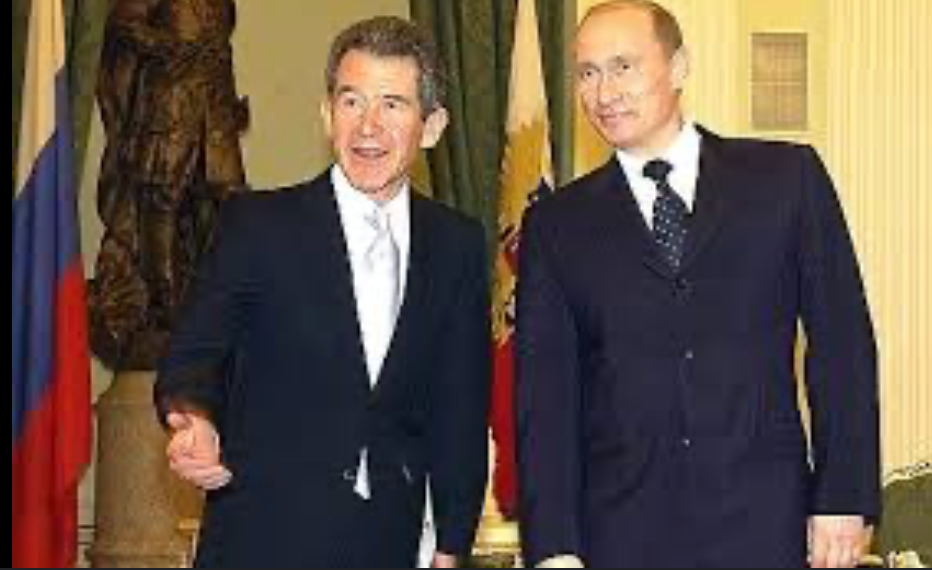
- He launched BP’s partnership with Russian oligarchs and the Russian state through TKK-BP, meeting President Putin several times. Browne praised Putin for bringing stability to Russia, whilst ignoring the curtailment of civil liberties, political freedoms and press freedom. Putin was “the new broom who would sweep everything out, the big reformer“, or “the reformer who was going to open up Russia and be good for security”. Browne did not publicly criticise Putin’s anti-gay legislation. From 2015 to 2021, Browne was chairman of L1 Energy. This is the energy arm of LetterOne, controlled by the oligarch Mikhail Fridman, who is now subject to sanctions following the Russian invasion of Ukraine.
- While extending every sympathy with Browne’s personal dilemma leading to his resignation in 2007 as BP’s Chief Executive, he was nonetheless found to have been dishonest in court. Judge Eady stated, “I regret to say that I have concluded that he told a deliberate lie to the court,” and noted Browne’s “improper” behaviour was “serious and relevant to his credibility”. The judge went on: “I am not prepared to make allowances for a ‘white lie’ told to the court in circumstances such as these – especially by a man who prays in aid his reputation and distinction and refers to the various honours he has received under the present government when asking the court to prefer his account“. The full legal judgment is here.
The possible election of Lord Browne to the Chancellorship raises concerns about risk of damage to the reputation of the University of Cambridge.
(This article was written by Professor Wyn Evans, who is also a candidate for the Chancellorship)
Who better to guide Cambridge than a guy who once advised oligarch-backed firms?
Lord Browne’s moral compass runs on diesel
Adam Boulton weighs in for Lord Browne with an error-strewn article
https://www.reaction.life/p/as-cambridge-elects-a-new-chancellor
“Last year, Oxford threw nominations open and ended up with a ludicrous 38 registered candidates including a Zumba teacher. Online voting winnowed this parade down to five conventional hopefuls – William Hague, Peter Mandelson, Dominic Grieve, Lady Angiolini and Baroness Royall. It remains unclear why the two women on the final shortlist of five were both heads of colleges, since the rules appeared to ban people working for the university.”
It is not unclear, Adam. The Colleges are different from the University.
“The astrophysics (sic) Dr Wyn Evans wants to settle scores with an “administrative oligarchy” from the inside. He insists that the “best candidate for Chancellor is an internal one… If Cambridge needs a high-profile or celebrity chancellor to be noticed, we might as well give up and rebrand the University as a reality TV show”. Evans has the second highest number of backers at 112, mostly from within the university. Unfortunately for the professors, the job description for the Chancellor is explicit that an insider, interfering with the running of the university, is not wanted”
Maybe check the Statutes, Adam. They are the primary source.
British journalism at its finest.
It’s hard to conceive of a worse candidate than Lord Browne to be honest
Unlike the rest of his jobs — which he was given by his friends in the Establishment — this is a job for which he has to win an election
Suspect he is not as popular as he thinks
Exactly this. He’s only ever been surrounded for decades by “his people” – either his own employees or other members of the business and political elite (both of whom fishing for favours). He’s never stood up for any public cause, never built a business only climbed the company ranks and even when he had the chance to an advocate of gay rights and join the cause he missed the boat. In his own words:
“”I’ve never thought of myself as a gay activist. It’s a very grand title. There are people who’ve done some extraordinary things as activists, such as Peter Tatchell. I’m not in the same class as them.”
Indeed.
The picture cavorting with Vladimir Putin tells us all we need to know.
Not just Putin here he is opening an office in Abu Dhabi
https://www.theconstructionindex.co.uk/news/view/erm-opens-new-abu-dhabi-office
Photo seems to have been removed but is still to be found here
https://www.theconstructionindex.co.uk/img-cache/46ec280bd0da123625c3dd0fef40ba3d/750x500_top_1332144401_19mar12-erm.jpg
Oddly if you try and search for this on Google you won’t’ find it. But other search engines first thing comes up
I cannot think why anyone would vote for him.
Consider that Lord Smith, who is also running for Cambridge VC, came out in 1984 in order to protest bans on gay employees telling the crowd “Good afternoon, I’m Chris Smith, I’m the Labour MP for Islington South and Finsbury and I’m gay.”
That is what true moral courage and leadership looks like. For the LGBTQ+ community, Browne belongs last on the list.
Not sure the gay vote is going to swing this election?? I mean we’ve also got Sandi but from her statement it seems the woman she loves most is the one who greets her in the mirror each morning!! Let’s vote for competence and values pleassse?
And here is John Browne with another despot, President Aliyev of Azerbaijan
https://www.bp.com/az_az/azerbaijan/home/who-we-are/operationsprojects/acg2/ACG-nin-tarixi.html
Aliyev’s rule established an authoritarian regime, featuring a pronounced personality cult and restricted political freedoms. Civil society, including LGBTQ+ advocacy, was either illegal or extremely limited.
I expect with a bit of effort we can find pictures of Browne and Gaddafi, or Browne and any despot with oil.
It’s hard to understand what Lord Bowne thinks he has done to earn the right to lecture us all on freedom of speech or personal integrity, or inclusivity.
It will be a truly huge disaster for Cambridge University if he wins the election.
He really is like Jeffrey Archer. You know, but without the crappy novels.
Check out this bio
https://www.theengineer.co.uk/content/in-depth/lord-browne-president-of-the-royal-academy-of-engineering
“As one of the most successful businessman of his generation, Lord Browne has a gift for charming the likes of Margaret Thatcher and Vladimir Putin.”
Ewww. Is your skin crawling yet?
What is common in both cases is that both Archer & Browne used their power, money and influence to denigrate their weaker opponents, Monica Coughlin and Jeff Chevalier, respectively.
The Archer case is more serious. That said, Browne does not emerge with much credit. From the link to the legal judgment we read:
“A wholesale attack was being made on his [Chevalier, Browne’s former partner] credibility. It was said that he is a liar, unstable and adversely affected by dependence on alcohol and illegal drugs. As Mr Spearman himself put it, “the case on unreliability was based on Mr Chevalier’s use of drink and drugs, and his instability, which was submitted to be ‘highly relevant to the source of the information
“When, subsequent to the 12 January hearing, Mr Chevalier voluntarily disclosed hismedical records and notes for the relevant period, it emerged that they contained virtually no support for the allegation of significant alcohol and drug dependence at the material time (although Mr Chevalier admitted some drug abuse at an earlier period in his life). The records rather revealed that he was being treated for anxiety and panic attacks. Mr Chevalier’s evidence is that he has never been diagnosed with or treated for dependency. The impression the Claimant had sought to give the court, however, was that Mr Chevalier was inherently to be disbelieved for that reason. (The Claimant’s allegation about alcohol seems largely to have been based on an inference he drew when his butler told him that his wine stocks were diminishing.)”
The Claimant’s allegation about alcohol seems largely to have been based on an inference he drew when his butler told him that his wine stocks were diminishing.
Wow. So basically he slandered an intimate partner whom he knew was struggling with mental health issues, and used that to ruin their reputation and future prospects.
Gruesome, what a charming man… No wonder (to quote the bio above) he “has a gift for charming the likes of Margaret Thatcher and Vladimir Putin”
Personal feelings as regards Browne = more nuanced. Respect his work at BP + believe he deserves respect for coming out about his sexuality.
Key problem w. Boulton analysis is more fundamental:
1. Once became head of BP – served circa 30 years in company. Knew system better than anyone – power players, departmental conflicts, key actors, investors, company challenges, revenue + financing structure. Loyal company man dedicated 100% to role. Optimally placed to force through cost cutting and “make elephant dance”. Did that job well.
2. But Browne = total outsider to Cambridge. Entering at the top in total ignorance. No conception of veto actors / revenue model / prospects. No idea of how colleges + administration + donors + staff + etc relate. No idea of values / motives behind key players. Worse yet – completely dependent for input on those responsible for current mess.
3. We see what happens in situations like this. Think Musk / DOGE (also Twitter: but at least there Team Musk delegated to people who knew social media industry even if destroyed brand value / image). Very likely to swing axe in all wrong directions.
4. No evidence of Cambridge loyalty. Post BP only working as fly-by consultant. Seems looking for sinecure role – not executive role. Bad hire on these grounds alone.
5. Cambridge = not a company so CEO (or Director) cannot wield executive authority. University responsible to its own members (Regent House). Requires different skillset + huge investment in relationship building taking many years.
Will vote Wyn as (1) first choice to protest bullying and staff abuse but following Boulton logic next choice would be El Erian = meets points above + understands core financing challenge (asset rich organisation w. long term cash flow constraint – need to leverage + invest + raise immediate capital not simply engage in cost cutting + systemic collapse).
[…] 21 Group has already expressed our reservations about the suitability of Lord Browne here and […]