A major investigation by Nafeez Ahmed and Peter Jukes of Byline Times here and here exposes a web of connections linking Cambridge University, Reform UK and Trump-aligned US tech billionaire Peter Thiel — raising fundamental questions about influence, power and accountability.
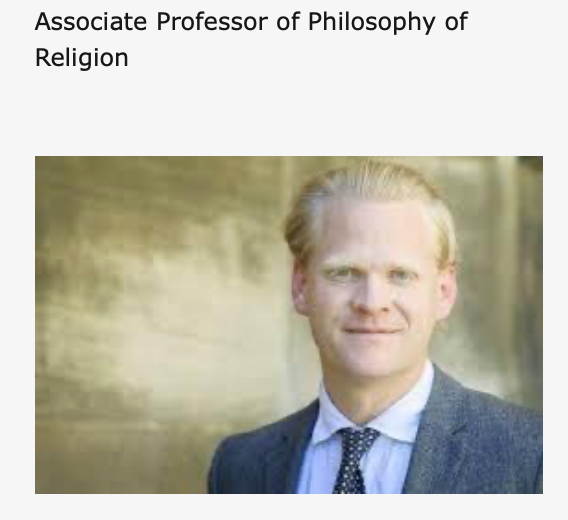
At the centre is James Orr — Associate Professor of Philosophy of Religion at Cambridge and Head of Policy at Reform — often described as Nigel Farage’s “kingmaker.” That alone should give pause: a senior academic simultaneously shaping political strategy at the highest levels of a populist party.
These are not minor or symbolic roles. Both are demanding, influential positions. The obvious question follows: how can one person properly fulfil both? It is difficult to avoid the conclusion that one of these responsibilities is being compromised.
But the deeper issue is the ecosystem Orr appears to have built around himself. He runs a postgraduate residential programme in Cambridge that has hosted an extraordinary roster of politically charged figures: Peter Thiel, his protégé US Vice President JD Vance, Dutch anti-Islam campaigner Ayaan Hirsi Ali, and Canadian activist Jordan Peterson. This is not a random line-up of guest speakers — it points to a coherent ideological network with global reach.
What exactly is this programme? Who selects these speakers, and for what purpose? What role does it play within the University — and what oversight exists, if any?
And the most basic question of all: who is funding it?
Because programmes like this do not run on goodwill alone. If significant external funding is involved — particularly from politically engaged or foreign sources — then the implications are serious. The potential for soft power influence, ideological patronage and the cultivation of future political actors within a university setting cannot simply be brushed aside as “academic freedom.”
“University documents seen by Byline Times confirm that the Palantir co-founder made an offer of a five-figure donation to the institution through James Orr in November 2018, when he was under consideration for the role of University Lecturer in the Philosophy of Religion.
In January 2019, the donation appears to have been sent from Thiel Capital to ‘Cambridge in America’ – a 501(c) US tax-exempt organisation that raises money for the university in the US. While the documents seen by Byline Times suggest that it was Orr who requested the donation be kept anonymous, it is understood from Orr’s lawyers that Peter Thiel himself requested anonymity.” [Byline Times]
Well, this is embarrassing, to say the least. No wonder Vice Chancellor Prof Deborah Prentice is keen on secrecy for donors!
Students are not passive observers in this environment. They are being exposed — and potentially drawn into — a highly organised political and intellectual network. What safeguarding measures are in place? Are students fully aware of the affiliations and agendas at play? And does the University consider this compatible with its duty of care?
This goes far beyond a debate about free speech or controversial speakers. It raises hard questions about transparency, governance, and whether academic spaces are being used as platforms for political influence operations operating in plain sight.
The overlap between Cambridge, Reform UK and a US billionaire with clear political interests should set alarm bells ringing. At the very least, it demands much more scrutiny and transparency.
It suggests something that is coming to be seen as typical of Professor Deborah Prentice’s tenure as Vice Chancellor — a serious failure of oversight.
Cambridge is drifting from scandal to scandal while Prof Prentice fails to demonstrate clear accountability or any grip on the issues, or to provide the leadership needed to restore confidence in the institution.
We’re afraid that worse is to come.
She was picked because she was poor. Last thing the oligarchs wanted was someone who would get a grip on things
The pathetic and cluleless American Queen is obviously not only a moron but lacks basic integrity. Unless she has some bit shame and tenders her resignation. Doubt she will do so! 570,000 a year and perks are too tempting and… corrupting. She is just a very well paid puppet. Behind her is an oligarchy that manouvers legal and HR to run a nepotistic place where any dissent is punished. And then mediocrity is promoted: gloating about large donations fronted by second class academics and hiding the cataclysmic disaster in ERC Advanced Grants (7 in 2 years vs 28 for Oxford…). Can a group of truly world class academics step up and write a letter to the Chancellor to step in and fire the whole leadership team? Emergency measures must be taken or Cambridge will disappear down the sewer.
This is a huge liability for Prentice. After the US midterms, congressional investigations will likely begin in to the Trump administration’s pressuring of American universities. After the next presidential election it could easily step up. Questions may well be asked about Cambridge giving support and legitimacy to MAGA influencers. She will be returning home to a country that will be likely far less forgiving than the UK should investigations in Britain commence.
In the UK too policymakers are getting wise to the foreign dark money pools undermining British democracy
Peter Thiel came to Cambridge to talk about the Antichrist. He left with the receipts.
“How would you feel if you woke up the next morning with $200 million in your bank account?”
Those present were not sure if the billionaire was testing them or joking. Reader, I promise you: he was doing neither. He was taking attendance.
This — this one line, dropped into a room of theologians, philosophers, and the sort of Cambridge don who still thinks a college feast counts as fieldwork — is the Rosetta Stone that unlocks Peter Thiel’s entire strategy. Everything else is decoration. The lectures, the donations, the “Antichrist” branding, the whispered offers of life-altering sums to junior scholars, the carefully-placed protégé who a few years later resurfaces as Nigel Farage’s Head of Policy: all of it, every piece, is downstream of that single sentence.
So what is the meaning of it? What is the real goal?
Let me tell you my answer:
What Thiel has achieved here is the ultimate act of trolling. And I do not use that word the way your uncle uses it on Facebook. I mean it in its original, pre-Reddit sense: a performative provocation designed less to persuade than to reveal. You throw a stone into the pond not because you want the pond wet, but because you want to see who jumps.
Thiel was invited to Cambridge to deliver a series entitled the Antichrist Lectures. He was hosted, per the public record, by key scholars from the Faculty of Divinity — most prominently James Orr, the theology lecturer who wrote his PhD under Douglas Hedley on divine lawmaking, and who has since made himself the connective tissue between Cambridge’s Divinity School and the American New Right; and by figures around Hedley’s own Scrutonian orbit, the same milieu that produced the Cambridge chapter of the Roger Scruton Legacy Foundation and, more recently, the Cambridge Scrutonian Society. A billionaire libertarian was flown in to lecture, in the oldest continuously operating divinity faculty in the English-speaking world, on the Antichrist.
This, in itself, is amusing. It is also — and I say this with love — extremely on-brand for a university that once burned people for less and now hosts them for canapés.
Thiel does not, in fact, care about God. Here is the part most of the coverage misses.
Thiel does not care for religious conservatism. He does not care for the Book of Common Prayer, he does not care for Aquinas, he does not lie awake worrying about the filioque. His intellectual roots are fundamentally materialistic and secular. His primary ideology is libertarianism of the Stanford-in-the-nineties, René-Girard-in-translation, Ayn-Rand-with-a-Ph.D. variety — a worldview rooted in mimetic theory, market fundamentalism, an obsession with “founders” as demigods, and, above all, a conviction that the institutions of Western liberalism are decadent and ripe for capture.
His core belief — articulated since his earliest years, since the Diversity Myth days at Stanford, since Zero to One, since the Thiel Fellowship — is hostility to universities. Not skepticism. Hostility. He sees them as fundamentally parasitic: overpriced credentialing rackets that immiserate the young, launder progressive ideology into the professional-managerial class, and produce, in his view, precisely none of the frontier innovation that justifies their prestige. This is the man who literally pays teenagers to drop out of college. The Thiel Fellowship exists because Peter Thiel thinks universities are a scam. He has said so, in print, for twenty years.
That is the frame in which all of this must be interpreted. A person’s core convictions do not change over the course of their life. These convictions have been core to Thiel from the outset. And once you see it, you cannot unsee it. He is not a convert to Christian conservatism. He is a user of Christian conservatism, in exactly the way a good venture capitalist uses any promising early-stage vehicle: for optionality.
That is the real experiment.
Thiel’s goal here is not to save Cambridge. It is to expose Cambridge.
An institution that claims to be progressive, that claims to be enlightened, that claims to have eschewed monetary gain for scholarly vocation, that fills its prospectuses with the language of critical thought and inclusion — and that will, given the right envelope and the right lecture-hall seat plan, host the largest single funder of the American authoritarian right and applaud politely at the end.
He knows it is all lies. He knew it before he wired the first check.
The real outcomes of this experiment — the actual outputs, the data points a good VC would circle in the deck — are these:
A. Deliver a lecture titled “The Antichrist” in front of self-proclaimed Christians and persons of faith, from the pulpit of one of the great Christian universities of Europe, and have them applaud the man bankrolling the most explicitly post-Christian political project in the modern West. Watch as tenured theologians nod along, ask soft questions, and line up afterwards to be photographed with him. Data point recorded.
B. Have professed liberals and Democrats host the largest single Trump donor in Cambridge — the sort of don who signs open letters against Brexit in the morning and shares a High Table with the co-architect of J.D. Vance’s Senate run in the evening. Watch the cognitive dissonance metabolize into “well, he’s very interesting, actually.” Data point recorded.
C. Demonstrate that the institutional feminism of the modern British university folds instantly the moment the pressure comes from the right rather than the left — that the same colleges that will discipline a graduate student over a pronoun will not stir themselves to ask why a Head of Policy for Reform UK is drawing a Cambridge salary while running comms for a party whose platform is, to put it delicately, not obviously friendly to women. Data point recorded.
D. Prove that Cambridge’s donor-diligence process — the storied Committee on Benefactions, the Guild of Benefactors, the “Regent House” that in a 985-to-562 vote asked for more transparency and was told, essentially, thank you, we’ll take that under advisement — is not a firewall. It is a filter for embarrassment, not for influence. Data point recorded.
E. Prove that a “people organization” can survey its people and get an answer of 27%. In October 2023, Vice-Chancellor Deborah Prentice’s inaugural address told the Regent House that “people are at the heart of everything we do.” Three months later, Cambridge ran its own Staff Culture Survey. Only 27% of staff said they were satisfied with how bullying and harassment were addressed in their department. Only 27% believed action would be taken on the survey’s results. Only 57% could recommend the University as a great place to work — the university with the beautiful courts, the choir schools, the Nobel laureates, the enormous endowment. Barely more than half. Cambridge is a “people organization” the way BP is an “energy transition company.” Data point recorded.
F. Prove that Cambridge’s silence has a price list. Between 2014-15 and 2018-19, UK universities issued nearly 11,000 non-disclosure agreements — an average of around 2,600 per year in 2017-18, up from 2,020 in 2014-15. Cambridge refused to disclose its numbers. Not “did not have them.” Refused. The “Russell Group playbook” sets out the four stages by which any elite British university handles serious allegations against a senior figure: (1) stall the investigation; (2) reframe the bullying as a “personality clash”; (3) commission an internal or captive-barrister “investigation” — one such at Cambridge’s Institute of Astronomy reportedly cost the department “nearly £70,000” of its own resources; (4) at the tribunal door, offer an NDA in exchange for silence. Cambridge’s institutional strategy for handling misconduct is “a financial settlement in exchange for victims’ silence” that lets the accused “remain in post or retire ‘with honour’.” That was Cambridge’s business model. That is what Louise Haigh’s amendments to the Employment Rights Bill were designed to make illegal. That is the model Cambridge was still running when Peter Thiel wrote the check. Data point recorded.
G. Prove that when the story finally breaks, Cambridge’s press strategy will be to forward journalists to its own accused lecturer’s private solicitors. Not to answer. Not to convene a governance review. Not to open its books. To forward. To the solicitors. Of the accused lecturer. Who is the same lecturer who introduced the donor. Who is the same lecturer now running policy for the party the donor’s associates are bankrolling. If you tried to write that as satire, an editor would send it back for being too on the nose. Data point recorded.
So what is the point of all this?
As stated: it is trolling. But trolling with a thesis.
Thiel’s goal, in short, is not to establish a far-right “cell” in Cambridge. It is to show that he can establish a far-right cell at Cambridge. It is a proof of concept. It is a pitch deck. It is a slide, in some Palo Alto conference room, that reads:
EXHIBIT A: WE OWN THEM TOO.
Everything else — the lectures, the fellowships, the whispered offers of “life-altering sums,” the donation routed through Thiel Capital and Cambridge in America and dropped into the university’s lap the same month a hitherto-obscure theology lecturer was up for confirmation — is evidence. Evidence for a case Thiel has been building, patiently, for a quarter of a century, that the Western academy is not a temple of knowledge but a marketplace with delusions of grandeur, and that the price of admission is lower than anyone at High Table would like to admit.
“How would you feel if you woke up the next morning with $200 million in your bank account?”
The final reveal, I am sure, will be to show that the experiment was a success. That the university is not a site of knowledge, but of ego, greed, and avarice, the same as anywhere else, but with better lawns. That the idea of Cambridge — the eight-hundred-year edifice, the choir schools, the Nobel laureates, the punts on the Cam — is available for rent, if you know which theology lecturer to email.
So why Cambridge, specifically?
Because Cambridge was the perfect site for such an experiment.
It could not be done in the United States. Harvard, Yale, Stanford: too close to the Trump administration, too visibly compromised already, too easy to dismiss as “well, of course, it’s an American story.” It had to be somewhere overseas — somewhere putatively liberal, putatively averse to Trumpism, somewhere the American press would find the story counterintuitive. Somewhere with brand.
By selecting the oldest of the ancient universities, Thiel chose the Platonic form of the university — the one institution that symbolically represents the entire academic system in the Anglophone world. If Cambridge can be bought, everywhere can be bought. And if Cambridge can be bought cheaply — a five-figure donation here, a fellowship there, a directorship at a Scruton foundation, a lecture series with a provocative name — then the moral of the story writes itself.
It is a hostile takeover conducted at a discount. It is arbitrage.
And the funniest part — the truly, cosmically funny part, the part where I do laugh, out loud, at my keyboard — is that the people running the university seem to genuinely believe that if they just keep saying “unsubstantiated allegations, willful mischaracterizations, and falsehoods” often enough, in press releases forwarded through their lawyers, the story will go away.
Reader, it will not go away. This has barely started.
This is a great post. Thank you.
I think you missed two important points.
First, this “experiment” as you put it, is being done when UCam is particularly fragile due to a range of problems, many of them related to how the senior leadership puts reputation ahead of everything, including the lives of its junior members. With or without experiment, UCam will pay the price of this choice, and the first 6 months of 2026 show that the process started and will hardly be reversed while the leaders remain the same. While choosing to run this “experiment” in UCam at this particular time may have been beneficial in some aspects, it is likely that the specific context of UCam will turn the “experiment” into a failure. It is very possible that choosing UCam for this experiment was actually the worst choice that the organizers could have done.
Second, not every member of UCam can be bought, even if the senior leadership can. So far, the issues you have described have been brought to the attention of external parties by single individuals who use it to contextualize their personal experiences. The standard response from the University, as you correctly put it, is to mispresent and isolate cases, to describe them as “personal vendettas” and the like. Once a large number of members comes together and report their experiences collectively, to the press, to sponsors, to MPs and, of course, to the Chancellor himself who for some reason thinks he has no power and is not responsible for the current mess, then the senior leadership will realize that there is nothing left for them to do than leaving without honour. Their names will be remembered for the worst reasons and it is becoming increasingly clear that this day is coming. Sooner or later, it will happen because the scandals will not stop otherwise.
If Cambridge wanted to prove such an experiment wrong, all they ever had to do was to behave in accordance with fundamental religious ethics. Acknowledge fault, seek understanding, and at last, ask for forgiveness. Perhaps there is more of a divine logic than you give credit for?
“not every member of UCam can be bought, even if the senior leadership can”
Quite, and I dare say that is why it now falls to the membership of the university to prove the “thesis” wrong, by voting for the Grace and showing that Cambridge still has a moral backbone (however bludgeoned and broken it may be at this point).
If there was only one person left on earth that one person would have no choice but to self-regulate. What is the person then self-regulating with respect to – the person is self-regulating with respect to the persons own internal environment and the persons own external environment. The person has to get to know their own self in great detail and has to get to know their own external environment in great detail in order to self regulate. In order to life their longest life in that external environment the person has to accurately know their own self and to accurately know their own external environment and to continuously accurately match their own self to their own external environment. Whether it’s one person or a group of people that challenge remains the same, to self-regulate as a person or to self-regulate as a group.
The basic unit of governance is self governance. When groups of people were disconnected from each other by physical barriers that is the governance structure a group had to achieve at the level of the group irrespective of the size of the group for the group to continuously live in the external environment the group happened to be located in. If we were to think in terms of a fractal governance structure, that is the pattern of governance which would be expected to be self-similar across different scales of that fractal governance structure in order to achieve overall governance at the largest scale that reflects what is needed for the task at hand at that largest scale – self governance.
Winning the lottery/gaining large sums of money – $200 million – is no guarantee of a better life for a person, if there is a problem with self governance, all that might happen with more money is that the self governance problem becomes more visible to others and/or the self governance problem has the potential to have a higher impact on others fuelled by the person having higher resources relative to others. Self governance is more challenging in more unpredictable external environments but such is life that life comes with no guarantees, such is life that life offers no choice but to rise to the challenges of any external environment encountered, such is life that life demands we live to learn to learn to live.
In an effort to try to influence a political environment it is possible to lose the ability to accurately sense a political environment – if a political environment cannot accurately be sensed does it then make sense to try to influence it?
If a person cannot own it – chaos – is it possible to buy it?
If an environment already has some degree of polarisation and charge accumulates on a particular person as a result of how an appointment happened or as a result of an additional appointment there can be a loss of the ability to accurately sense an environment – a loss of effective contact with an environment.
It’s like trying to buy a tether to an object to pull the object in a particular direction but where the more you try to buy the tether the weaker the tether to the object becomes and the higher the risk of the tether to the object breaking in the process of trying to pull the object any distance in a particular direction. Cambridge is a heavy object, it’s hard to pull it any distance with even the strongest of tethers to it.
A person who has been a thinker all their life can end up being in a position of having gone into universities and been able to think in universities themselves and yet also having sensed that universities are potentially putting constraints on the thinking that can be done in universities where it’s not obvious to the person themselves that those constraints are optimal.
A person in that position might end up having being drawn into universities – communities or thinkers – having becoming disillusioned with universities and having heavily criticised universities. The constant across a persons life is not then the attitude to universities which is varying throughout the persons life, the constant is that the person is a thinker. The emergence of this situation doesn’t mean that communities of thinkers in universities are in the wrong or that the thinker criticising universities is in the right, it just means a space has potentially opened up for new thinking in universities and new thinking with respect to universities.
The tether that grows and strengthens to the object that is Cambridge is the academic freedom tether, this tether grows as a person continuously finds the mental space necessary to try to understand something without any undue pressure from any external source. Cambridge is moved by attempts to do the right thing, by a search for the truth, that is the only thing that pulls the heavy object that is Cambridge any distance. Cambridge is moved by a dignified walk towards a higher understanding – through pure academic disagreement and pure academic debate. A person is not being constrained by punishment or by reward, a person is being constrained only by a drive to try to understand something.
If life puts a heavy constraint on a person to understand something it can induce a state of academic freedom where punishments and rewards fall away as relatively weaker constraints. A life event can trigger a state of academic freedom for a person and with it a feeling of being immersed in academia, of being in the right place being in a university.
It’s like some form of the uncertainty principle where if forced into a state of absolute certainty about the need to understand something it becomes possible to handle a state of maximum uncertainty about how to go about understanding that something – get maximum academic freedom to go about understanding something.
Thank you for highlighting this. This story will grow and has many layers of concern. As was commented on the previous blog, this certainly also involves other Cambridge academics who are allies of Orr. A far right under the radar trend has been noted in various faculties.
Given the aggressive approach of university lawyers, have to assume the evidence is real and byline were able to get these documents. Makes it quite a scoop.
Suspect this one will break over an extended duration and that byline are only at early stage of piecing up the full picture.
Agreed — looks like there’s more to come out about the activities of Dr James Orr.
Where are the student’s stories ? There’ll be some.
There are plenty, and also a broader issue here around consistency in the university’s freedom of speech code. On the one hand, university lawyers appear to be very insistent on restricting open debate about matters of public interest, even down to apparent attempts to redact comments from this site.
That assumes one set of principles regarding free speech, and may be considered internally consistent. Yet on the other hand, the university appears comfortable with Orr’s public statements, including the following:
i) In October 2023 he responded to a video of Muslims praying at a pro-Palestinian demonstration by posting “Import the Arab World, become the Arab World.” (https://www.varsity.co.uk/news/26271)
ii) He has publicly described asylum seekers as “invaders” and referred repeatedly to “disastrous demographic change,” calling diversity a “debilitating weakness” (https://religionnews.com/2025/08/14/jd-vance-and-james-orrs-special-relationship-and-the-illiberalizing-of-the-us-and-uk/)
iii) He is hard-line anti-abortion, opposing it even in cases of rape and incest, and has said the 6 January 2021 US Capitol riot was “exaggerated” by the “global left” (https://www.varsity.co.uk/news/30500)
The key issue here is one of consistency for the institution. It is frankly rather hard to to take as genuine the university’s position against open debate on governance matters, while at the same time, it defends the right to engage in the manner of inflammatory speech of the kind detailed above.
It is either one position or the other: not free speech for the far right, yet legal threats for moderates and centrists.
Don’t forget the extensive moves last year to ban peaceful protests (https://elsc.support/high-court-rejects-bid-by-the-university-of-cambridge-for-a-long-term-injunction-on-palestine-protests/). From the article:
“Since October 2023, university managements across the UK have escalated a pattern of aggressive tactics aimed at suppressing student-led protests. Disciplinary measures have been weaponised against individual students, while universities have pursued costly legal action to remove protest organisers and dismantle encampments. In many cases, police have been called to forcibly remove demonstrators, leading to arrests and, in some instances, injuries. Reports have also emerged of security staff harassing and even physically assaulting student protesters.”
Freedom for some – crackdowns for others.
The policy in summary
Inflammatory hate speech about asylum seekers and minorities – totally fine
Polite critiques of University HR – “hate speech”
@TheResearcher was censured by trying to post a link to an article in the Guardian on Viva Exchange
Stasi like levels of control.
The removal of TheResearcher’s link to a Guardian article is, on the face of it, itself a violation of the Acceptable Use Policy as well as the University’s broader commitment to free speech, as articulated in its own guidelines and government policy (e.g. the 2025 Act).
This is so for several reasons.
First, the Social Media Guidelines set an express non-removal commitment for lawful content. The university states: “We never remove comments that express controversial or unpopular opinions within the law”. A link to a genuine, published Guardian news story is lawful content, so it falls within that protection rather than the removal grounds.
Second, the only stated bases for removal are content that is “spam, abusive, violent, irrelevant, or posted by bots or fake accounts,” plus “personal attacks… bullying or targeted harassment”. A link to a Guardian article does not, in itself, fall into any of these categories. It is relevant, genuine, and the article targets no individual. The appropriate response would be to preserve the article link and all content that remains within the guidelines.
Critically, para 48 states that all University policies “are to be interpreted and applied in a manner consistent with the Code of Practice [on Freedom of Speech]; in the case of any perceived conflict, the provisions of the Code of Practice will take precedence insofar as that is lawful and reasonably practicable.” And para 23 requires the listed prohibitions to be “carefully balanced with the right to freedom of speech and academic freedom.” This is reinforced by the University’s statutory duty since 1 August 2025 under the Higher Education (Freedom of Speech) Act, under which OfS guidance says providers must not restrict lawful speech on grounds of viewpoint, alignment with the institution’s values, offence, or reputational impact.
Third, the extension of the AUP to this domain is in violation of its stated purpose. The policy is explicit in stating from the outset that its remit is to fight cybercrime (https://help.uis.cam.ac.uk/policies/information-services-acceptable-use-policy). The removal of free and fair comment is far more likely closer to such a threshold than the content of a comment by a member of the community.
A formal grievance and complaint to the OfS would be a minimal first step, followed by exercise of whistleblower rights and exercise of TheResearcher’s protections under the Higher Education (Freedom of Speech) Act.
You’ve have absolutely nailed it!
Jordan Peterson is an outspoken defender of absolute free expression. The 21 Group has no problems with talks by the likes of Jordan Peterson (if folks wish to attend)
We have a problem with suppression of criticism of university Governance whilst being lectured on absolute Freedom of Speech by Jordan Peterson.
This is why the Grace has to pass. We have an HR service that instigates investigations against whistleblowers while offering a free pass when members of the community from minority and migration backgrounds are targeted en masse. It is a colossal failure of governance standards and basic human ethics.
I find it hard to tell what some of these statements really mean e.g. “Import the Arab World, become the Arab World.”
One concern that appears to be tied up in this statement seems to be this : if a significant war state is generated somewhere in the world & people flee that war state to other countries there is the possibility of that situation nucleating an internal war state in other countries if people from different sides of that war state flee to the same country or nucleating an external war state between a different set of countries if people from different sides of that war state flee to different countries.
This is why there should be resistive mechanisms in place that act to contain the spread of any war state. Uncontrolled & uncontrollable destruction is no way to build up different civilisations, it will never beat controlled & controllable construction to build up different civilisations.
If a significant war state is generated somewhere in the world & it nucleates internal war states in every other country in the world or wars between every other country in the world where then will people flee to for asylum?
If asylum seekers fleeing war states don’t see the necessity of containing war states in general & of resisting the spread of war states in general, don’t see becoming a peacekeeper as an implicit part of the act of seeking asylum, don’t see themselves as becoming active contributors to places of asylum then the asylum seeking system itself is not set up in such a way that it continuously builds an effective counterweight to any war state that is putting pressure on it.
The asylum seeking system itself has be set up in such a way that it builds an effective counterweight to any war state, a counterweight that grows in proportion to the growth of any war state that is putting pressure on it. The asylum seeking system itself has to be set up such that it presents a strong resistive force to the spread of any war state that is putting pressure on it where the resistance it presents to any war state grows as the war state putting pressure on it grows. The asylum seeking system has to be set up to hold at its firmest when the pressure being put on it is at its greatest.
Any part of the world that is struggling to contain/resist war states is going to put pressure on the asylum seeking system – the Arab World is no different to any other part of the world in this respect.
‘The strong do what they can & the weak suffer what they must’ is always taken to mean that there is always a significant difference between what happens to the strong and what happens to the weak. This cannot be applied in all situations. There are situations where all the strong can do in a situation is die and what the weak must suffer in a situation is death i.e. there is no significant difference between what happens to the strong & the weak in the situation.
If war states are not resisted war states spread, the system then becomes more & more disordered as the war states that are not actively being resisted spread further & further through the breadth & depth of the system. At some point the system can enter into a state of such disorder that survival of the fittest no longer applies – it’s survival by pure chance. There is no guarantee any civilisation will survive such war states and the idea that war states are necessary to build up a civilisation or to build civilisational resilience doesn’t stand up to scrutiny.
The highest probability of life is in peace states, where the strong & the weak both have a higher overall chance of doing anything – what they want, what they can, what they need to do – and of suffering what they must for even the strong succumb to illness & suffer what they must. A disordered system in prolonged war states has a lower overall probability of curing the illness of any person.
The lowest probability of life is in war states, where the strong & the weak both have a lower overall chance of doing anything – what they want, what they can, what they need to do – and of suffering what they must for eventually there comes a point in prolonged war states where survival of the fittest cedes to survival by pure chance. The weak in the right place at the right time survive & the strong in the wrong place at the wrong time don’t survive.
If a person cannot predict a car crash situation then the person is in the hands of a higher power in that car crash situation. If a person can predict a car crash situation the person has the agency to free the hands of any higher power by preventing that car crash situation. If two people who can make accurate predictions about head on collision car crashes are preparing to drive straight in to each other to generate a head on collision car crash while both people are appealing to the same higher power to protect them in that head on collision car crash the higher power might well ask – if both people have agency & could prevent that head on collision car crash why then are both people appealing to a higher power to protect them?
To be chosen for life, life has to be chosen.
The higher the predictive power in relation to war, the higher the predictive power in relation to the prevention of war, the higher the agency to prevent war.
When war could not be predicted & prevented all that could be done when faced with the threat of war was for every side under the threat of war to appeal to the same higher power for protection in war. In that case – war could not be predicted & prevented – protection was in the hands of a higher power.
If accurate predictions can be made in relation to war and in relation to the prevention of war there is then the agency to prevent war i.e. when faced with the threat of war there is agency to prevent war, to take protection out of the hands of a higher power, to free the hands of a higher power.
On 29 May 2026 Trump’s nominated Ambassador, Warren A. Stephens, visited the University of Cambridge, met Vice-Chancellor Professor Deborah Prentice. He began by thanking “Vice Chancellor Prentice and Chancellor Lord Smith for the warm welcome to Cambridge today”. That event also served as the launch of a new interdisciplinary body, the Centre for the United States of America at Cambridge (CUSAC).
There is no suggestion that Stephens’ visit was linked to matters exposed by the Byline Times, yet he is a longstanding MAGA movement mega-donor. After Trump locked up the 2016 RNC nomination, Warren Stephens gave at least $6.5 million to Trump’s campaign and super PACs, including donations to MAGA Inc., the principal pro-Trump super PAC. OpenSecrets FEC records show he gave $1 million to MAGA Inc. on 11 October 2024 and a further $1 million to MAGA Inc. on 2 December 2024, alongside multimillion-dollar gifts to the Senate Leadership Fund and Congressional Leadership Fund. In the 2020 cycle he had already given more than $3 million to pro-Trump super PACs.
Stephens was then the single largest individual donor to Trump’s 2025 inauguration fund, giving $4 million on 2 December 2024, the very same day Trump announced his nomination as ambassador (see stories in the New York Times and NBC News). The Campaign Legal Center called it “one particularly egregious situation,” noting he “was nominated as ambassador to the United Kingdom on the same day that he donated $4 million to the inaugural committee”.
However you look at this, it seems like extremely poor judgment.
I think one can accept that he attended in his capacity as US ambassador, rather than as Trump’s personal envoy (though the distinction between the two is admittedly slight). All the same, one must exercise discretion in how these things are handled. Peter Mandelson also had warm words to say about him while serving as his counterpart, and those already look a bit awry.
Import the MAGA sphere, become the MAGA sphere.
Orr was originally appointed as University Lecturer in Philosophy of Religion from 1 September 2019.
He passed probation without objection in early 2023 and in an April 2023 interview he described himself as taking up Associate Professor “as of just a few months ago”.
His Google Scholar profile (https://scholar.google.com/citations?hl=en&user=qbksHpYAAAAJ&view_op=list_works&sortby=pubdate) lists no publications since.
The publications he did produce from 2019-2023 (the last one) have attracted a mere 45 citations.
He is Cambridge’s leading voice on the politics of the far right.
I’ve just finished reading ‘Careless People’ by Sarah Wynn-Williams, an insider account of bad behaviour at Facebook. Highly recommended. She was their global director of public policy between 2011 and 2017.
Wynn-Williams tells a story of awareness but indifference to the harms perpetrated at Facebook at its highest levels. From rampant sexual harassment to its involvement in misinformation around political events in the US and elsewhere, to enabling the regime in Myanmar to persecute its own people. She was investigated and ultimately dismissed after whistleblowing the behaviour of a senior colleague. She’s unable to talk further about her experiences or promote the book herself after legal action from Facebook.
Maybe all large organisations are similarly psychotic? Doesn’t make it right.
Orr is classic Cambridge nepotism. He completed both his MPhil and PhD at the University (St John’s College). His advisor and sponsor is Professor Douglas Hedley, now Professor of the Philosophy of Religion at the Faculty of Divinity, and also a Fellow of Clare College.
In the ruthlessly meritocratic environment of US academia he would have faced instant extinction. He has no recent publications that are widely cited. On the citation Bell Curve, he is a total zero, and academically, will never get from zero to one. Only connections and favoritism have allowed him to escape the survival of the fittest.
The tentacles of a big octopus hidden in plain sight.
Excellent post! Thank you.
Things in Cambridge are giving off a terrible stench.
We’re close to a laughing stock,
The profile photo says it all.
That’s the face of Cambridge in 2026, folks.
I sent an email to Daniel Zeichner MP and cced the University Council, General Board, Board of Scrutiny, the Proctors and others. I will paste it below and the 21 Group may choose to post it in full or partially.
Please do not be afraid to step forward and share your concerns openly, namely to external parties given that internally no one takes us seriously and we are ignored at best. Showing fear is the best victory to this people. No one should have the power to silence and threaten you for reporting serious misconduct at your working or study place. We need a collective action urgently.
Dear Mr Daniel Zeichner MP,
I am writing to you again to draw your attention not only to recent developments concerning my situation at the University of Cambridge, but also to a number of other matters of serious concern relating to the University. I am also writing to request a meeting with you, as my Member of Parliament, so that I can provide further details about these and related matters.
Below, I am forwarding the email that I sent to the University Council, the General Board, the Board of Scrutiny, and others regarding what is known at Cambridge as a “Grace”—essentially a formal recommendation concerning University business submitted to the University’s governing body, the Regent House. I also refer to the further censorship imposed on me by the University because I supported and commented on this Grace.
What is this Grace about? The Grace calls for an independent external review of the University’s HR practices. It was prompted by serious concerns regarding the operation of the University’s HR policies, particularly those relating to Organisational Change, Dignity at Work, and Grievance procedures, some of which I have previously reported to you.
For the University Council to consider the Grace, it must receive the required minimum number of signatures from members of the Regent House. To this end, the Grace was advertised through various email lists and blogs and, on 6 July, it was also promoted on the University’s internal Viva Engage platform by a member of the Council. I thanked him and others for their important contribution, explained to the University community that uses Viva Engage why the Grace was particularly important at this stage, and shared links to relevant articles published by The Guardian and the 21 Group, including the most recent article accusations of retaliation against whistleblowers:
https://www.theguardian.com/education/2026/jun/15/university-of-cambridge-accused-of-tolerating-misogyny-and-bullying-in-tribunal
The original post and my comments on Viva Engage were viewed by thousands of members of the University of Cambridge and received multiple likes. Two days after these posts were published, I was banned from using Viva Engage. More recently, colleagues who still have access to the platform informed me that some of my comments had been deleted, including the link to a post published by the 21 Group entitled True Confessions of a University HR Administrator, which contains testimony from an HR professional describing HR practices.
Why was the University so concerned about this post? Whatever its reasons, no one from the University contacted me to explain why I had been banned from Viva Engage or why my comments had been deleted without any prior notice. As you will see below, I raised these concerns about censorship with the University’s senior leadership, but no one addressed the issue, including the Head of Internal Communications and Deputy Director, Mr Andrew Aldridge, or his line manager, Mr James Helm, Executive Director of the Office of External Affairs and Communications.
While the University acts swiftly to silence me when I raise concerns—both my own and those of others—about serious malpractice within the institution, particularly regarding the handling of reports of bullying and harassment, and express my support of an external review of HR practices, the same individuals have failed to respond to other deeply concerning matters. One such example is the six-month investigation published a few days ago by Byline Times, which raises serious concerns about student safeguarding and foreign influence at the University:
https://bylinetimes.com/2026/07/09/peter-thiel-and-reform-uks-cambridge-university-pipeline-project/
Regardless of one’s views on this recruitment project involving Palantir co-founder Peter Thiel and Reform UK at the University of Cambridge, and I would think that you and your colleagues in Parliament will have strong views about it, the following issues are of particular concern to me:
“James Orr has housed students at his ‘right-wing mecca’ alongside race science advocates and hard-right political figures, in clear breach of Cambridge University’s safeguarding rules.”
“Academics and students have consistently raised concerns about Orr’s conflicts of interest over funding, and the dangers of breaching ‘foreign influence’ legislation.”
“Several complaints about Orr to the Pro-Vice-Chancellors and even the Vice-Chancellor were made by senior staff across the University. Yet, in every case, no action was taken.”
“Byline Times contacted Professor Kamal Munir, the Pro-Vice-Chancellor for University Community and Engagement, and Professor Bhaskar Vira, the Pro-Vice-Chancellor for Education, but did not receive replies.”
“When Byline Times contacted Cambridge University’s press office with confidential enquiries relating to its own standards and policies, the queries were not merely ignored but were forwarded in full, without notice, to James Orr and his representatives at Addleshaw Goddard, a law firm that also represents Ben Delo.”
The issues described above form part of a broader problem of accountability that is becoming increasingly apparent to many members of the University. The University of Cambridge is moving from one scandal to another and now requires external intervention because its current senior leadership has demonstrated that it is either unable or unwilling to address these problems, or even to respond to members of the University and journalists seeking clarification.
You and your colleagues in Parliament may wish to contact the Vice-Chancellor, Professor Deborah Prentice, and ask her to explain her vision and strategy for addressing these ongoing scandals. I, along with others, have attempted to do so on numerous occasions, but we have consistently been ignored and, in some cases, subjected to extreme reprisals.
Given the recent events and the succession of scandals affecting the University this year, we do not know when the next scandal will emerge. We do know, however, that unless meaningful action is taken, another scandal is likely to occur in the near future.
I am copying this email to all the University members whom I previously contacted regarding the Grace and the subsequent censorship I experienced for supporting it, including, of course, the Vice-Chancellor, Professor Deborah Prentice.
I look forward to hearing from you.
Yours sincerely,
Nuno Oliveira
“When Byline Times contacted Cambridge University’s press office with confidential enquiries relating to its own standards and policies, the queries were not merely ignored but were forwarded in full, without notice, to James Orr and his representatives at Addleshaw Goddard, a law firm that also represents Ben Delo”
This is direct evidence of a link between Cambridge Legal Services and Ben Delo. You should look in to that.
https://en.wikipedia.org/wiki/Ben_Delo
“Ben Delo is a British entrepreneur. He is the co-founder and former executive of BitMEX. In 2022, Delo pleaded guilty to a United States Bank Secrecy Act violation and received a 30-month probation sentence. In 2025, Delo was pardoned by President Donald Trump.“
Which person in communications sent the Byline enquiry to Cambridge legal dept, and then which exact solicitor passed it in full to Addleshaw and on what justification. Presumably Addleshaw is not a client of Cambridge, so, this was not part of a solicitor-client exchange.
Delo is the British domestic funder who took over from Thiel as the primary financial engine of Orr’s network after joining it in December 2023. He underwrites the Westminster hub (the Sanctuary) that hosts Orr’s Cambridge Scrutonian Society and adjacent Reform-aligned groups; he funded Thiel’s Antichrist Lectures at Cambridge that Orr organised; he funds the Free Speech Union that Orr helps run; and crucially, he gave £4 million to Reform UK in early 2026, the party where Orr is now Head of Policy. He and Orr share the same law firm (Addleshaw Goddard), which is the firm that threatened to injunct Byline Times’ investigation.
It is unclear why Cambridge communicated directly with the firm, rather than via Orr as its presumed client – given that the presumed counter-party was the Byline Times not Cambridge (unless Cambridge is also representing Orr).
As noted he was pardoned by president Donald Trump for violation of the United States Bank Secrecy Act, and one of the major Trump donors was recently hosted in person in Cambridge by Vice Chancellor Prentice.
So Delo pleads guilty to criminal charges in 2022, and the next year, is funding networks at Cambridge.
Are Zurich Insurance / Cambridge legal dept paying hundreds of thousands to protect James Orr too? After all, they have just argued in Tribunal that this is a general policy.
Brilliant spot.
Remember, the claim is, if you are sued & are an employee of the University, then Cambridge will spring to your defence. We know from the Employment Tribunal that this is (allegedly) a blanket policy open to all employees.
You can carry out unlawful acts, be sued and trusty Cambridge University’s Legal Services will be there to pick up the tab with public money.
Advantage is being taken of the policy right at this moment by two employees who engaged in corrupt acts.
Worse that that. The policy appears to be that if you are sued by another member of the Cambridge community for violating statutes and engaging in retaliation, the university will spring to your defence – prior to conducting any investigation and apparently without disclosing relevant facts, so far as known, to the insurer.
No wonder they are keeping secret the donor list. Who wants to be named alongside convicted criminals and authoritarians.
Considering the involvement of students surely this might be a case for Prevent?
It would only be for Prevent if there were advocacy of violence, which does not appear to be the case in this instance (in spite of inflammatory language in tweets and interviews).
More salient routes for referral however could be:
1. The Foreign Influence Registration Scheme (FIRS), National Security Act 2023, Part 4. The Home Office activated the enhanced tier in 2025 and the political-influence tier from 1 July 2025. Where the alleged conduct involves undeclared political-influence activity directed by a foreign power or foreign-power-controlled entity, this is the correct primary channel. Referral is to the Home Office FIRS unit.
2. The Office for Students (OfS), public-interest governance conditions (E1, E2), and the OfS’s new complaints and free-speech functions under the HE (FoS) Act 2023. Where the concern is Cambridge’s institutional handling (donor due diligence, conflicts of interest, transparency around foreign funding, staff conduct in political roles alongside a University post).
3. HMRC (Non-Charitable Expenditure rules) and Companies House filings scrutiny, where charitable vehicles are alleged to be used for political activity (as appears to be the case here).
Is Cambridge in America registered with the UK Foreign Influence Registration Scheme (FIRS, National Security Act 2023, Part 4)?
It is strange. I cannot extract a memory of Orr from the past or any other point in the timeline. The face draws a blank. He seems like he should have been among the names.
Great! Let’s get reporting!
Let’s get cracking!
Just a brief recap for those new to the thread:
On 21 October 2025, James Orr, Cambridge Associate Professor of Philosophy of Religion, is appointed senior adviser to Nigel Farage.
In November 2025, Cambridge Vice-Chancellor Prentice tells the Council that Russell Group VCs have been quietly meeting Reform figures, that Reform will scrap the OfS, and that consultations are happening “now.”
In December 2025, the Regent House votes 985 to 562 to make the Guild of Benefactors public, and 826–757 for transparency on legal action against protesters. The Council decides both votes are non-binding on it. Nothing changes and the list remains secret.
In July 2026, Byline Times reveals that a Thiel donation was routed through Cambridge in America and Delo. This was the exact opacity mechanism the Regent House had just tried to close.
“Grace for submission to the Regent House under Special Ordinance A (ii) 5 (Guild of Benefactors)”
https://www.admin.cam.ac.uk/reporter/2024-25/weekly/6795/section1.shtml#heading2-9
“The Council, as the University’s trustee body, must act in the best interests of the University and therefore has no plans to publish the Guild’s membership even if the Grace is approved. Given the importance of philanthropy in supporting the mission of the University, it would be unwise to adopt a change in policy that is likely to damage its ability to fundraise. Differences in policy on the disclosure of information about donors and donations can be sufficient to encourage donors to divert their support elsewhere. Cambridge Guild membership could also be used as a list of high-net-worth prospects by other institutions. Further, should the Council decide to publish the names of the Guild’s members, it would need to obtain the members’ consent in line with GDPR requirements, which is likely to be withheld by, for example, those who have made anonymous donations. Complying with the Grace is therefore unlikely to achieve its goal of greater transparency, as it would not necessarily expand the information about donors and donations that the University already makes public.”
You ask: Did all members of Council agree with this BS? The answer is no, several did not agree.
And very wise of them to have opposed it for the Council’s stated reasons for declining to implement the Grace passed by the Regent House do not withstand examination.
i) On trusteeship: The Council is the University’s principal executive body, but it is subordinate to the Regent House, which is the University’s sovereign legislative authority under Statute A III. A Grace is not advice the Council may weigh against its own view. It is the institution’s own legislative act. To decline it on the basis of a “trustee duty” is to violate the University’s constitution.
ii) On fundraising: The claim that publishing major-donor membership would damage philanthropy is asserted without evidence. Oxford, Harvard, Yale, LSE, Imperial, and UCL all publish their major-donor lists, and none has seen its endowment collapse. If donor transparency were fundraising-lethal, none of these institutions would practise it.
iii) On poaching: The argument that competitors would use the list as a prospect database is circular. Every peer institution already publishes such lists. The premise is falsified by every comparator’s actual behaviour.
iv) On GDPR: The claim is legally invalid. UK GDPR provides six lawful bases for processing personal data. Consent is only one. Publication pursuant to a resolution of the Regent House engages Article 6(1)(c) (legal obligation) and 6(1)(e) (public task) without needing consent. The Grace does not require unmasking genuinely anonymous donors, whose identities Cambridge does not hold. It requires publishing the membership of a formally constituted Guild whose members are known to the University.
v) On the final claim: The Council cannot simultaneously argue that publication would damage fundraising and that publication would reveal nothing not already public. Both cannot be true. This statement is a flat and obvious contradiction.
Logical flaws, assertions without evidence, circular arguments, legally invalid claims and obvious contradictions…
Nothing new here, then. This is the University of Cambridge…
Not far off the genuine belief “that if they just keep saying “unsubstantiated allegations, willful mischaracterizations, and falsehoods” often enough, in press releases forwarded through their lawyers, the story will go away.”
I wondered why Varsity was not covering this issue, and they may still do, but they actually flagged part of the issue early this year:
https://www.varsity.co.uk/news/31135
“This is not the first time Thiel has delivered a talk in Cambridge. In 2024, he was invited to speak at the Cambridge Union. The resulting protest, which drew hundreds of people, disrupted the event and prevented Thiel from leaving the building for over an hour afterwards.”
But we have a new article in The Telegraph on Thiel:
“The chaotic collapse of Peter Thiel’s secret society for the global elite”
https://www.telegraph.co.uk/news/2026/07/13/peter-thiel-dialog-conference-guestlist-hacked/
In this, as in so many things, the people running the University are guilty of mind-boggling stupidity.
The “stupidity”, as you put it, would appear to be more than a mere question of sound politics, but also governance, considered from a purely self-interested perspective. This is what many find quite baffling. It constitutes an obvious risk to donor funding to court controversial names and parties, but also, it is a clear risk for alumni relations. If only for the best interests of the university itself we need to find a new way forwards that does not involve denial and escalation, but rather, is based on openness and dialogue. I do hope the broader community is a stakeholder in righting the course we are on.
The university senior management team (Prentice, Munir, Glover, Hudson, & Co) have no reverse gear.
When things go wrong, they just hit the accelerator pedal. We are looking at some spectacular car crashes
Varsity have covered the topic extensively
actually have been leading on this story for years
Right-wing billionaire Peter Thiel gives ‘antichrist’ lecture in Cambridge, 6 February 2026,
https://www.varsity.co.uk/news/31135
Controversial billionaire Peter Thiel set to speak at Union, 22 April 2024,
https://www.varsity.co.uk/news/27454
‘Divine dissenters’ call on University to investigate secretive right-wing group, 14 December 2021,
https://www.varsity.co.uk/news/22640
Racism testimonies within Divinity Faculty surface, 21 January 2022,
https://www.varsity.co.uk/news/22832
Where’s my money, Peter Thiel?, 28 December 2021,
https://www.varsity.co.uk/opinion/22690
Free speech, or doublespeak?, 26 December 2021,
https://www.varsity.co.uk/opinion/22686
A right to speak over, 18 January 2022,
https://www.varsity.co.uk/opinion/22771
Let’s get the monsters talking, 16 March 2026,
https://www.varsity.co.uk/comment/31396
Cambridge don appointed Reform adviser, 23 October 2025,
https://www.varsity.co.uk/news/30500
Cambridge doesn’t need another Cofnas, 31 October 2025,
https://www.varsity.co.uk/comment/30532
Cambridge cosies up to Reform UK, 30 November 2025,
https://www.varsity.co.uk/news/30787
Varsity’s biggest stories of 2025, 31 December 2025,
https://www.varsity.co.uk/news/30910
CUCA risks becoming Reform-lite, 7 February 2026,
https://www.varsity.co.uk/comment/31156
Students protest talk by Reform adviser Jack Anderton, 6 February 2026,
https://www.varsity.co.uk/news/31148
Conservative Association drops ‘far right’ speaker after student outcry, 23 January 2026,
https://www.varsity.co.uk/news/31054
Right-wing billionaire Peter Thiel gives ‘antichrist’ lecture in Cambridge, 6 February 2026,
https://www.varsity.co.uk/news/31135
Foundation with links to Hungarian government funding Scruton Legacy Foundation, 20 February 2026,
https://www.varsity.co.uk/news/31233
Philosophy don heads contentious NatCon conference, 20 May 2023,
https://www.varsity.co.uk/news/25686
Over 1,400 students and staff demand Cambridge ‘sever financial ties’, 20 October 2023,
https://www.varsity.co.uk/news/26308
University denies ‘censoring’ of ‘problematic’ books, 24 October 2023,
https://www.varsity.co.uk/news/26353
Clare Don wants coloniser paintings back, 28 October 2023,
https://www.varsity.co.uk/news/26379
Free Speech Union offers to bring Braverman back, 18 October 2024,
https://www.varsity.co.uk/news/28364
News in brief: sloshed students and dog doctors, 3 November 2024,
https://www.varsity.co.uk/news/28445
Cambridge doubles down on freedom of speech rules, 6 August 2024,
https://www.varsity.co.uk/news/27963
Controversial professor Jordan Peterson to return to Cambridge, 1 October 2021,
https://www.varsity.co.uk/news/22119
Dutch PM criticised anti-gay law because he doesn’t have children, 22 April 2022,
https://www.varsity.co.uk/news/23576
Jordan Peterson gifted an ‘enormous slab of meat’ for giving lectures, 22 April 2022,
https://www.varsity.co.uk/news/23552
Downing benefactor gave Farage undisclosed £5m, 7 May 2026,
https://www.varsity.co.uk/news/31624
Foundation with links to Hungarian government funding Scruton Legacy Foundation, 20 February 2026,
https://www.varsity.co.uk/news/31233
Don faces backlash for criticising gender pronoun ‘zealots’, 2 February 2024,
https://www.varsity.co.uk/news/26982
Caius fellow Arif Ahmed named new ‘free speech tsar’, 1 June 2023,
https://www.varsity.co.uk/news/25750
I guess that we should expect an article in Varsity following what was recently published in Byline Times then 😊
Good job, keep publishing on it!
Varsity have repeatedly failed to publish many articles on bullying over the last year (eg CRUK, Astronomy, DAMTP), apparently after intervention or pressure by the University
True. But let’s give the University a few more weeks and wait for what will be published elsewhere about those topics. By then, the least of their concerns will be what is published in Varsity. I hope those stories will eventually be published in Varsity because they are of major relevance to Cambridge students. What happens to staff in their interactions with HR, happens with students in their interactions with OSCCA.
The editorship of Varsity has been in total chaos this year. There were 3 different editors in Lent. The appointed editors for Lent resigned in the middle of the term and left only one editor for Easter. In early Lent the paper was quite proactive in covering the Reform / Thiel stories. Then the paper turned radio quiet since that editorial team implosion.
Hopefully Varsity will report on this in full as it directly affects their readership in terms of safeguarding.
Doubt the many Varsity alumni in the national press were much pleased either? Really cannot comprehend the total lack of foresight involved in producing such shenanigans.
In other news I see that Prof. Munir is stepping down early as Pro-VC in September, serving 5 years out of the maximum term of 6 years.
Wow.
https://www.cam.ac.uk/news/professor-kamal-munir-to-return-to-teaching-and-research
“The Vice-Chancellor, Professor Deborah Prentice, said: “Kamal has provided exceptional leadership during one of the most demanding periods in the University’s recent history. His judgement, integrity and ability to bring people together have been invaluable in helping the University navigate complex challenges while strengthening our community for the future.
“His leadership has left a lasting legacy across many aspects of University life, and we are deeply grateful for his outstanding service. He is a popular and respected figure across the University, and far beyond, and we are delighted that he will continue to contribute to the University in a number of important and valuable ways.”
Would love to know the backstory to this. Can imagine there were some heated exchanges in recent weeks.
Perhaps the VC didn’t enjoy her day in court recently so much after all…
He has provided “exceptional” leadership during one of the most demanding periods in the University’s recent history — primarily by his inability to distinguish between leadership and sustained institutional damage. Under his tenure, challenges were not merely encountered but amplified, ensuring that even minor issues could achieve their full, catastrophic potential.
His judgement, integrity, and ability to bring people together have been on full display throughout — most notably in his unmatched capacity to unite staff, students and others in a shared loss of confidence. It is no small feat to erode trust so comprehensively while maintaining the steady conviction that everything is proceeding exactly as intended.
His leadership has left a lasting legacy across virtually every corner of University life, much of it now in urgent need of repair. Systems have been strained, morale depleted, and credibility expired. The breadth of impact is undeniable.
He is, without question, a widely recognised figure across the University and far beyond, largely because the consequences of his decisions have proven difficult to contain or ignore. While “popular and respected” may function as a useful proxy in formal statements, a more accurate description might involve phrases like “we collectively managed to survive.”
We are, of course, deeply grateful for his service in the same way one might be grateful for a prolonged and avoidable crisis: it sharpens the senses, lowers expectations, and ensures that future leadership will be judged against an exceptionally low bar. We are equally delighted that he will continue to contribute to the University in a number of “important and valuable ways,” not least by serving as a permanent, living reminder of the consequences of getting it wrong for so long.
Are they finally going to release the executive pay report that was due on February 27th? Presumably the annual (June to June) accounts are now complete now too, so the delay is just getting awfully awkward.
Happy days even if that text is a complete BS!
I hope that my email to the MP early this week helped towards this outcome. The key question is, shall I give the MP an update? After all he contacted Munir in the past about me and Munir lied to him. He may want to focus on Prentice this time.
Importantly, who will be the new Chair of the HR Committee? And who will protect the most discussed Lead HR Business Partner in the 21 Group? We shall see!
Good point about the HR committee… This will be a good test of whether there is good will to de-escalate and achieve some kind of consensus on how to get the university to a better place at long last.
One question is: Who will leave next?
Option A: Prentice
Option B: Hudson
Option C: Glover
Option D: Vira
Well, it depends what scandal will burst next. If Thiel’s gains traction, probably Vira. I wonder how many times Prof. Vira replied to students during his tenure as ProVC. And remember…
“Byline Times contacted Professor Kamal Munir, the Pro-Vice-Chancellor for University Community and Engagement, and Professor Bhaskar Vira, the Pro-Vice-Chancellor for Education, but did not receive replies.”
Depends if the resignations are voluntary or otherwise? If voluntary it could be any of them really (if only out of reputational management), but if people are politely being asked to “consider their options”, then B would be my vote. (But also how is Vira involved in the Thiel thing?)
Vira in a bit of a tight spot on this one. He is more directly responsible for fundraising, so it sits squarely within his portfolio. To be fair I don’t know how proactive he was in trying to reform fundraising transparency during the whole back and forth of recent years.
Either way, though, he is on the board of Cambridge in America, identified by the Byline Times as the conduit through which the Thiel donation was routed. Cambridge in America is the mechanism by which US donors give to Cambridge with US tax deductibility. Because it is a US charity, its donor disclosures are governed by IRS 990 rules rather than the UK transparency regime.
There is no public evidence in either the Byline investigation or elsewhere that Vira had any role in, or knowledge of, the specific Thiel donation or its routing. What is not in doubt is that he sits on the board of the specific US vehicle that the Byline investigation identifies as the mechanism of concern, so, has clear duties of oversight in that specific regard.
*****BREAKING*****
The press have their talons in two more scandals with BV implicated in both
One is Orr, plenty more to come on dark money. We could even see some of Cambridge’s finest in front of House of Commons Select Committee.
The other is … ssshhh
BreakerMorant, always with the best news!
Do not forget to keep us updated with POLIS. It became one of my favourite departments and if I am not expelled from UCam for life I may even try to do a degree there if they keep the same HoD. It will be so fun!
Thank you so much for the boost in morale! 😉
CUSAC (the Centre for the United States of America at Cambridge) is being funded through a new philanthropic endowment campaign, launched by the University on 29 May 2026 alongside Warren A. Stephens’ visit. Stephens delivered the opening remarks and is one of the largest documented Trump donors in the 2024 cycle.
No core University funding, UK Government funding, US Government funding, or corporate sponsorship has been announced.
It is, on the public record, a purely donor-funded initiative.
To this end, Cambridge in America (CAm) stands as the US fundraising vehicle. CAm is Cambridge’s 501(c)(3) partner that enables US taxpayers to make tax-deductible gifts to the University, and the launch event was co-branded as CAm’s 25th anniversary celebration. In effect, the timing of the CUSAC launch and CAm’s anniversary was structured to leverage US-taxpayer philanthropy. The Byline Times piece offers settled public-record allegations that Thiel used the CAm channel to make an anonymised gift tied to a Cambridge appointment.
Has it been shown it was “tied” to a Cambridge appointment ? The timing certainly suggests that.
They all MUST go! The place has descended to the bottom of the stinky pit! The regime is finished!
Yes but we need to play Last Man Standing as they will not all leave at the same time!
If we rely on the Grace for option B, it may take a while unfortunately…
Option A can be quicker depending on the results of the Whistleblowing Tribunal and, of course, the frequency of the coming scandals. For sure, Prof. Prentice will hardly be the last one standing.
If there were any justice in the world, Option B. She should have gone long ago.
As a gambling man, my guess is Option A.
There’s every indication, that her heart is not in this & that she will walk. Not even her fault really, she could not know how dysfunctional Cambridge has become & how hopeless the cause of reform is.
Being paraded at the ET like a trophy might well be the last straw.. And we still have the result of that imbroglio to come
“It is now over two years since I joined the University, and yet I continue to be inspired by the stories of impact, innovation, and outreach that I encounter”
https://www.admin.cam.ac.uk/reporter/2025-26/weekly/6833/Annual_Reports_Financial_Statements-2025.pdf
Where is the salary of Munir & Co?
Perhaps here?
https://www.admin.cam.ac.uk/reporter/2025-26/weekly/6833/Annual_remuneration_report-2024-25.pdf
I could not find it…
It’s a separate report it is referenced each feb in cambridge reporter
Registrary
CEO, SHMA
Pro VC
Second Pro VC?
Quite the quarterly performance result
Good spots, right down to the ?
Thanks
“today we settle all family business”?
Can’t wait to see what Q3 has in store. How do I invest?
Those who have done nothing wrong have nothing to fear, but those who wonder if they will be next have answered their own question.
In times of rapid change more modes of a political thought can become possible in a political environment & more extreme modes of political thought can start propagate in a political environment.
If there are shifts in the amount of false information propagating in a political environment that in itself can make more extreme modes of political thought possible in that political environment. In this case it is possible to have a deviation of the centre of the spectrum of the modes of political thought propagating in a political environment away from political neutrality.
If there is the potential for a rapid & significant increase in the overall power available in a political environment due to significant technical advancements in a society more extreme modes of political thought can be made possible based on true information propagating in a political environment. In this case the centre of the spectrum of modes of political thought propagating in the political environment is political neutrality.
If there is a combination of the two, there can be dynamic propagation of political modes of thought in a political environment where there is an increase in the complexity and/or number of extreme modes of political thought propagating in the political environment & dynamic deviations of the centre of the spectrum of the modes of political thought propagating in a political environment away from political neutrality.
If the constraints of a political environment change that changes the boundary conditions of the political environment. If the boundary conditions of the political environment change that changes the modes of political thought possible in a political environment which in turn changes the modes of political thought that can propagate in a political environment. If the centre of the spectrum of modes of political thought propagating in the political environment is political neutrality that means the political thought propagating in the environment represents the true constraints of the political environment.
“It is a proof of concept. It is a pitch deck. It is a slide, in some conference room”
If BV is (as alleged – I make none of my own) involved in both Orr and Arday then that seems an un-survivable combination.