The 21 Group is always willing to report accounts of victimisation and bullying in Universities. Please use contact@21percent.org to tell us your story.
This contribution comes from a Lecturer at a University somewhere in the Midlands.
“I moved to a Lectureship in the English Midlands from abroad a few years ago. At first, it felt like a fresh start. There was enough time to focus on research, and I genuinely enjoyed teaching my students. I felt I was making good progress and building a meaningful career. I was happy in my new job. After a few years, I applied for promotion.
Meanwhile, the University hired a new Dean. She came from another University and was hailed as a ‘research super-star’. With her arrival came a wave of new positions. But the recruitment process was anything but fair. Those appointed were members of her former research group or longtime collaborators. Conflicts of interest on the recruitment panel were obvious.
The department began to split. On one side were the newcomers; on the other, the pre-existing members of staff.
Oh, one thing I should have mentioned, the newcomers are exclusively white. I, along with the majority of the pre-existing members of the Department, are from minority ethnic backgrounds.
I was rejected for promotion.
Soon after, the University introduced a new system to allocate teaching, called the Workload Distribution Framework (WDF). The consequences were immediate and devastating. Suddenly, I was doing far more teaching, and my research time was slashed to just 10%. Many of my colleagues experienced the same burden — but the new Dean’s recruits were largely unaffected.
The pattern was undeniable: non-white Lecturers and Senior Lecturers bore a disproportionate teaching load, while white colleagues enjoyed far more favorable terms. This imbalance doesn’t just feel unfair — it actively blocks our ability to conduct research, limits our professional development and diminishes our chances of promotion.
We raised the discriminatory effects of the WDF with the University. It was contrary to their EDI policies, which they make a big fuss over. Well, we all know what happens when a University carries out an internal investigation. Our concerns were completely dismissed.
Now, the stress has become unbearable. I have been placed at risk of redundancy. I fear that, despite years of academic work, I might lose my job.
Multiple staff are on sick leave. Sleep no longer comes easily to us, anxiety has become a constant companion.
This is more than just frustration or disappointment. It is the painful reality of being trapped in a system where merit and hard work no longer seem to matter — and where the colour of your skin seems to shape your career in ways you cannot control.”
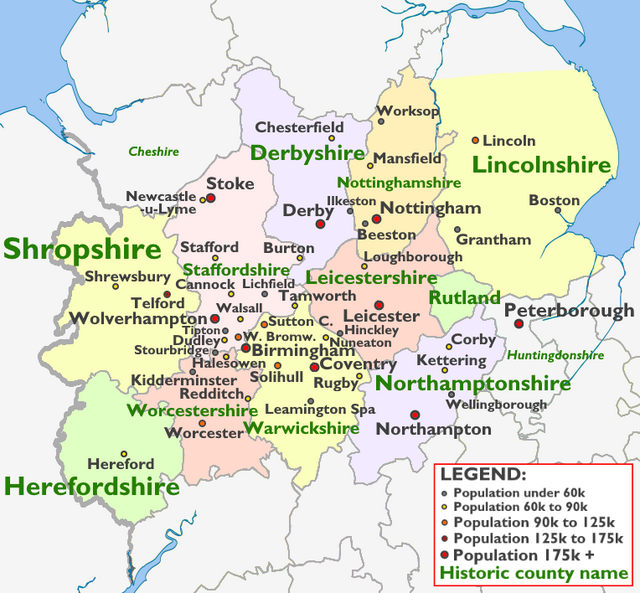
(The map is available under the Creative Commons CC0 1.0 Universal Public Domain Dedication. The creator of the image is Plaretyagain).
37 Comments
Jay · 6 April 2026 at 11:18
“Well, we all know what happens when a University carries out an internal investigation. Our concerns were completely dismissed.”
Take, for example, the case at the University of Rochester, where faculty and students brought forward serious sexual harassment allegations against a senior professor.
https://www.scientificamerican.com/article/9-researchers-sue-university-of-rochester-over-sexual-harassment-allegations/
Two separate internal investigations concluded that there was no violation of the university’s own policies, despite multiple witnesses and well‑documented accounts. Even outside observers noted that critical voices weren’t heard and that key witnesses were overlooked by the investigators.
Many of the complainants ended up leaving the department or academia entirely.
Universities just cover up & cover up & cover up.
TheResearcher · 6 April 2026 at 12:11
Along the same lines, I will quote a Professor who had to move from Sheffield to Nottingham after reporting cases of abuse: “They will lie and lie and lie.”
Strikingly, if you call them liars, they will report you for hurting their feelings!
Puzzled · 7 April 2026 at 16:16
I find it puzzling why universities cover up and double down given how awfully toxic it is. Is it an academic personality thing? The lack of any ability to acknowledge mistake or seek forgiveness until the lies accumulate in to a landslide?
RK · 10 April 2026 at 18:30
It is difficult to understand what Keele University is doing when staff are openly and publicly making such claims. This appears to be a matter for the Office for Students (OfS), particularly regarding how university funds have been used: “Some colleagues are engaged solely in administrative roles without any teaching responsibilities.”
“There is a group of staff who have been hired without following the hiring policy and workload allocation policy.”
“Many staff members from this group were appointed by bypassing the university’s well-established procedures.”
Eileen Nugent · 8 April 2026 at 04:08
“The case against Jaeger began to come together in early 2016, when he allegedly said in several faculty meetings that it was acceptable for faculty members to date students.”
If an academic begins a sexual relationship with own student e.g. PhD student – that new personal relationship takes precedence over the professional relationship – student & supervisor have both then mutually agreed to resign the supervision. New supervision arrangements would then need to be put in place by the university as would be the case when any supervision relationship is formally ended for any no fault reason by either or both parties. Otherwise direct professional power – ability to influence academic outcomes – could be used to apply undue pressure on a student to enter into & stay in a sexual relationship which means there is a potential for professional power exercised on behalf of university – judging academic work to determine an academic outcome – to be used to commit acts of sexual abuse which creates an unacceptable risk for a university.
Jaeger – based on information in the public domain – stated that he thought it was acceptable for faculty members to date students. Any faculty member in the University of Rochester who doesn’t hold the same view could state this in the public domain. Prospective students would then know the exact position of each faculty member there which would allow students to completely avoid the same type of awkward professional situations detailed in the article above – waste of time & energy which are both in short supply for anyone serious about making it in academia – as they build a valid path through academia, one they could then demonstrate to their own students should they themselves reach the position of being a faculty member.
21percent.org · 8 April 2026 at 09:20
Jaeger was appointed as a ‘superstar’ young Assistant Professor at Uni Rochester at age 31. Graduate students in the US are typically in their mid-20s to early 30s. So the age difference between the Professor and his graduate students was small.
Our view is that sexual relations between faculty and graduate students is an unacceptable risk for a university for the reasons you clearly state.
This is shown by the final cost of Jaeger case, which was enormous
https://revistapesquisa.fapesp.br/en/the-cost-of-ignoring-sexual-harassment/
“The University of Rochester (UR), USA, struck a deal in court to settle for US$9.4 million in a sexual harassment case that began in the middle of the last decade. The money will be shared among the nine plaintiffs, including alumni and current and former professors, mostly women. The group alleged that university officials protected linguist Tim Florian Jaeger, of the Department of Brain and Cognitive Sciences, after he was accused of harassing and bullying students and creating a hostile environment for women at the institution..”
Many of the documents in the Jaeger case have been leaked to the 21 Group. We plan on writing something about it shortly.
OMG · 8 April 2026 at 09:31
“Many of the documents in the Jaeger case have been leaked to the 21 Group”
OMG, you must know so much about so much
Where so many bodies are buried? Who started the fires? Where the poison was gotten? Who signed the orders? Who made it all look like accidents? Who faked the death certificates?
21percent.org · 8 April 2026 at 09:39
The 21 Group has a way of remembering what others would rather keep lost 😉
Public Eye · 8 April 2026 at 13:05
Ha wow had no idea you had as many cases as that. One day you and Ian Hislop will have to sit down and write the true story of how British high society works.
ALawyer · 6 April 2026 at 12:08
Sounds like a straightforward case of indirect racial discrimination
RK · 10 April 2026 at 18:40
This is not the first time Keele University has faced a racial discrimination case. A few years ago, a staff member filed a tribunal case against the university, and the university settled that case before the tribunal hearing. This appears to be a continuation of the same practices.
Arthur Fleck · 6 April 2026 at 13:35
This kind of thing is rampant across the sector. Is it racial discrimination I wonder or more about seniority and nepotism. The indirect racial discrimination angle is that outsiders tend to be non-white….as often universities hired junior people from immigrant backgrounds to improve on diversity points then treat them as token hires who don’t really belong in the “club”. You only need to look at the British Academy to see how at the top the hierarchy British academia is still totally white and Anglo.
sk · 6 April 2026 at 14:14
True, and what is the point of the British Academy any more. It receives money from Govt to administer Post-Doctoral Fellowships, etc, but it does not need to be an elective academy to do that. As you say, the organisation has nepotism & favouritism built into it
Joy · 6 April 2026 at 14:45
To add further, hiring of researchers who are running paper mills to justify their contribution for REF talks about another fraud happening in the UK academia. Research england is providing funds for the quality and effective research, rather producing the research for such agenda, top managements are promoting the paper mills to show good performance towards REF.
21percent.org · 6 April 2026 at 15:13
This is a very good point — paper-milling authors are being hired by some departments for REF.
We believe it is also an issue in the department featured in the blog posting.
Joy · 6 April 2026 at 15:53
It’s a very prominent issue in the B schools in most of the post 92 universities, and there is no check there by the research england even after multiple whistleblowings by the researchers.
21percent.org · 6 April 2026 at 16:58
B schools = Business schools, I guess
Eileen Nugent · 8 April 2026 at 02:57
Paper milling authors as PIs = students taking legal action against universities for breaches in trust & confidence to recover student fees & to compensate them for the negative personal impact of that unacceptable situation. The use of paper mills is not a valid path through academia, if any PI hired by a university to supervise the research of students cannot show students a valid path through academia as the PI hasn’t taken a valid path through academia themselves it’s a breach of trust & confidence between a university & any student exposed to their academic supervision by a university. Anyone with academic standards and/or safeguarding responsibilities to students could also raise concerns in relation to paper-milling authors with the principal regulator of the university – the office for students – to have that situation investigated.
QuestionMark · 6 April 2026 at 19:48
https://www.crowdjustice.com/case/expose-end-academic-discrimina/
MA · 6 April 2026 at 20:37
Some information relating to the same institution’s culture is publicly available on the university UCU local branch website; this material is both worth reviewing and raises significant concerns.
https://www.keeleucu.co.uk/wp-content/uploads/2025/02/mini_KUCU_committee_report_SHORTENED-V2.pdf
RK · 10 April 2026 at 18:58
Why does Keele University prefer to pursue tribunal cases using public funds when staff are raising concerns about a toxic culture? The concerns include:
“The atmosphere in the school has become toxic and unhealthy.”
“There is a culture of fear, favouritism, and outright bullying.”
“The Head of KBS becomes very aggressive towards colleagues who…”**
https://www.keeleucu.co.uk/report-on-kbs-responses-to-health-safety-questionnaire/
JG · 10 April 2026 at 21:02
There is further to add to this that came to my notice that Keele Business School director is having multiple complaints around harassment and buying and he is doing all this with the minority staff members and still the top management is not doing anything and also making him travel around the world as an incentive. Can you believe the HOD appointed in 2021 such a big B school having PhD conferred in 2018, it’s a fraud. Further the staff is facing a lot of trouble and top management has the silence. He is also promoting people who are running paper mills and making them use the public money for their personal gains.
Rent · 7 April 2026 at 23:07
Has anyone else noticed that Cambridge Deputy HR Director is now also director of a private company letting out university property? It used to be called North West Cambridge development for key worker properties on the Eddington site but they seem to have changed the name. The University Accommodation Service is the front door for applications, but the homes are “managed by Lodge Property Services.”
At this point in time she is the only listed director there too.
Why is HR involved in this? It does not strike me as a very obvious HR function to be managing estate instead of people and you’d think they had enough work to keep them busy these days on that.
Also why is it a profit-making company and what is the remuneration package does anyone know?
21percent.org · 8 April 2026 at 08:48
This certainly warrants an explanation. Lodge Property Services is here on gov.uk
https://find-and-update.company-information.service.gov.uk/company/09012687/
Nature of business is “letting and operating of own or leased real estate”
Directors (as listed on gov.uk) are Robin Andrew Douglas, Kevin Anthony Edwards and Thuy Niven (all Cambridge University insiders). Their addresses are all listed as Old Schools, Trinity Lane, Cambridge, Cambridgeshire, CB2 1TN
Your final question is highly relevant — what is the remuneration package for this activity?
We certainly agree that — with the chaos HR are causing in Cambridge — they should have no time to be running companies, as well. They literally cannot carry out any HR procedure on a relevant timescale. Even getting the minutes back from meetings takes many, many weeks.
Surplus Value · 8 April 2026 at 10:45
I think you are right that the issue 1 here is about their failure to perform contracted duties. HR don’t reply to emails, don’t mediate, don’t handle grievances properly or at all, and cannot even get a basic IT platform finished. It is mystifying why senior HR executives find time therefore to run private companies. But on that note it seems more like a spin-off from managing university property rather than a genuine independent enterprise. People always joke about the university and collleges being more like a property holding company with a side teaching function attached – but this is it stated in black and white.
Public Eye · 8 April 2026 at 13:09
I think it is owned by the university but that does make one wonder why. Was it to avoid reputational risk or some other reason and if not then why register as private company? Does that mean the accounts don’t have to be disclosed under university charitable status?
Eileen Nugent · 8 April 2026 at 21:21
Almost ~ £9m goes in to this company from rents collected, ~ £6m goes out in “management fees” and ~ £2.5m in “administrative fees”. It’s not registered as a charity with the charity commission in its own right so it derives its charitable status from the charitable status of the university whilst retaining the ability to operate as a private company [limited by guarantee without share capital] & is also exempt from disclosing transactions with related parties – the university or any other company set up in similar way in relation to university.
What other private companies are paired with the university as a related party? What are the possible range of destinations of any transactions made by this company to related parties that are exempt from disclosure by this company and presumably also exempt from disclosure by the other companies on the receiving end of those transactions? Do any of the related entities it makes transactions to have different attributes to this company e.g. company limited by shares?
What are the third party dependencies of any company this company makes transactions that are exempt from disclosure as both companies are paired to the university in a way that makes any transactions between them exempt from disclosure? If a company that is paired to the university in this way contracts out all its services to third parties while the company itself operates at a loss does the university absorb the loss of the company paired to the university in this way?
What are the heat bills like for key workers like in Eddington? Are they what people would expect taking into account the energy performance certificate & other attributes – size – of key worker accommodation? How does paying to access the communal Eddington’s commercial gas boilers – basis of its heat supply – compare to if each apartment/house had its own gas boiler & paid a gas supplier directly? Is the price being charged per kWh being limited by the energy cap price per kWh for gas?
21percent.org · 8 April 2026 at 21:36
This is interesting — our information is that there is a lot of discontent among those renting at Eddington.
Almost ~ £9m goes in to this company from rents collected, ~ £6m goes out in “management fees” and ~ £2.5m in “administrative fees”.
Do you have a link for the financial data?
Keyworker · 8 April 2026 at 23:25
This is worth looking at properly. Please share a link to the data. This is “key worker” rental right? So on low incomes? How many employees are there? There’s only one director right now still active right, the others resigned? Please correct if any of this is mistaken.
Eileen Nugent · 9 April 2026 at 00:02
Lodge property services files accounts each year. These can be accessed from the link to company information on gov.uk that is referenced in your post above. The numbers quoted are for accounts up to 31 July 2025.
https://find-and-update.company-information.service.gov.uk/company/09012687/filing-history
There are more of these companies, one – core sustainable heat management – seems to have been founded for the sole purpose of selling heat to people in Eddington – including those in key worker housing but it seems to contract all its work out to third parties.
https://find-and-update.company-information.service.gov.uk/company/10586130/filing-history
Is it possible that key workers in Eddington are effectively paying business rates for the gas on which the heating system there is based & also additional money to a third party company that is purchasing gas at business rates – uncapped unlike domestic rates – in addition to profiting from delivering heat management services? The 7 directors of one of the third party companies involved collectively paid themselves £2 million last year & the company reported a 11.4% gross profit margin.
Where are the sustainable energy systems that were promised in Eddington? The heat system is based on commercial gas boilers – what’s the overall efficiency of this communal gas-based heat system? Does it take less energy (& money) to heat key worker housing this way than it would to have to heat it with standard gas connections & standard gas boilers in accommodation units? Would core sustainable heat management do any work to push back against any unreasonable heat network price hikes by a third party company or would all key workers in Eddington be left interacting with ofgem to get protection from an unreasonable heat network price hike?
21percent.org · 9 April 2026 at 08:34
£ 2,000,000 ÷ 7 = £ 285,714.29
This looks exorbitant, but typical of what has been happening
n/a · 9 April 2026 at 15:16
Eileen link is correct:
https://find-and-update.company-information.service.gov.uk/company/09012687/filing-history
Urge everyone to read from page 12 and tell me if you see what I see.
£9,000,000 taken in rent from low income workers
Less than a third spent on upkeep etc
Paltry 300k send “back” to university….
£6,000,000 disappears into unspecified “management fees”.
Shouldn’t all that money go back to the university which actually owns the buildings?
Eileen Nugent · 8 April 2026 at 02:11
Increased teaching load coupled to reduced time allocated for research in conditions of: sector in high redundancy risk state where redundancy risk is more critically dependent on research performance than teaching performance = increased risk of redundancy and/or overwork = increased work-related stress health & safety risk. If a person and/or group of people can define a comparator person and/or group of people in same job family it may then be possible to seek a court injunction to prevent the university – legal entity taking employment decisions – from altering the ratio of research:teaching duties of a person and/or group of people beyond a fixed ratio that is being applied in the case of a comparator person and/or group of people in same job family.
Each person can claim a legal right to the same basic working conditions for the same base permanent academic position. Academia as a profession is set up such that higher levels of individual achievement – in teaching and/or research – can be recognised through promotions of an individual up the academic ranks from a base position. It makes sense to hold the basic working conditions in the base level position as steady as possible and to have as little unnecessary variation as possible in the basic working conditions of all those in the base level position such that a person can continuously explore ways to find higher levels of individual success in academia irrespective of how long a person has been in academia.
It’s important to recognise that there are dynamics at play in any academic department that would be at play even in an academic department that was populated by a group of people who were genetic clones of each other & raised in the exact same environment together. Historically a permanent academic post was for life, what this means is the academic departments typically run in conditions of high trust which function like any close knit community where there is a high probability that a person will spend decades interacting with others members of the community, a community they are unlikely to ever leave once they join it. People in close knit communities learn ways to live in peace with each other out of necessity because the cost of any breakdown in relations is extremely high & it is possible for the cost in any breakdown in relations to rise to the loss of life.
When that type of community – high trust – comes under an exceptional collective stressor there is only one way to get through that collective survival situation, equal division of collective stress, this is what dignity at work really boils down to – equipartition of collective stress in times of highest collective stress such that each person bears an equal portion of any increase in collective stress. A highly specific type of unity is then required, one that can arise in a situation of high collective risk, where the entire group is unified – by necessity – in collectively working to ensure each person in the group is treated in the exact same way [if possible] or treatment of group members is as close as makes rational sense – in terms of the equal division of stress to minimise the overall risk of a collective failure under an exceptional collective stressor. It is in this type of situation – exceptional collective stressor – that the absence of any practical understanding of dignity at work within a group would be most keenly felt because it would be felt as a bare threat to survival by members of the group.
Any action that focuses attention and/or analysis on irrelevant differences between members of the group & reduces trust between members of the group decreases the probability of the group surviving the exceptional collective stressor. Any action that directly deals with the exceptional collective stressor – accurate workload modelling that is fully transparent to every member the group, equal division of workload among group members, dynamic balancing of collective workload changes to actively manage workload fluctuations in ways that dynamically maintain equal division of stress – increases the probability of the whole group surviving the exceptional collective stressor.
The group that most accurately represents the circumstances of each individual in the group – i.e. builds & dynamically maintains an accurate picture of relevant differences e.g. health state and/or caring commitments of individual members of the group & impact on capacity to sustain a specific workload – & minimises the amount of unnecessary discrimination – i.e. whether a person is a new comer or longer serving member of a department – to accurately & dynamically allocate workload in ways that are optimal for the group taken as a whole will have the highest levels of dynamic group discipline & the highest chance of collectively surviving a series of exceptional collective stressors.
Eileen Nugent · 8 April 2026 at 04:44
Take person in a research & teaching permanent lectureship – i.e. 40:40:20 research:teaching:admin/service split – which is UK HE sector standard. Say a university shifts a person to 10% research by increasing teaching load to 70% such that the person is now on 10:70:20 whilst still in the same job family. If that happens at a point in time when the whole HE sector is in a high redundancy risk state & when research output remains the most critical element in determining both overall redundancy risk & hiring probability across the sector a person can argue that this university action has then created a 30% overwork situation.
A person put in that position by a university would have no choice but to continue to put in same research hours as they were putting before the increase in teaching workload – i.e. work 30% extra hours – to maintain their research output at the level that would be expected of person in their particular job role in the sector to maintain their redundancy risk at the same level in the sector as others employed in that same job family in the sector i.e. the pool of people the person would have to compete against if made redundant from the university and had to compete with others to secure a similar role in another university. An increase in workload of 25% was judged in the employment tribunal to constitute constructive unfair dismissal.
Eileen Nugent · 8 April 2026 at 05:12
If a university department comes under exceptional pressure it is possible for it to overwork – either intentionally or unintentionally – any person with any set of personal characteristics. The two academics who died overwork deaths in Cardiff University were both British, white & male – the sharing or not sharing of the same colour of skin and/or sex and/or citizenship status with the rest/some of the department made no difference to the shape of their careers over which they eventually came to have no control. Any person who does not learn how to actively resist undue workload pressure from an academic department should it come under exceptional pressure is at risk of being pressured to an early death.
Generation Fucked · 8 April 2026 at 07:20
40:40:20? That’s a joke. For people starting out now it is more like 100:100:100
Joy · 8 April 2026 at 22:23
Academia has gone too far from this realistic number of 40:40:20, it’s more a white collar corruption now, which is running in all the universities like you a club where they share their stories and get the feedback of doing more and increasing their paychecks even if the university is at the verge of bankruptcy. Who gives them such power to increase their salaries and making people redundant who has no say in the decisions.