
The UK government’s decision to remove the statutory cap on unfair dismissal compensation is one of the most important structural reforms affecting accountability in higher education in a generation. For decades, Universities have operated within a legal framework that placed an upper limit on the financial consequences of unfair dismissal. The limit is now set to disappear, as discussed here.
This is a potential game-changer — it will fundamentally alter the incentive structures that have encouraged rotten institutional behaviour across UK Universities.
Under current law, compensation for unfair dismissal is capped at the lower of one year’s salary or £118,223. This allows universities to quantify their maximum exposure at an early stage. Once that ceiling is reached, the marginal financial risk of continuing a dispute, defending weak decisions or prolonging proceedings becomes limited and predictable.
In contrast, claims involving whistleblowing or discrimination are uncapped, reflecting Parliament’s recognition that certain forms of wrong-doing require stronger deterrence.
Under the new Employment Rights Bill, the compensatory cap for unfair dismissal will be removed, with implementation expected on 1 Jan 2027. This means Employment Tribunals will be able to award compensation reflecting the full financial consequences of dismissal, including (i) long-term loss of earnings, (ii) pension losses, (iii) career-long damage and (iv) loss of future opportunity. The removal of the cap does not change the legal test for unfair dismissal. What it changes is the scale of the financial consequences when Universities get it wrong.
In the Higher Education sector, dismissals often have severe and irreversible consequences. Academic careers are unusually path-dependent. Professional reputation, publication trajectory, grant continuity, and international mobility are all deeply interconnected. An unfair dismissal can permanently derail or (in the present job climate) destroy a career. Yet under the capped regime, the financial consequences for Universities remained limited, even where the professional damage extended over decades.
This created a structural asymmetry: The individual faced potentially permanent career loss and the University faced a capped and predictable financial liability.
Such asymmetry inevitably shapes institutional incentives. Removing the cap significantly raises the stakes when dismissal processes are flawed or unjustified.
Uncapping compensation won’t eliminate institutional abuse or guarantee justice. Universities still hold considerable financial and structural advantages. But, it removes one of the most significant barriers to accountability, it strengthens incentives for fair process, and it turns dismissal from a predictable cost into a real risk.
The danger for Cambridge University could hardly be more stark. Its Human Resources (HR) division is notoriously dysfunctional. Many of the HR Business Partners have a persistent habit of flouting both University policy and Employment Law. Under the old capped system, mismanagement carried a fixed cost, insulating the University from the real consequences of its failings. Every flawed process, every retaliatory dismissal and every breach of procedure now carries a real liability that could match the true scale of harm inflicted on staff. Complacency, bureaucratic inertia and selective rule-breaking are no longer affordable (especially given the University’s desire to reduce its ongoing deficit)
For a University whose HR culture has habitually betrayed the staff it exists to serve, the reform turns decades of impunity into an existential threat — one that could, if the mismanagement continues, inflict very serious financial troubles.
Complacency, inertia and selective rule-breaking are no longer affordable. Things now need to change urgently, Kamal.
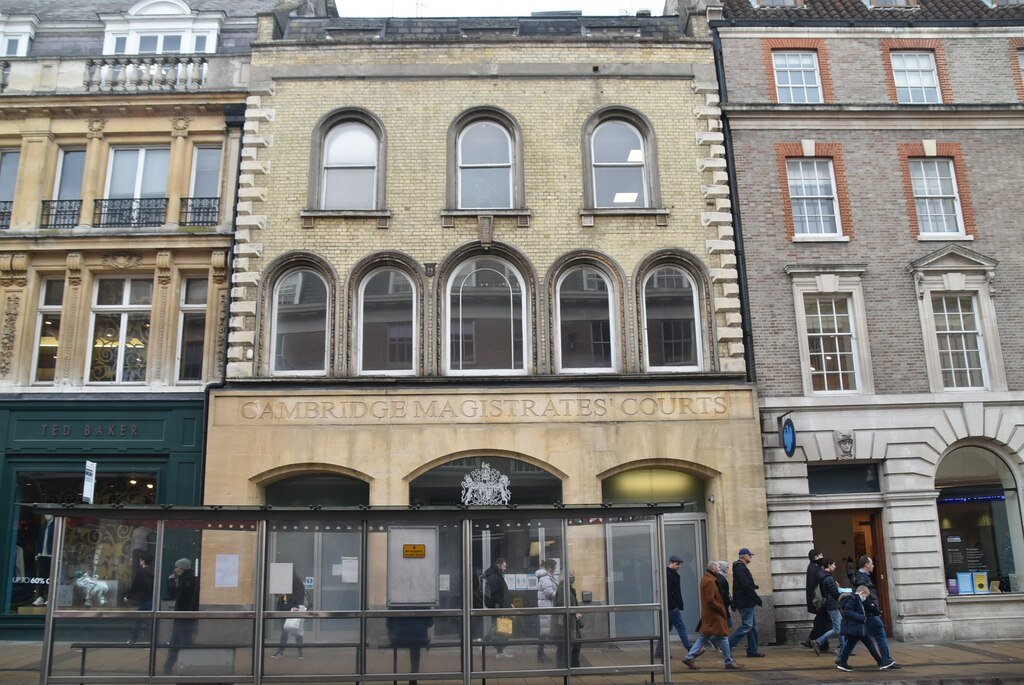
(The 21 Group thanks an anonymous academic for suggesting the subject of this blog posting. The image shows Cambridge County and Family Court, where many Employment Tribunals involving the University of Cambridge take place)
A critical practical question is whether ongoing Employment Tribunal cases will benefit from uncapped compensation once the reform takes effect.
The answer depends on the “effective date of termination” (EDT)—not the tribunal hearing date. Historically and legally, compensation rules are determined by the law in force at the time of dismissal, not the time of judgment. This principle is reflected in previous annual compensation limit changes, which explicitly apply based on termination date.
Therefore, in most cases, dismissals occurring before the implementation date (likely 1 January 2027) will remain subject to the existing cap. Only dismissals occurring after the reform takes effect will benefit from uncapped compensation.
However, until detailed transitional regulations are formally published, edge cases may arise, particularly where dismissal dates occur close to implementation.
Uncapped compensation, capped compensation – it’s all the same if none of it has to be paid after an employment tribunal
https://www.thebureauinvestigates.com/stories/2025-10-02/revealed-thousands-of-rogue-bosses-have-failed-to-pay-tribunal-awards
Like Rome the University oligarchy is oblivious to all of this. After a second rate little Canadian lawyer as VC we now have a totally clueless minor psychology academic believing she is regal. The American Queen and her surrounding ‘court’ are incompetent, spineless, and self-serving. They failed in getting in Lord BP as Chancellor to preside over the rot but Lord Smith, which could have been a disruptor, has settled in to just watch Rome burn while he plays… (if not the lute I don’t know what!). It could all be comical, but instead it is profoundly tragic! 800 years down the gutter!
To be fair though they are already paying quarter billion dollars a decade to just 50 execs so a few extra million pounds of payoffs every year is barely a rounding mistake on top of that. I feel sad for the university.
We already tried to estimate the cost of Employment Tribunal cases at Cambridge University, reckoning an annual figure of between £ 3-10 million
https://21percent.org/?p=863
The changes in employment legislation may multiply this by some factor of 2 or 3. The total will be a substantial part of the annual deficit.
We do agree that pay of senior executives has gotten completely out of control under the reign of Emma Rampton. She has done enormous damage to the University.
If claims on the previous thread about the pay of one of the pro-VCs are right, then this is a huge scandal
No doubt that one of the Pro VCs took home 375,000 pounds base and probably 400-some total in 2023 and 2024, and maybe more last year. That’s in the official accounts. Only question is whether it was Munir.
We can ask him!
How is this not public information? If one of the pro VCs is paid almost the same as the VC why do we have to guess? How can any charity pay someone that kind of money and not inform thw public?
The absurdity is that one even has to speculate. The university could easily clarify the matter openly and if it had followed the same transparency guidelines as other NGOs or government bodies we would know. After all we know Diarmuid’s new salary because the Irish government upholds such principles, which somehow, UK universities do not. We know the VC salary because she agreed to uphold such values in her own case however awkward. If there was genuine accountability it would provide an absolute guarantee of open discussion and mature debate.
“Complacency, inertia and selective rule-breaking are no longer affordable. Things now need to change urgently, Kamal.”
Can’t we just send this phrase to his College (Homerton College) and to his Department (Cambridge Judge Business School) to give him some incentive? Unfortunately, I think that the fact the University may have to spend more on unfair dismissals will not make a big difference on how the senior leadership operates as the money does not come from their pocket. They only care about reputation, namely the University’s and their own.
Haha omg did he really say that
Is that from an email or private communication
Either way it is hilarious
Complacency and selective rule breaking are the only thing we’ve seen during the past four years
And whose decision was it to drag cases out and refuse to investigate
“And whose decision was it to drag cases out and refuse to investigate”
That is a very good question. It is (in many cases) unlawful. And it is comparatively recent, so we suppose either Ms Hudson or Prof Munir are to blame.
Failure to investigate is clearly unlawful if the grievance relates to: discrimination (Equality Act 2010), whistleblowing (Public Interest Disclosure Act 1998), harassment & victimisation.
If an employer refuses to investigate serious grievances —- especially involving bullying, harassment, whistleblowing, discrimination or abuse of process — this allows the employee to resign and claim constructive unfair dismissal. This is well-established case law.
Prof Munir has repeatedly refused to progress Grievances against Prof Peake and Ms Akroyd in multiple cases of serious wrongdoing at the School of Physical Sciences.
One of those cases will become public 1-28 June 2026, Bury St Edmunds. Prof Munir can explain his reasoning to the Tribunal.
There is deep institutional decay at Cambridge University. It is a huge tragedy that extraordinary students and academics are trapped inside this bureaucratically captured environment.
“we suppose either Ms Hudson or Prof Munir are to blame.”
“Prof Munir has repeatedly refused to progress Grievances against Prof Peake and Ms Akroyd in multiple cases of serious wrongdoing at the School of Physical Sciences.”
It is important that people understand that Prof. Munir and Ms Hudson are not the only to blame and that Prof. Munir not only refuses to consider Grievances against Prof. Peake and Ms Akroyd but also dismisses—without any investigation— whistleblowing disclosures and safeguarding referrals based on medical evidence to protect the same individuals. And when you bring this issue to the Vice-Chancellor Prof. Deborah Prentice via a representation under Statute AIX, she found nothing wrong with it and claimed that “Professor Kamal Munir considered the disclosure” and that the issues raised “have received (or are receiving) an appropriate response in line with the University’s applicable policies and procedures,” which is demonstratively untrue. Prof. Deborah Prentice clearly does not know the Whistleblowing Policy and the ACAS guidance.
Now, was Prof. Deborah Prentice who wrote this response? As the metadata of the file clarifies that the author is David Parsons, which is the same name of the Head of Legal Services of Cambridge, one can only wonder if it was Prof. Prentice, Mr Parsons, or some funny fusion between the two who wrote the response. Perhaps we can just call the author DP as their initials are the same anyway. Regardless, this kind of attitude towards misconduct and its cover up is extremely draining. I now have to appeal to the Commissary, and I have done nothing else for over 30 months than dealing with dishonest people who are more than happy than with the degrading culture of UCam.
OMFG, we can’t believe they did that
Cleaning the metadata is Legal Smarts 101.
It is extraordinary that something so elementary was missed, particularly given how much is spent on legal and administrative oversight.
SamLouise and DavidDebbie
For example, I found that the author of a letter that Prof. Beverley Glover sent me a few months ago as Chair of an Appeal Committee is not even from the University. The odd thing is that the letter is signed by Prof. Glover, suggesting as we suspected that pantomime horses are very common in Cambridge.
The troubling issue is not the identity of the individual who drafted the letter, but the governance implications of a senior office-holder signing correspondence whose authorship lies elsewhere. When a Chair of an Appeal Committee signs a letter, the clear and reasonable expectation is that the conclusions expressed reflect their own independent judgment, reached on the basis of proper consideration of the evidence.
If, instead, such letters are substantially authored by external or undisclosed parties, and merely transmitted under the authority of the Chair’s signature, this raises serious questions about the integrity and independence of the appeal process. It creates the appearance that the signatory may be functioning primarily as a conduit for decisions formulated elsewhere, rather than as an independent decision-maker.
This is of course exactly what happened in the Post Office scandal where politicians (of all parties) signed letters drafted by civil servants telling the subpostmasters to FOAD
I meant to say that I found it by checking the metadata of the file they sent me. If you check the metadata of the files you receive from UCam, you may well find some surprises. Perhaps you can even find that the author of a file with the response to your Grievance against the most discussed Lead HR Business Partner in the 21 Group is the most discussed Lead HR Business Partner in the 21 Group herself!
These days it is much harder to scrub document metadata than most people think. Even creating a new document can result in persistence, that was built in by Microsoft to assist the internal audit chain (assuming most organisations value accountability and compliance). It is much simpler to be honest and have all documents signed by the person who actually wrote them.
Same for Adobe. Regulatory requirement to have encrypted authorship/edit chain in every document. Trying to remove = hard + creates further evidence. Simply don’t bother. Honesty is always the best policy.
The operational level of the university seems to have assumed that it could (a) not comply with a re-engagement order from an employment tribunal for a substantively unfairly dismissed chair of its internal board of scrutiny (b) block an application for a judicial review of that organisational decision and (c) carry on as normal. These assumptions are incorrect, if it takes actions (a) and (b) then (c) becomes impossible because it cannot then reason that there are effective internal dispute resolution mechanisms in place to cover the full range of internal disputes that could arise in the organisation and it also cannot then reason that there is a public law system through which any unresolved internal disputes can be resolved.
This is a structural fault with the internal dispute resolution mechanisms that was generated by the harshest possible handling of an organisational case within the constraints of employment law and under the guidance of external legal advisors. This case handling is not repeatable – the organisation cannot repeat that sequence of organisational actions – substantively unfairly dismiss a person, not contest the unfair dismissal in court and then refuse to re-engage/reinstate the person after an employment tribunal has made that remedy available to the person. That was not a single-use, non-repeatable solution that could be applied in a single case until a better solution is found for future cases. This was a how-to-permanently-jam-the-organisational-internal-dispute-resolution-mechanisms-with-one-single-case-such-that-no-other-case-can-be-resolved-until-this-case-is-resolved non-solution to a case masquerading as a solution to a case for more than a decade. The organisation has not found a sustainable and repeatable way to handle such cases. The existing handling of that type of case – as continuously demonstrated by the unresolved Mackenzie case – is not compatible with the new organisational health and safety legal obligation to regulate work-related stress.
Multiple people in the organisation are now directly experiencing the impact of this structural fault with the internal dispute resolution mechanisms. It’s difficult to see how Professor Prentice or anyone else at the governance level could be held responsible for this particular structural fault for the following reasons :
(a) It is an operational fault at the operational level of the organisation.
(b) It is an operational fault that has emerged at the operational level of the organisation despite an exceptionally well qualified and well placed member of the governance level of the organisation – chair of the internal board of scrutiny/qualified barrister – continuously providing feedback to the operational level of the organisation of the continued existence of this structural fault with the organisations internal dispute resolution mechanisms for more than a decade.
(c) An employment tribunal – external court – also provided feedback to the operational level of the organisation that there was structural fault with the internal dispute resolution mechanisms by ordering a re-engagement to remedy the substantive unfair dismissal of the chair of the internal board of scrutiny. This is a clear signal that the internal barrister the university appointed as chair of the internal board of scrutiny turned out to be well matched to that role of precisely scrutinising the internal workings of the university and holding the university to account, as well matched – if not better – than the external barrister the university paid to “guide” its legal actions in the case. It is unclear why the operational level of the university placed more weight on the guidance of an external barrister it didn’t appoint to be the chair of its own internal board of scrutiny than on the guidance of an internal barrister that it did appoint to be the chair of its own board of scrutiny when proceeding with its handling of the case after an independent judge confirmed there were no problems with the scrutinising skills of the internal barrister/chair of the board of scrutiny. It is unclear how from that point forward – independent judge orders re-engagement remedy for substantive unfair dismissal of internal barrister university/chair of board of scrutiny – anyone in the university could block the re-engagement order. That organisational decision was unreasonable and there was also no rational basis for that organisational decision.
(d) Professor Prentice having taken up the role of VC in 2023 which is a full decade after the organisations internal dispute mechanisms broke down in 2013.
Those working in the operational level and/or external legal advisors seem to have significantly underestimated the potential impact of one organisational decision – decision to not re-engage chair of board of scrutiny, a barrister – on organisational behaviour going forward. This is evident with the benefit of hindsight, knowledge of the future impact of that one organisational decision and of the introduction of a new legal obligation to enables better organisational behaviour states to be found & ~4 years of analysis – this combination suggests that it is highly unlikely to have been evident to those taking that one critical organisational decision at the time.
In certain situations people can find it hard to accept intent played little to no role in the emergence of the situation. People in that position can sometimes read intent into a situation when none exists and where reading intent into the situation acts as a significant barrier to building an accurate & rational understanding of a situation which is what is required to prevent future reoccurrence of the same situation. Sometimes the emergence of a particular situation in an organisation is the end stage of an extremely slow motion organisational accident & it is only at that end stage of that extremely slow motion organisational accident that it can be recognised as such – an accident, the root cause of the accident can be established & an end can be brought to the accident.
“If an employer refuses to investigate serious grievances — especially involving bullying, harassment, whistleblowing, discrimination or abuse of process — this allows the employee to resign and claim constructive unfair dismissal. This is well-established case law.”
Constructive unfair dismissal will also be included in the change to compensation levels.
Key to the law is not just investigation but fair investigation, so, not the delayed / sham procedures currently in place…. Those won’t hold up as a defence when biased, dragged out for multiple years, and resulting in no consequences!
They already carry a real price. The loss of Great British scientists and researchers to universities overseas, the bankrupting of British universities through financial mismanagement, and a massive hit to staff morale and productivity.
True. It is notably how many senior figures have either left the university in recent years or are rumoured to be planning an exit. Obvious examples are El Erian and O’Brien last year, both of whom left the country entirely. I think they gave up on a lost cause after failing to achieve change and knew these problems were structural and intractable. One must suspect Toope concluded the same back in 2022, and he also, of course, departed overseas.
Who needs to leave are the dishonest people who run the place. If they remain, more victims will pile up, and more lives will be damaged. It is the responsibility of all of us to prevent that from happening if we openly speak about the abuses we have witnessed. The evidence is overwhelming from multiple Departments and Schools that UCam is currently in a degrading state and needs urgent intervention. The most basic policies are not being followed, and it became a serious risk for the lives of its members. This is not a tale, it is very real.
Agreed. Allowing that people like the most discussed Lead HR Business Partner in the 21 Group continue, unchallenged, to engage in actions which may ultimately lead to further risk to the Health and Safety of other people – by refusing to consider evidence, refusing to investigate and literally signing off their own exonerating statements, has to be extremely serious dereliction of duty.
@Peter
“The loss of Great British scientists and researchers to universities overseas”
It is the loss of talented, exceptional scientists and researchers (of all nationalities) to a great British institution that really wants emphasis – because they were driven out through the shocking corruption of its management, and the stupidity, nastiness, cynicism and small-mindedness of its current HR department.
I have just come from a meeting with a very senior member of the University who told me that there are many people seriously concerned with all the noise that I have been doing because it is attracting a lot of attention from people in the University and from outside.
I would like to ask everyone who experienced abuses in the University of Cambridge to report what you experienced or witnessed. Please do not keep it to yourself and do not follow their ridiculous enforced confidentiality because they will use it against you in a way or another. Please contact the 21 Group and/or the Chancellor and/or the local MP and/or your sponsors so that an increasing number of people knows about it and can reflect on the recurrent patterns. I probably had more retaliation from Cambridge than anyone else for contacting so many people, but I do not regret it. Please keep pushing it because the current situation is damaging very many people and has to be addressed urgently. Please note that truth is a complete defence to a defamation claim. If you are telling the truth, it does not matter how many people in the University say that you are wrong because many people in this institution are just following the script that others told them to follow and are comfortable with the current culture of misconduct. Their game only works when they can bend the rules.
This is excellent news.
If the Vice Chancellor had some good sense, she would set up an immediate external review of the performance of Cambridge University’s HR division
“If you are telling the truth, it does not matter how many people in the University say that you are wrong because many people in this institution are just following the script that others told them to follow and are comfortable with the current culture of misconduct.”
It is alarming how many people in the University seem to have lost the will or the ability to discriminate between truth and falsehood, how many are too busy, too lazy or too fearful of appearing “disrespectful” to question, to probe, to test, and to request evidence before accepting a statement as true or declaring it to be untrue. Or worse, how many ignore or discard evidence that exists, or actually believe that relevant evidence is “too confidential” to be shared.
Instead, they settle for the word of “someone who knows” or “someone who has access to the evidence-too-confidential-to-share”, HR or a person in a position of authority (who’s signed a draft provided by HR), while their entire departments continue to crumble around them.
While the HR drafters continue to exploit busyness, neurodiversity, fear of liability and lack of confidence to “help”, i.e. lie, mislead, provide destructive advice and ultimately control the decision-making in departments and entire schools.
“It is alarming how many people in the University seem to have lost the will or the ability to discriminate between truth and falsehood, how many are too busy, too lazy or too fearful of appearing “disrespectful” to question, to probe, to test, and to request evidence before accepting a statement as true or declaring it to be untrue. Or worse, how many ignore or discard evidence that exists, or actually believe that relevant evidence is “too confidential” to be shared.”
Those who have been in their posts for several years surely know what is happening and chose to ignore it, likely convincing themselves that it is not their business. It is a good opportunity to remember the sincere words from Prof. Munir, “We are crystal clear that harassment and sexual misconduct are unacceptable. We have an obligation to prevent it, and everyone at the University has a role to play. That’s why it’s important that all our staff understand our policies and what is expected of them, including what to do if they receive a report.”
https://www.studentsupport.cam.ac.uk/harassment-and-sexual-misconduct
Unfortunately, as the person who preaches these words does not follow his own words, I can see why other staff ignores them as well.
“Their game only works when they can bend the rules.”
The type of game that is being played is one that no organisation ever intends to play but some organisations nonetheless succumb to. Entire organisations can become overwhelmed if a collection of unsolved internal problems collides with a series of external stressors to set a whole organisation up to play a type of game no organisation ever intends to play. If an organisation succumbs to unintentionally playing that type of game it will continue to do so until members of the organisation recognise the type of game that is being played and apply pressure to the organisation to put a stop to it being played.
Cambridge enjoys the type of game where it plays a central role in developing rules, adapting rules & updating rules to increase the fairness and reasonableness of outcomes in situations where rules are being applied. That type of game is compatible with Cambridge culture and Cambridge is well suited to playing that type of game. Cambridge doesn’t enjoy the type of games where rules are being bent to produce grossly unfair & unreasonable outcomes in situations where rules are being applied. That type of game is incompatible with Cambridge culture and people in Cambridge will see very little sense in that type of game being played in any organisation – including in Cambridge itself.
A person could try to play the latter type of game in Cambridge but eventually everyone else in Cambridge will be looking at the person playing that type of game in Cambridge and asking them to justify their actions. The person could try to justify their actions by claiming their actions were “in the name of Cambridge” or to “protect the reputation of Cambridge” but such responses would only serve to demonstrate that in addition to the person not knowing what they are doing they also don’t understand Cambridge.
I don’t think the people playing that type of game in Cambridge have fully appreciated the finer details of the character of Cambridge as an organisation. If the character of Cambridge as an organisation was transposed onto a person and that person was put in a life-or-death whistleblowing situation then that person would blow the whistle until the last breath of their existence or until the whistleblowing situation was adequately dealt with – whichever comes first.
“I have just come from a meeting with a very senior member of the University who told me that there are many people seriously concerned with all the noise that I have been doing”
Well there are also many senior members of British parliament, media and civil society who are seriously concerned about the university’s silence in the face of multiple reports of systemic abuse.
So, perhaps, we should start the conversation from there.
This is excellent news — this is a conversation that is urgently needed, and it should involve members of British parliament, media and civil society.
If you are able to supply contact details for individuals we should approach, please tell us on [email protected]
“the university’s silence in the face of multiple reports of systemic abuse.”
That is the only thing they have left. They do not know how to assume misconduct; they cannot deny the abuses when challenged by unbiased people and lying will only make the situation worse at this stage because an increasing number of cases are in the radar now. They might try the latter when challenged about individual cases, but when several cases are considered in parallel, the overall pattern is undeniable.
We have to keep pushing it because the University’s position will be much weaker when a substantial number of victims reports the abuses they experienced in UCam. Please contact at least your local MP, your sponsors, and the 21 Group. Relying on the internal processes and procedures is no longer a viable option because key policies are ignored. These incidents need to be reported as if the situation is not addressed the University will continue business as usual and more victims will pile up, both staff and students.
The Vice-Chancellor must request an external review of the performance of HR and OSCCA at the very least, and if she continues to look the other way as if nothing is happening, she is actively contributing to the secrecy and cover up of misconduct.
There seems to be a lot of naivety here! Remember the Post Office!!! UCam is much worse! Only a total clean out of the top leadershiph will do. That means: VC, all ProVCs, Council, Acting Registray, Head of Legal and Head of HR. THEY ALL MUST GO!
Yes, but we do not have any procedure for that drastic change at the moment. Even the Chancellor who in theory could do something substantial must be concerned about the impact of his actions if he decides to intervene as surely he already realized that very many people are involved. Regardless of what he does, we can only control our actions and one simple thing we can do is to openly speak about the scandals without fears of retaliation. That is a right they cannot take from us. However, this strategy is only affective if many people talk as otherwise the University can isolate individuals and put the blame on them. We urgently need an external investigation about the abuses that are currently happening. We should be able to get this investigation, even if we have people like Prof. Munir trying to prevent it.
” That means: VC, all ProVCs, Council, Acting Registrary, Head of Legal and Head of HR. THEY ALL MUST GO”
Of that list, there are perhaps 1 or 2 individuals that are satisfactory.
The rest are well below par, and we are paying collective salaries of millions for their abysmal insights and management.
Juvenal, it is not “collective” salaries of millions.
It is /individual/ salaries of millions.
Over the past five years each member of the “Golden 50” has taken more than a million dollars in pay. That is a numerical fact. It is published in the university finance reports.
The most highly paid among them have taken several million dollars – each. This too is not open to doubt. The figures are there for everyone to see.
The annual remuneration report is due to be published in the Reporter on Feb 27 and should provide a fascinating update on ProVC and Golden 50 salaries 😉
Given the asterisks and revisions from the 2024 to the 2025 accounts (budget items moved over the CUEF etc) you have to wonder what kind of creative accounting we can expect this time…. (but of course it only fuels the speculation further)
Not sure what is worse, the attempt to hide banker-bonus salaries behind unnamed table entries, or their genuine conviction that it’s all “because I’m worth it”
If someone is head of HR / pro VC for the academic community, and an anti-bullying movement forms on your watch, then by that metric alone, they have failed in their job.
Nothing more should be required. And any leader who fails to draw the same conclusion has also failed in theirs.
Ask ChatGPT: which UK University is famous for bullying? 😉
Just to be clear, it is HR & senior management, Heads of School & Heads of Department who are doing most of the bullying
Do not forget OSCCA. They have the very same practices with students that HR uses with staff, which I find extremely concerning.
I would like to call your attention to the new Mental Health Student Service that the University offers (https://www.cpft.nhs.uk/ucarmhss/), which is physically in the Student Services Centre (New Museum Site). This is a partnership with NHS and UCam is one of the sponsors. The shocking thing about this, if it does not ring a bell, is that the University decided to put in the same building abusers and health providers, namely when the abusers can be the cause of the health condition.
Cambridge and UCL (for some reason) according to the latest model ….. there are 170 universities in the UK. So if after having for MANY YEARS your sole responsibility as improving community relations and staff safeguarding and positive working culture I think any business school would agree that you have failed on your most critical KPI…
don’t need a bankbusting business school salary to reach this basic conclusion
UCL have had some shocking & high profile cases, eg the Christopher Backhouse matter
A former academic at University College London must pay almost £50,000 in damages to a former colleague after falsely portraying her as a sex worker on social media as part of a months-long campaign of harassment.
https://www.theguardian.com/education/2022/oct/12/former-ucl-academic-to-pay-damages-after-harassing-colleague-for-months
Of course, Cambridge, UCL (& Oxford) are also much more newsworthy than (say) University of Suffolk or Cumbria.
If someone is head of HR/pro VC for the academic community at a university that has taken this sequence of actions (i) unfairly dismissed the chair of its own internal board of scrutiny – a trained barrister – an refused to remedy that situation internally (ii) refused to comply with a reinstatement/re-engagement order from an employment tribunal – remedy rarely offered by an employment tribunal (iii) opposed a judicial review of the two preceding organisational actions initiated by a former chair of the board of scrutiny then they should understand that to fail in that particular job in an organisation that has reached that particular state is a highly probable outcome.
Cambridge is built on high-trust relationships, that is the social foundation, that is the underlying culture. The whole organisation pays an exceptionally high cost to operate in a state where Cambridge has done something so irrational in a situation that no member can thereafter trust it to remedy a situation or to deal with serious concerns. Undertaking a HR transformation programme/initiatives to develop academic community in that particular set of circumstances is like trying to build a new building on a foundation that is undergoing a continuous erosion and destabilising process – every new mishandled case erodes trust further and destabilises a social foundation that has already been continuously destabilised over the preceding decades.
How do you know that the University shared (or is planning to share) your personal data without your authorization even before you make a subject access request on it?
A few days ago, I sent an appeal to the Commissary regarding the response I received from the Vice Chancellor (or according to the metadata of the file, from the Director of Legal Services) following my representation under Statute AIX. The process is rather straightforward and I asked to know who would have access to the data I had submitted. I thought it was a simple question but it was not. The administrator (Ms Andrea Temple) wrote,
“Section 6 of Statute A IX notes the other parties the Commissary may invite to make representations in response to your submission, who may in turn seek advice or input from others. A small group of staff in the Governance and Compliance Division provide support to the Commissary, including by managing this inbox.”
Of course, I am not concerned with the people who the Commissary chooses to see and evaluate the data, but those who see the data without authorization, which seems to me rather common in UCam. Therefore, I kept asking to know where it would lead us. In particular, I asked “May I kindly ask you to confirm if the files were/will be shared with people other than the one the Commissary asked to be shared?” The answer of Ms Temple was very interesting. She simply told me, “I can confirm that information provided by you in connection with your representation will be processed in accordance with the University’s Data Protection Policy.” Nothing else. Oh boy, how these things trigger me. Of course, that was not what I had asked, and we all know how Data Protection is followed in UCam, right? (https://21percent.org/?p=1608) I insisted and asked next, “I would appreciate if you could confirm explicitly that the documents I sent were not shared with people in addition to those that the Commissary himself chooses, and that you will inform me if that is the case. The answer should be straightforward. ” The answer from Ms Temple says it all,
“Under paragraph 3.6.3 of the University’s Data Protection Policy, individual staff in the University must only access and use personal data as necessary for their contractual duties and/or other University roles and not disclose it unnecessarily or inappropriately, and non-observance may result in disciplinary action. However, the Policy does not require any staff member to provide the kind of personal assurance that you are asking for.”
Yes, this is the same University that contacted Mr Daniel Zeichner MP telling him to delete files I had sent him because of data protection issues!
@TheResearcher
This is very interesting. Thank you for sharing.
I made an application to the Commissary too. I encountered the following issue.
About the data submitted, it was confirmed “that we safely received your application and the supporting documents. They have been sent to the Acting Commissary and the University Representative.”
I queried whether that was procedurally correct, quoting paragraph 6, which says: “All material submitted in a particular case will be disclosed *by the Commissary* to the parties and to the person or persons nominated by the Council to make representations for the University.”
Paragraph 6 ensures that decision-making about data disclosure lies with the Commissary (who may take account e.g. of conflict of interest).
The response (from the administrator) was ” Please be reassured that your application and the supporting documents have been passed to correct people via correct channels *within the instructions I have*.”
For the time being, and until independent assurance can be provided, I can only suspend judgement as to whether correct process (as opposed to instruction) was in fact followed.
There seems to be no independence of data and process from “the University” and, within the University, from parties which may be conflicted.
@Blacklisted,
From your previous posts it seems clear that you know how UCam operates and not because someone told you but because you experienced it yourself. Therefore, you should not expect anything different in this particular procedure. Conflicts of interest is a concept that does not exist for many managers in UCam. At the very least they will try to see how you argued to the Commissary and check if you submitted new evidence that may work against them in the future even if they cannot influence the decision at this stage. I do not have anything against the Commissary, never met him, and I am not particularly worried about the people he shares the data with. I am more concerned with how the University uses data without telling me and the Commissary while in parallel gives the impression that they follow the data protection policy. It is the fakeness that annoys me the most. Is how they try to evade my questions with answers that do not apply. They know precisely what they are doing.
Many months ago, I had an Appeal Hearing and had to submit some evidence. I knew for a fact that they would send it to conflicted people but I wanted to catch them in the act. Therefore, I asked them a formal document (effectively, a non-disclosure agreement) with the full list of people with the whom they would share the data and they sent me the letter because they wanted to know the evidence I had. The document—sent by Ms Neya Omar, in case you are curious—explicitly states “Please note that the circulation of these documents is strictly limited to the individuals listed above. No further distribution or sharing of the appeal pack is required or permitted. We appreciate your cooperation in maintaining the confidentiality and integrity of the appeal process.”
Do you know what happened? Data subject access requests show that they sent the data to conflicted people who were not in the list.
Long story short, I think you know what you should expect from the University by now. How can we counteract that? If we follow blindly their rules, they will beat us because they can bend the rules. However, note that nothing prevents you from submitting your appeal to the Commissary as they ask you (via governanceadministratorATadmin…) and cc the Commissary himself (Sir Patrick Elias) and the Chancellor (Lord Chris Smith).
What is reported here is the norm! The University oligarchy meets and decides BEFORE any process what is the outcome they want. From that moment there is no statute, no VC or Comissary that will protect you! Your fate is decided! The Comissary will do whatever the oligarchy wants!
Yes, many who read this blog already know that. I am personally not expecting that UCam managers care about what the Commissary says, regardless if he upholds my claim or not. Unfortunately, I cannot simply let it go and allow them to do whatever they want. They will still hear from me for some time, and an increasing number of people will know about what they do. That is the minimum I can do.
If we simply let them continue unchecked, they have no reason to change their practices. If an increasing number of victims becomes vocal and ignore their enforced confidentiality, they may at least slow down the pace of misconduct. They have not shown such sensibility yet, it is true, but they may be crossing that threshold soon and we should keep pushing it.
It’s a sad tale of institutional corruption in every sense – moral, legal and financial
Pointed out on twitter/X
https://x.com/paul_d_stevens/status/2024776626173616433
Unfair redundancies may be brought forward to evade the cap.